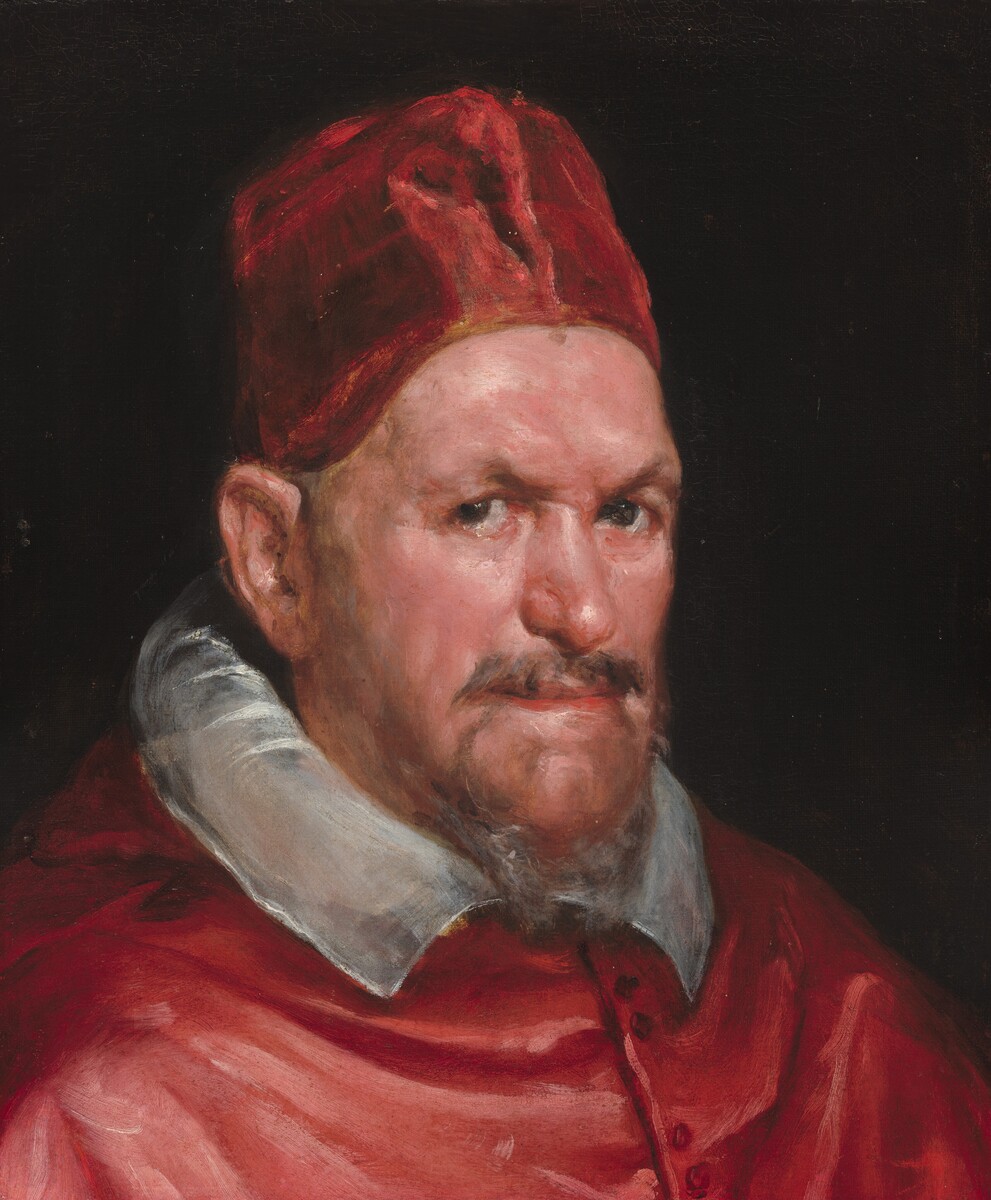
A bust-length portrait of Pope Innocent X, painted around 1650 by an anonymous artist associated with Diego Velázquez. The work shows the pope in crimson, looking at us from the corners of his eyes against a deep shadow. This gallery visit explains what the painting represents and how its visible choices shape that reading.
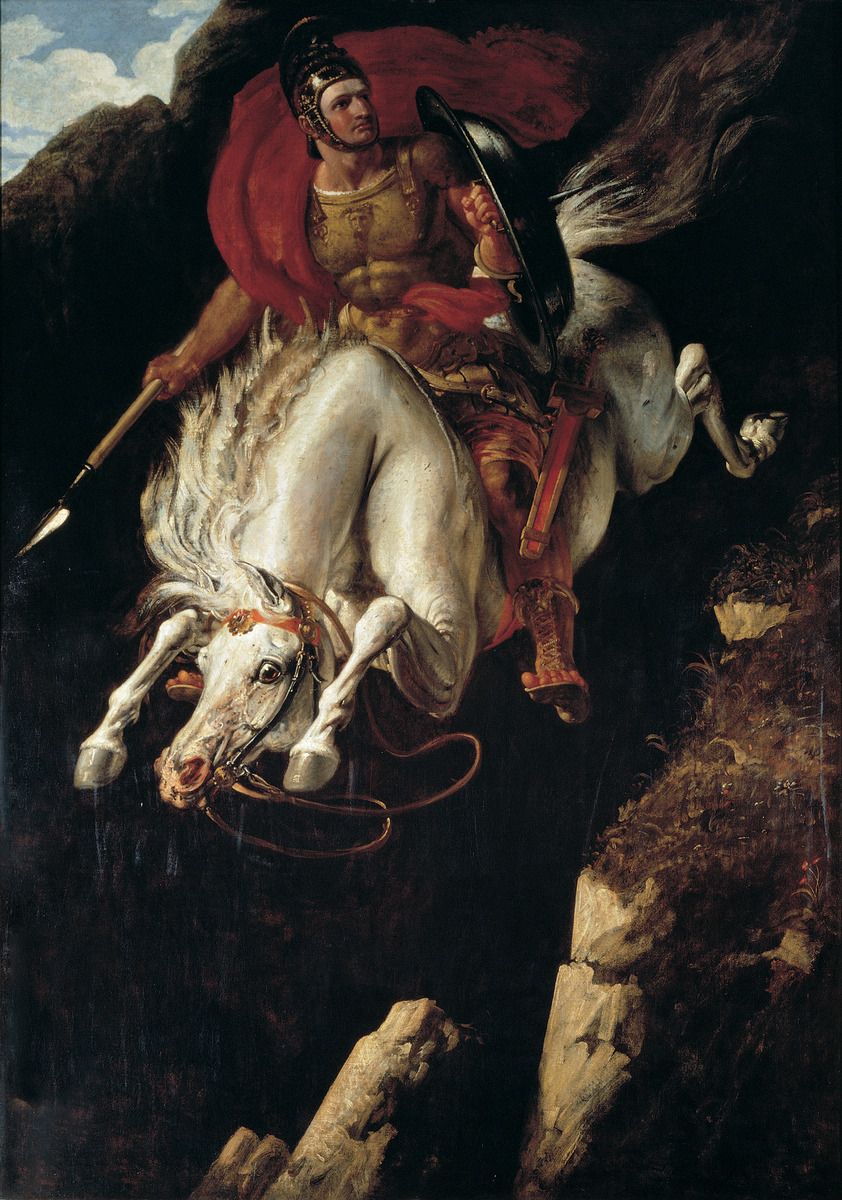
Ancient Roman subject, interpreted by a nineteenth-century British artist
A horseman throws himself into a dark chasm, his white horse rearing above the void. The scene is ancient Roman legend, painted by the nineteenth-century British history painter Benjamin Robert Haydon, a man whose own life ended in catastrophe. This draft explores the painting's visible drama and the story it tells, and asks what it means when an artist's subject echoes his own fate.
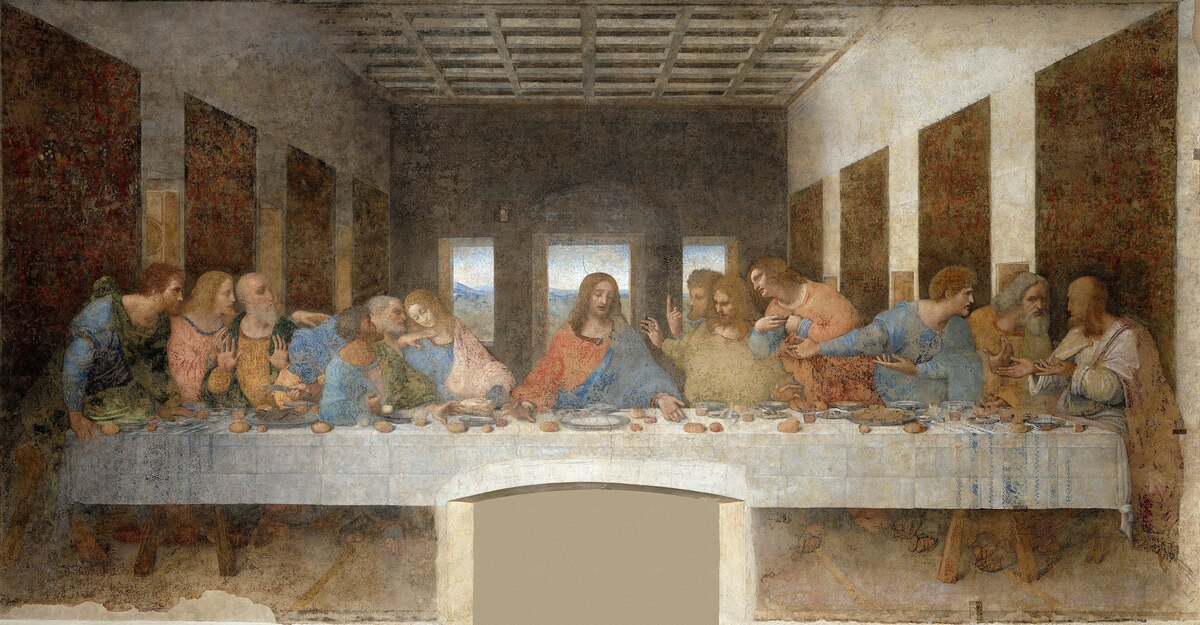
Leonardo da Vinci painted The Last Supper in Milan between 1495 and 1498, and the official Museo del Cenacolo Vinciano identifies it as his work. This short tour sets the biblical subject and then follows the museum's own evidence about the painting's making and its present fragility, keeping the limits of the record in view.
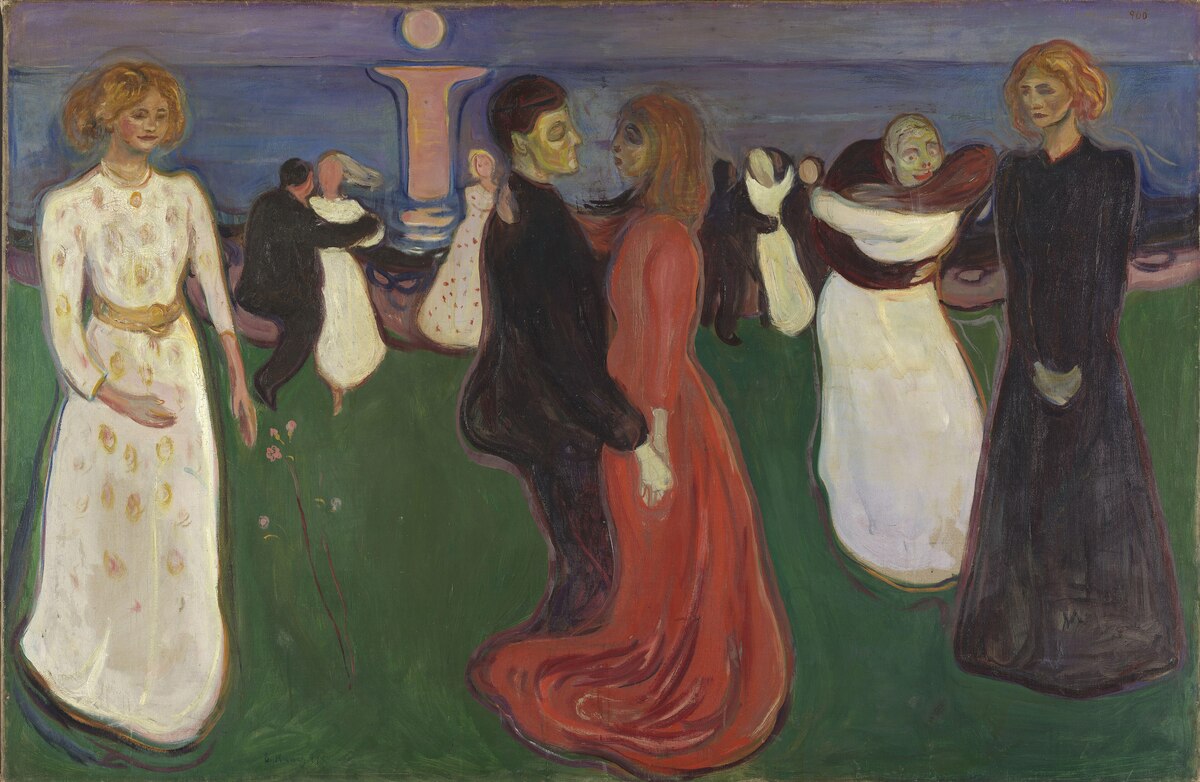
Edvard Munch's The Dance of Life sets three women at different stages of love against a moonlit shore. This docent tour explains the symbolic cycle Munch built from the figures, their colours and their placement.
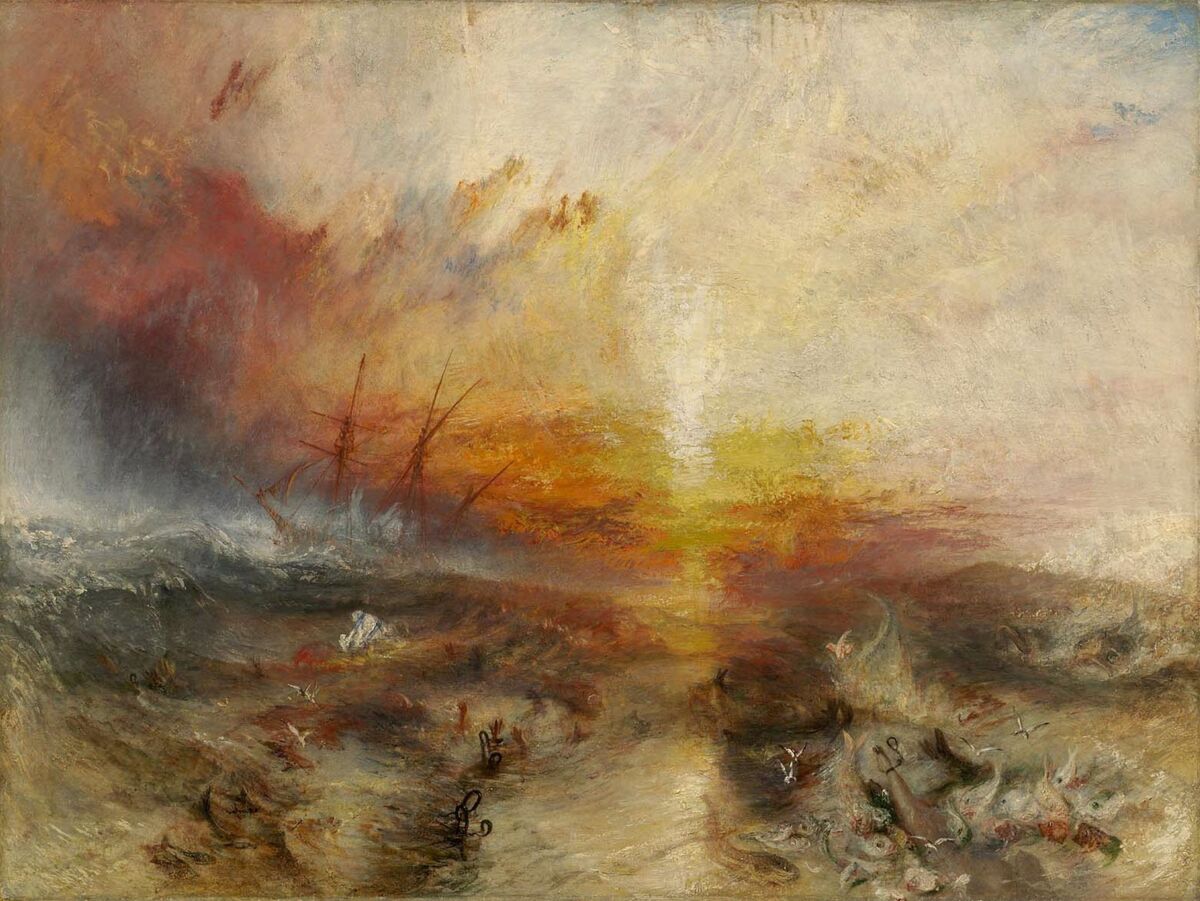
A docent's tour of Turner's The Slave Ship, the 1840 oil painting whose full recorded title, Slavers throwing overboard the Dead and Dying, Typhoon coming on, states its disturbing subject. The account distinguishes the recorded title and associations from what the pictorial description itself can and cannot establish.
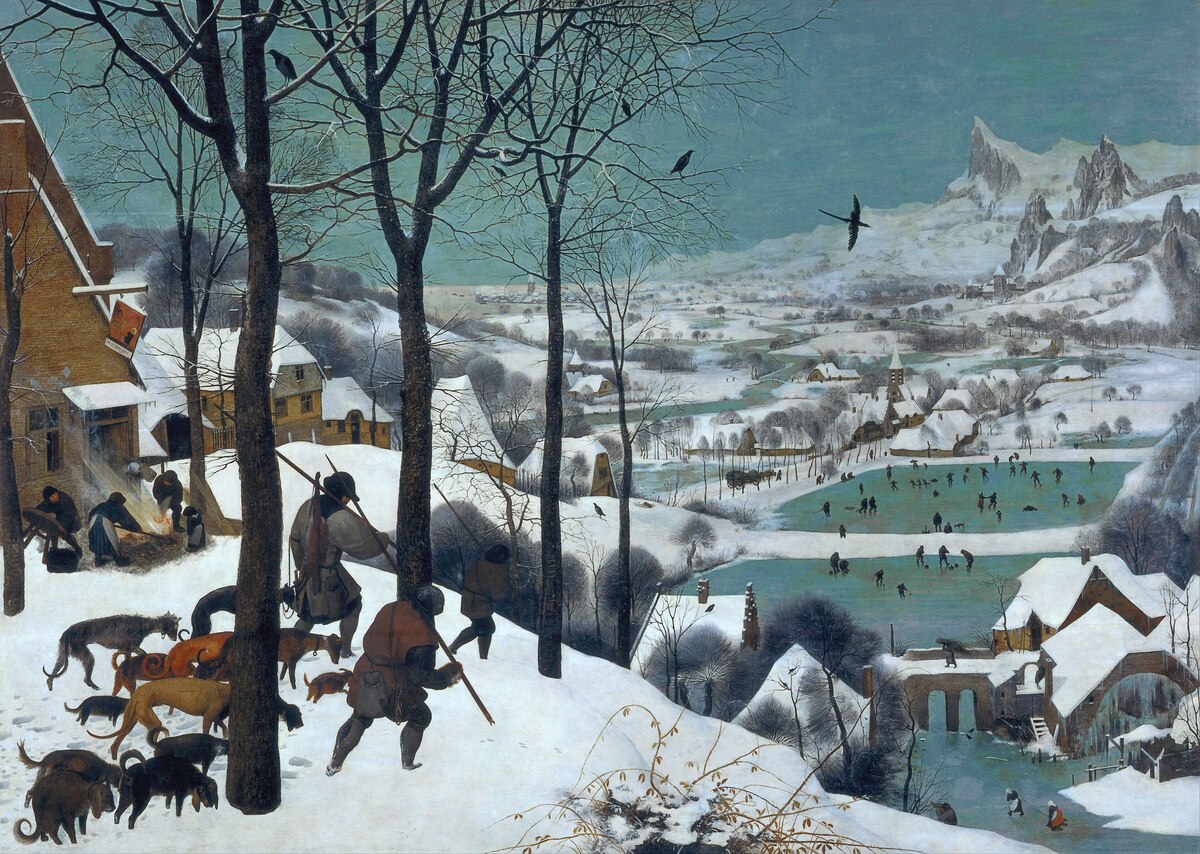
Three hunters and their tired dogs trudge downhill through a snowbound valley, while skaters play below and villagers singe a pig at an inn fire. In this painting of 1565, part of a series of the Labours of the months, Pieter Brueghel the Elder sets a small human figure against a landscape of alpine scale, winter deprivation visibly beside winter pleasure.
Advertising supports the archive. These preferences control aggregate page counting, reading activity and ad-delivery diagnostics. They use no visitor tracking cookie.