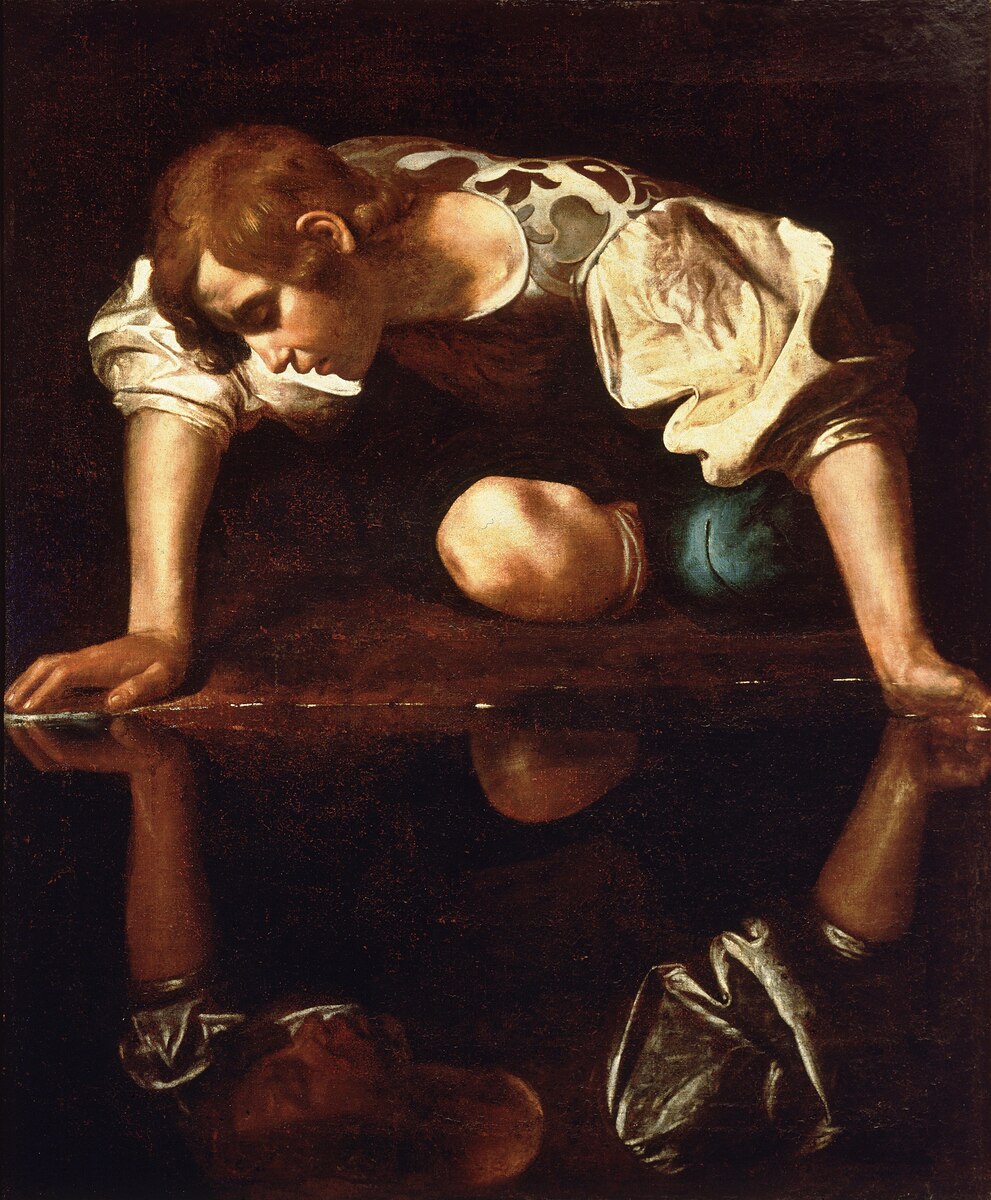
A mythological painting by Caravaggio, made around 1600, showing Narcissus fixed on his own reflection in a dark pool. The account draws on the supplied object record and stays close to what it supports, distinguishing the visible scene from documentable facts and curatorial interpretation.
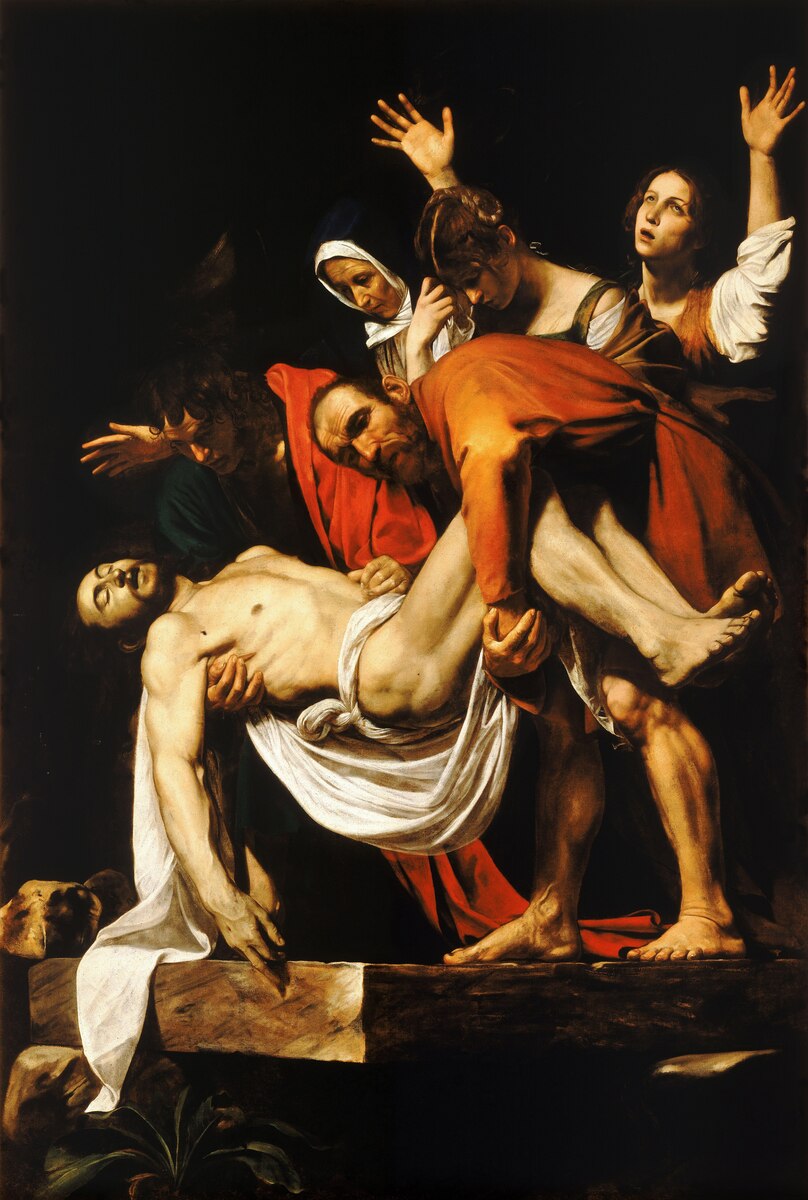
Caravaggio's Entombment of Christ shows the dead Christ being laid into the tomb by his followers. This docent-led visit explains the action, identifies the figures and the setting, and connects the composition to the Gospel of John.
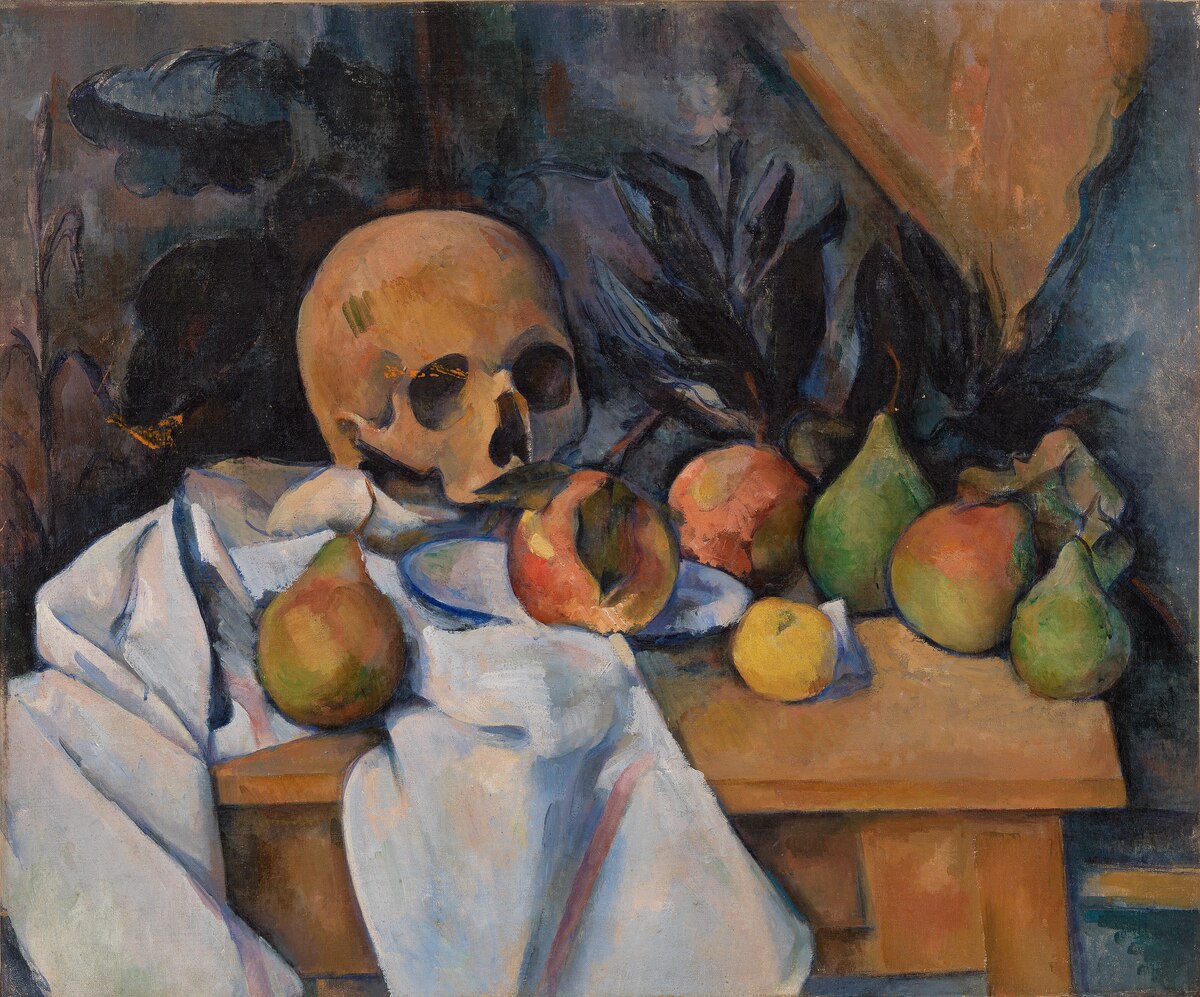
A docent's tour of Cézanne's late still life with a skull, cloth, fruit and plate, explaining how the painting works and what the source-evidenced skull tradition and studio history add to our reading of it.
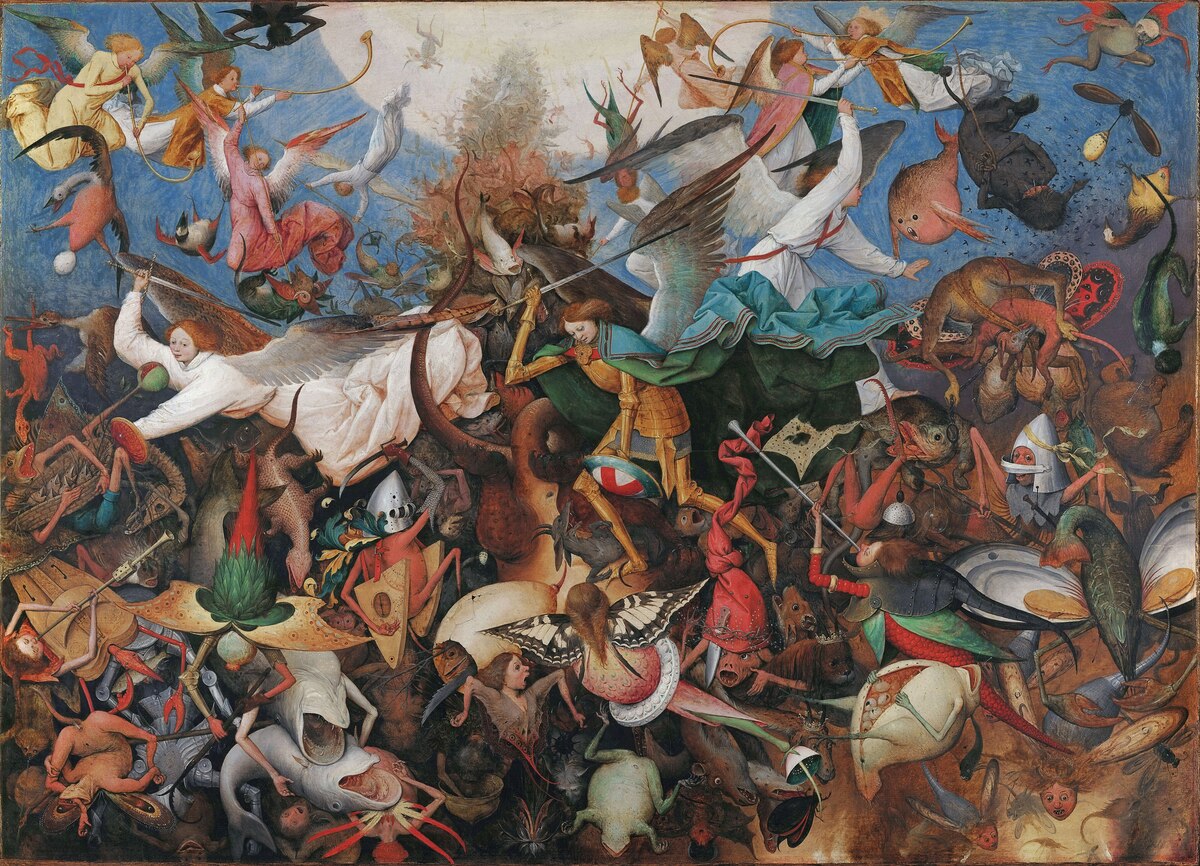
A docent-led reading of Pieter Bruegel the Elder's 1562 panel in Brussels, in which the archangel Michael and the faithful angels drive a grotesque, metamorphosing host of rebel angels out of heaven. The account follows the battle downward through the painting's crowded sky, distinguishing what the panel shows from the scriptural tradition behind it.
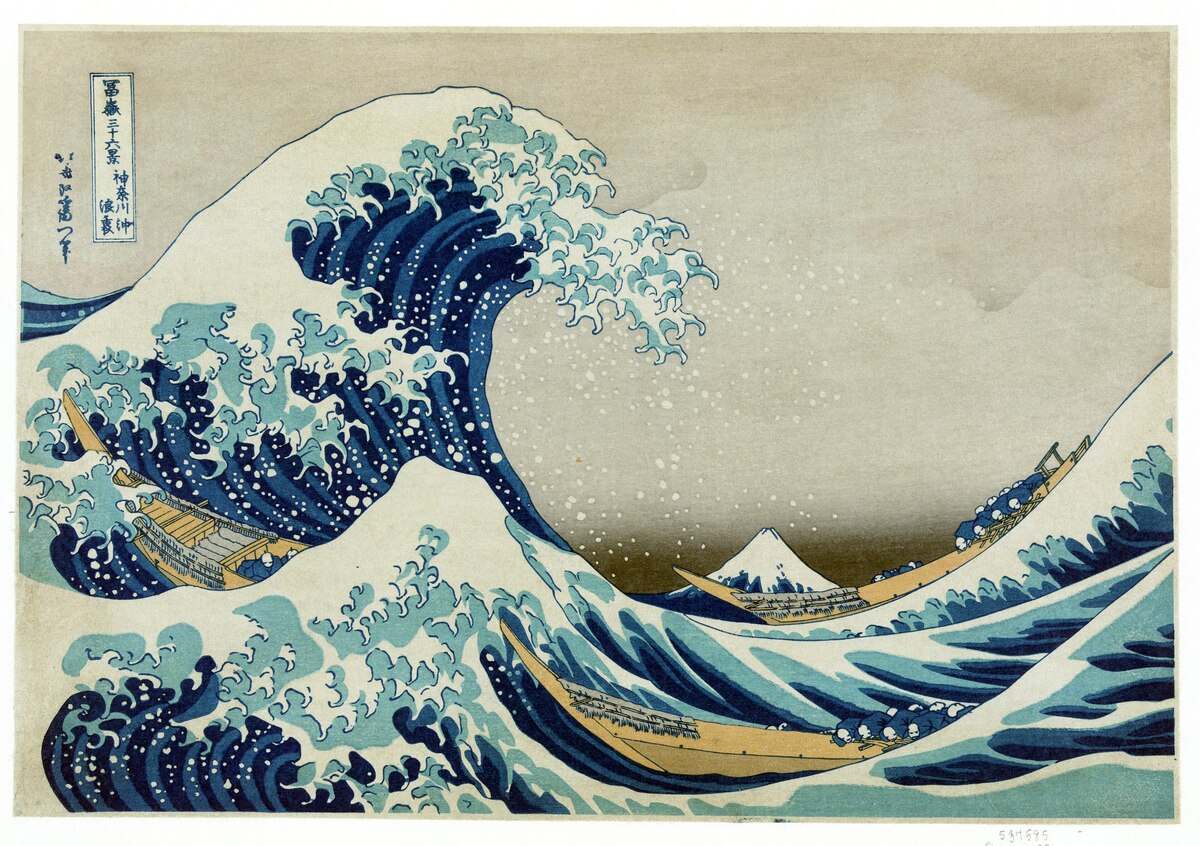
A colour woodcut from Hokusai's series Thirty-six Views of Mount Fuji, showing a towering wave off Kanagawa with boats caught in the swell and Mount Fuji low in the distance. This docent-led visit stays close to what the catalogue record establishes about the print and reads its composition from that evidence.
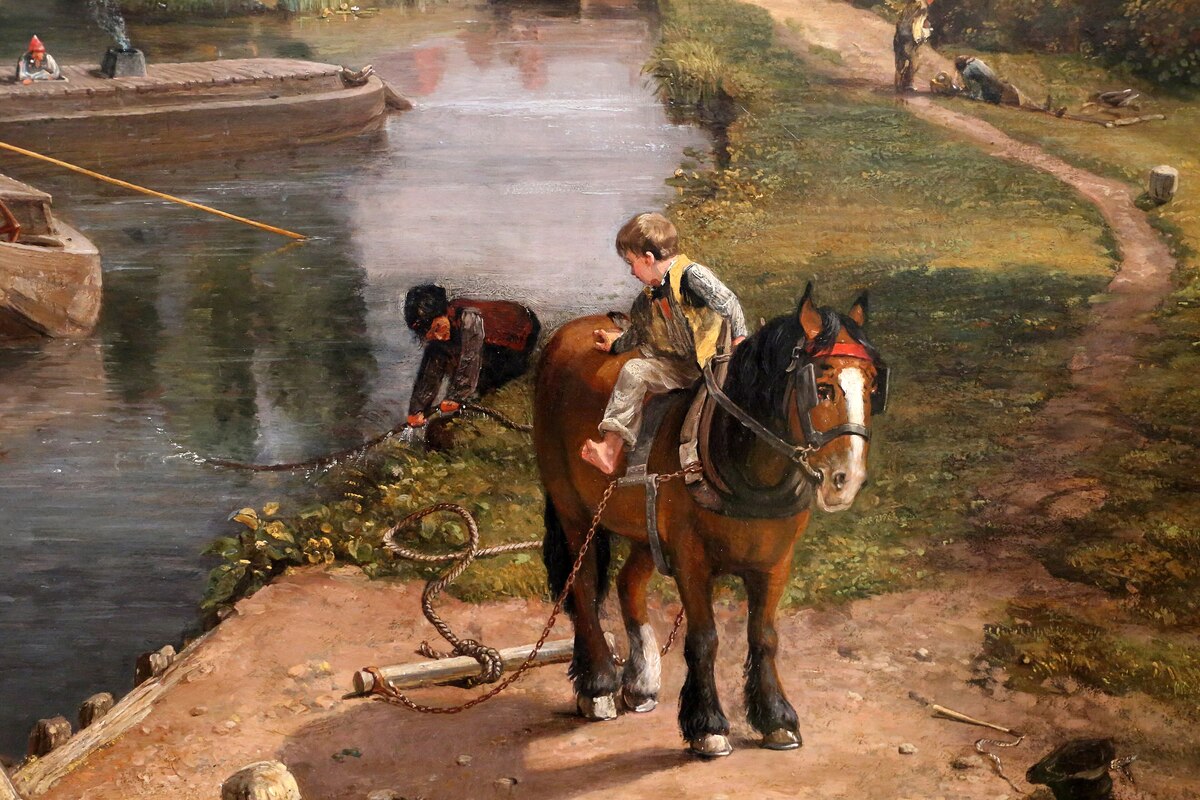
A docent-led reading of John Constable's Flatford Mill, a working river scene painted in 1816 to 1817. The account stays with what the supplied record establishes about the painting's identity, its dated subject and its categories, and it marks clearly where composition and meaning remain beyond the evidence.
Advertising supports the archive. These preferences control aggregate page counting, reading activity and ad-delivery diagnostics. They use no visitor tracking cookie.