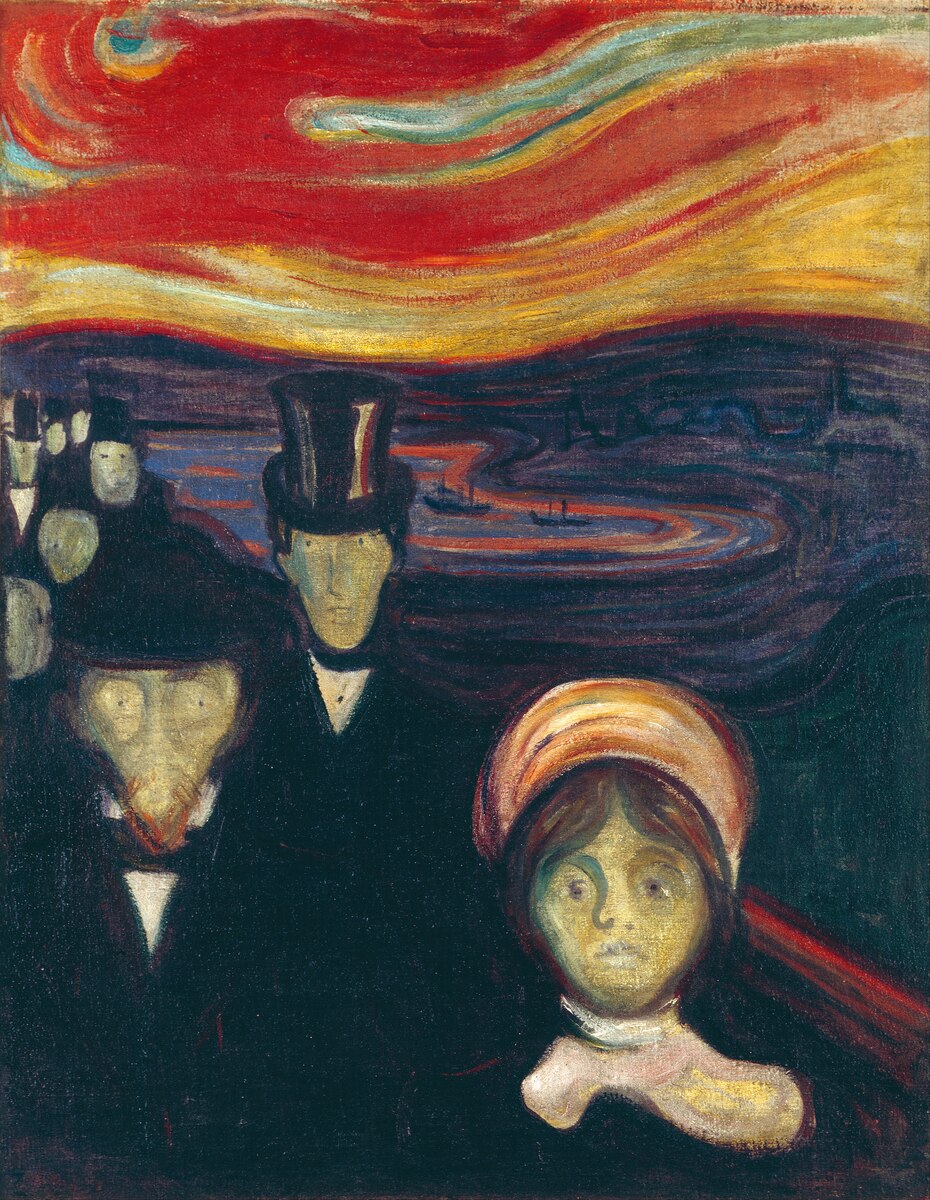
A docent-led reading of Edvard Munch's 1894 painting Anxiety, in which a crowd of pale-faced figures advances toward the viewer beneath a blood-red sky. The tour follows the composition, the scholarly interpretations attributed to Gerd Woll, Uwe M. Schneede, Arne Eggum and Reinhold Heller, and Munch's own diaristic account of a panic attack on Karl Johans gate.
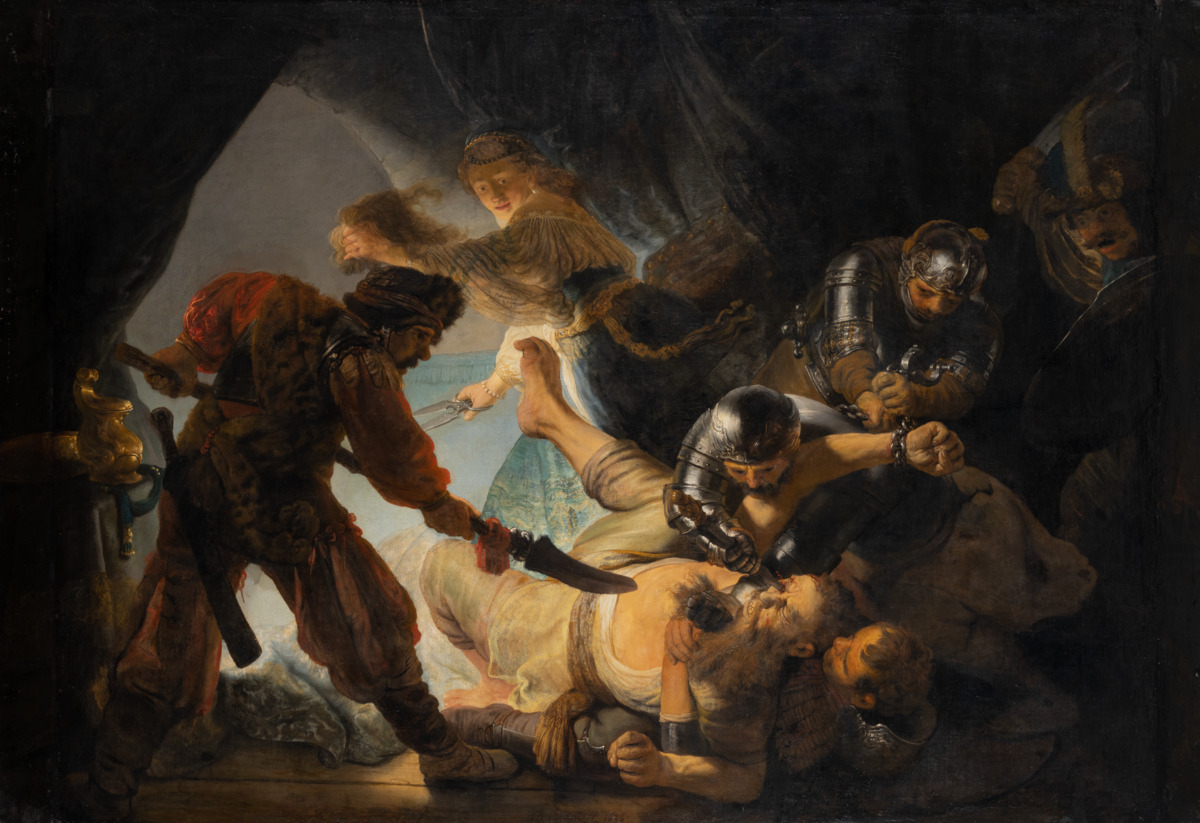
A single candle? No, a shaft of light cuts through a dark tent, finding a man pinned to the ground while a blade hovers over his eye. Rembrandt's painting confronts the viewer with the moment of Samson's blinding, a scene of betrayal and violence that asks us to look closely at who holds power and who loses it.
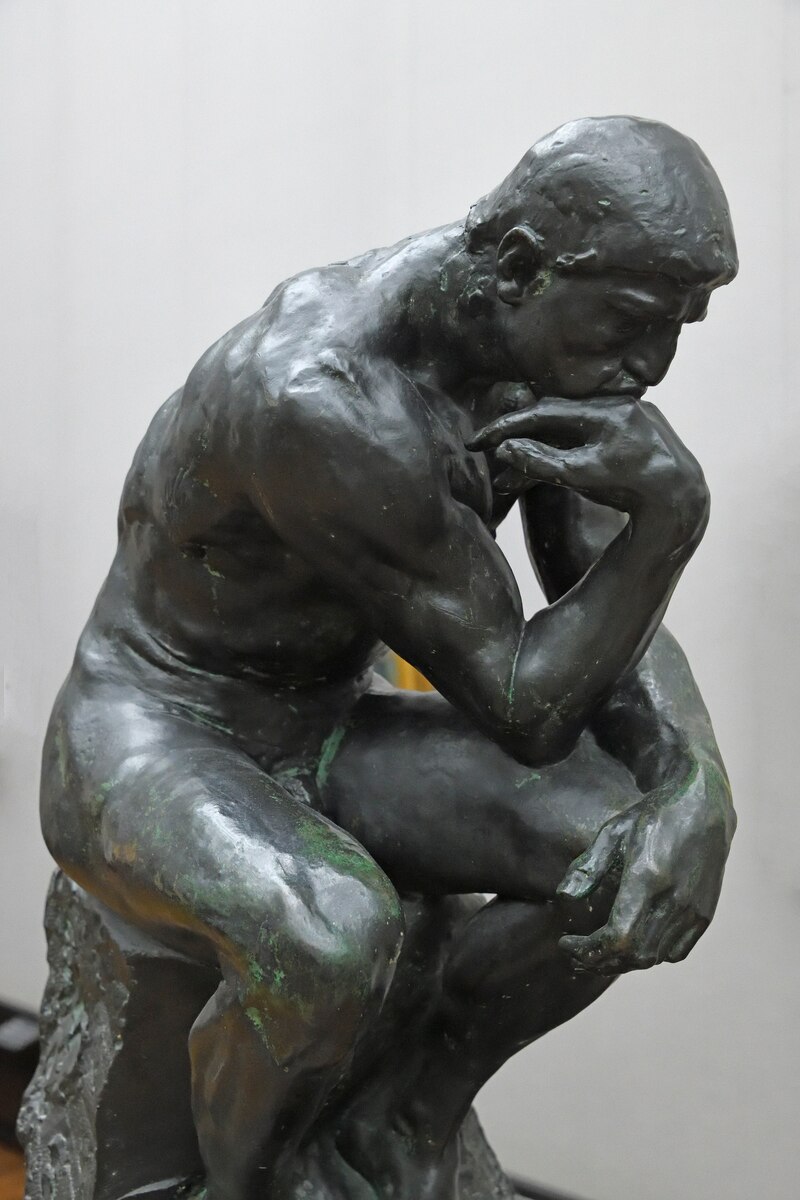
Auguste Rodin conceived The Thinker in 1880 as The Poet, a figure of Dante surveying the circles of Hell from the top of The Gates of Hell. This bronze cast, made in 1904, shows the seated nude with his chin on his clenched right hand, and the museum's own reading of the figure ties thought to a body built for action.
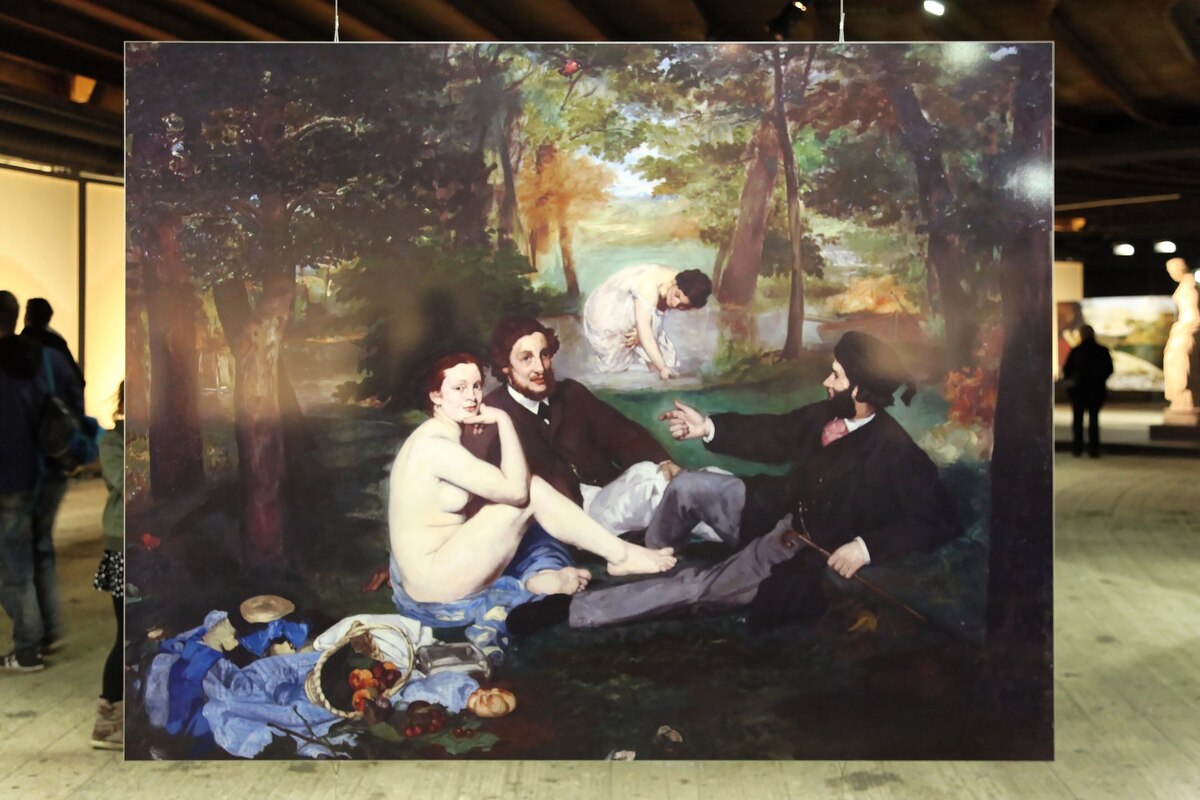
In this 1863 painting, a nude woman sits on the grass beside two fully clothed men while a second woman bathes in a stream behind them. The work placed a familiar outdoor scene into a modern setting and was shown at the Salon des Refusés in 1863.
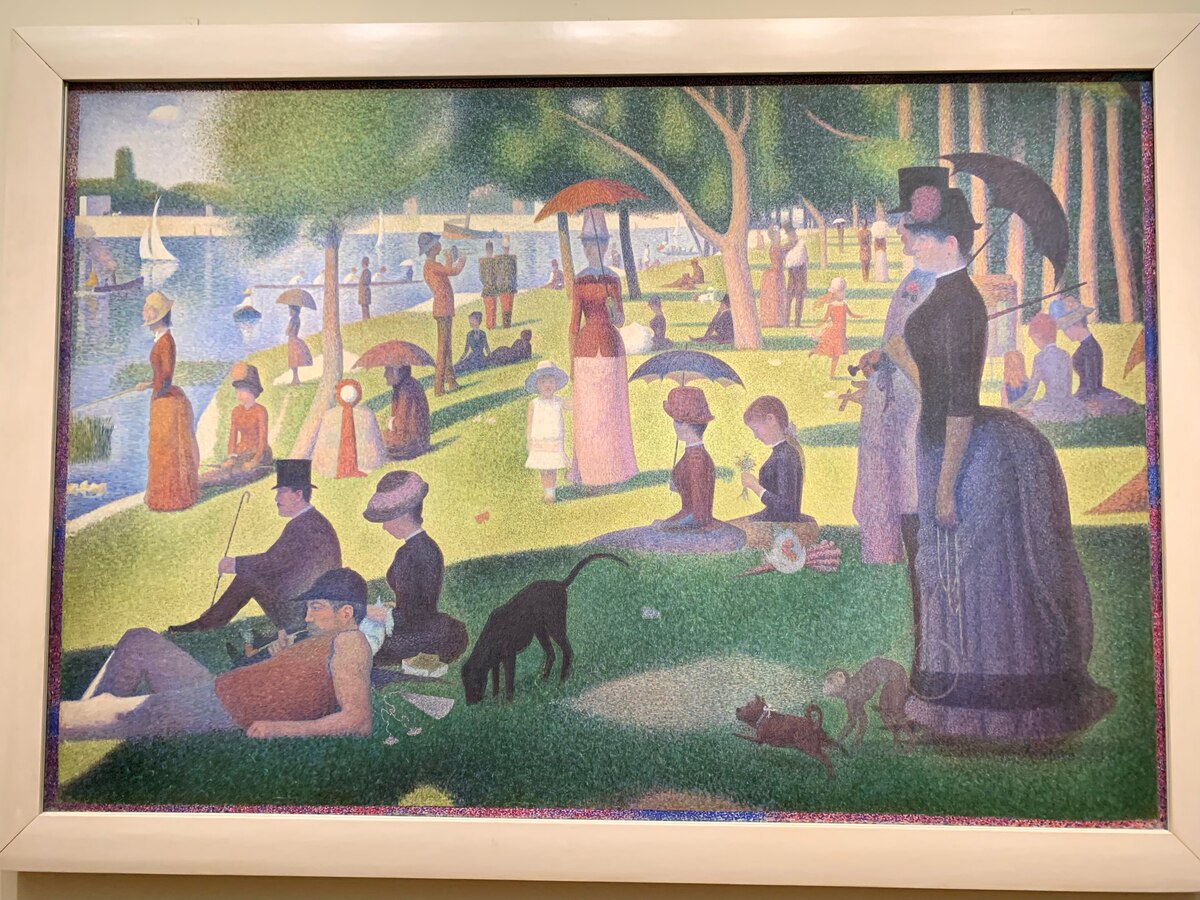
A spoken gallery visit to Georges Seurat's large park scene of Parisians at leisure, with attention to the picture's subject, composition and painted surface and to the limits of the supplied evidence.
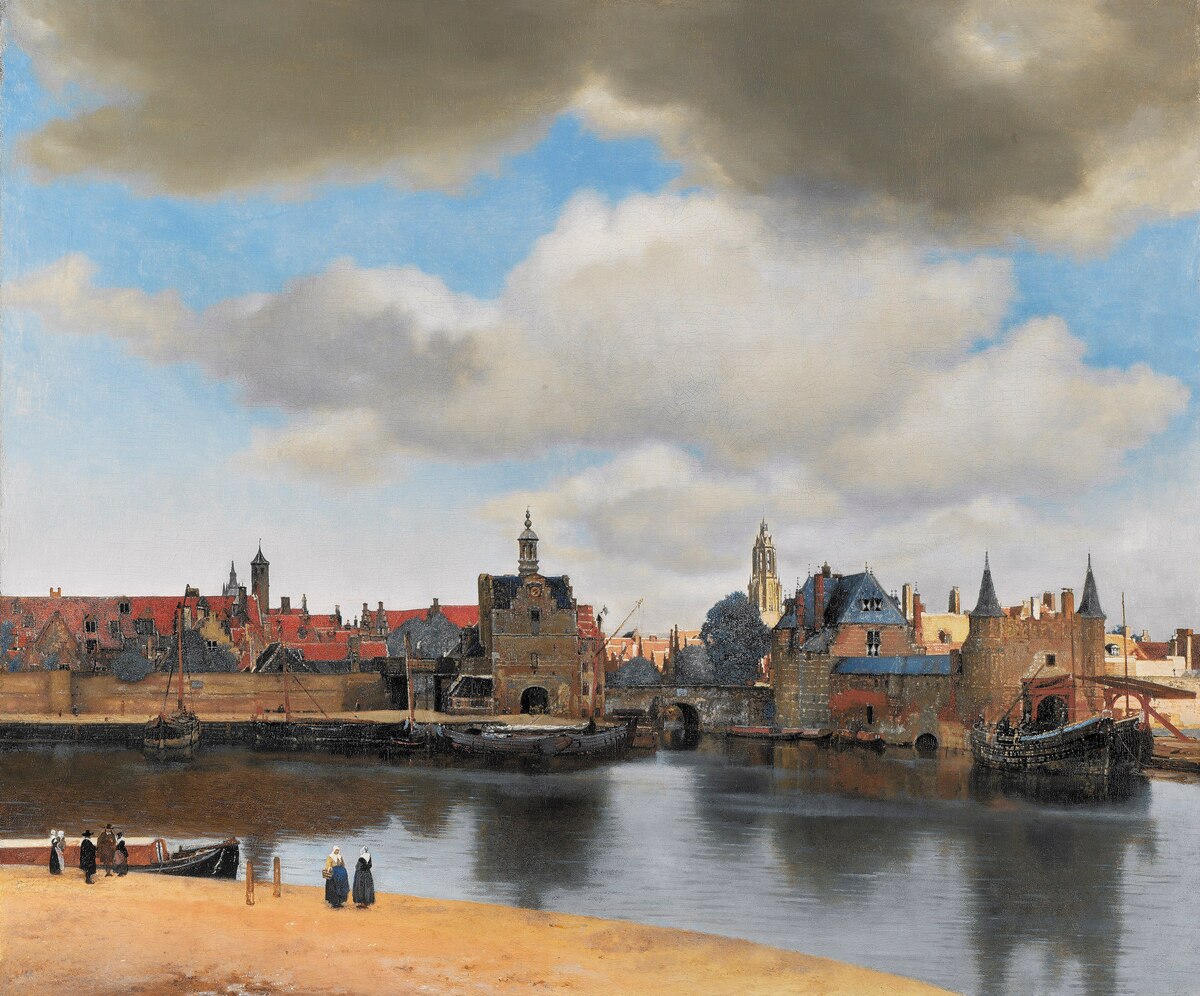
A gallery visit to Johannes Vermeer's View of Delft, a cityscape that shows the artist's home city across the river Schie. The tour looks at the painting's arrangement of architecture, water and sky, and explains why a town view painted around 1660 could read as both a portrait of a place and a study of light.
Advertising supports the archive. These preferences control aggregate page counting, reading activity and ad-delivery diagnostics. They use no visitor tracking cookie.