The story About 3 minutes to read
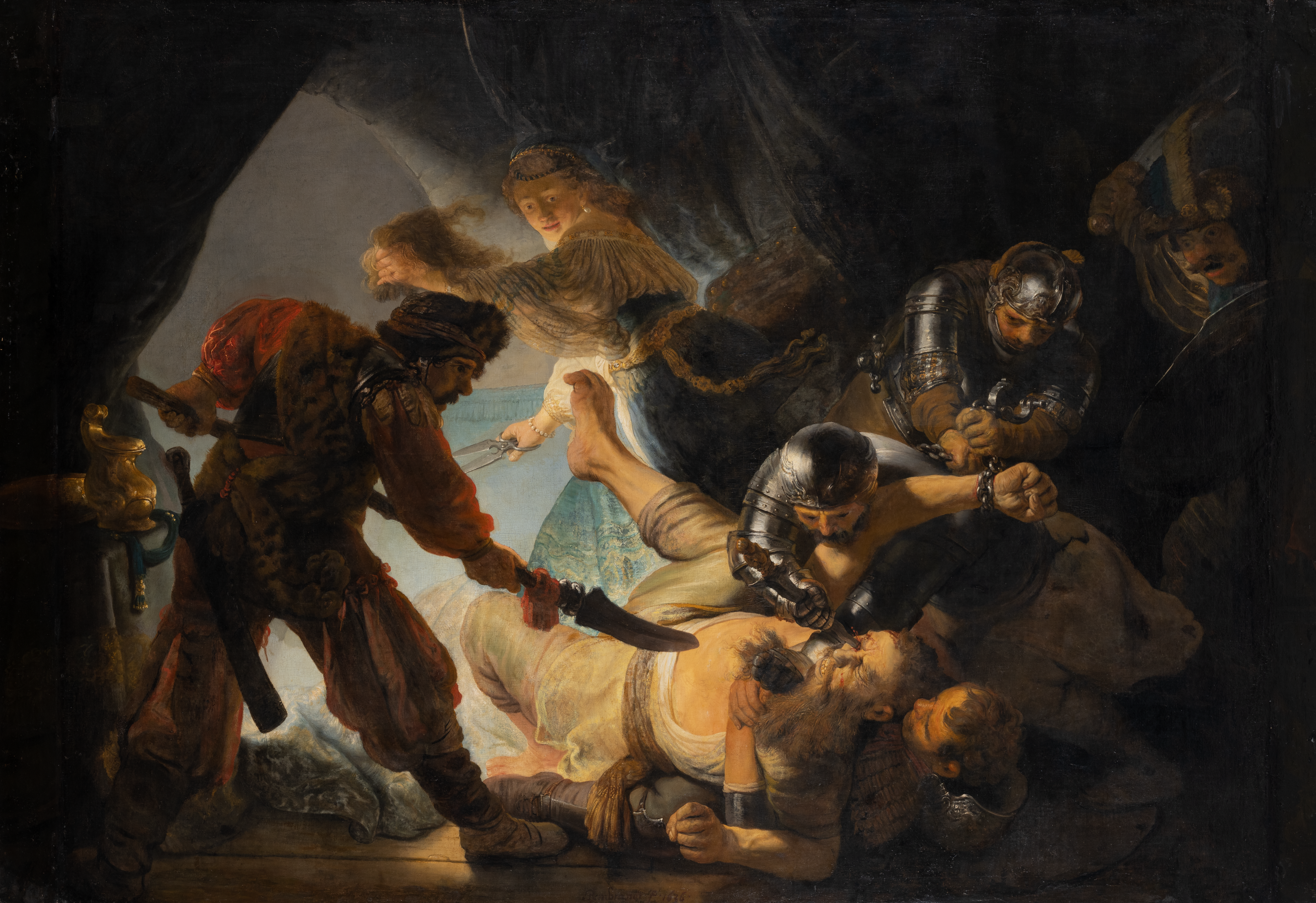
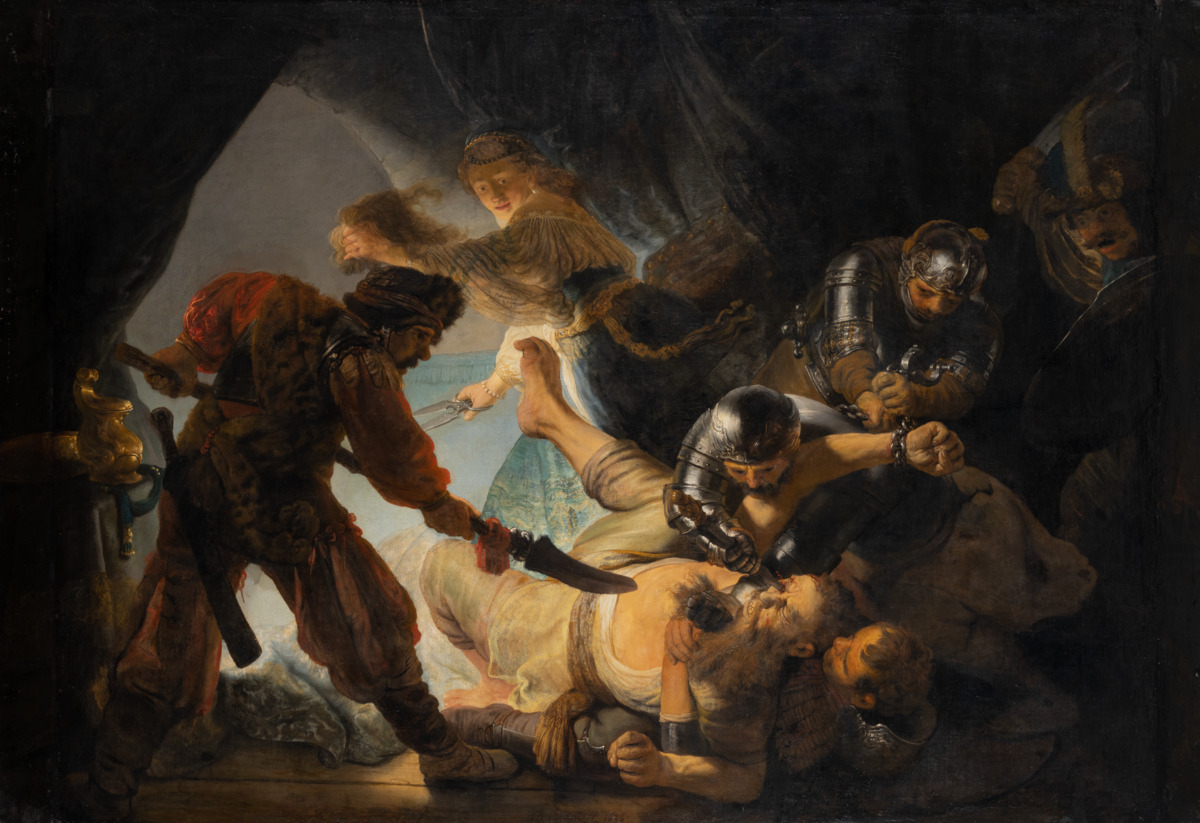
A man lies on his back, his arms and legs held down by soldiers. One soldier presses a blade toward his eye. Blood is already visible. Nearby, a woman stands holding a lock of hair and a pair of shears. The light catches her face and the blade, while the rest of the scene falls into deep shadow.
The painting is built from darkness. Rays of natural light enter from the upper left, cutting through the gloom to illuminate the struggling body and the instruments of violence: a dagger, armour, a chain, fetters. The source describes the scene as taking place inside a cave or grotto, with Delilah and another woman among the group.
The subject comes from the biblical story of Samson and Delilah in Judges, chapter 16. Samson's strength was tied to his uncut hair. Delilah, bribed by the Philistines, learned the secret and arranged for his hair to be cut while he slept. The painting shows the immediate aftermath: Samson overpowered, his hair severed, his eyes about to be put out.
The source characterises the image through themes of betrayal, deceit, force, and Samson's powerlessness and humiliation. But the painting does more than illustrate a story. It places the viewer at the centre of the action, forcing us to witness the exact moment when a legendary hero becomes a captive. The light that reveals the scene also exposes our own position as onlookers.
We began with a blade and a beam of light. We end with the same image, but now we see the layers: the betrayal that led here, the power that is being taken, and the quiet figure of Delilah holding the proof of her deed. Rembrandt does not let us look away. The painting holds us in that dark tent, asking what we would do if we were there, and what we are doing now, as witnesses.