The story About 4 minutes to read
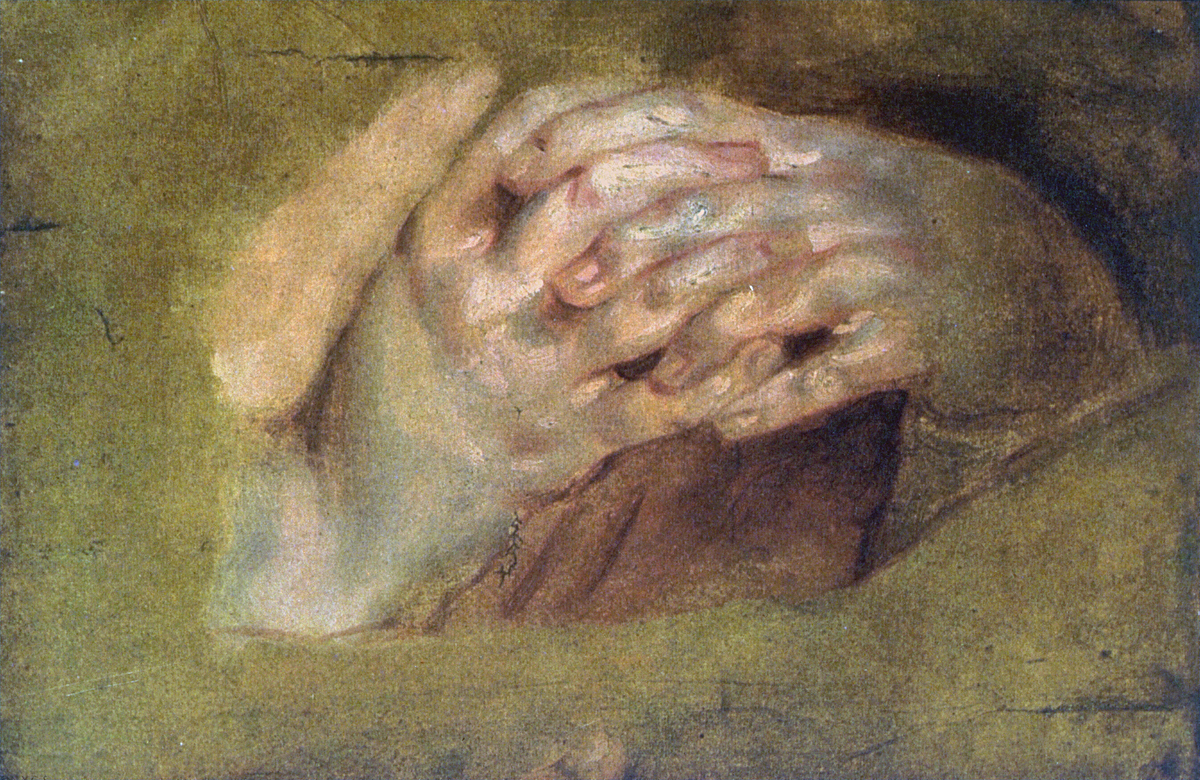
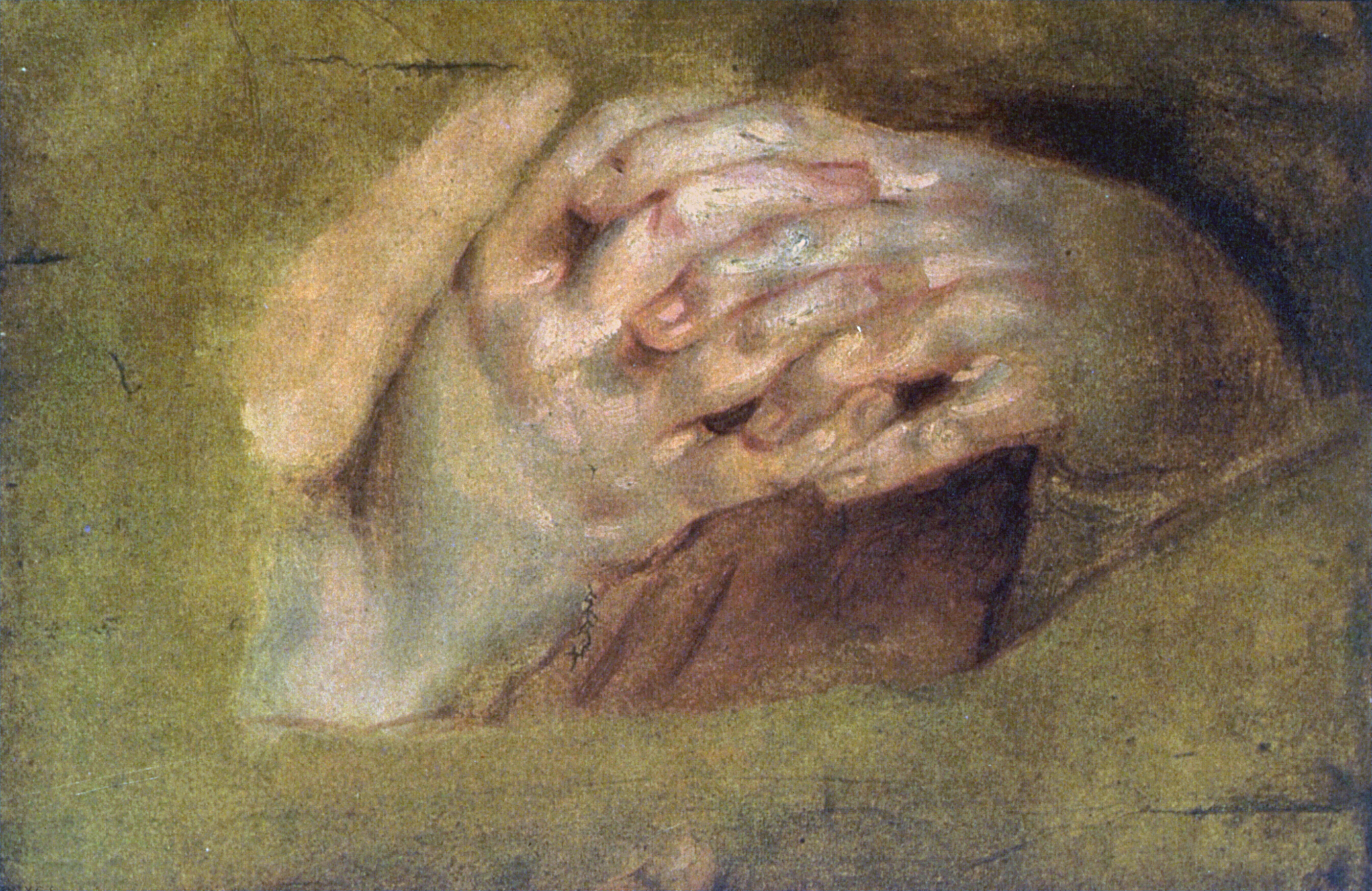
What you're looking at is a painting titled Praying Hands, attributed to Peter Paul Rubens and dated to about 1600.
Its whole subject is the gesture itself: a pair of hands pressed together in prayer, held as the centre of the picture.
Because the hands are the subject, almost everything else has been cleared away. There is no face, no room, no story unfolding around them.
That emptiness concentrates your attention on the joined fingers, the angle of the palms and the pressure where the two hands meet.
The two hands fold together along a central vertical axis, so the shape reads as one symmetrical form rather than two separate ones.
That symmetry gives the image a stillness that suits prayer: nothing in the composition pulls sideways, and the gesture stays closed and self-contained.
The attribution and the approximate date come down to us from the file record rather than from a museum catalogue.
That same record describes the picture as an oil painting, and it categorises the image as a religious painting and as a painting of praying hands.
Rubens was born in 1577 and died in 1640, and the source describes him as a Flemish painter, draughtsman, printmaker and diplomat.
Around 1600 he was at the start of that career, which is why the date on this small devotional image matters to how we place it.
There is an important limit to what this record can tell you. It is a Wikimedia Commons file, not an official museum collection record.
No dimensions for the painting, no accession number and no present collection location are supplied, so we cannot say where the work is today.
What the file does tell us is more modest. The upload dates from 2010, and the uploader described the painting and cited a COREL photo CD, Masters I, as the source photograph.
So the image is a photographic reproduction of a two-dimensional public domain work of art, not a direct record made for a catalogue.
Set the documentation aside and the picture asks for something simpler. A pair of hands, pressed together, occupying the whole field of view.
Whether or not further evidence ever settles its authorship or home, the painting's meaning rests in that single act: devotion offered through the body, with nothing else in the frame to distract from it.