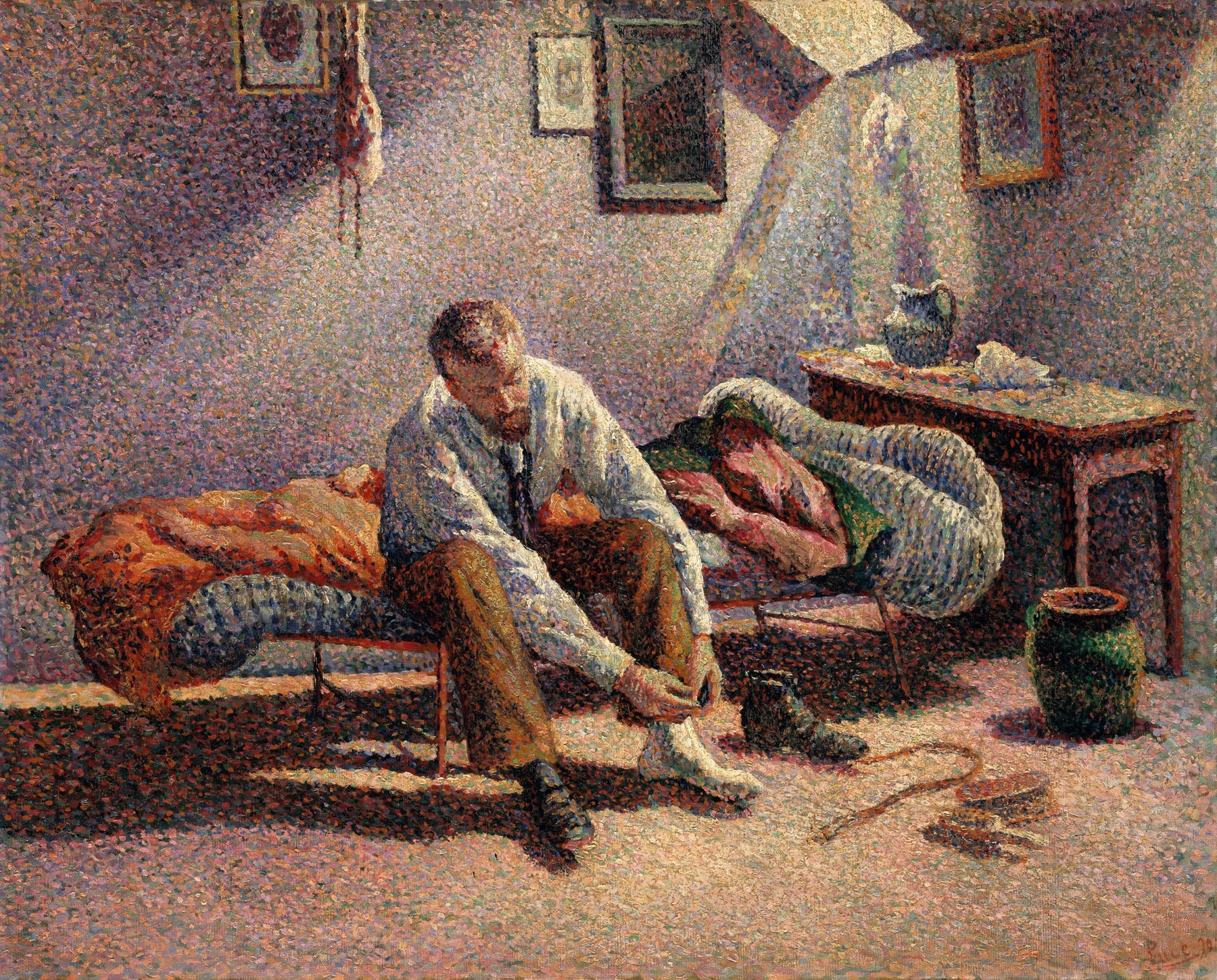
A man bends over his feet in a cramped bedroom while morning light cuts across the wall. The Metropolitan Museum identifies him as Gustave Perrot, Luce's friend and fellow painter. Dense touches of color make clothing, bedding, walls, and shadows shimmer. This intimate scene combines an ordinary act of getting dressed with the ambitious experiments in color associated with Neo-Impressionism.
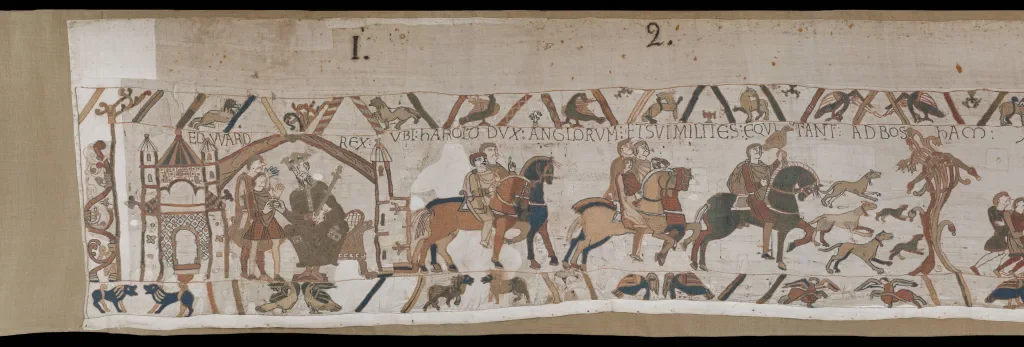
A king gives an audience, horsemen ride towards the sea, ships cross the Channel, and armies collide. The Bayeux Tapestry turns the conquest of England into a continuous embroidered narrative. Follow its full surviving length, then zoom in to see how thread, gesture and inscription carry the story.
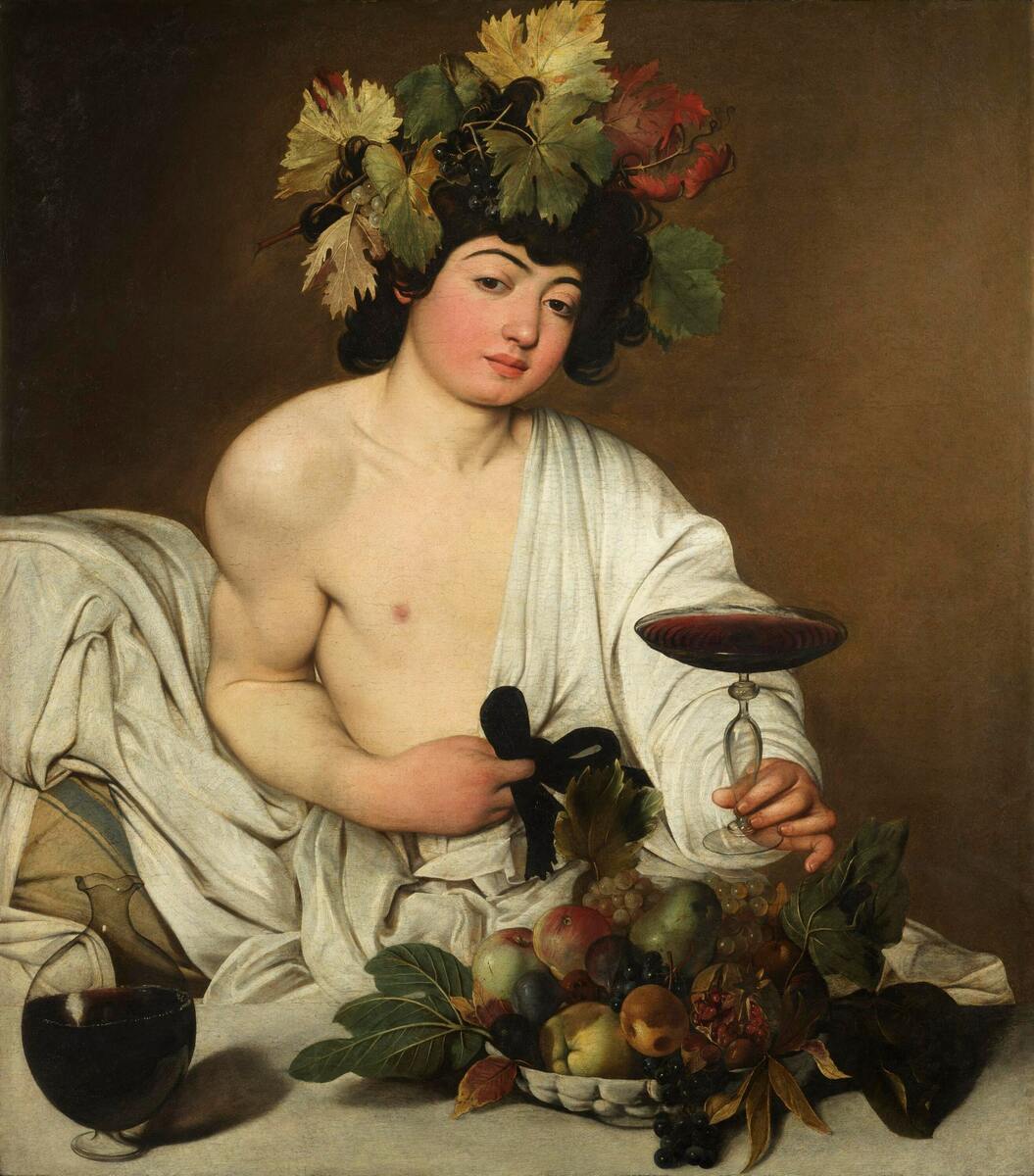
A young god holds out a glass of wine, his face flushed, his gaze unsteady. For centuries this painting was lost in storage, until a sharp-eyed scholar recognised the hand of Caravaggio. The story of how Bacchus came back into the light reveals as much about the artist's early career as it does about the painting itself.
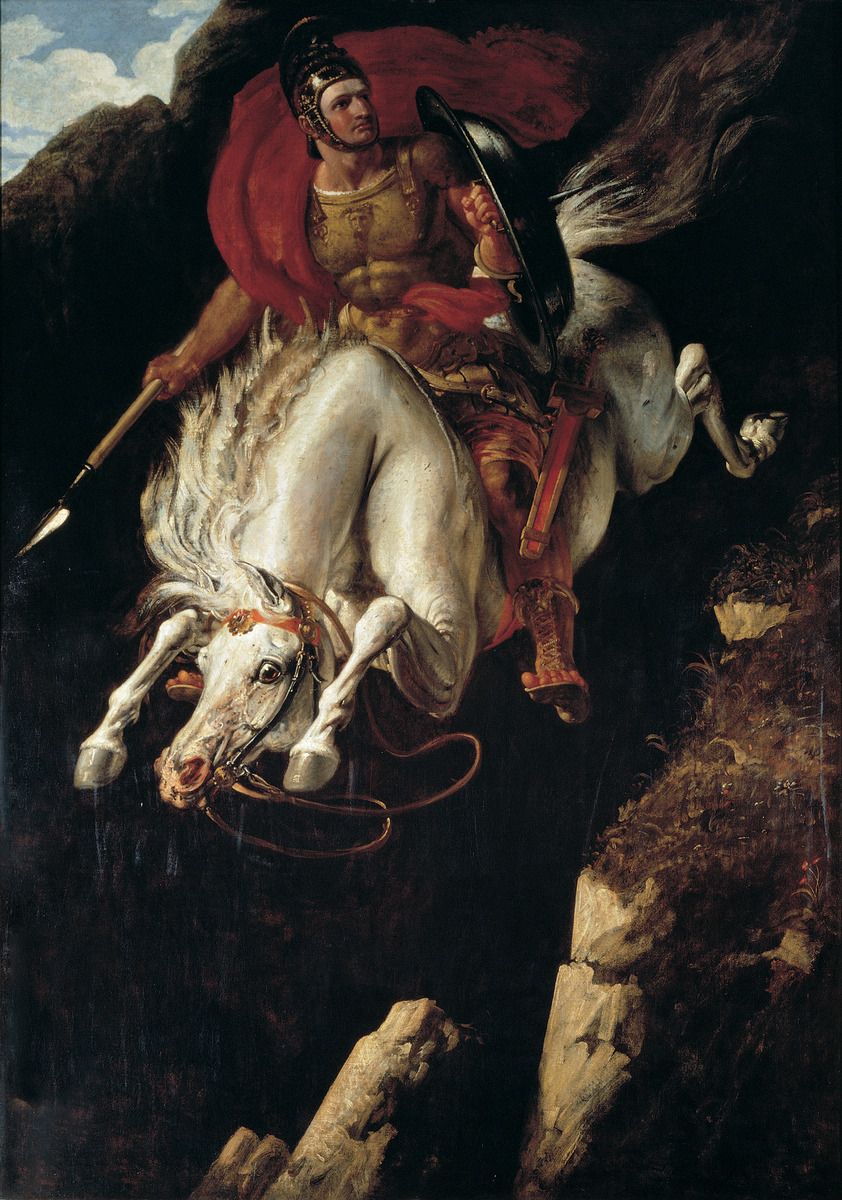
Ancient Roman subject, interpreted by a nineteenth-century British artist
A horseman throws himself into a dark chasm, his white horse rearing above the void. The scene is ancient Roman legend, painted by the nineteenth-century British history painter Benjamin Robert Haydon, a man whose own life ended in catastrophe. This draft explores the painting's visible drama and the story it tells, and asks what it means when an artist's subject echoes his own fate.
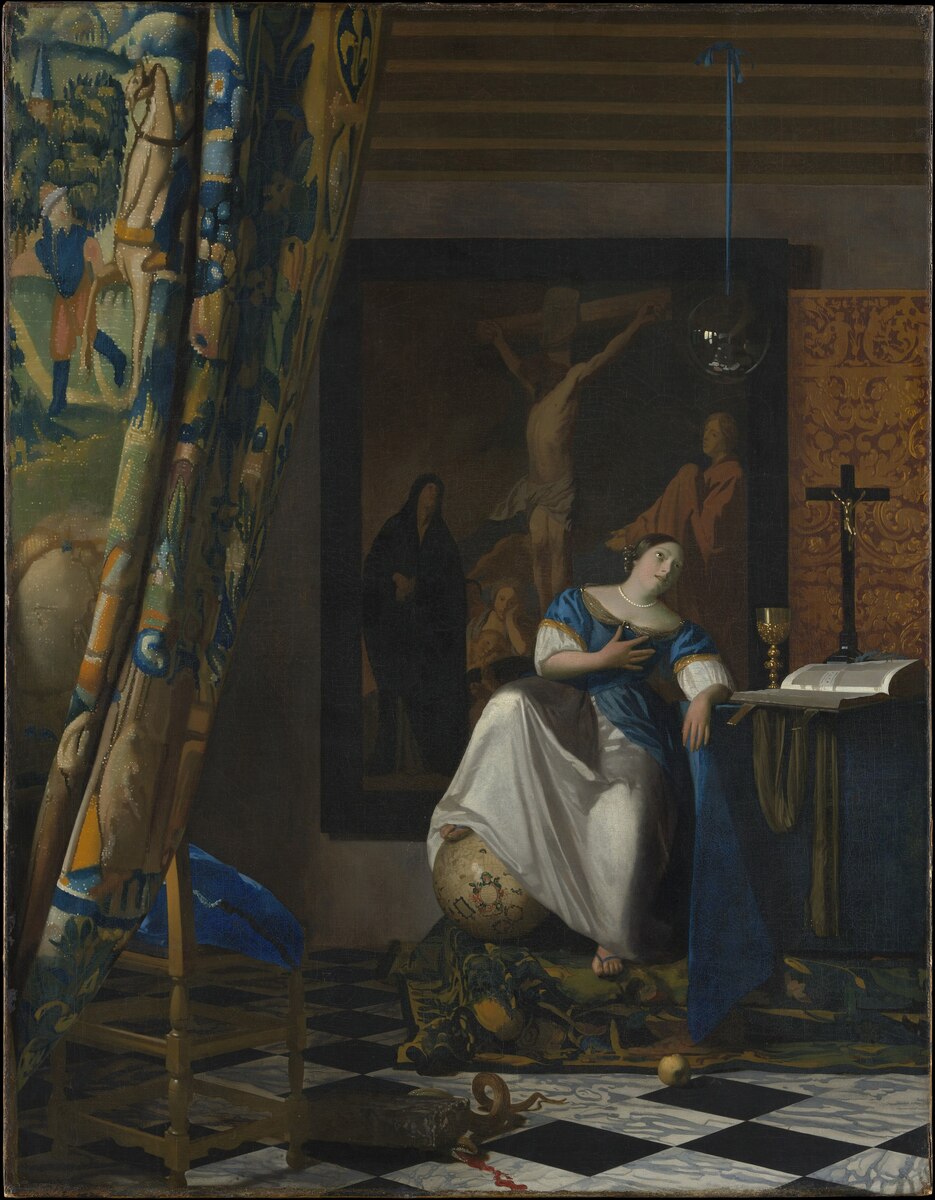
A gallery guide to Johannes Vermeer's Allegory of the Catholic Faith, in which a seated woman personifies Faith, her hand pressed to her breast and her face lifted, while a globe, a crushed serpent, an altar, a glass sphere and a painted tapestry build the allegory around her.
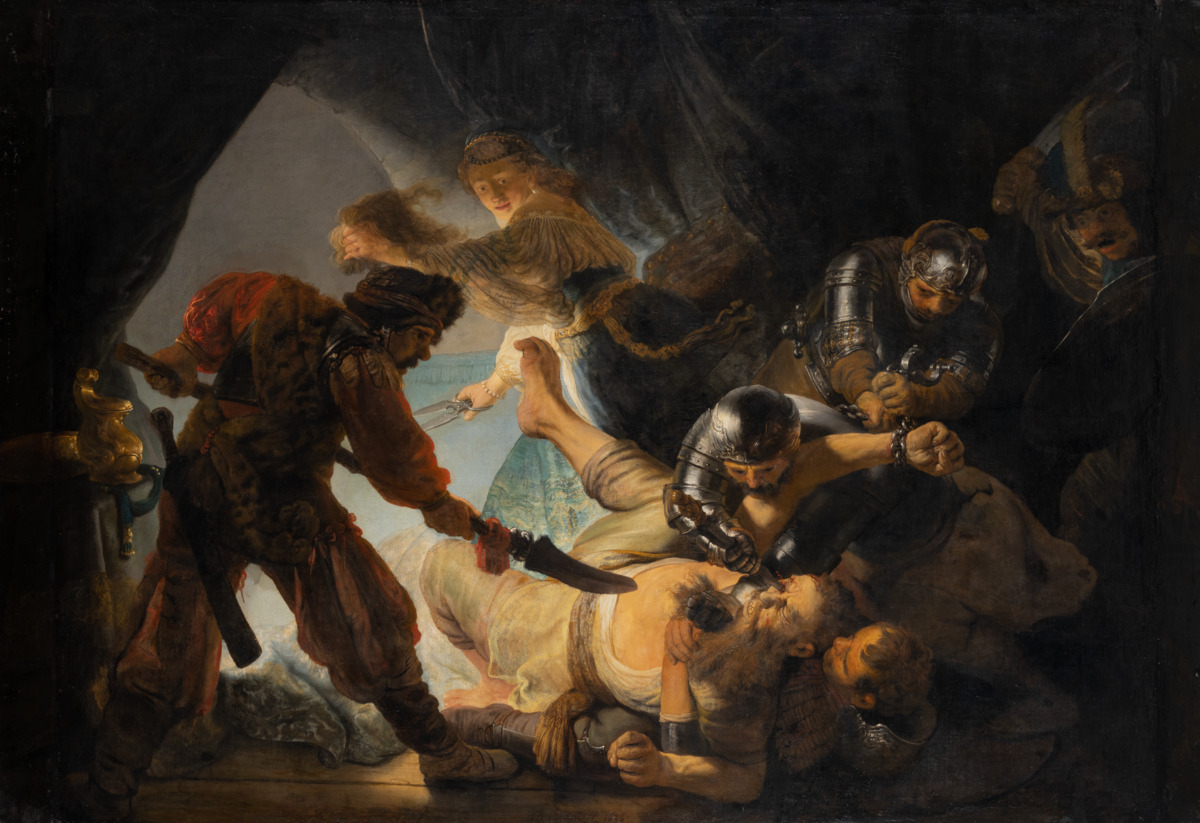
A single candle? No, a shaft of light cuts through a dark tent, finding a man pinned to the ground while a blade hovers over his eye. Rembrandt's painting confronts the viewer with the moment of Samson's blinding, a scene of betrayal and violence that asks us to look closely at who holds power and who loses it.