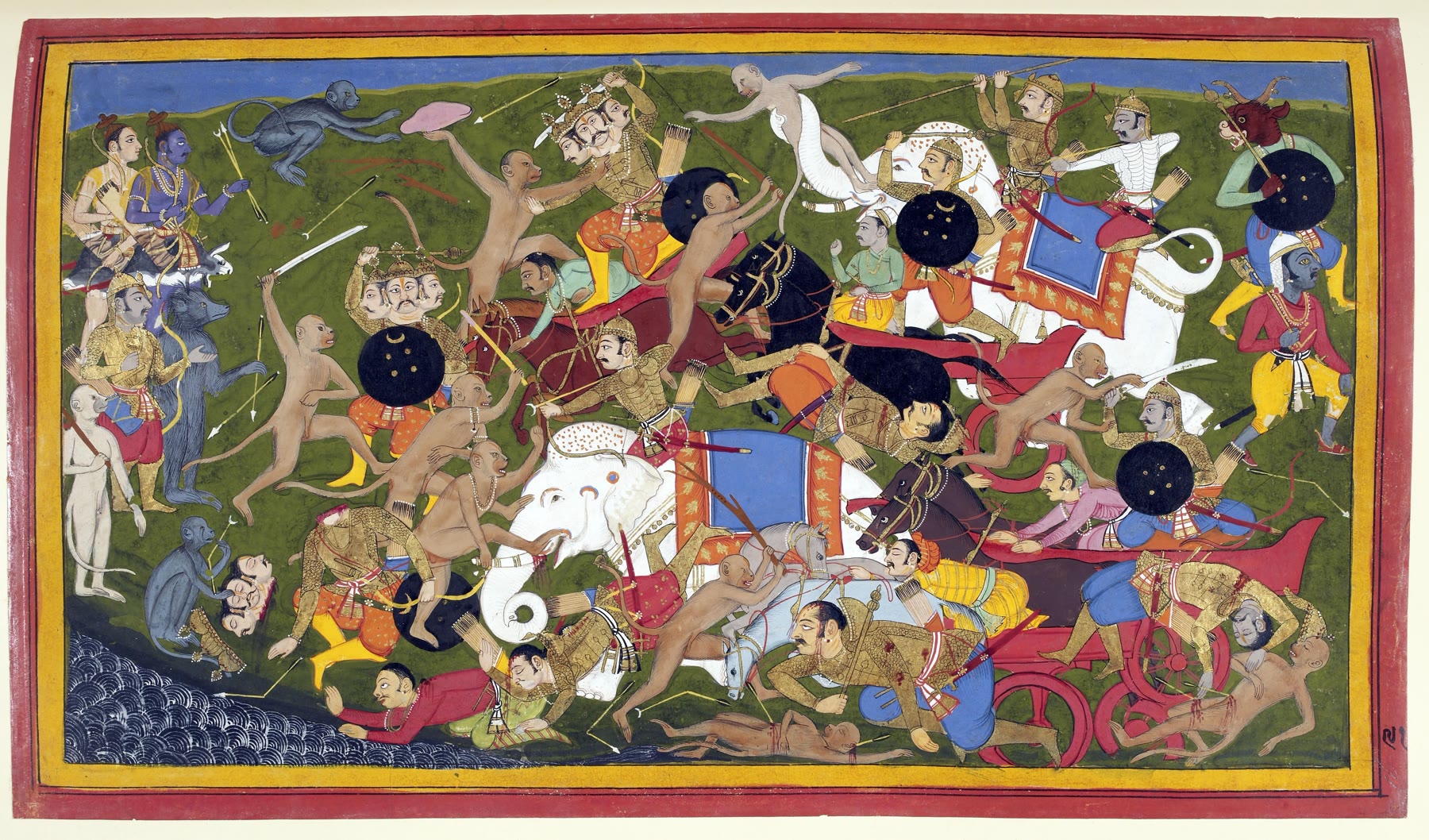
A battlefield becomes a sequence of stories within one painted page. Monkeys leap across elephants, chariots collide, and a three-headed warrior appears more than once, while blue-skinned Rama watches from the upper left. This is a folio from the lavish Mewar Ramayana, a court manuscript whose pictures connect an epic struggle with the ambitions and ancestry of its royal patrons.
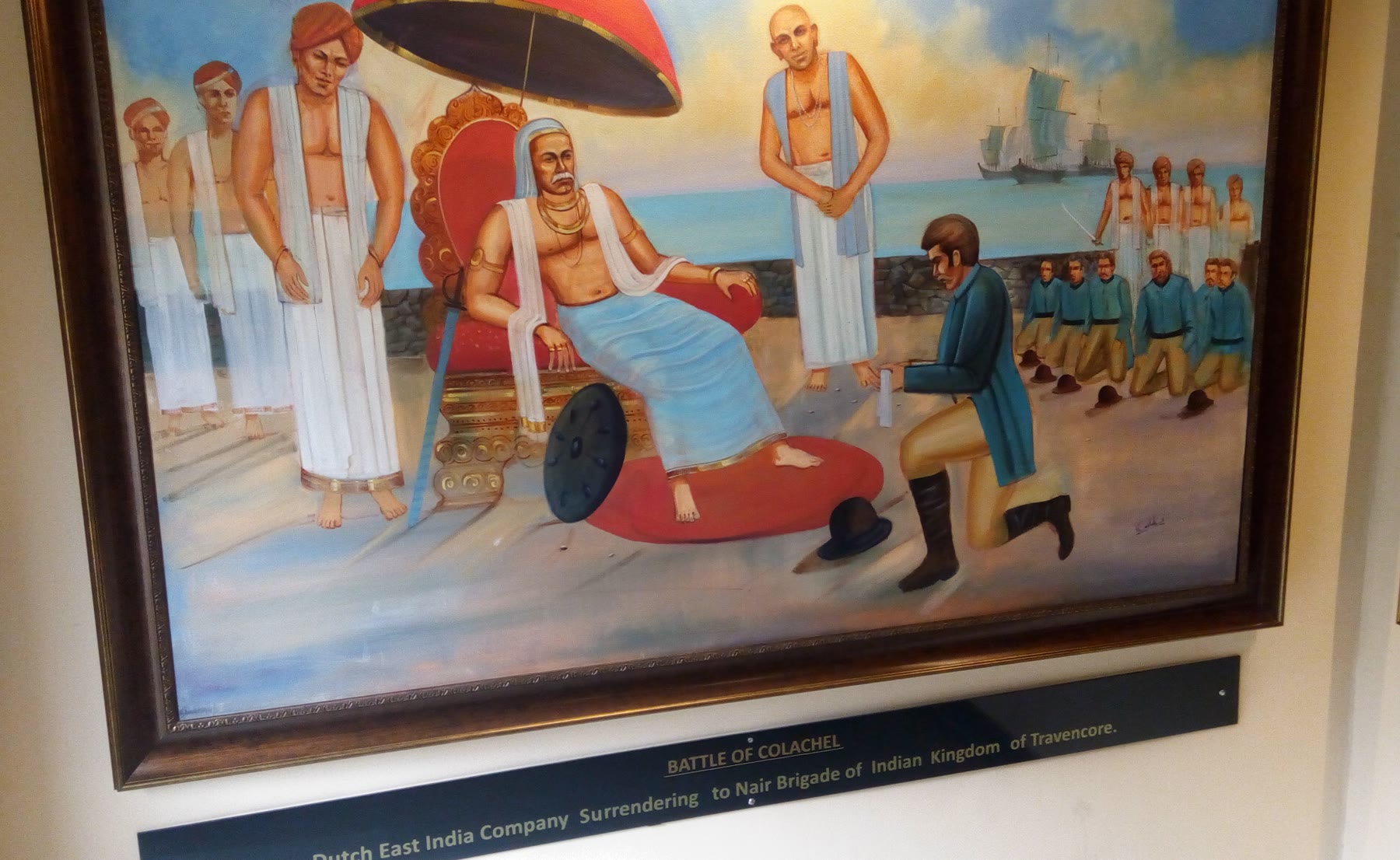
A European officer kneels before a seated Indian ruler, presenting surrender as an orderly ceremony. This photographed museum painting commemorates Travancore's defeat of the Dutch East India Company at Colachel in 1741. Its historical subject is identifiable, but the painter and painting date remain unverified. The picture opens onto a richer history of siege warfare, coastal communities, later military service, and the legends attached to a celebrated victory.
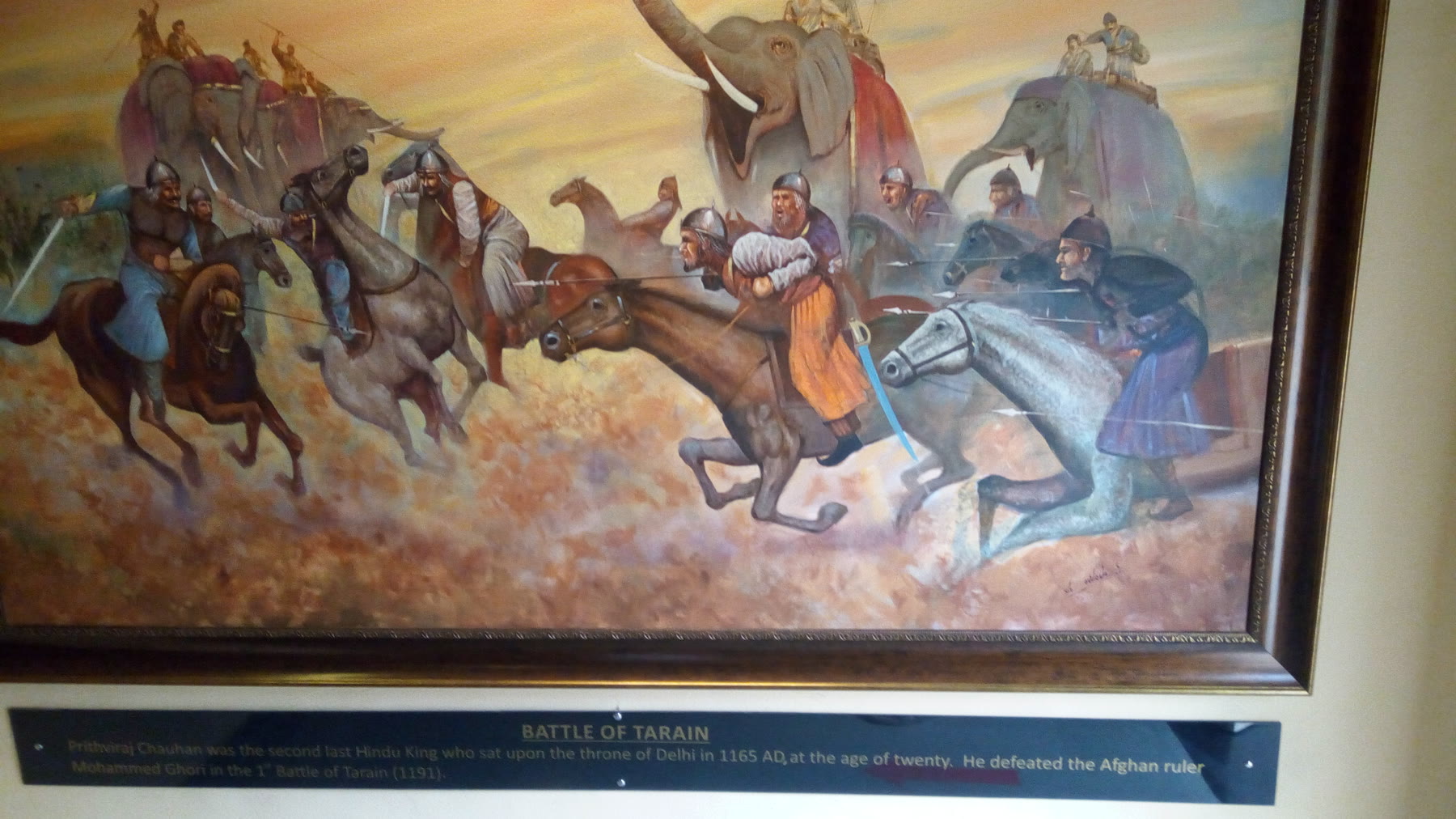
Mounted fighters charge beneath enormous elephants in a later representation of a medieval battle. The photographed museum label identifies Prithviraj Chauhan's victory in the first Battle of Tarain in 1191. The painting speaks to the event's place in military memory, while the painter, production date and material remain unresolved. Its historical subject is better documented than the history of the painting itself.
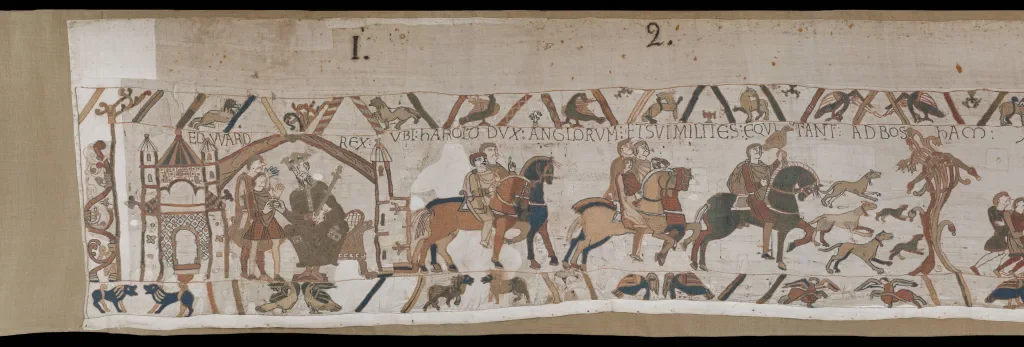
A king gives an audience, horsemen ride towards the sea, ships cross the Channel, and armies collide. The Bayeux Tapestry turns the conquest of England into a continuous embroidered narrative. Follow its full surviving length, then zoom in to see how thread, gesture and inscription carry the story.
We count article page loads to improve the archive, without a visitor tracking cookie. Essential storage supports your basket, delivery choice and site security. Stripe uses payment security storage when payment opens. Your notice and counting choices are remembered for one year.