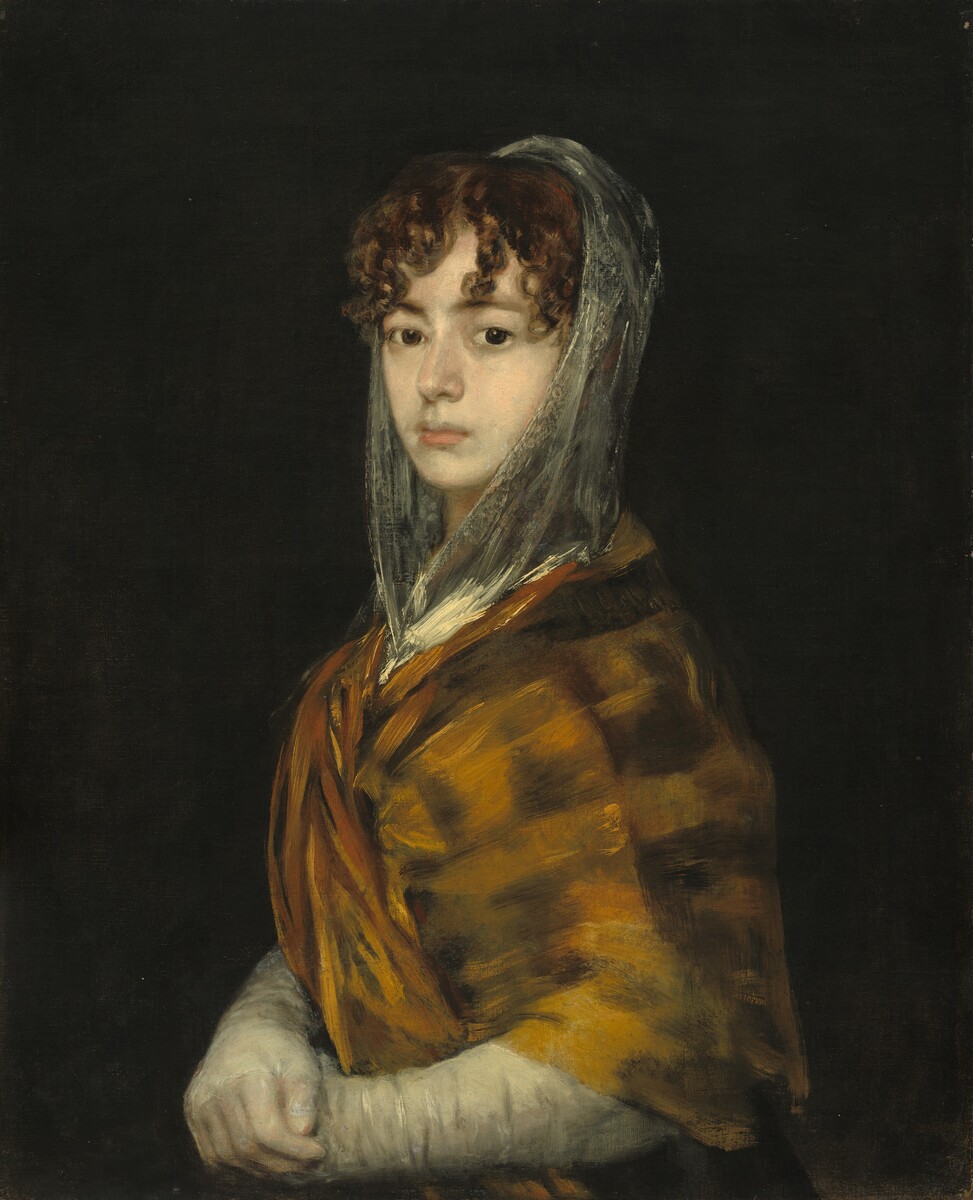
A half-length portrait of a young woman in Spanish dress, her direct gaze and clasped hands held within a sheer white mantilla. Goya painted her around 1806 to 1811, and the work is now in the National Gallery of Art.
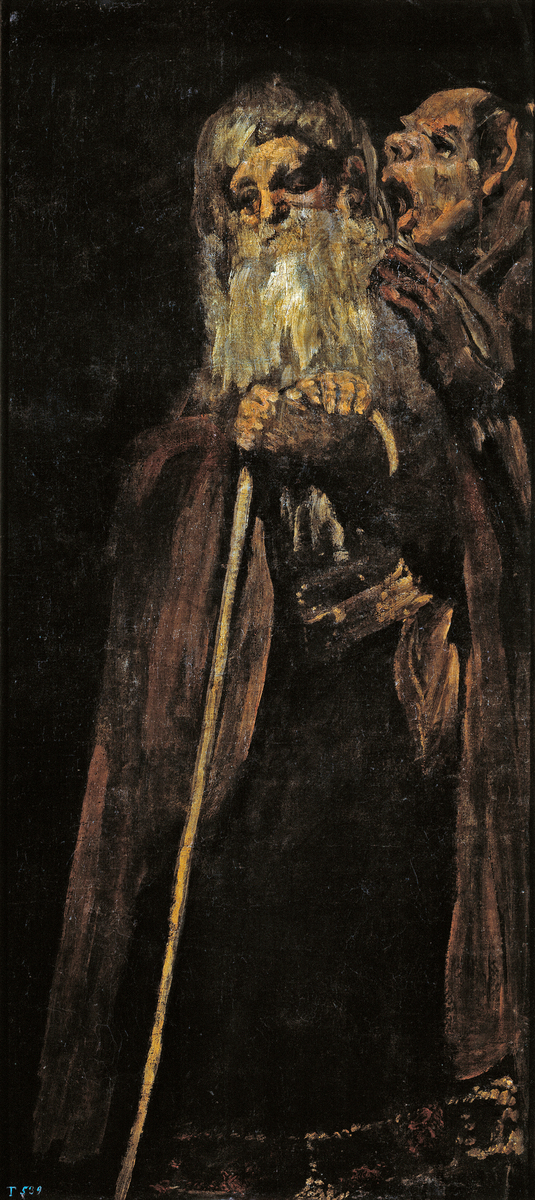
A late painting from Goya's Black Paintings, showing two elderly men in close conversation. The source record identifies the artist, date, and series but offers limited interpretation, so this account stays close to what can be seen and securely documented.
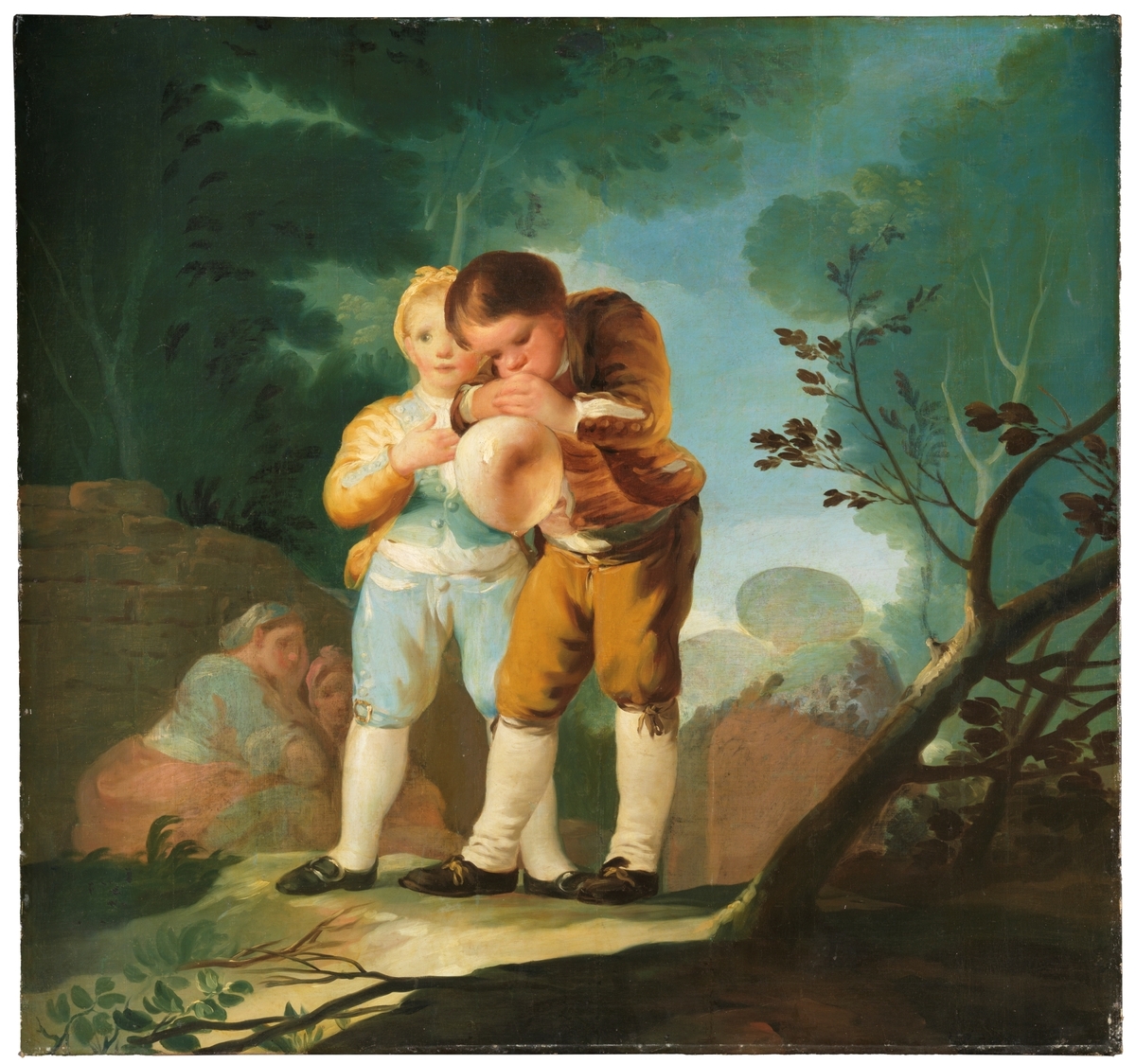
A close reading of Goya's 1778 painting of children inflating a bladder, made as a full-scale design for a tapestry. The account stays with what the supplied record establishes: the subject, the work's function as a tapestry cartoon, and the limits of the evidence about its meaning.
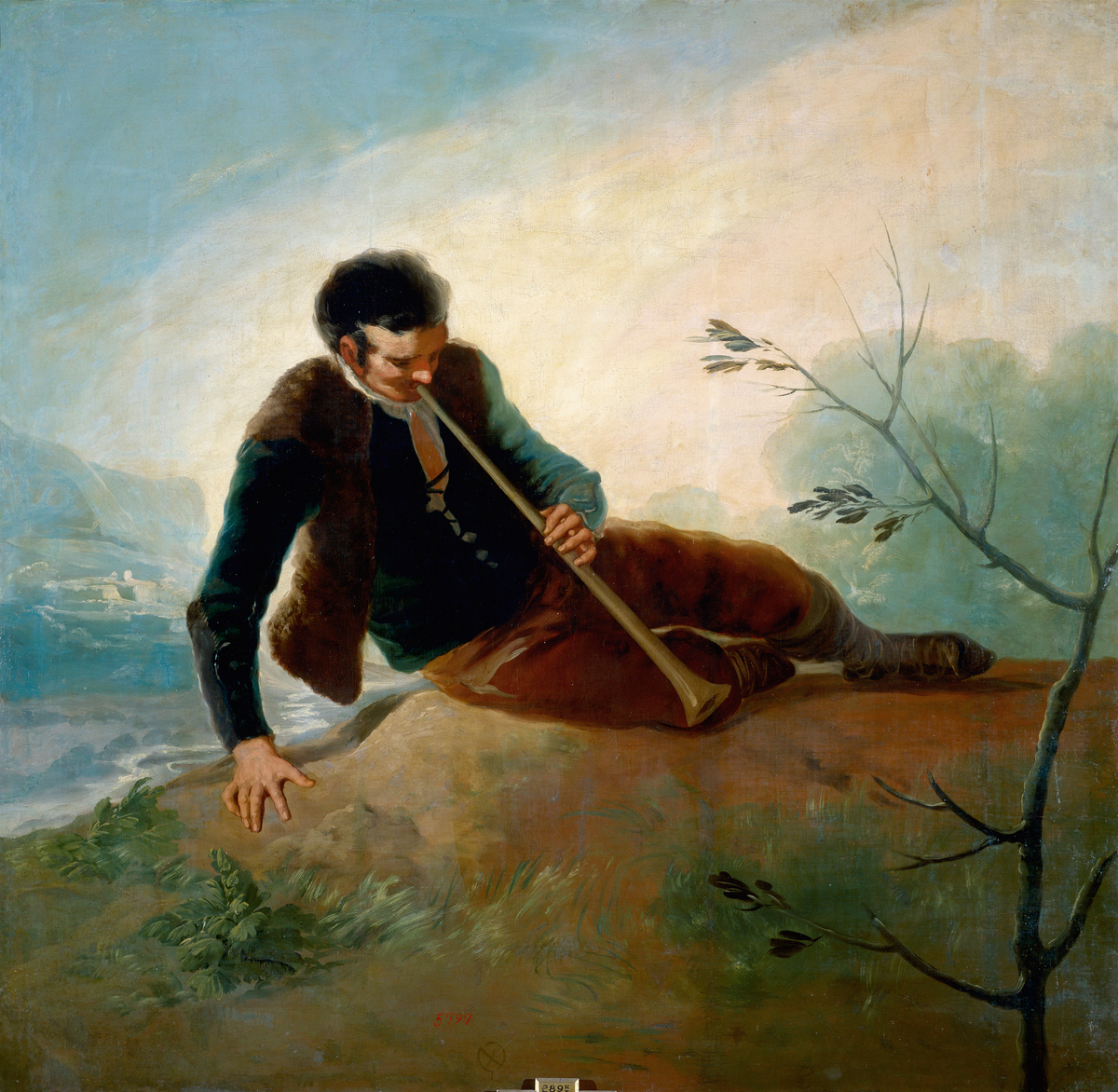
A seated shepherd raises a long woodwind instrument, the dulzaina, in a pastoral scene Goya painted in the 1780s. This short tour looks at what the painting shows and where it sits within Goya's work as a designer of tapestry cartoons, while being clear about what the supplied record does and does not establish.
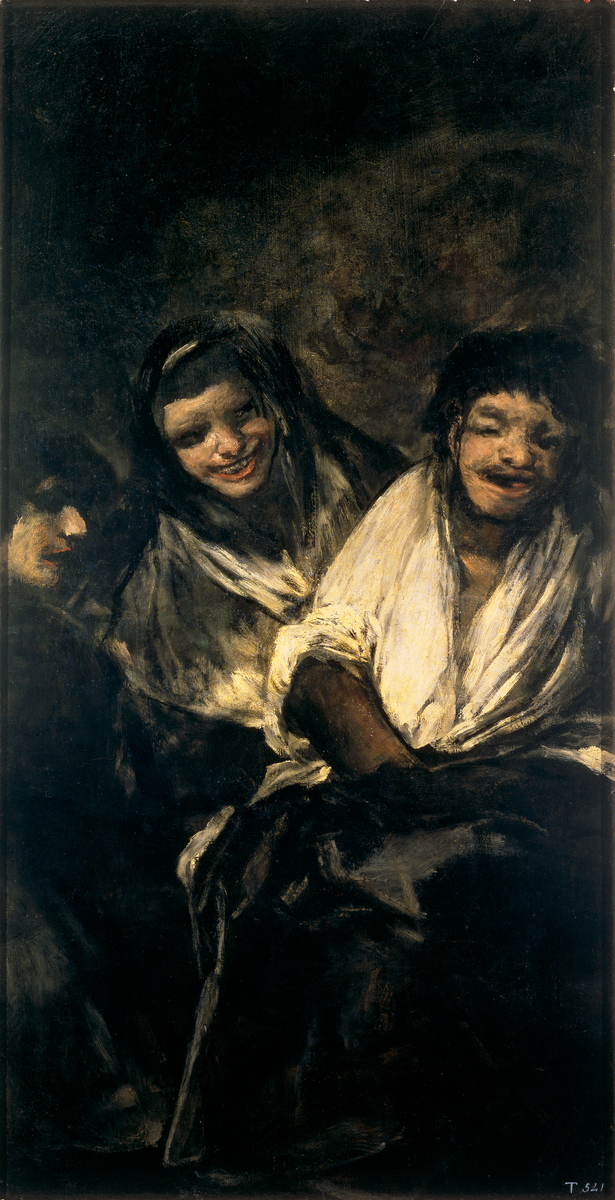
A short gallery visit to Goya's late painting of two women laughing at a man, part of the Black Paintings he made between 1819 and 1823. The record for this object establishes its subject, attribution, medium and series, but gives little interpretation, so this account stays close to what is actually documented.
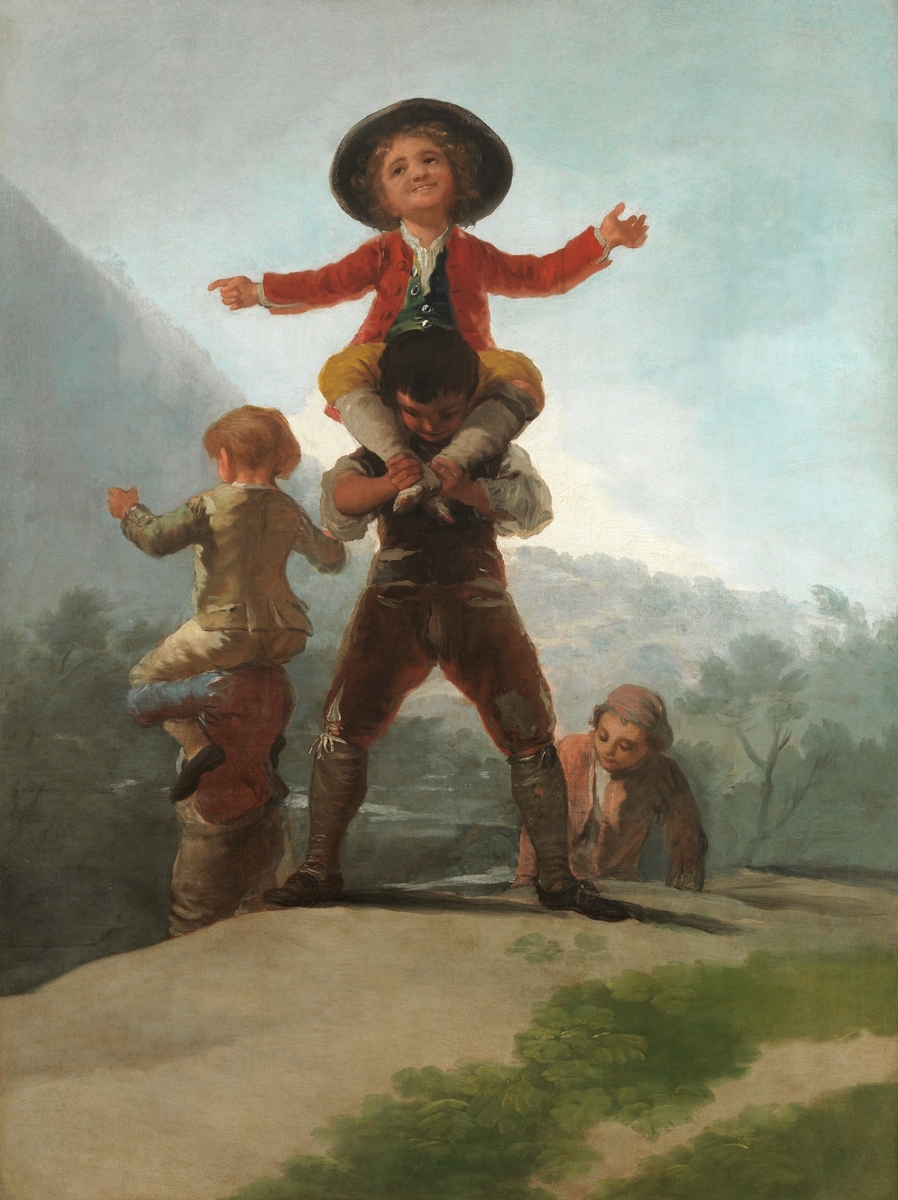
A boy balances on another child's shoulders in a rocky landscape, and a circle of boys turns the moment into a game. Goya painted this scene as a design for a tapestry, and the supplied record is modest: it establishes the subject, the medium, the date and the tapestry-cartoon function, but offers no interpretive essay. This visit stays close to those facts, reading only what the picture itself supports.
Advertising supports the archive. These preferences control aggregate page counting, reading activity and ad-delivery diagnostics. They use no visitor tracking cookie.