ArchiveVenus de Milo

Artwork record / 38 of 162

Venus de Milo by Maker unknown

Artist: Maker unknown

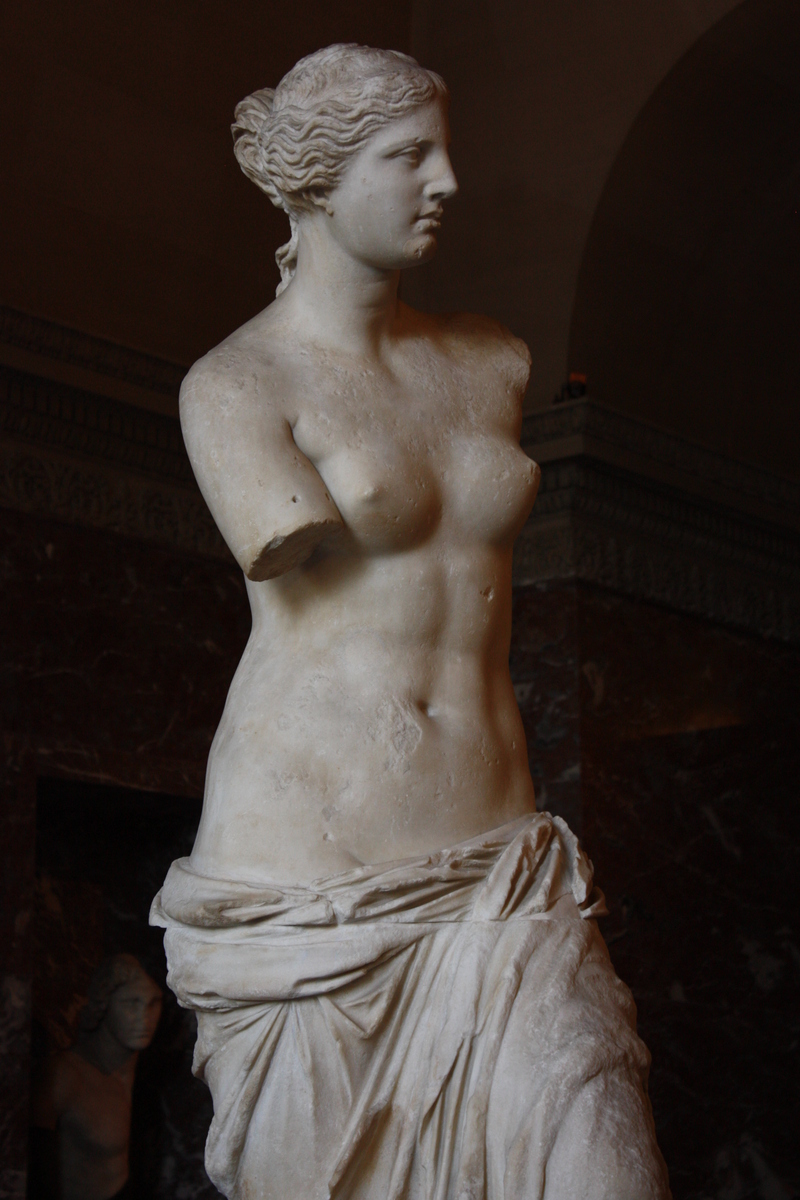
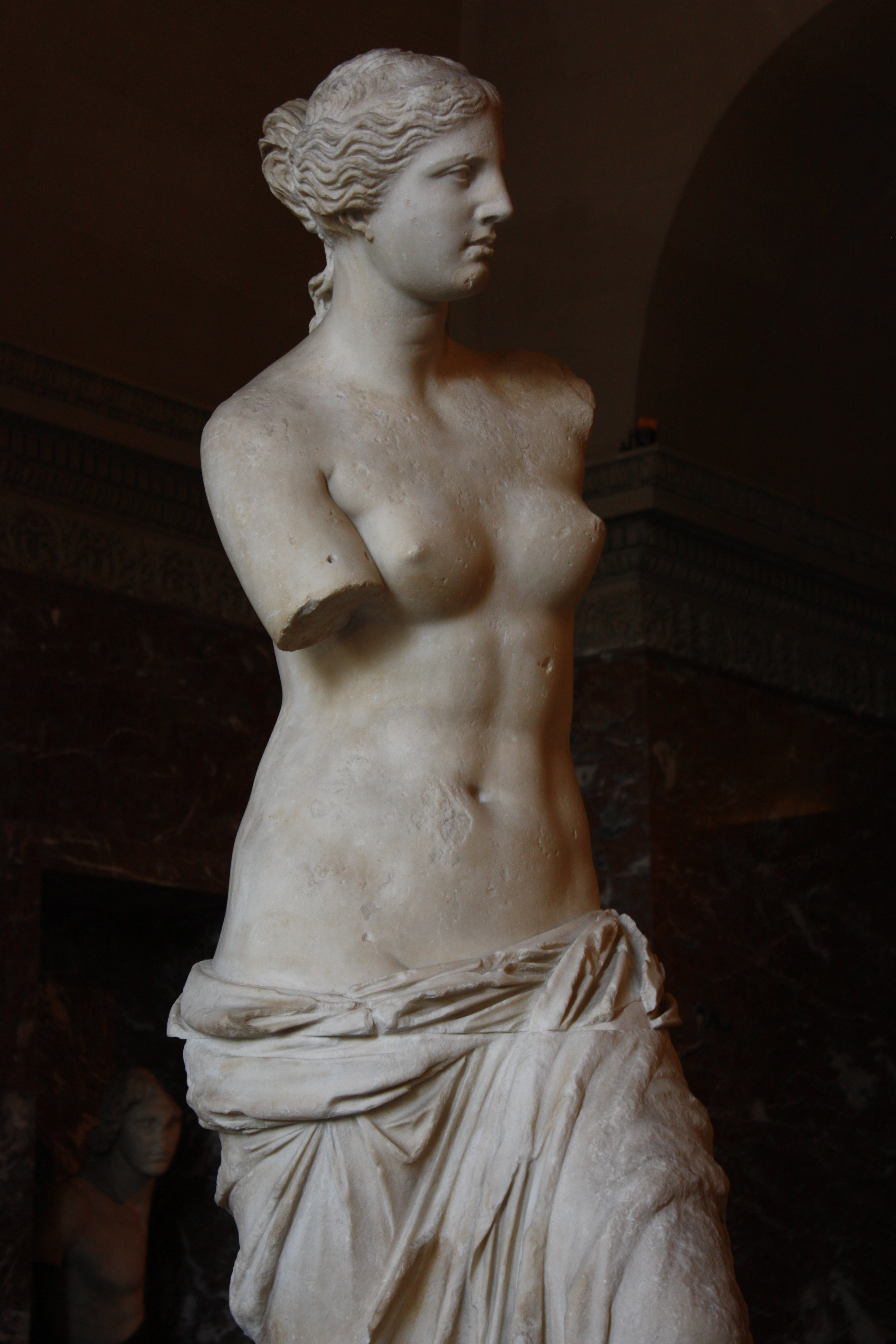
A gallery reading of the Venus de Milo as recorded in a 2013 photograph taken in the Louvre, Paris. The supplied evidence establishes the object's identity and its museum setting; it does not establish the maker, date, material or dimensions, so this account stays with what the photograph shows and what the record documents.

Read the story ↓ About the artist ↓ Research and record ↓ Literature and sources ↓ Listen to the article ↓
Article text for AI
Shop this artwork ↓ 0 visits
DateNot recorded in supplied sourcesCultureNot recorded in supplied sources PeriodNot recorded in supplied sourcesCurrent locationLouvre, Paris, France
Listen to the article
100%
Venus de Milo by Maker unknown
Loading full-resolution artwork…
Scroll to zoom · drag to pan · double-click to focus Pinch to zoom · drag to explore · double-tap to focus FIELD VIEW / 38
Tools & download
Pixel colour Select a pixel with the eyedropper
No pixel selected

Choose the eyedropper, then click or tap the image. Scroll to zoom for finer selection.

Add text

Hand to pan · Select to move text and drawings · Add as many texts as you like · Scroll to zoom

Venus de Milo: high-resolution image

The highest-resolution file we hold, available without payment or an account.2,848 × 4,272 pixels.

Download highest-resolution image

Details to notice

About 2 minutes to read
01

Sheared left shoulder

The sliced joint at the figure's left shoulder where the arm and part of the shoulder are missing, leaving a flat worked plane that reveals how the marble block was cut and reworked after discovery.

02

Broken right arm stump

The sharp break where the figure's right arm was severed high on the upper arm, exposing the raw marble core and rough tooling; this damage is central to the statue's celebrated fragmentary character.

03

Contoured torso and abdomen

The polished nude chest, breasts and softly modeled abdomen with navel and subtle muscular swellings, showing the sensuous carving and the slight forward twist of the body that give the figure its lifelike tilt.

Portrait unrecorded

About the makers

Maker unknown

Individual life dates unrecorded

Biographical details and a verified portrait have not yet been recorded for this attribution.

The research & record

Study the work.
Follow the evidence.

Find catalogue details, historical context, technical research and the literature behind this artwork.

Article text for AI
Open research text

The artwork record

Research catalogue

Catalogue information and detailed research, with references that link to the bibliography.

Updated .

Identity and catalogue

Link
Title
Venus de Milo(Tom King, 2013)
Artist or attribution
Maker unknown
Current collection or location
Louvre, Paris, France
Depicted subject
The supplied sources identify and depict the Venus de Milo, an ancient marble statue of a female figure, photographed in the Louvre in Paris. The exact date, medium, maker, and subject interpretation are not established by the supplied excerpts.
Date
Not recorded in supplied sources
Medium and support
Not recorded in supplied sources
Dimensions
Not recorded in supplied sources
Culture / place
Not recorded in supplied sources
Period
Not recorded in supplied sources
Catalogue identification

The source consulted for this account identifies the depicted artifact as the Venus de Milo. That identification is the one firm object-level claim the evidence carries: the record names the artifact, and nothing further about its production is asserted in the supplied excerpts. The same source places the work at the Louvre in Paris, France, so the identification and the present location are established together, while questions of origin remain outside what the evidence states.(Tom King, 2013, Structured data, depicts: Venus de Milo)

The supplied excerpts do not record the maker, date, medium, dimensions, or accession number of the Venus de Milo. That absence is itself part of the catalogue record. It means the object cannot here be assigned a sculptor, a carving date, a stone type, a measurement, or a museum inventory number, and any such attribution would have to come from sources not supplied. What the evidence distinguishes is the date of the photograph, 2 September 2013, from the date of the object, which is left unrecorded. The catalogue therefore separates two chronologies: the moment of photographic capture and the much earlier moment of the statue's making, which the evidence does not fix.(Tom King, 2013, Whole document)

The photographic record

Interpretation

Read together, the units define a narrow but useful evidentiary base. The object is identified as the Venus de Milo and located at the Louvre; the image is dated 2 September 2013 and credited to a named uploader with a stated license; and the object's maker, date, material, dimensions, and accession number are simply not in the record. Within a larger history of art and material culture, this asymmetry matters: the surviving documentation here documents modern photographic access to a celebrated ancient work far more fully than it documents the work's own creation, so the object's cultural presence in the present is better evidenced than its origins. Treating the gap as part of the honest account, rather than filling it from outside the evidence, keeps the identification secure and the attributional claims proportionate to what is actually recorded.(Tom King, 2013, Structured data, depicts: Venus de Milo; Whole document; File history and Structured data, author name string)

The supplied source identifies the depicted artifact as the Venus de Milo.(Tom King, 2013)

The supplied excerpts do not record the maker, date, medium, dimensions, or accession number of the Venus de Milo.(Tom King, 2013)

Subject and iconography

Link
The photograph as the primary visual document

Visual observation

The visual record under discussion is a photograph rather than the sculpture itself: the supplied image file is titled and described as Venus de Milo, Paris, and dated 2 September 2013. That title fixes the subject by the conventional name of the object and locates the view in Paris, but it is the record of a viewing occasion rather than a statement about the statue's making. The source identifies the depicted artifact as the Venus de Milo and records it at the Louvre in Paris, France. Read together, these details establish the identification of the figure and its present setting; they do not carry information about when, by whom, or in what material the sculpture was produced.(Tom King, 2013, Summary, Description)

The supplied image file is titled and described as Venus de Milo, Paris, dated 2 September 2013.(Tom King, 2013)

Materials and technique

Link
The photographic record

Interpretation

The supplied evidence for this object begins with a single image file rather than with the sculpture itself, and the file carries its own capture history. The photograph is titled and described as Venus de Milo, Paris, dated 2 September 2013, and was created by Wikimedia Commons user Tom King (T2King0), uploading it on 27 September 2013 under a Creative Commons Attribution ShareAlike 3.0 Unported license. The technical record attached to the file specifies capture with a Canon EOS 450D, an exposure time of 0.033333333333333 second, an f-number of 5.6, ISO speed 250, and a focal length of 49 millimetre. These values describe the circumstances of the photograph, not the sculpture: they establish a hand-held or at least non-institutional camera body, a moderately stopped-down aperture, a moderate sensitivity, and a standard-to-short-telephoto field of view. Read together, they indicate that this is a documentary photograph made by a visiting contributor rather than a measured, archival or scientific record of the object, which matters because the evidentiary weight of everything visible in the image depends on that distinction.(Tom King, 2013, Structured data; Summary, Description)

Visual observation

The same file page places the photograph in two categories, Front right views of the Venus de Milo and Venus de Milo with black background, and the source annotation confirms the file page shows the statue at the Louvre in Paris. The front right viewpoint and the dark background are therefore not incidental qualities of a casual snapshot but the catalogued, deliberate framing of the image: the angle presents the figure turned slightly, and the black ground isolates the lit surface from any museum context. This distinction between image and object is important for technical description, because the tonal separation and the light catching the surface in the photograph arise from the photographer's viewpoint and lighting choices, not from properties the evidence attributes to the sculpture's material or finish. The source also states that the supplied excerpts do not record the maker, date, medium, dimensions, or accession number of the Venus de Milo, so the file can be used to verify the object's identification and present location only, and the technical account must not slide from what the photograph shows to claims about how or when the statue was carved.(Tom King, 2013, Structured data; Summary, Description)

Technical examination

The image file records capture with a Canon EOS 450D, exposure time 0.033333333333333 second, f-number 5.6, ISO speed 250, and focal length 49 millimetre.(Tom King, 2013)

Provenance and ownership

Link
The Modern Record

The provenance documentation supplied for this file concerns the modern photographic record rather than the ancient object it depicts. The photograph of the Venus de Milo was created by Wikimedia Commons user Tom King, credited under the account name T2King0, and uploaded on 27 September 2013 under a Creative Commons Attribution ShareAlike 3.0 Unported license. That chain of custody is short and fully recorded: a named contributor, a stated upload date, and an explicit licensing instrument. It establishes the conditions under which the image entered the Commons repository and can be reused, nothing about the statue's own history of ownership.(Tom King, 2013, File history and Structured data, author name string)

Because the evidence does not record the maker, date, medium, dimensions, or accession number of the Venus de Milo, the statue's ownership before 2013 remains an unrecorded interval in this material. The supplied source places the object at the Louvre in Paris, which is a documented present location, not a documented acquisition history. The distinction matters for provenance research: an unrecorded interval is a gap in the surviving documentation, whereas a proven change of ownership requires a dated instrument, sale, or transfer. On the present evidence, no such instrument exists for the statue, and the account should say so rather than supply a sequence the sources do not support. The same file, through its categories, provides the only further documented classification: the photograph is grouped under Front right views of the Venus de Milo and Venus de Milo with black background, terms that describe the image's viewpoint and setting rather than the object's legal or institutional custody.(Tom King, 2013, File history and Structured data, author name string; Categories)

The photograph of the Venus de Milo was created by Wikimedia Commons user Tom King (T2King0) and uploaded on 27 September 2013 under a Creative Commons Attribution ShareAlike 3.0 Unported license.(Tom King, 2013)

Provenance timeline
  1. 27 September 2013

    A photograph of the Venus de Milo taken by Wikimedia Commons user Tom King (T2King0) was uploaded under a Creative Commons Attribution ShareAlike 3.0 Unported license.(Tom King, 2013, File history and Structured data, author name string)

Reception and literature

Link
Modern Photographic Reproduction

Visual observation

The reception history documented in the supplied evidence begins not with the statue's creation but with its modern photographic reproduction. The Commons file records a photograph made on 2 September 2013, titled and described simply as "Venus de Milo, Paris," which places the already-famous object in the Louvre. The file page itself is the primary vehicle of this stage of reception: it is a digital reproduction whose descriptive metadata, rather than any curatorial text, frames the statue for a global online audience. The image was created by Wikimedia Commons user Tom King (T2King0), who uploaded it on 27 September 2013 under a Creative Commons Attribution ShareAlike 3.0 Unported license. This licensing choice matters to reception history because it makes the photograph legally reusable and adaptable by others, extending the statue's circulation beyond the museum and beyond the photographer while the attribution requirement preserves King's role as the maker of this particular view.(Tom King, 2013, Categories; Summary, Description; File history and Structured data, author name string)

Interpretation

The Commons file places the photograph in two categories: "Front right views of the Venus de Milo" and "Venus de Milo with black background." These categories describe the photograph's format and viewpoint, not the sculpture's ancient display. They also show how a modern archive organizes reception: the same statue is indexed by angle and by visual presentation, so that a viewer browsing the category encounters the Venus de Milo as a set of repeatable photographic conventions. The "black background" category records a staging decision that isolates the pale figure and heightens the contrast of its surface, while the "front right" category records a viewing position relative to the statue. Together they demonstrate that by 2013 the statue's public image was being managed through categorized, searchable file metadata, a form of reception quite different from earlier museum display or print reproduction.(Tom King, 2013, Categories; Summary, Description)

The Limits of Photographic Evidence

Visual observation

The photographic record is deliberately narrow in what it establishes about the object itself. The image file is titled and described as "Venus de Milo, Paris" and dated 2 September 2013; it documents a particular 2013 visit and viewpoint rather than the statue's origin. The supplied excerpts do not record the maker, date, medium, dimensions, or accession number of the Venus de Milo, so the photograph cannot be used to date the carving or to describe its material. The Commons file does, however, record the capture conditions of the photograph: a Canon EOS 450D, exposure time 0.033333333333333 second, f-number 5.6, ISO speed 250, and focal length 49 millimetre. These technical details belong to the photograph's own making, not to the ancient sculpture, and they show how precisely a modern reception document can describe its own conditions while leaving the object's creation undocumented in this evidence set.(Tom King, 2013, Summary, Description; File history and Structured data, author name string; Categories)

The Commons file places the photograph in the categories Front right views of the Venus de Milo and Venus de Milo with black background.(Tom King, 2013)

Collection and display

Link
The photographic record and what it can establish

The evidence available for this section is a single photographic record rather than a catalogue entry or museum publication. A Wikimedia Commons file page presents a photograph whose title and description identify the subject as the Venus de Milo, and the same record states that the object is at the Louvre in Paris, France. The source is therefore a modern record of display: it establishes the identity of the object shown and the institution in which it stood when photographed, and nothing further about the object itself. The evidence explicitly notes that its excerpts do not record the maker, date, medium, dimensions, or accession number of the Venus de Milo, so those basic facts about the sculpture remain outside what this unit can support.(Tom King, 2013, Summary, Description: English: Lourve, Paris)

The Commons file documents its own making in some detail. The photograph was created by Wikimedia Commons user Tom King, credited as T2King0, and uploaded on 27 September 2013 under a Creative Commons Attribution ShareAlike 3.0 Unported license. The image file is titled and described as Venus de Milo, Paris, dated 2 September 2013, so the capture date and the upload date differ by several weeks. Technical metadata records the camera as a Canon EOS 450D, with an exposure time of 0.033333333333333 second, f-number 5.6, ISO speed 250, and a focal length of 49 millimetres. These details describe the conditions under which the photograph was produced, not the conditions under which the sculpture was made or displayed.(Tom King, 2013, Summary, Description: English: Lourve, Paris)

The file page places the photograph in two categories, Front right views of the Venus de Milo and Venus de Milo with black background. Those categories describe the photographic record: they fix the viewing angle and note the dark setting against which the figure appears. They do not establish anything about the object's original setting or its history of display. Read together with the camera settings and the stated date, they allow the photograph to be understood as a deliberate, dated front right view made in 2013, and they mark the limits of what the unit documents, which is the appearance of the object from one chosen position on one occasion.(Tom King, 2013, Summary, Description: English: Lourve, Paris)

The supplied source records the Venus de Milo at the Louvre in Paris, France.(Tom King, 2013)

Documented values and qualified estimates

Link
The evidentiary base

Interpretation

The supplied record for this object supports only a narrow set of claims, and the working valuation built on it must be read against that narrowness. The source identifies the depicted artifact as the Venus de Milo and records it at the Louvre in Paris, France, and the image file itself is titled and described as Venus de Milo, Paris, dated 2 September 2013. Beyond identity and present location, the excerpts do not record the maker, date, medium, dimensions, or accession number of the Venus de Milo. The Commons file is further placed in the categories Front right views of the Venus de Milo and Venus de Milo with black background, which describes the photographic record rather than the sculpture's production. Any statement about the object's value therefore has to begin from what the evidence does not contain.(Tom King, 2013)

The working estimate and its limits

The working insurance estimate recorded here is a range of US$500M to US$1.5B, entered as a working calculation generated 2026-10-16. Its stated methodology is a broad conservative working range generated for manual review. The document explicitly refuses the usual machinery of valuation: because the work is one of the most prominent ancient sculptures held in a major encyclopedic museum and is treated in the supplied sources as a unique cultural artifact rather than as a market commodity, a conventional comparable-sales or replacement-cost calculation is not supportable from the supplied material. The range is described as deliberately wide and low-confidence, intended only to bracket the order of magnitude for a hypothetical total-loss or institutional indemnity review by a qualified specialist, and it does not rely on comparable sales, private insurance records, or any unpublished valuation source. The qualification is stated plainly: this is a model-generated working insurance range for manual review only, not an official insurance value, appraisal, auction result, or sale price.(Tom King, 2013)

The document also notes that actual insurance values for objects of this status are typically handled through institutional indemnity, sovereign immunity, or bespoke risk-transfer agreements rather than open-market valuation. That observation explains why the figure functions here less as a price than as a placeholder for a category of risk that ordinary art-market instruments are not designed to carry. It is a claim about institutional practice, attributed to the valuation document, and it is the reason the range is presented as an order-of-magnitude bracket rather than a point estimate. Reading the two together, the calculation is best understood as a procedural artifact of the review process, not as evidence about the sculpture's market position.(Tom King, 2013)

Working estimate

Calculated working insurance estimate, not a sale price: Working insurance range: US$500M to US$1.5B Recorded date: Working calculation, generated 2026-10-16. Methodology: Broad conservative working range generated for manual review. The supplied excerpts identify the object as the Venus de Milo, an ancient marble statue of a female figure, photographed at the Louvre in Paris, France. The excerpts do not establish maker, date, medium, dimensions, accession information, acquisition history, or formal valuation data. Because the work is one of the most prominent ancient sculptures held in a major encyclopedic museum and is treated in the supplied sources as a unique cultural artifact rather than as a market commodity, a conventional comparable-sales or replacement-cost calculation is not supportable from the supplied material. The range is therefore deliberately wide and low-confidence, intended only to bracket the order of magnitude for a hypothetical total-loss or institutional indemnity review by a qualified specialist. It does not rely on comparable sales, private insurance records, or any unpublished valuation source. Qualification: This is a model-generated working insurance range for manual review only. It is not an official insurance value, appraisal, auction result, or sale price. The supplied sources confirm only the identity and present location of the object and do not provide sufficient information for a professional valuation. Actual insurance values for objects of this status are typically handled through institutional indemnity, sovereign immunity, or bespoke risk-transfer agreements rather than open-market valuation.(Tom King, 2013)

Further reading

Books for a closer look

Paid links. As an Amazon Associate I earn from qualifying purchases.

  • Cover of Disarmed: the story of the Venus de Milo
    Open Library

    Gregory Curtis, 2003

    Disarmed: the story of the Venus de Milo

    Alfred A. Knopf · 1st ed.

    Recorded under Gregory Curtis with the title Disarmed, this candidate carries explicit subject headings for the artwork and its setting: Venus de Milo, Aphrodite von Melos, Aphrodite (Greek deity), Musee du Louvre (Paris), Musee du Louvre, La Venus de Milo (sculpture), Ancient Marble sculpture, Greek Marble sculpture, and Sculpture en marbre grecque. Those subjects indicate an object specific study of the statue, its material and its museum context, making it directly pertinent to the named artwork rather than a broad artist survey. Note that this is a distinct catalogue record from the other Curtis entry, OL8362677M, which lists no subjects at all and therefore cannot be linked to the statue on the evidence recorded.

    ISBN 9780375415234

    Find book on Amazon.co.uk View reference
  • Cover of La Vénus de Milo : Un mythe
    Open Library

    Dimitri Salmon, 2000

    La Vénus de Milo : Un mythe

    Gallimard

    La Venus de Milo by Dimitri Salmon is a title wholly devoted to the named artwork, so it is an on topic candidate for the statue. The record lists no subjects, so relevance rests only on the title and author as recorded, without assuming anything about its contents or treatment.

    ISBN 9782070535316

    Find book on Amazon.co.uk View reference

Bibliography

Sources and further reading

References are arranged by author or organisation, with links to the original publications. Where no publication date is recorded, n.d. means no date.

Source notes updated .

  1. 03

    Book

    La Vénus de Milo : Un mythe. Gallimard.

    La Venus de Milo by Dimitri Salmon is a title wholly devoted to the named artwork, so it is an on topic candidate for the statue. The record lists no subjects, so relevance rests only on the title and author as recorded, without assuming anything about its contents or treatment.

    ISBN
    9782070535316
    Link to reference
    Citation text
  2. 02

    Book

    Disarmed: the story of the Venus de Milo. 1st ed. Alfred A. Knopf.

    Recorded under Gregory Curtis with the title Disarmed, this candidate carries explicit subject headings for the artwork and its setting: Venus de Milo, Aphrodite von Melos, Aphrodite (Greek deity), Musee du Louvre (Paris), Musee du Louvre, La Venus de Milo (sculpture), Ancient Marble sculpture, Greek Marble sculpture, and Sculpture en marbre grecque. Those subjects indicate an object specific study of the statue, its material and its museum context, making it directly pertinent to the named artwork rather than a broad artist survey. Note that this is a distinct catalogue record from the other Curtis entry, OL8362677M, which lists no subjects at all and therefore cannot be linked to the statue on the evidence recorded.

    ISBN
    9780375415234
    Link to reference
    Citation text
  3. 01

    Secondary · About this artwork

    Wikimedia Commons: Venus de Milo. File: Venus de Milo, Paris 2 September 2013 002.jpg. Wikimedia Commons.

    Wikimedia Commons file page with a photograph of the Venus de Milo at the Louvre, including uploader credit, licence, and camera metadata. Used here to verify the object identification and present location only.

    Language
    English
    Link to reference
    Citation text

Article text and sources · Reading and attribution

An unhandled error has occurred. Reload 🗙