The story About 4 minutes to read
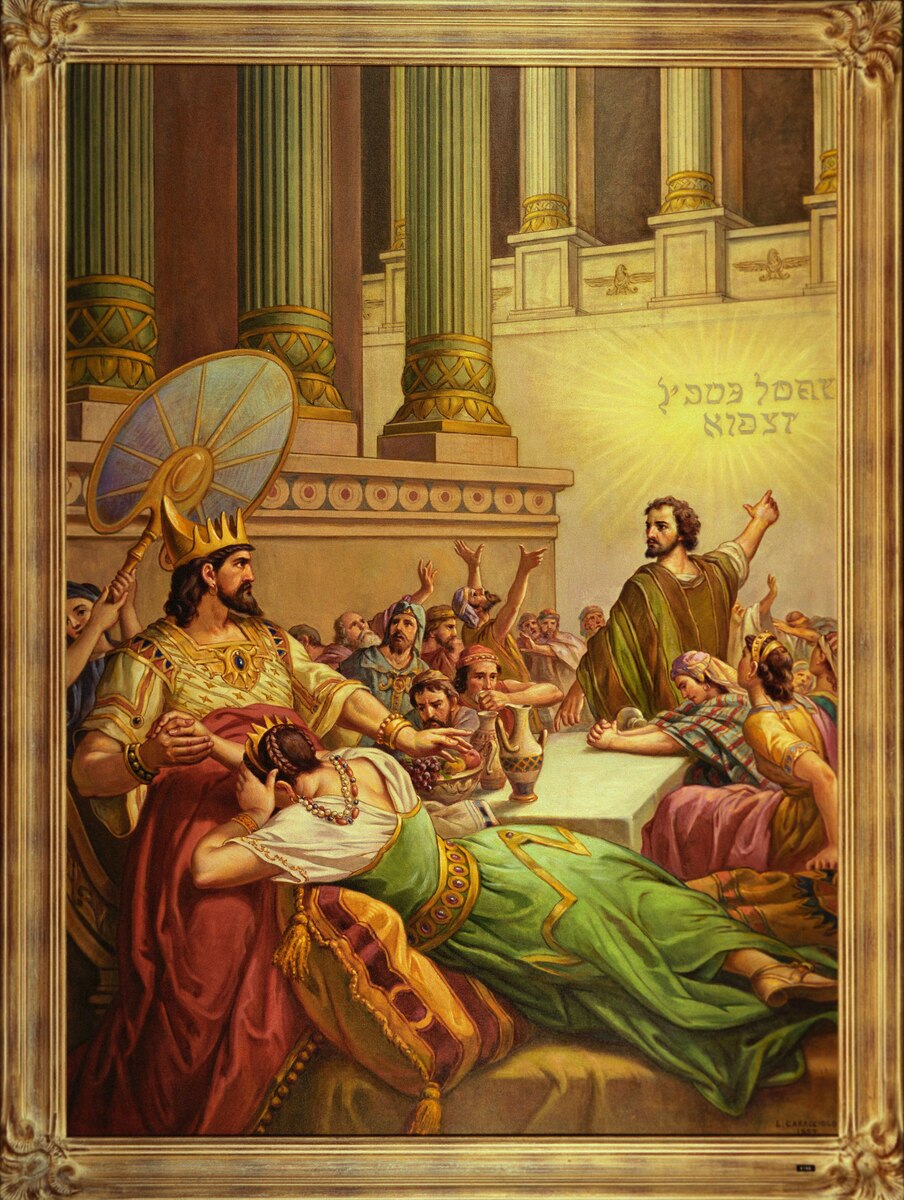
This painting shows the biblical feast of Belshazzar, the moment when handwriting appeared on the wall during the celebration.
The object record names the subject directly, and it identifies the work as Belshazzar's Feast by Caracciolo, L.
The record also describes this canvas as a copy after an original Belshazzar's Feast by Jose Ribera, so the attribution carries that qualification throughout.
The structured data for this file records that the image depicts Belshazzar and Belshazzar's Feast.
Beyond that identification of the figures and scene, the supplied record does not describe the composition, the arrangement of guests, the gestures, or the placement of the writing.
The feast is the setting for the episode the title points to, and the handwriting on the wall is the event the record names as the subject.
The record treats the scene as a known biblical narrative rather than a documented historical occasion, which fits how such subjects are usually described in catalogue entries.
The key qualification here is the word copy. The record presents this as Caracciolo's copy of an original by Ribera, not as Ribera's own hand.
That distinction matters when we look at the picture, because the composition, the light, and the handling of paint may reflect Ribera's invention as much as the copyist's work.
The object record also notes where the work now sits, in the Camp Chesterfield collection in Chesterfield, in the United States.
That information comes from the same file record and is one of the few facts supplied about the painting's present situation.
The file was contributed to Wikimedia Commons by Camp Chesterfield through a project facilitated by the Digital Public Library of America, working with its partner Indiana Memory.
That contribution history explains how the image reached the public record. It does not tell us where the painting was before it entered the Chesterfield collection.
So what we have is a painting of a well-known biblical scene, made as a copy after Ribera and recorded under Caracciolo's name.
The record confirms the title, the attribution as a copy, and the subject of the feast with the writing on the wall. It leaves the painting's own date, size, and details of its composition to be filled in elsewhere.