ArchiveVampire

Artwork record / 324 of 331

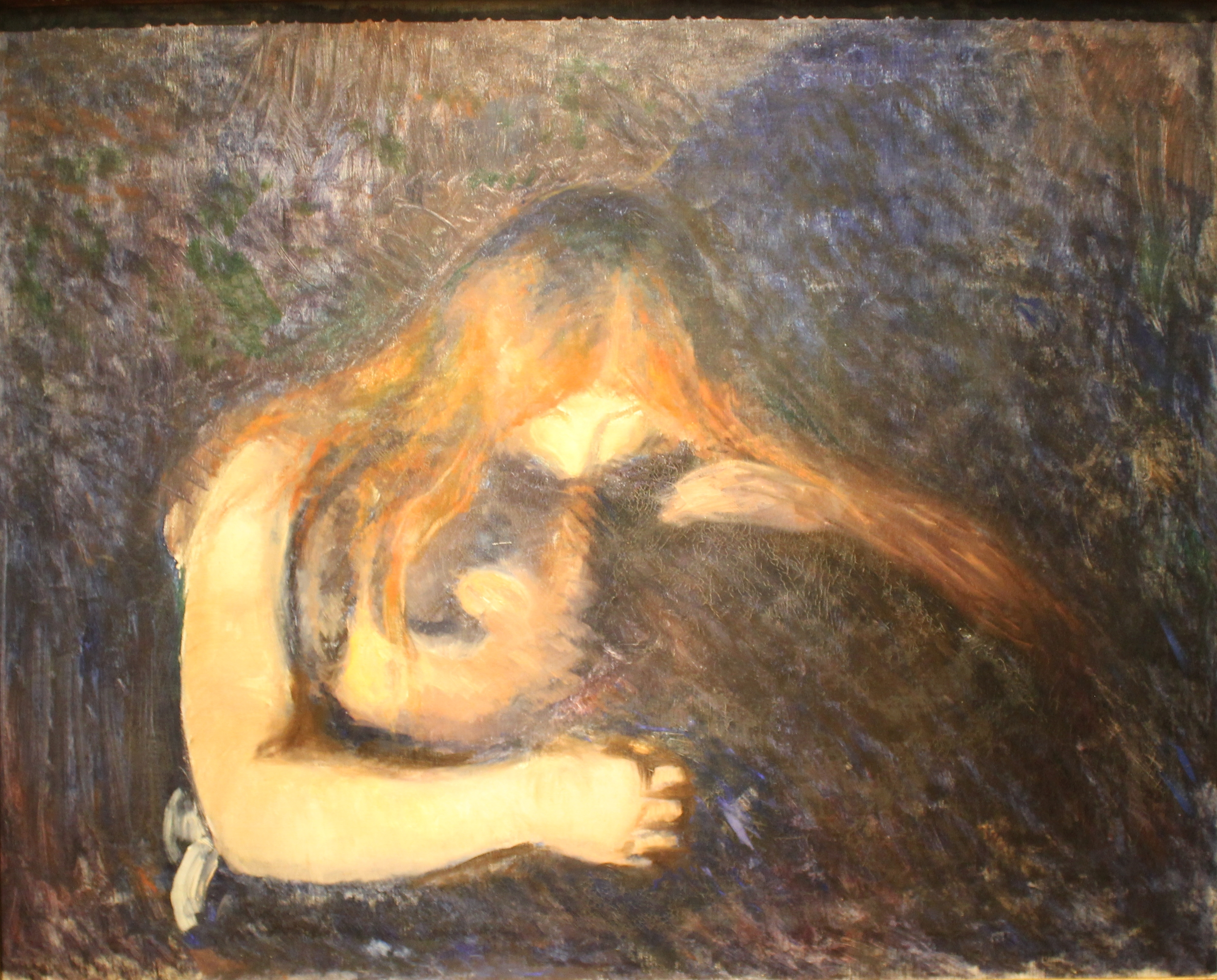
Vampire by Edvard Munch (1893)

Artist: Edvard Munch

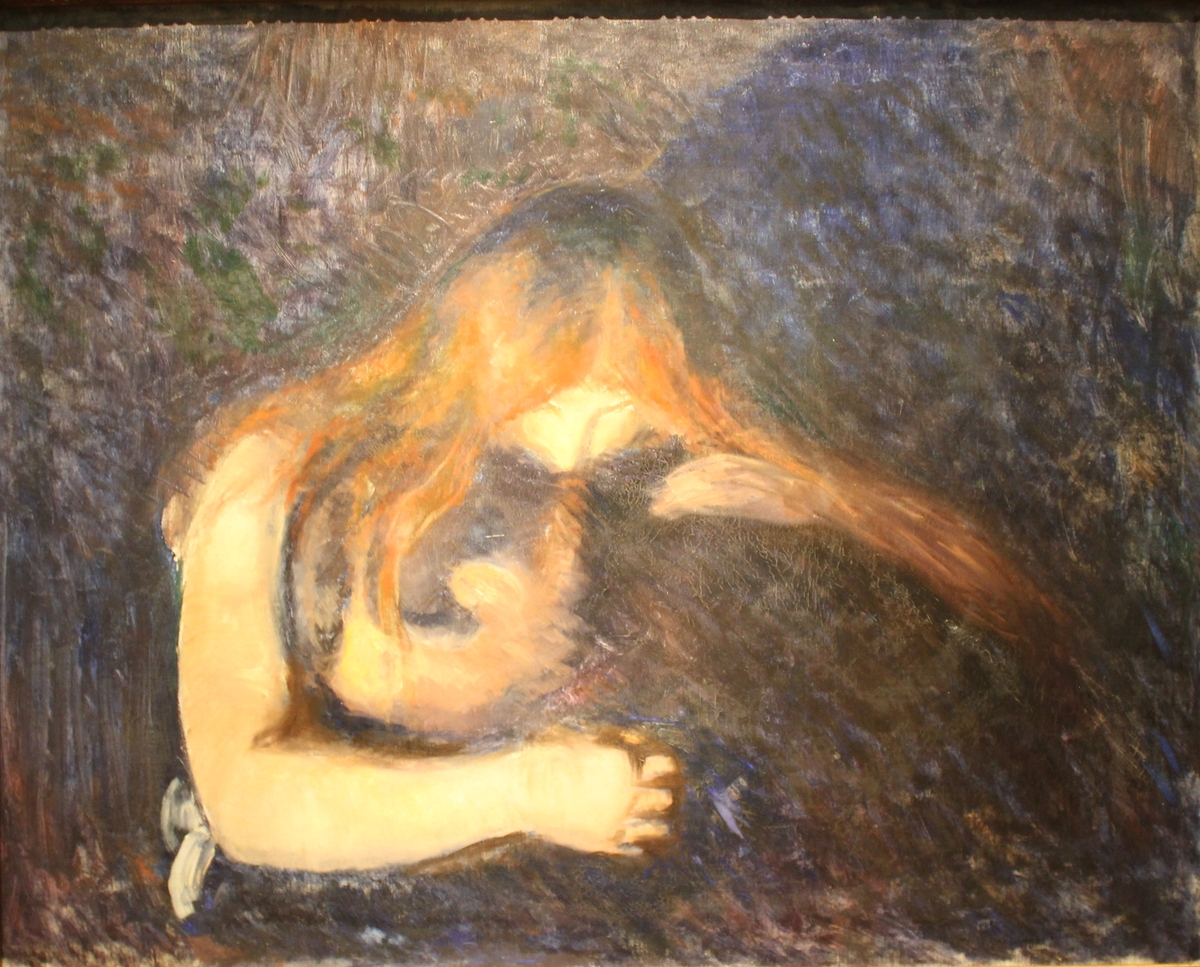
Edvard Munch's Vampire shows a woman with long red hair bending over a bowed figure, her face pressed to his neck as her arm holds him. This docent tour reads the painting's composition, its Symbolist context and the history recorded for this exact canvas, and it keeps observation, interpretation and documented history distinct.

Read the story ↓ About the artist ↓ Research and record ↓ Literature and sources ↓ Listen to the article ↓
Article text for AI
Shop this artwork ↓ 1 visit
Date1893CultureNorwegian PeriodSymbolismCurrent locationGothenburg Museum of Art, Gothenburg, Sweden
Listen to the article
100%
Vampire by Edvard Munch (1893)
Loading full-resolution artwork…
Scroll to zoom · drag to pan · double-click to focus Pinch to zoom · drag to explore · double-tap to focus FIELD VIEW / 324
Tools & download
Pixel colour Select a pixel with the eyedropper
No pixel selected

Choose the eyedropper, then click or tap the image. Scroll to zoom for finer selection.

Add text

Hand to pan · Select to move text and drawings · Add as many texts as you like · Scroll to zoom

Vampire: high-resolution image

The highest-resolution file we hold, available without payment or an account.2,865 × 2,308 pixels.

Download highest-resolution image

Details to notice

About 3 minutes to read
01

Churning background brushwork

The surrounding field of agitated blue-violet, green and brown strokes that whirls around the two bodies. The visible, nervous handling of paint is itself a subject here, generating the tension and instability that the figures embody.

02

Bowed figure receiving the embrace

The dark-clad figure whose lowered head and shoulder are buried beneath the woman's hair and arm. His yielding, almost submissive posture is what turns the scene into a study of surrender rather than simple affection.

03

Pale embracing arm

The luminous bare arm that curves from the lower left of the composition into a pale hand with visible fingers near the bottom center. The warmth and smooth modeling of this limb contrast sharply with the dark, rough surroundings and carry the embrace's physical tenderness.

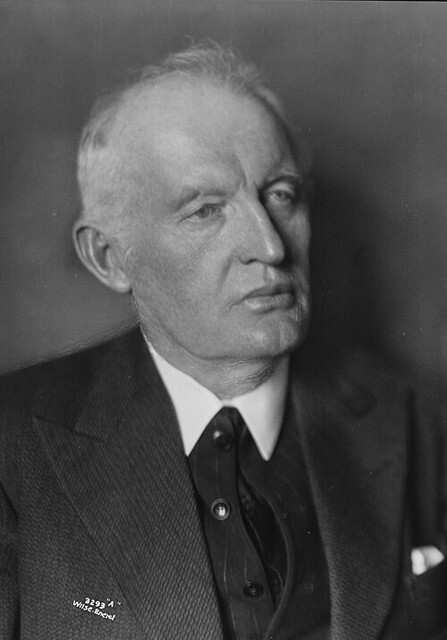
Artist portrait of Edvard Munch
Artist portrait Image credit

Anders Beer Wilse. Image source · Public domain

About the artist

Edvard Munch

1863 to 1944

Edvard Munch was a Norwegian painter (1863–1944). Their work is associated with Symbolism; Expressionism. Their recorded places of work include Oslo; Berlin; Åsgårdstrand.

Born
1863
Died
1944
Nationality
Norway
Birthplace
Ådalsbruk
Died in
Ekely; Oslo

The research & record

Study the work.
Follow the evidence.

Find catalogue details, historical context, technical research and the literature behind this artwork.

Article text for AI
Open research text

The artwork record

Research catalogue

Catalogue information and detailed research, with references that link to the bibliography.

Updated .

Identity and catalogue

Link
Artist or attribution
Edvard Munch
Object date
1893
Medium and support
Oil on canvas
Dimensions
80.5 x 100.5 cm(Andrzej Otrębski, 2017)
Current collection or location
Gothenburg Museum of Art, Gothenburg, Sweden(Andrzej Otrębski, 2017)
Movement or period
Symbolism
Country or culture
Norwegian
Depicted subject
A woman with long red hair bends her head over a bowed figure, her face pressed into his neck as her arm holds him, in a scene the painting titles Vampire.
Title variants
Vampyren(Andrzej Otrębski, 2017)
Accession number
GKM 0640
Support
Canvas
Catalogue identification

The object is catalogued as Vampire by Edvard Munch, dated 1893. The catalogue record also supplies a Swedish title, Vampyren, so the painting carries two recorded title forms in the documentation: an English title, Vampire, and a Swedish title, Vampyren. The catalogue title is the primary identification, and the date 1893 belongs to the work's making rather than to any later act of cataloguing or publication. The dimensions recorded in the supporting source metadata are 80.5 by 100.5 centimetres, executed in oil on canvas, but this section should distinguish carefully between the object's own date and the dates attached to later documents about it.(Andrzej Otrębski, 2017, Summary, Artist, Title, Date; Summary, Title)

Within the reference literature the painting has a fixed catalogue number. It is listed in Woll's Edvard Munch: Complete Paintings: Catalogue Raisonné as number 334. That number is an identifier assigned by a modern scholarly compilation, and it should not be confused with an inscription on the work or with an accession number. The catalogue raisonné entry establishes where the painting sits in the systematic record of Munch's paintings, while the title and date remain the descriptive facts that the entry records.(Andrzej Otrębski, 2017, Summary, References)

The artwork is Vampire by Edvard Munch, dated 1893.(Andrzej Otrębski, 2017)

Vampire is listed in Woll's Edvard Munch: Complete Paintings: Catalogue Raisonné as number 334.(Andrzej Otrębski, 2017)

The English title of the painting is Vampire and the Swedish title is Vampyren.(Andrzej Otrębski, 2017)

Materials and technique

Link
Documented support and medium

The evidence for this painting begins with a straightforward material description: Vampire is an oil on canvas measuring 80.5 by 100.5 centimetres. That description is documented in the Wikimedia Commons file page for a photographic reproduction of the work, credited in that metadata to Andrzej Otrębski, with the medium and dimensions recorded in the summary. Two things follow from this formulation. First, the picture is a portable easel painting rather than a mural or a work on panel or paper, so its surface is a woven textile prepared to receive oil paint. Second, the recorded measurements establish its proportions, slightly wider than it is tall, which is the physical format within which the close, locked-together composition has to operate. The same source further records that the work is by Edvard Munch and dated to 1893.(Andrzej Otrębski, 2017, Summary, Medium, Dimensions)

The medium statement has to be read together with the terms in which the same source identifies the object. The source describes Vampire as oil on canvas, dates it to 1893 and identifies it as a work by Edvard Munch, and it also classifies the picture as genre art, a scene of figures rather than a named historical or religious subject. It records the English title as Vampire and the Swedish title as Vampyren. Materially, this means the evidence establishes oil paint applied to a canvas support for a figure subject made in the early 1890s, and it establishes the titles under which the work has circulated. What the source does not provide is any technical examination of the canvas itself: there is no thread count, no tacking or stretcher description, no ground or priming analysis, no pigment identification, no description of brushwork, layering or any later intervention. Any statement about how the paint was actually manipulated would therefore go beyond what this evidence unit establishes, and the archive should keep the distinction between the documented medium and support and an unexamined account of technique.(Andrzej Otrębski, 2017, Summary, Medium, Dimensions)

Cataloguing, collection and display

Where the evidence goes beyond the material description, it is in the documentation of how the canvas has been identified, catalogued, collected and shown. The same source records that Vampire is held at the Gothenburg Museum of Art with accession number GKM 0640, that the painting was purchased with funds from I Lignell, H Wijk and C M Pineus in 1918, and that it is listed in Woll's Edvard Munch: Complete Paintings: Catalogue Raisonné as number 334. It also records that the work was included in the exhibition Munch 150 at the Munch Museum, held from 2 June 2013 to 13 October 2013. These items are what make the canvas a traceable physical object with a recorded place in a public collection, a documented acquisition, a numbered position in the catalogue raisonné and a recent exhibition history, rather than only a reproduction whose appearance can be described. The accession number in particular is the kind of identifier by which a specific canvas, as distinct from other versions or reproductions, can be referred to.(Andrzej Otrębski, 2017, Summary, Medium, Dimensions)

Interpretation

It is worth separating these several kinds of record carefully, because they carry different evidential weight. The identification of artist, date, medium, dimensions, title, collection and accession number are the documented particulars of the object. The 1918 purchase and its named funders are a provenance and acquisition note recorded in the source metadata. The catalogue raisonné number is a scholarly cataloguing reference, which establishes that the picture has been included in a complete catalogue of Munch's paintings rather than only described in exhibition or collection literature. The Munch 150 dates establish a display event a century after the painting's making and around the sesquicentenary of the artist's birth. None of these records comments on the condition of the paint surface, so the archive cannot use them to infer what the canvas looked like on any earlier occasion, only how the object has been identified and where it has been.(Andrzej Otrębski, 2017, Summary, Medium, Dimensions)

Taken together, the material and documentary evidence place this canvas within the history of late nineteenth-century oil painting on canvas and within Munch's production of figure subjects in the 1890s. The date of 1893 is the period in which the work was made, the canvas dimensions define its physical scale, the oil medium defines its material category, and the catalogue number, accession number and exhibition record attach it to a specific, locatable painting in the Gothenburg Museum of Art. What the evidence does not supply is the internal technical history of the object: nothing is recorded here about preparatory layers, pigments, drying, surface finish, retouching, lining or conservation, and nothing describes the marks of the brush. The account of materials and technique therefore rests on a documented medium and support plus a well-documented record of identification and custody, and the boundary between those documented facts and any reconstruction of making is exactly where this evidence stops.(Andrzej Otrębski, 2017, Summary, Medium, Dimensions)

Vampire is an oil on canvas measuring 80.5 by 100.5 centimetres.(Andrzej Otrębski, 2017)

Provenance and ownership

Link
Acquisition and Collection History

The documented provenance of this canvas begins with a purchase in 1918, made with funds supplied by I Lignell, H Wijk and C M Pineus. The evidence records the year of acquisition and the three named contributors of the purchase funds, and it identifies the work as the painting Vampire by Edvard Munch, dated 1893, today held at the Gothenburg Museum of Art under accession number GKM 0640. The purchase record does not name a seller, an intermediary, or any owner prior to 1918, so the earlier chain of possession remains unrecorded in the supplied evidence rather than merely disputed.(Andrzej Otrębski, 2017, Summary, Notes)

Interpretation

The 1918 acquisition is the only transfer documented in the evidence, and the object's current location and identifier are established together with it. The accession number GKM 0640 belongs to the Gothenburg Museum of Art, so the interval between the 1918 purchase and the painting's present institutional care is not described in the record at all: the evidence shows a funded purchase and a present holding, with no intervening sale, gift, loan or transfer stated. That gap is an absence of documentation, which should not be read as evidence that no change of ownership occurred, nor as proof that the 1918 buyers were acting on behalf of the museum that now holds the work.(Andrzej Otrębski, 2017, Summary, Notes)

The painting's identity within the scholarly literature rests on its place in Woll's Edvard Munch: Complete Paintings: Catalogue Raisonné, where it is listed as number 334. It is described in the same documentation as genre art, that is, a scene of figures rather than a named historical or religious subject, and it carries both an English title, Vampire, and a Swedish title, Vampyren. The work is an oil on canvas measuring 80.5 by 100.5 centimetres. These identification details anchor the provenance record to a specific, catalogued object rather than to a title or subject alone.(Andrzej Otrębski, 2017, Summary, Notes)

The painting was purchased with funds from I Lignell, H Wijk and C M Pineus in 1918.(Andrzej Otrębski, 2017)

Provenance timeline
  1. 1918

    The painting was purchased with funds from I Lignell, H Wijk and C M Pineus.(Andrzej Otrębski, 2017, Summary, Notes)

Exhibition history

Link

Vampire was included in the exhibition Munch 150 at the Munch Museum, 2 June 2013 to 13 October 2013.(Andrzej Otrębski, 2017)

Reception and literature

Link
Object and Collection Record

The canvas known in English as Vampire and in Swedish as Vampyren is an oil painting on canvas measuring 80.5 by 100.5 centimetres, made by Edvard Munch in 1893 and now held at the Gothenburg Museum of Art under accession number GKM 0640. It is classified as genre art, that is, a scene of figures rather than a named historical or religious subject, and it is listed in Woll's Edvard Munch: Complete Paintings: Catalogue Raisonné as number 334. These identifications matter for reception because they establish which physical object later stories, exhibitions and reproductions are actually about: a single, catalogued canvas with a fixed title, medium, measurement and inventory number, not a loose motif or a later reworking. The Swedish title also records the object's long institutional life in a Swedish collection, where the painting's name circulated in a language other than the one in which most of the international Munch literature was written.(Andrzej Otrębski, 2017, Summary, Exhibition history; Summary, Notes)

A Recorded Owner and Its Consequences

According to the collection record, the painting was purchased in 1918 with funds from I Lignell, H Wijk and C M Pineus. This is the earliest documented moment of reception supplied here, and its form is instructive. Reception did not begin with a dramatic event or a public controversy but with acquisition: three named funders made the canvas part of a public museum collection, which is what allowed it to be conserved, catalogued, titled in Swedish and eventually lent. The accession number GKM 0640 belongs to that same institutional process. Because the record establishes the purchase but not the earlier chain of owners or the circumstances in which the work left the artist's hands, the interval between the painting's making in 1893 and its acquisition in 1918 remains undocumented here; no provenance sequence should be inferred beyond what the purchase note states.(Andrzej Otrębski, 2017, Summary, Notes; Summary, Exhibition history)

Twentieth and Twenty-First Century Display

The documented exhibition history supplied here records that Vampire was included in Munch 150 at the Munch Museum, held from 2 June 2013 to 13 October 2013. The framing of that exhibition, as a commemoration of the sesquicentenary of the artist's birth, places the painting within a retrospective account of Munch's whole career rather than presenting it as an isolated curiosity, and it returned the canvas temporarily to the artist's own institutional home in Oslo from its Swedish collection. The evidence supplies no further exhibition entries, no installation details and no account of how the work was hung or received by visitors on that occasion, so the 2013 showing should be treated as one documented stage in a longer display history rather than as the whole of it. What the entry does establish is that by the twenty-first century the painting functioned as a loanable, exhibition-worthy work whose museum identity travelled with it.(Andrzej Otrębski, 2017, Summary, Exhibition history)

Reproduction and the Circulation of the Image

Interpretation

The same body of documentation that records the object's catalogue entry, collection and exhibition history also records its availability as a photographic reproduction: the file page carries an author credit to Andrzej Otrębski, a publication year of 2017 and a publication title derived from the artwork itself. That reproduction is the mechanism by which most viewers have encountered the painting, since a canvas in Gothenburg can only be seen in one place at a time, whereas the image circulates without limit. Reproduction also fixes the terms in which the work is discussed. The English and Swedish titles, the dimensions, the accession number, the catalogue raisonné number and the exhibition history all travel as metadata attached to the image, which means that the documentary apparatus and the picture are received together. This is a distinct stage of reception from the 1918 purchase or the 2013 exhibition, and it is the stage in which a museum object becomes a widely recognisable image.(Andrzej Otrębski, 2017, Summary, Exhibition history)

What the Record Does Not Supply

The documentary units gathered here are administrative and bibliographic in character. They establish identification, date, medium, dimensions, collection, accession number, a purchase with three named funders, a catalogue raisonné number, an exhibition entry and a reproduction credit. They do not supply early critical notices, historical biographies, literary readings, the artist's own statements, private correspondence, sales records before 1918, condition reports or treatment histories, and they do not describe how any individual viewer responded to the work. Consequently the successive stages of reception that this section can document are narrower than the phrase might suggest: acquisition in 1918, cataloguing and museum display, exhibition loan in 2013 and photographic reproduction. Where later meanings have accumulated around the picture, the supplied evidence does not attribute them to a named critic, historian or institution, and they should not be presented as documented reception. Preserving this gap is part of an accurate account, because it distinguishes what the record proves from what has simply been said often.(Andrzej Otrębski, 2017, Summary, Notes; Summary, Exhibition history)

Reception and the Work's Standing

Interpretation

Taken together, the documented stages show how an object's cultural position is built out of ordinary institutional acts. A purchase funded by three private donors in 1918 turned a painting made in 1893 into public property; a museum accession number gave it a permanent administrative identity in Swedish; a catalogue raisonné number fixed it within the scholarly corpus of Munch's paintings; a major anniversary exhibition in 2013 reinserted it into the narrative of the artist's career; and photographic reproduction, credited on a 2017 file, made the image available far beyond Gothenburg. These stages reinforce one another. Each time the painting is catalogued, lent or reproduced, the same identifying apparatus is repeated, and that repetition is what gives the work its familiarity as a named object rather than an anonymous image. The evidence does not rank these stages by importance or claim that any one of them explains the painting's reputation; it shows only that the canvas accumulated documented public roles over roughly a century, and that its meanings in those roles were carried as much by titles, numbers and labels as by the painted surface itself.(Andrzej Otrębski, 2017, Summary, Notes; Summary, Exhibition history)

Collection and display

Link
Collection and display

Vampire is classified as genre art and belongs to the collection of Gothenburg Museum of Art. That double designation, an object type and a collection, is the most basic frame within which every other claim about the canvas has to be read; it tells us that the painting is understood by its holding institution as a scene of figures rather than a depiction of a named historical, religious or mythological subject, and that its institutional home is a municipal art museum in Sweden rather than a private collection or a Munch-specific museum.(Andrzej Otrębski, 2017, Summary, Object type, Genre, Collection)

Within that collection the canvas is held under the accession number GKM 0640, the identifier by which the museum tracks the object through storage, loan and exhibition. The accession number matters for research because it is the anchor that connects the physical canvas to its documented records, and any future study of the work's condition, movement or display history would proceed from that number rather than from the title alone.(Andrzej Otrębski, 2017, Summary, Collection, Accession number)

Interpretation

Read together, these two units establish a specific and consequential situation: an 1893 Symbolist canvas by a Norwegian artist, classified as genre art, sits in a Swedish public collection under an accession number, not in the artist's own national museum. The pairing of object type and collection is therefore not incidental metadata but a statement about how the work has been institutionalised, as a figure painting absorbed into a general art museum's holdings rather than as a document of a national school.(Andrzej Otrębski, 2017, Summary, Collection, Accession number; Summary, Object type, Genre, Collection)

Vampire is held at Gothenburg Museum of Art, with accession number GKM 0640.(Andrzej Otrębski, 2017)

Vampire is classified as genre art and belongs to the collection of Gothenburg Museum of Art.(Andrzej Otrębski, 2017)

Documented values and qualified estimates

Link
Object and identification

Interpretation

The scholarly record for this canvas begins with its identification: Edvard Munch (1863-1944), Vampire, 1893, oil on canvas, 80.5 by 100.5 centimetres, held at the Gothenburg Museum of Art under accession GKM 0640. The work sits within Munch's Symbolist current of the 1890s and is catalogued as number 334 in Woll's Edvard Munch: Complete Paintings: Catalogue Raisonne. It also appears under the Swedish title Vampyren, and it is classified as genre art, meaning a scene of figures rather than a named historical or religious subject. That classification matters because the picture carries no identifying inscription; the English and Swedish titles, rather than any painted text, are what frame the encounter as predatory. The composition shows a woman with long red hair bending over a bowed figure, her face pressed into his neck and her arm holding him, an embrace whose close, charged contact the title recasts.(Andrzej Otrębski, 2017)

Visual description

Formal description in the published account notes how the two figures lock together. The woman's hair falls across the man's neck and shoulder, and her body covers his, so he reads almost as a support for her rather than a partner facing her; his head is bowed and his face hidden, which leaves the woman's action rather than his expression as the thing the picture asks the viewer to watch. Colour carries much of the weight: the red of her hair is the warmest, most saturated element and lands exactly where her face meets his neck, while the rest of the canvas stays muted and close in tone, placing the figures in a shallow space rather than a described room. The account treats this flatness as keeping attention on the contact between the two bodies, and observes that Munch shows no blood or violence, only an embrace that the naming turns into drama. These are described visual observations rather than technical findings, and they are presented here as the account's reading of the painted surface.(Andrzej Otrębski, 2017)

Collection history and exhibition record

The object has a recorded institutional history. It was bought in 1918 with funds from I Lignell, H Wijk and C M Pineus, and it now carries accession number GKM 0640 at the Gothenburg Museum of Art. It was shown in Munch 150 at the Munch Museum, 2 June 2013 to 13 October 2013, an exhibition marking the sesquicentenary of the artist's birth. The Wikimedia Commons file page documenting these details is attributed to Andrzej Otrębski and published in 2017, and it supplies the identification, date, medium, dimensions, collection, accession number, provenance note, catalogue raisonne reference, exhibition history and the English and Swedish titles. The supply record notes the page as only partially consulted, so the factual points it establishes are reported here at the level at which they were supplied.(Andrzej Otrębski, 2017)

Valuation record

A separate, clearly labelled unit in the record is a model-generated working insurance estimate dated 2026-10-16, giving an estimated value of US$50M to US$150M. Its stated methodology derives the range from the confirmed context already described: Munch's status in Symbolism, the painting's inclusion in Munch 150, and its long-term museum collection history. The unit states that because no public sale, auction result, or official insurance valuation was supplied, the figure is a broad conservative working estimate for manual review only, based on qualitative art-market prominence rather than comparable transactions, and intentionally wide to account for museum-held status, acquisition provenance, and the absence of a recent market benchmark. Its qualification is explicit: it is not an official insurance value, appraisal, auction result, or sale price; no comparable sales or private insurance records were used; the figures are illustrative and should be replaced or confirmed by a qualified appraiser or the holding institution before any insurance, loan, or coverage decision. Within this archive the figure stands as a documented working calculation of uncertain status, not as an established market value.(Andrzej Otrębski, 2017)

Working estimate

Calculated working insurance estimate, not a sale price: Estimated value: US$50M to US$150M Recorded date: Working calculation, generated 2026-10-16. Methodology: Working range derived from confirmed context: Edvard Munch (1863-1944), Vampire, 1893, oil on canvas, 80.5 x 100.5 cm, accession GKM 0640, Gothenburg Museum of Art, acquired 1918 with funds from I Lignell, H Wijk and C M Pineus, and cited in Woll's catalogue raisonne as no. 334. The range reflects Munch's canonical status in Symbolism, the painting's inclusion in the Munch 150 exhibition, and its long-term museum collection history. Because no public sale, auction result, or official insurance valuation was supplied, the figure is a broad conservative working estimate for manual review only, based on qualitative art-market prominence rather than comparable transactions. It is intentionally wide to account for museum-held status, acquisition provenance, and the absence of a recent market benchmark. Qualification: This is a model-generated working insurance range for manual review only. It is not an official insurance value, appraisal, auction result, or sale price. No comparable sales or private insurance records were used. The figures are illustrative and should be replaced or confirmed by a qualified appraiser or the holding institution before any insurance, loan, or coverage decision.(Andrzej Otrębski, 2017)

Further reading

Books for a closer look

Paid links. As an Amazon Associate I earn from qualifying purchases.

  • Cover of Edvard Munch: archetypes
    Open Library

    Edvard Munch et al., 2015

    Edvard Munch: archetypes

    Museo Thyssen-Bornemisza

    Exhibition catalogue with recorded subject 'Emotions in art' and Munch, Edvard, 1863-1944. Munch's Vampire is tied to emotional and symbolic themes, making an emotions-focused scholarly catalogue a relevant art-historical comparison resource. The record does not name Vampire specifically.

    ISBN 9788415113737

    Find book on Amazon.co.uk View reference
  • Cover of Edvard Munch: paintings, sketches, and studies
    Open Library

    Arne Eggum, 1984

    Edvard Munch: paintings, sketches, and studies

    C.N. Potter; Distributed by Crown Publishers · 1st American ed.

    Arne Eggum authored this Munch title with recorded subjects Exhibitions, Portraits, Criticism and interpretation, Artists and Munch, Edvard. Eggum is a documented Munch catalogue author, so this is a scholarly source for Munch criticism and interpretation. The record does not cite Vampire by name.

    ISBN 0517556170

    Find book on Amazon.co.uk View reference

Bibliography

Sources and further reading

References are arranged by author or organisation, with links to the original publications. Where no publication date is recorded, n.d. means no date.

Source notes updated .

  1. 01

    Secondary · About this artwork

    Wikimedia Commons: Vampire. File:Edvard Munch Vampire.jpg. Wikimedia Commons.

    Wikimedia Commons file page for a photographic reproduction of Edvard Munch's Vampire. It provides the object's identification, date, medium, dimensions, collection, accession number, provenance note, catalogue raisonné reference, exhibition history and title in English and Swedish.

    Language
    English
    Link to reference
    Citation text
  2. 03

    Book

    Edvard Munch: paintings, sketches, and studies. 1st American ed. C.N. Potter; Distributed by Crown Publishers.

    Arne Eggum authored this Munch title with recorded subjects Exhibitions, Portraits, Criticism and interpretation, Artists and Munch, Edvard. Eggum is a documented Munch catalogue author, so this is a scholarly source for Munch criticism and interpretation. The record does not cite Vampire by name.

    ISBN
    0517556170
    Link to reference
    Citation text
  3. 02

    Book

    Edvard Munch: archetypes. Museo Thyssen-Bornemisza.

    Exhibition catalogue with recorded subject 'Emotions in art' and Munch, Edvard, 1863-1944. Munch's Vampire is tied to emotional and symbolic themes, making an emotions-focused scholarly catalogue a relevant art-historical comparison resource. The record does not name Vampire specifically.

    ISBN
    9788415113737
    Link to reference
    Citation text

Article text and sources · Reading and attribution

An unhandled error has occurred. Reload 🗙