ArchiveTwo Human Beings. The Lonely Ones (The Reinhardt Frieze)

Artwork record / 244 of 331

Two Human Beings. The Lonely Ones (The Reinhardt Frieze) by Edvard Munch (1906 to 1907)

Artist: Edvard Munch

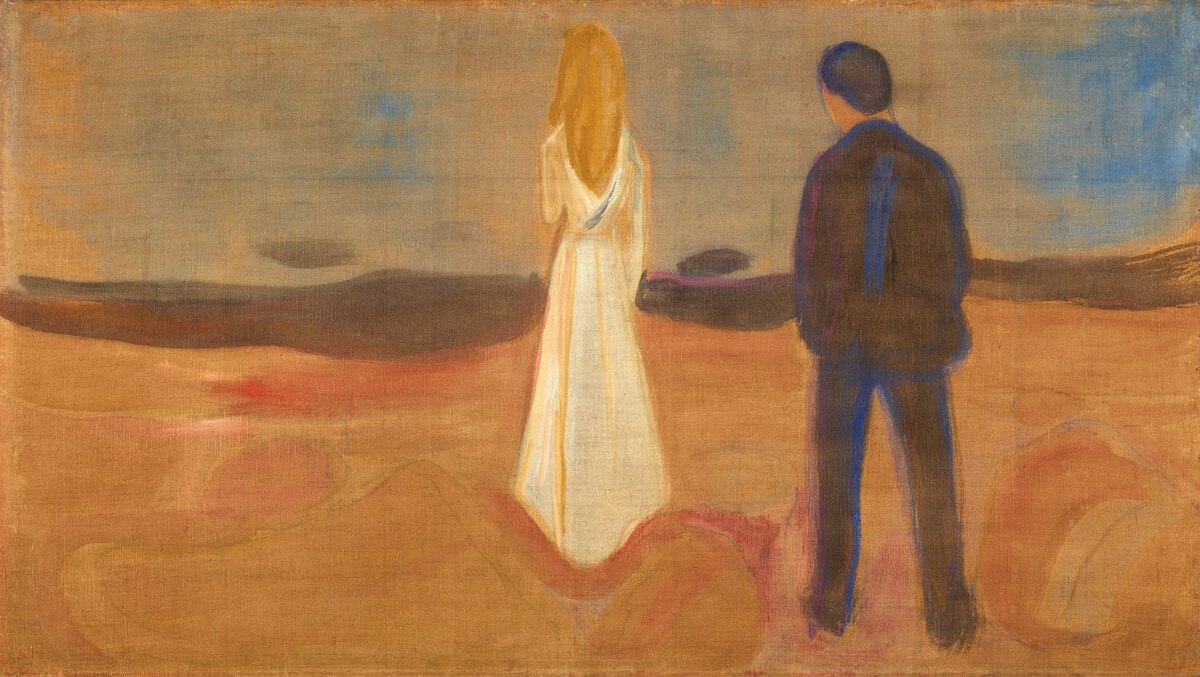
Edvard Munch painted two figures standing together on a bare shore, turned away from each other and out toward the water. The title calls them the lonely ones. Made in 1906 and 1907 as part of the Reinhardt Frieze, the canvas turns a shared place into an image of isolation, using the simplest means: two backs, a flat horizon, and very little else.

Read the story ↓ About the artist ↓ Research and record ↓ Literature and sources ↓ Listen to the article ↓
Article text for AI
Shop this artwork ↓ 0 visits
Date1906 to 1907CultureNorway PeriodEarly twentieth century modernism, Symbolism and ExpressionismCurrent locationAlte Nationalgalerie (per Wikimedia Commons collection data, with painting also linked to Museum Folkwang categories); city and country not verified by supplied excerpt
Listen to the article
100%
Two Human Beings. The Lonely Ones (The Reinhardt Frieze) by Edvard Munch (1906 to 1907)
Loading full-resolution artwork…
Scroll to zoom · drag to pan · double-click to focus Pinch to zoom · drag to explore · double-tap to focus FIELD VIEW / 244
Tools & download
Pixel colour Select a pixel with the eyedropper
No pixel selected

Choose the eyedropper, then click or tap the image. Scroll to zoom for finer selection.

Add text

Hand to pan · Select to move text and drawings · Add as many texts as you like · Scroll to zoom

Two Human Beings. The Lonely Ones (The Reinhardt Frieze): high-resolution image

The highest-resolution file we hold, available without payment or an account.3,840 × 2,165 pixels.

Download highest-resolution image

Details to notice

About 3 minutes to read
01

Reddish stains beneath the woman's hem

Loose red and pink smears of paint around and below the woman's dress, an area of expressive, unfinished brushwork that adds bodily warmth and turbulence to the bare ochre shore and anchors her figure in the ground.

02

Dark headland and shoreline

The low dark strip of coastal land and water cutting across the middle distance behind the figures, separating the brownish foreground from the pale sky and reinforcing the barren, closed horizon of the scene.

03

The two figures and the space between them

Both figures framed together, showing how they stand near one another yet face away and leave a clear interval of empty ground between them. This interval is the painting's central statement about loneliness shared between two people.

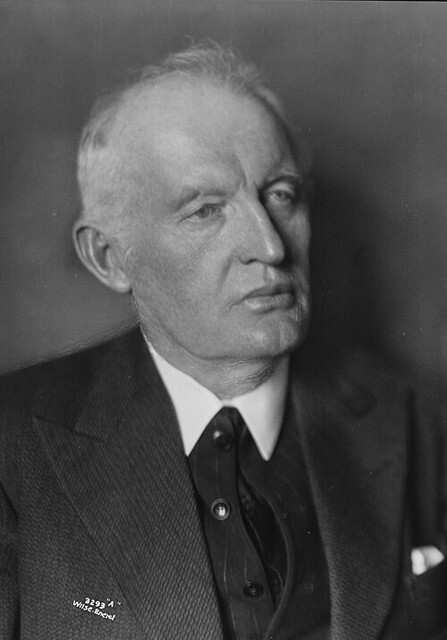
Artist portrait of Edvard Munch
Artist portrait Image credit

Anders Beer Wilse. Image source · Public domain

About the artist

Edvard Munch

1863 to 1944

Edvard Munch was a Norwegian painter (1863–1944). Their work is associated with Symbolism; Expressionism. Their recorded places of work include Oslo; Berlin; Åsgårdstrand.

Born
1863
Died
1944
Nationality
Norway
Birthplace
Ådalsbruk
Died in
Ekely; Oslo

The research & record

Study the work.
Follow the evidence.

Find catalogue details, historical context, technical research and the literature behind this artwork.

Article text for AI
Open research text

The artwork record

Research catalogue

Catalogue information and detailed research, with references that link to the bibliography.

Updated .

Identity and catalogue

Link
Title
Two Human Beings. The Lonely Ones (The Reinhardt Frieze)
Artist or attribution
Edvard Munch(Wikimedia Commons: The Frieze of Life, n.d.)
Medium and support
Tempera on canvas(Wikimedia Commons: The Frieze of Life, n.d.)
Dimensions
Height 89.5 cm (35.2 in); width 159.5 cm (62.7 in)(Wikimedia Commons: The Frieze of Life, n.d.)
Current collection or location
Alte Nationalgalerie (per Wikimedia Commons collection data, with painting also linked to Museum Folkwang categories); city and country not verified by supplied excerpt(Wikimedia Commons: The Frieze of Life, n.d.)
Movement or period
Early twentieth century modernism, Symbolism and Expressionism
Country or culture
Norway
Depicted subject
Two human figures stand near one another on a bare coastal shore, turned away from each other and facing out toward the water and sky. The painted motif, made in 1906 to 1907 as part of the Reinhardt Frieze, presents the isolation of two people together; the title names them as the lonely ones.
Catalogue identity

The supplied file record names Edvard Munch (1863 to 1944), the Norwegian painter and printmaker, as the artist of this work. The record dates the painting from 1906 until 1907, so the file gives a two-year span rather than a single year of completion, and the catalogue attribution and the object date are distinct pieces of information: the artist line identifies Munch, while the date field places the making of the work across 1906 and 1907. The recorded dimensions are 89.5 cm in height and 159.5 cm in width, a markedly horizontal format in which the width is close to twice the height. That proportion is the only physical measurement the supplied excerpt establishes for the object, and it is consistent with the file's classification of the work within a group recorded as a frieze.(Wikimedia Commons: The Frieze of Life, n.d., Summary, Artist field; Date field; Dimensions field; Series title field and categories)

The work is catalogued under the German title Zwei Menschen. Die Einsamen (Reinhardt-Fries), with English, French and Norwegian variants recorded as Two Human Beings. The Lonely Ones (The Reinhardt Frieze), Deux Êtres humains. Les Solitaires (Frise Reinhardt) and To mennesker. De ensomme (Reinhardt-frisen). The multilingual title variants are part of the cataloguing record rather than evidence of separate works: each version preserves the same pairing of two beings with the qualifier of loneliness, and each attaches the motif to the Reinhardt Frieze. The represented subject, recorded as the depicted item, is Two Human Beings. The Lonely Ones (The Reinhardt Frieze), listed in the file as the main subject statement. The work belongs to a group recorded as the Reinhardt Frieze, and the series title recorded for the motif is Two Human Beings. The Lonely Ones, so the file carries both an object-level title and a series-level title for the same motif. In this record, therefore, the frieze designation is not simply a stylistic description; it is embedded in the title itself, in parentheses in every European language variant the file preserves.(Wikimedia Commons: The Frieze of Life, n.d., Title field; Structured data, main subject statement; Series title field and categories)

Record and rights

Interpretation

The supplied evidence establishes the artist, the title and its European variants, the 1906 to 1907 date range, the subject statement, the series title, the dimensions and a public domain copyright determination. It does not establish other categories of information that a full catalogue entry would often carry. The file supplies no curatorial essay, provenance history, exhibition history, condition report, treatment record, or reception account for this exact work beyond the catalogue fields listed here. The consultation status is recorded as partial, since only the supplied excerpt of the source was available. These qualifications matter for how the identity of the object should be stated: the absence of provenance and exhibition data in the file is a limit of the supplied record, not a claim that such histories do not exist, and the object date of 1906 to 1907 should not be confused with the much later dates at which the file itself was compiled or its copyright status determined. What the surviving catalogue fields do establish is a coherent core for the work: Munch, the lonely two, the frieze group, and a wide horizontal canvas.(Wikimedia Commons: The Frieze of Life, n.d., Summary, Artist field; Title field; Date field; Dimensions field; Structured data, main subject statement; Credit line and copyright status statements)

The supplied file record names Edvard Munch (1863 to 1944), the Norwegian painter and printmaker, as the artist of this work.(Wikimedia Commons: The Frieze of Life, n.d.)

The work carries the German title Zwei Menschen. Die Einsamen (Reinhardt-Fries), with English, French and Norwegian variants recorded as Two Human Beings. The Lonely Ones (The Reinhardt Frieze), Deux Êtres humains. Les Solitaires (Frise Reinhardt) and To mennesker. De ensomme (Reinhardt-frisen).(Wikimedia Commons: The Frieze of Life, n.d.)

The file record dates the painting from 1906 until 1907.(Wikimedia Commons: The Frieze of Life, n.d.)

The recorded dimensions are 89.5 cm in height and 159.5 cm in width.(Wikimedia Commons: The Frieze of Life, n.d.)

The represented subject, recorded as the depicted item, is Two Human Beings. The Lonely ones (The Reinhardt Frieze), listed as the main subject of the file.(Wikimedia Commons: The Frieze of Life, n.d.)

Historical context

Link
The documentary record

The painting entered the archival record through a Wikimedia Commons file that supplies its basic catalogue fields and little else. It names Edvard Munch (1863 to 1944), the Norwegian painter and printmaker, as the artist, and dates the work from 1906 until 1907. The medium is recorded as tempera, and the file sits in the category of twentieth-century tempera on canvas paintings, so canvas is the stated support. The recorded dimensions are 89.5 cm in height and 159.5 cm in width, a strongly horizontal format. The file record lists the collection as Alte Nationalgalerie while also categorising the file among Museum Folkwang collection pages, so the object record leaves two institutional names in play, and the excerpt does not verify a single present display location, city or country. Beyond the catalogue fields listed, the file supplies no curatorial essay, provenance history, exhibition history, condition report, treatment record or reception account for this exact work. This account therefore rests on a narrow documentary base and should be read as a description of what the record states, not as a settled museum history.(Wikimedia Commons: The Frieze of Life, n.d., Series title field and categories; Credit line and copyright status statements)

The work belongs to a group recorded as the Reinhardt Frieze, and the series title recorded for the motif is Two Human Beings. The Lonely Ones. The file record also carries the German title Zwei Menschen. Die Einsamen (Reinhardt-Fries), with English, French and Norwegian variants recorded as Two Human Beings. The Lonely Ones (The Reinhardt Frieze), Deux Êtres humains. Les Solitaires (Frise Reinhardt) and To mennesker. De ensomme (Reinhardt-frisen). Each variant keeps the same pairing of two beings and loneliness, and each attaches the work to the frieze. The represented subject, recorded as the depicted item, is likewise Two Human Beings. The Lonely ones (The Reinhardt Frieze), listed as the main subject of the file. These titles and series assignments are the record's own categories; they establish how the work is catalogued rather than why it was made or how it was first displayed. The supplied evidence supports the title variants, the artist, the date range, the medium, the dimensions and the series title, and no more.(Wikimedia Commons: The Frieze of Life, n.d., Series title field and categories; Credit line and copyright status statements)

The file is supplied by Google Arts & Culture and marked as public domain, with the copyright determination recorded as PD-old-80-expired. That status concerns the reproduction and rights position of the digital file, and it belongs to the catalogue's administrative layer rather than to the painting's creation circumstances. It shows that the object has been digitised and circulated through an aggregating platform, which is part of how this work now reaches viewers, but it does not establish a commission, a patron, a first owner or an exhibition history. The same file carries no account of those things. The distinction matters for research: public domain status and an artist attribution are different kinds of claim from a documented commission, and the supplied evidence documents only the former.(Wikimedia Commons: The Frieze of Life, n.d., Credit line and copyright status statements; Series title field and categories)

The frieze context

Interpretation

The work's place within the Reinhardt Frieze is the strongest contextual fact the record establishes, and it is a fact about grouping rather than about the making of a single panel. The record names the group and names the motif's series title within it. Beyond that, the supplied evidence does not document who Reinhardt was, when or where the frieze was commissioned, how the panels were arranged, or how this panel functioned within the sequence. Those gaps should be stated rather than filled by inference. What can be said is that the cataloguing treats the painting as one panel of a larger decorative and thematic programme, which is consistent with the frieze form the record names. The archive cannot presently go further without evidence it does not have.(Wikimedia Commons: The Frieze of Life, n.d., Series title field and categories)

The work belongs to a group recorded as the Reinhardt Frieze, and the series title recorded for the motif is Two Human Beings. The Lonely Ones.(Wikimedia Commons: The Frieze of Life, n.d.)

Materials and technique

Link
Documented medium and support

The file record for this work gives the medium as tempera and places the image within the category of twentieth-century tempera on canvas paintings, so canvas is the support stated by the record. The same record dates the painting from 1906 until 1907 and gives recorded dimensions of 89.5 cm in height and 159.5 cm in width. Those figures are cataloguing data rather than the result of a described technical examination: the dimensions are unusually wide relative to the height, so the support is a horizontal rectangle whose proportions frame a broad landscape view. Nothing in the supplied evidence reports a stretcher, a panel, a prepared ground, a primer, a varnish, a brush type, a pigment, a binder analysis, a layer build-up or any conservation treatment for this exact work, and the file supplies no condition report or treatment record beyond the catalogue fields listed.(Wikimedia Commons: The Frieze of Life, n.d., Medium field and categories; Whole page)

Because the medium is recorded only as tempera, the evidence establishes the general class of paint and not its specific constitution. Tempera in this period was commonly used by artists seeking a matte, relatively chalky surface rather than the gloss of an oil varnish, but the supplied record does not identify the tempera type, the presence or absence of an oil or resin component, or the support preparation, so any statement about drying behaviour or finish would be inference from the medium term rather than a documented finding. The same limitation applies to pigment identification: no pigment, dye, filler or ground material is named anywhere in the supplied record, and no analytical method is described that could have produced such naming. The technical evidence therefore consists of a medium field, a support category, a date range and two dimensions, and should be weighed as that.(Wikimedia Commons: The Frieze of Life, n.d., Medium field and categories; Whole page)

Relationship between the visual account and the documented material record

The visual account of the painting describes a composition of horizontal bands: a strip of shore, a band of water and a broad sky occupying most of the height, with a flat and low horizon. Two figures stand near one another on the bare shore, both turned away from each other and facing the water and sky, with no object, gesture or exchange crossing between them. Within the evidence, that description is a reading of the image supplied with the file rather than a technical examination. It is nonetheless consistent with what the documented medium and format establish: a matte tempera surface on a wide canvas suits broad, plainly painted zones of shore, water and sky. The relationship being described is one between subject and support, not a claim about how the paint was applied, since no application method is documented.(Wikimedia Commons: The Frieze of Life, n.d., Medium field and categories; Whole page)

Title variants, series and artist

The work belongs to a group recorded as the Reinhardt Frieze, and the file gives the series title for the motif as Two Human Beings. The Lonely Ones. A frieze in this sense is a long sequence of paintings designed as a group, and the panel was made within it. The file also records the artist as Edvard Munch (1863 to 1944), the Norwegian painter and printmaker, gives the German title Zwei Menschen. Die Einsamen (Reinhardt-Fries), and records English, French and Norwegian variants as Two Human Beings. The Lonely Ones (The Reinhardt Frieze), Deux Êtres humains. Les Solitaires (Frise Reinhardt) and To mennesker. De ensomme (Reinhardt-frisen). The represented subject, recorded as the depicted item and main subject of the file, is Two Human Beings. The Lonely ones (The Reinhardt Frieze).(Wikimedia Commons: The Frieze of Life, n.d., Medium field and categories)

The file lists the collection as Alte Nationalgalerie and is also categorised among Museum Folkwang collection pages, so the object record leaves two institutional names in play. The excerpt does not verify a single present display location, city or country. That uncertainty belongs to the cataloguing history rather than to the painting's meaning, but it is a real qualification on any institutional attribution and should be preserved alongside the more secure fields. What the file does establish is the artist, the title variants, the date range, the medium and the series, and it credits the image to Google Arts & Culture and marks it public domain, with the copyright determination recorded as PD-old-80-expired.(Wikimedia Commons: The Frieze of Life, n.d., Medium field and categories)

Limits of the record and the case for the object's place in a history of materials

The supplied record for this work, consulted only in excerpt, carries no curatorial essay, provenance history, exhibition history, condition report, treatment record or reception account beyond the catalogue fields listed. For a materials and technique account this is a decisive limit: the evidence can establish that a tempera painting on canvas of a stated date range and size exists, belongs to the Reinhardt Frieze, is titled in several languages and is associated in cataloguing with named collections. It cannot establish how the paint was mixed, how the canvas was prepared, how the surface has aged, what has been conserved, or what institutions or audiences have made of these materials. The distinction between what the file documents and what the visible image suggests should be kept explicit when the material record is summarised.(Wikimedia Commons: The Frieze of Life, n.d., Medium field and categories; Whole page)

Interpretation

The object matters to a larger history of art materials first because it is firmly dated to 1906 to 1907, is recorded as tempera on canvas, and belongs to a documented multi-panel ensemble, which lets one dated example stand for a period when painters used matte, quickly worked tempera on canvas for large decorative schemes rather than easel pictures alone. The wide 89.5 by 159.5 cm format supports that reading of the panel as part of a frieze, and the stated support allows comparison with other twentieth-century tempera on canvas paintings in the same category. At the same time, because the evidence supplies no pigment, binder, preparation, layer or treatment data, this account cannot say in what specific ways the physical construction of the work differs from other panels in the series or from Munch's work in other media, and that gap is part of which version of the materials history a partial file can validly support.(Wikimedia Commons: The Frieze of Life, n.d., Medium field and categories; Whole page)

The medium is recorded as tempera, and the file sits in the category of twentieth-century tempera on canvas paintings, so canvas is the stated support.(Wikimedia Commons: The Frieze of Life, n.d.)

Condition and conservation

Link
Evidence limits for condition and conservation

This section concerns the condition and conservation record for Edvard Munch's Two Human Beings. The Lonely Ones, a tempera painting on canvas dated 1906 to 1907 within the group recorded as the Reinhardt Frieze. The governing evidentiary limit is established by the file itself: it supplies no curatorial essay, provenance history, exhibition history, condition report, treatment record, or reception account for this exact work beyond the catalogue fields it lists. For a research archive on condition and conservation, that absence is the central, documented finding. It means no dated condition observations, no established damage, no recorded interventions, no treatment materials, no conservation decisions and no environmental measures can be attributed to this exact painting from the supplied evidence. Everything this account can support comes from the catalogue fields and categories that the record does carry, and those describe materials, dimensions and status rather than condition history.(Wikimedia Commons: The Frieze of Life, n.d., Whole page)

Rights status and the question of physical condition

Interpretation

Taken together, the record supports a negative finding that is itself useful for an accumulating archive: the condition and conservation history of Two Human Beings. The Lonely Ones cannot be reconstructed from the evidence supplied here. The file establishes the artist, the title variants, the date range of 1906 to 1907, the medium of tempera on canvas, the dimensions, the series title of the Reinhardt Frieze, the main subject statement and the collection line, and nothing beyond those fields. Any future account of the work's condition, damage, treatment or environmental history will need records that this file does not contain, and this archive should record that gap rather than fill it with inference. The same limitation governs the connected materials and provenance evidence cited here: the medium field names tempera on canvas, and the rights status is recorded as public domain with the PD-old-80-expired determination, but neither supplies condition or conservation information for the object. What the object record does preserve are the parameters that any future technical study would need to address.(Wikimedia Commons: The Frieze of Life, n.d., Whole page; Medium field and categories; Credit line and copyright status statements)

The file supplies no curatorial essay, provenance history, exhibition history, condition report, treatment record, or reception account for this exact work beyond the catalogue fields listed.(Wikimedia Commons: The Frieze of Life, n.d.)

Provenance and ownership

Link
Cataloguing Record and Identification

The cataloguing record for this work opens with a sequence of identification fields rather than a narrative chain of owners. The file names Edvard Munch (1863 to 1944), the Norwegian painter and printmaker, as the artist, and dates the painting from 1906 until 1907. The title is recorded in four languages: German, Zwei Menschen. Die Einsamen (Reinhardt-Fries); English, Two Human Beings. The Lonely Ones (The Reinhardt Frieze); French, Deux Êtres humains. Les Solitaires (Frise Reinhardt); and Norwegian, To mennesker. De ensomme (Reinhardt-frisen). The medium is recorded as tempera, with canvas as the stated support, and the dimensions are 89.5 cm in height by 159.5 cm in width. The represented subject, entered as the depicted item, is given as Two Human Beings. The Lonely ones (The Reinhardt Frieze), listed as the main subject of the file.(Wikimedia Commons: The Frieze of Life, n.d., Credit line and copyright status statements)

Institutional Names and Recorded Uncertainty

On the collection line, the file record lists the collection as Alte Nationalgalerie, and the file is also categorised among Museum Folkwang collection pages. The excerpt therefore leaves two institutional names in play for the same object and does not verify a single present display location, city, or country. This is a discrepancy within the cataloguing history, and it should be treated as an unresolved record rather than as evidence of a transfer from one institution to another. The record as supplied does not supply a date for either association, an accession number, or a stated sequence in which either name applied.(Wikimedia Commons: The Frieze of Life, n.d., Credit line and copyright status statements)

The file is supplied by Google Arts & Culture and marked as public domain, with the copyright determination recorded as PD-old-80-expired. That determination concerns the copyright status of the image and the underlying work and is dated by the rule applied rather than by a documented act of publication or transfer. It establishes no owner, sale, gift, or acquisition event. Likewise, the record supplies no curatorial essay, provenance history, exhibition history, condition report, treatment record, or reception account for this exact work beyond the catalogue fields listed. The resulting position is that the object's documented creation date range, medium, dimensions, series membership and title variants are stated, while any interval between the making of the work and the institutional names now attached to it remains unrecorded in the supplied evidence.(Wikimedia Commons: The Frieze of Life, n.d., Credit line and copyright status statements)

Interpretation

Taken together, the primary record and the context unit allow a careful distinction between what is documented and what is merely unrecorded. The artist, the 1906 to 1907 date range, the tempera medium on canvas, the dimensions, the four language title variants, and the membership of the work in the group called the Reinhardt Frieze are all documented fields. The presence of both Alte Nationalgalerie and Museum Folkwang in the file is documented as a cataloguing fact about the record itself, but it is not proof that the object changed hands, since a change of ownership requires an event, a date, and a transferor and transferee, none of which the excerpt provides. The copyright determination PD-old-80-expired and the public domain marking are documented statements about legal status, not provenance events. An unrecorded interval between the creation of the painting and the institutional names currently attached to it is not the same as a proven change of ownership, and the supplied evidence supports only the former.(Wikimedia Commons: The Frieze of Life, n.d., Credit line and copyright status statements; Series title field and categories)

The file is supplied by Google Arts & Culture and marked as public domain, with the copyright determination recorded as PD-old-80-expired.(Wikimedia Commons: The Frieze of Life, n.d.)

Collection and display

Link

The supplied file record identifies the artist of this painting as Edvard Munch (1863 to 1944), the Norwegian painter and printmaker, and dates the work from 1906 until 1907. The same record gives the medium as tempera and, because the file sits in the category of twentieth-century tempera on canvas paintings, states canvas as the support; the recorded dimensions are 89.5 cm in height and 159.5 cm in width. The work belongs to a group recorded as the Reinhardt Frieze, and the series title recorded for this motif is Two Human Beings. The Lonely Ones. The represented subject, entered as the depicted item, is Two Human Beings. The Lonely ones (The Reinhardt Frieze), listed as the main subject of the file. These catalogue fields, rather than any curatorial essay, are the documentary basis for the object's basic description.(Wikimedia Commons: The Frieze of Life, n.d., Collection field and categories)

The file record preserves the title in several languages rather than a single authoritative form. The German title is Zwei Menschen. Die Einsamen (Reinhardt-Fries), and English, French and Norwegian variants are recorded as Two Human Beings. The Lonely Ones (The Reinhardt Frieze), Deux Êtres humains. Les Solitaires (Frise Reinhardt) and To mennesker. De ensomme (Reinhardt-frisen). Each version keeps the same pairing of two beings with the lonely ones, and each attaches the panel to the Reinhardt Frieze grouping. The file is supplied by Google Arts & Culture and marked as public domain, with the copyright determination recorded as PD-old-80-expired, and the file record itself supplies no curatorial essay, provenance history, exhibition history, condition report, treatment record, or reception account for this exact work beyond the catalogue fields listed.(Wikimedia Commons: The Frieze of Life, n.d., Collection field and categories)

Conflicting collection attributions

Two institutional names remain in play in the object record. The file record lists the collection as Alte Nationalgalerie, and the file is also categorised among Museum Folkwang collection pages. This means the cataloguing history carries two collection affiliations without the excerpt verifying a single present display location, city, or country. That unresolved dual affiliation belongs to the record rather than to the painting's imagery, and it should be reported as an open question about documentation. What the same file does establish, independently of the collection line, is the artist, the title variants, the date range, the medium and support, the dimensions, and the series title.(Wikimedia Commons: The Frieze of Life, n.d., Collection field and categories)

Interpretation

The Reinhardt Frieze is recorded as a group, and a frieze in this sense is a long sequence of paintings designed as a group, of which this panel is one. The file's own limits matter for how far this can be pressed: consultation of the source was only partial, since only the supplied excerpt was available, and the record offers no curatorial essay, provenance narrative, exhibition history, condition report or reception account for this exact work. Any account of how the panel functioned within the frieze, how it was commissioned or displayed as a sequence, or how it was received therefore lies outside what this evidence supports. The substantial connective claims that remain securely grounded are the ones the catalogue fields carry: attribution, title variants, date range, medium and support, dimensions, series title, depicted-subject statement, collection line and rights status.(Wikimedia Commons: The Frieze of Life, n.d., Collection field and categories)

The file record lists the collection as Alte Nationalgalerie, and the file is also categorised among Museum Folkwang collection pages.(Wikimedia Commons: The Frieze of Life, n.d.)

Documented values and qualified estimates

Link
What the record establishes

Interpretation

The supplied record for this panel is a Wikimedia Commons file page rather than an owner or insurer object record, and the scope of what it can establish is correspondingly narrow. It names Edvard Munch (1863 to 1944), the Norwegian painter and printmaker, as the artist; it dates the work from 1906 until 1907; it records the medium as tempera with canvas as the stated support, filing the image under twentieth-century tempera on canvas paintings; and it gives dimensions of 89.5 cm in height and 159.5 cm in width. The same page supplies the German title Zwei Menschen. Die Einsamen (Reinhardt-Fries), with English, French and Norwegian variants recorded as Two Human Beings. The Lonely Ones (The Reinhardt Frieze), Deux Êtres humains. Les Solitaires (Frise Reinhardt) and To mennesker. De ensomme (Reinhardt-frisen). It states that the work belongs to a group recorded as the Reinhardt Frieze, gives the series title recorded for the motif as Two Human Beings. The Lonely Ones, and lists the represented subject, recorded as the depicted item, as Two Human Beings. The Lonely ones (The Reinhardt Frieze), the main subject of the file. The image itself is supplied by Google Arts & Culture and marked as public domain, with the copyright determination recorded as PD-old-80-expired. Against these catalogue fields the page carries no curatorial essay, provenance history, exhibition history, condition report, treatment record or reception account for this exact work, and consultation status is recorded as partial, since only the supplied excerpt was available. That asymmetry between firm catalogue data and absent narrative documentation governs everything that can responsibly be said about the object's recorded value.(Wikimedia Commons: The Frieze of Life, n.d.)

The collection line is the point at which the record turns equivocal. The file record lists the collection as Alte Nationalgalerie, and the file is also categorised among Museum Folkwang collection pages. Two institutional names are therefore left in play, and the excerpt does not verify a single present display location, city or country, nor current owner or provenance. The qualification matters for how the object is described in any downstream document: institutional collection context is supported by the supplied records, but ownership and location are not. The uncertainty belongs to the cataloguing history of a Commons file, not to the painting's identity, and it should be preserved rather than resolved by inference.(Wikimedia Commons: The Frieze of Life, n.d.)

The working insurance estimate

Separately from the file record, a working insurance estimate was generated on 2026-10-16: a deliberately broad range of US$500K to US$2M, produced by a model as a working calculation for manual review. The stated methodology derives the range from the confirmed artist, date, medium, scale and collection context, not from an official appraisal. The reasoning recorded with it is that Edvard Munch is a major modern artist; that the work is a tempera on canvas from 1906 to 1907 belonging to the Reinhardt Frieze; that the panel measures approximately 89.5 by 159.5 cm; and that its subject, Two Human Beings. The Lonely Ones, is a recognized Munch motif. The range is described as deliberately broad and conservative because the supplied excerpt is a Wikimedia Commons file record, not an owner or insurer object record, and because no accession number, inscription or sale history is provided. The explicit qualification is that this is a model-generated working insurance range for manual review only: not an official insurance value, appraisal, auction result or sale price. No comparable sales and no private insurance records were used; the range rests on supplied identification context and public file data, and it must not be relied upon for coverage, settlement or valuation decisions without review by a qualified appraiser and insurer. A full appraisal and underwriting review would require condition, provenance, exhibition history, title and current market evidence. This unit is best understood as an internal working figure attached to an identification record, and its own terms make it unusable as a documented market value.(Wikimedia Commons: The Frieze of Life, n.d.)

Set the two accounts side by side and the pattern is consistent rather than contradictory: the identification fields (artist, date range, medium, support, dimensions, title variants, series and subject) are what both the file record and the estimate treat as given, while the estimate's breadth and its disclaimers both follow directly from the same evidentiary gap the file record describes, namely that no curatorial essay, provenance history, exhibition history, condition report, treatment record or reception account is supplied for this exact work. The range is wide because condition, provenance and market evidence are absent, not because the object's identity is in doubt. Within this archive the recorded value of the panel is therefore double: a set of catalogued facts about a tempera on canvas of 1906 to 1907 in the Reinhardt Frieze, and an explicitly non-authoritative monetary figure that marks, rather than fills, the missing appraisal record.(Wikimedia Commons: The Frieze of Life, n.d.)

Working estimate

Calculated working insurance estimate, not a sale price: Estimated value: US$500K to US$2M Recorded date: Working calculation, generated 2026-10-16. Methodology: Broad working insurance range for manual review. It is calculated from the confirmed artist, date, medium, scale, and collection context, not from an official appraisal. Edvard Munch is a major modern artist, and the work is a tempera on canvas from 1906 to 1907, part of the Reinhardt Frieze. The panel is approximately 89.5 by 159.5 cm and its subject, Two Human Beings. The Lonely Ones, is a recognized Munch motif. The supplied records link the painting to the Alte Nationalgalerie and to Museum Folkwang categories, which supports institutional collection context but does not verify current owner, display location, or provenance. The range is deliberately broad and conservative because the supplied excerpt is a Wikimedia Commons file record, not an owner or insurer object record, and because no accession number, inscription, or sale history is provided. A full appraisal and underwriting review would require condition, provenance, exhibition history, title, and current market evidence. Qualification: This is a model-generated working insurance range for manual review only. It is not an official insurance value, appraisal, auction result, or sale price. No comparable sales or private insurance records were used. The range is based on supplied identification context and public file data and must not be relied upon for coverage, settlement, or valuation decisions without review by a qualified appraiser and insurer.(Wikimedia Commons: The Frieze of Life, n.d.)

Further reading

Books for a closer look

Paid links. As an Amazon Associate I earn from qualifying purchases.

  • Cover of Edvard Munch: archetypes
    Open Library

    Edvard Munch et al., 2015

    Edvard Munch: archetypes

    Museo Thyssen-Bornemisza

    Recorded as an exhibition catalogue with Edvard Munch among the authors and contributors including Paloma Alarcó, Patricia G. Berman and Jon-Ove Steihaug, and indexed under subjects 'Emotions in art' and 'Munch, edvard, 1863-1944'. The emotion theme aligns with the psychological subject of Two Human Beings. The Lonely Ones from the Reinhardt Frieze, and the catalogue format makes it a plausible source for object-specific discussion of Munch's frieze works, though the record does not specify individual plates.

    ISBN 9788415113737

    Find book on Amazon.co.uk View reference
  • Cover of Edvard Munch: paintings, sketches, and studies
    Open Library

    Arne Eggum, 1984

    Edvard Munch: paintings, sketches, and studies

    C.N. Potter; Distributed by Crown Publishers · 1st American ed.

    Arne Eggum's Munch title is recorded with subjects 'Exhibitions', 'Criticism and interpretation' and 'Munch, Edvard, 1863-1944'. As an established Munch scholar's catalogued work, it offers art-historical interpretation that could bear on the Reinhardt Frieze and its paired-figure motif, though the catalogue record does not confirm whether this specific painting is treated.

    ISBN 0517556170

    Find book on Amazon.co.uk View reference

Bibliography

Sources and further reading

References are arranged by author or organisation, with links to the original publications. Where no publication date is recorded, n.d. means no date.

Source notes updated .

  1. 03

    Book

    Edvard Munch: paintings, sketches, and studies. 1st American ed. C.N. Potter; Distributed by Crown Publishers.

    Arne Eggum's Munch title is recorded with subjects 'Exhibitions', 'Criticism and interpretation' and 'Munch, Edvard, 1863-1944'. As an established Munch scholar's catalogued work, it offers art-historical interpretation that could bear on the Reinhardt Frieze and its paired-figure motif, though the catalogue record does not confirm whether this specific painting is treated.

    ISBN
    0517556170
    Link to reference
    Citation text
  2. 02

    Book

    Edvard Munch: archetypes. Museo Thyssen-Bornemisza.

    Recorded as an exhibition catalogue with Edvard Munch among the authors and contributors including Paloma Alarcó, Patricia G. Berman and Jon-Ove Steihaug, and indexed under subjects 'Emotions in art' and 'Munch, edvard, 1863-1944'. The emotion theme aligns with the psychological subject of Two Human Beings. The Lonely Ones from the Reinhardt Frieze, and the catalogue format makes it a plausible source for object-specific discussion of Munch's frieze works, though the record does not specify individual plates.

    ISBN
    9788415113737
    Link to reference
    Citation text
  3. 01

    Secondary · About this artwork

    Wikimedia Commons: The Frieze of Life (n.d.). Wikimedia Commons.

    Wikimedia Commons file page used to establish the artwork's title variants, artist, date range, medium, dimensions, series title, main subject statement and collection line. The page carries no curatorial essay, provenance narrative, exhibition history, condition report or reception account for this exact work. It credits the image to Google Arts & Culture and marks it public domain. Consultation status is partial, since only the supplied excerpt was available.

    Link to reference
    Citation text

Article text and sources · Reading and attribution

An unhandled error has occurred. Reload 🗙