
01
Secondary · About this artwork
Wikimedia Commons: The Entombment (n.d.). Wikimedia Commons.
Artwork record / 111 of 331
Artist: Caravaggio (Michelangelo Merisi da Caravaggio)
A gallery tour of Caravaggio's Entombment of Christ, painted around 1602 to 1604 and now in the Pinacoteca Vaticana. The guide explains the subject, the supporting figures, and how Caravaggio's composition stages the burial for the viewer, drawing only on the supplied object record and its sources.
Read the story ↓ About the artist ↓ Research and record ↓ Literature and sources ↓ Listen to the article ↓Your browser could not copy automatically. Select the research text below, then copy it.
Open the complete research text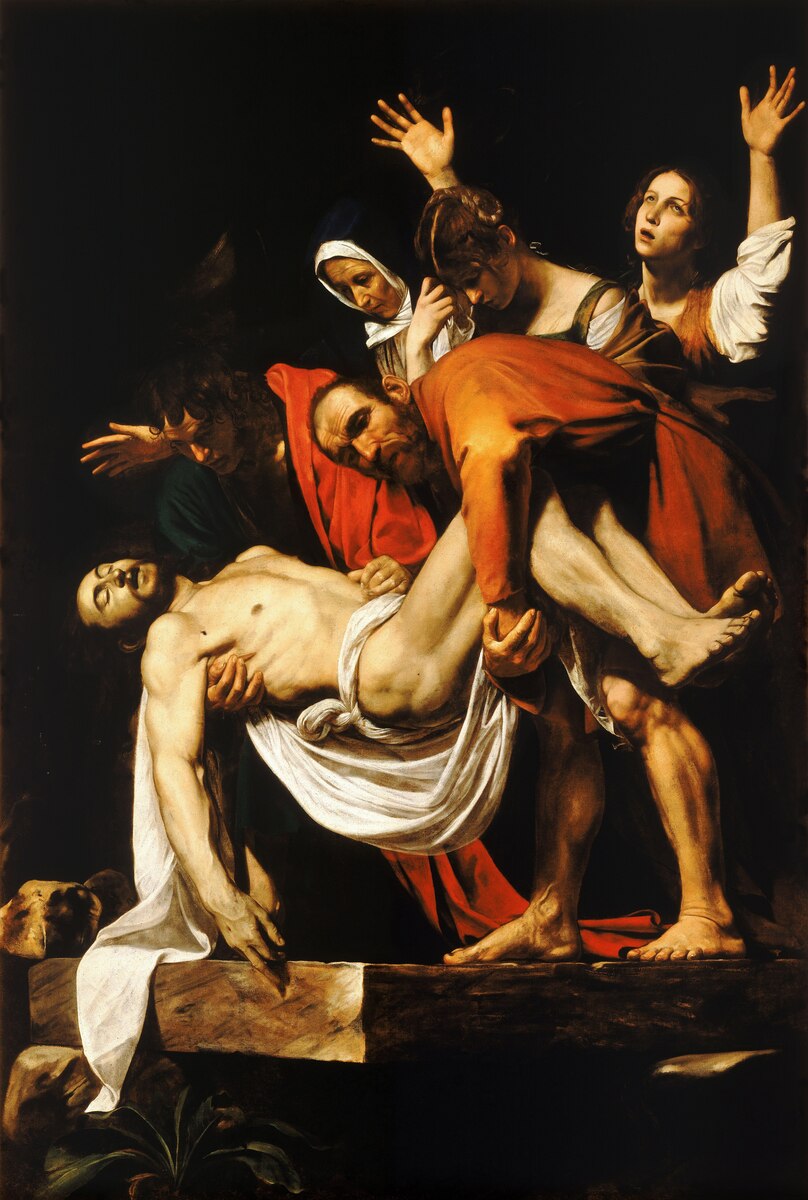
The highest-resolution file we hold, available without payment or an account.3,840 × 5,704 pixels.
Download highest-resolution imageThe dead hand hanging with fingers downward to touch the rough stone slab, the white linen shroud spilling over its edge beside rocks and a plant: the still point of the entombment at the lower left.
The brown-haired woman who bows her head low and presses her hands to her face, weeping; her bowed silhouette between the other mourners measures the weight of the loss.
The older woman in a white veil and dark mantle standing just behind the body, hands clasped near her chin, eyes cast down on her son in silent, contained sorrow.
Your gallery guide
A gallery tour of Caravaggio's Entombment of Christ, painted around 1602 to 1604 and now in the Pinacoteca Vaticana. The guide explains the subject, the supporting figures, and how Caravaggio's composition stages the burial for the viewer, drawing only on the supplied object record and its sources.
Editorial review by Artifact Archive automated publishing
Explore the researchThe story About 3 minutes to read
We are looking at Caravaggio's Entombment of Christ, painted around 1602 to 1604. It shows the dead body of Christ being laid into the tomb. Several figures surround him, supporting the body as it is lowered.
Look at how the body of Christ stretches diagonally across the foreground. The figures take hold of him at different points, carrying the weight together rather than letting it fall. Behind them, a dark stone slab marks the place where the body is being placed.
The people gathered here are named in the source. Nicodemus and John the Apostle help carry the body. Mary, Mary Jacobi, and Mary Magdalene are present as well. Each has a distinct part in the scene, and their placement keeps the group close to the body throughout.
Caravaggio places the action so close to us that we seem to stand at the edge of the tomb. The diagonal of Christ's body draws the eye from the lower left toward the stone slab. The figures lean and reach, and their arrangement tells us that the burial is happening now.
The Entombment of Christ is an oil painting on canvas, made in the early seventeenth century. It belongs to the Baroque period and is now part of the Pinacoteca Vaticana in Vatican City. What we take away is a burial shown as a shared physical act. The figures do not stand apart from the body; they hold it, lower it, and stay near it.
Editorial review by Artifact Archive automated publishing.
Historical claims are linked to the records below. Close looking and interpretation are identified in the passage notes.
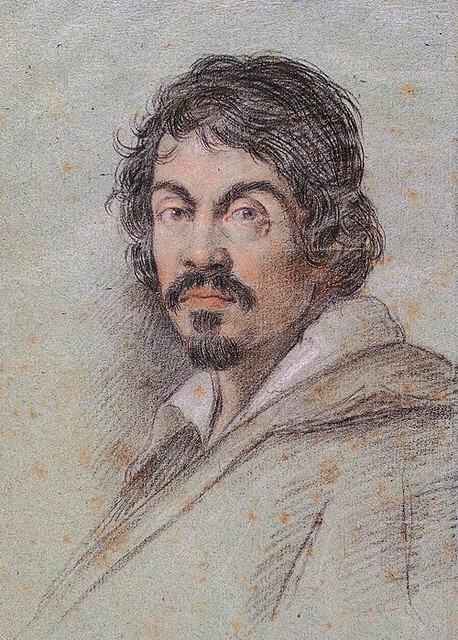
Ottavio Leoni. Image source · Public domain
About the artist
1571 to 1610
Caravaggio was an Italian painter (1571–1610). Their work is associated with Baroque; Counter-Reformation. Their recorded places of work include Rome; Zagarolo; Naples; Valletta; Syracuse; Genoa; Messina; Milan; Palermo; Paliano.
The research & record
Find catalogue details, historical context, technical research and the literature behind this artwork.
Your browser could not copy automatically. Select the research text below, then copy it.
Open the complete research textThe artwork record
Catalogue information and detailed research, with references that link to the bibliography.
Updated .
The work catalogued here is The Entombment of Christ, attributed to Caravaggio, the name under which the artist Michelangelo Merisi da Caravaggio is recorded. The painting carries the accession number MV.40386, and it is dated from 1602 until 1604. The recorded dimensions are 300 cm by 203 cm, equivalent to 118.1 in by 79.9 in. These are the basic identifying facts of the object as the source record states them: title, artist name in both its common and fuller forms, an accession identifier, a date range, and a measured size.(Wikimedia Commons: The Entombment, n.d.)
Interpretation
Two distinct kinds of dating should be kept apart in this record. The span 1602 to 1604 belongs to the making of the painting itself, as the source presents it. The accession number MV.40386 belongs to the object's later registration as a museum holding, and the source names the Pinacoteca Vaticana in Vatican City as the collection in which it is now held. Nothing supplied here fixes a specific year of accession or of any earlier transfer, so the interval between the painting's execution and its cataloguing under that number remains unstated in the evidence.(Wikimedia Commons: The Entombment, n.d.)
The medium recorded for the work is oil on canvas, and its subject is the entombment of Christ. Beyond the title subject, the source identifies the depicted figures as Jesus Christ, Nicodemus, John the Apostle, Mary, Mary Jacobi, and Mary Magdalene. Those identifications are what the catalogue record establishes about the picture's content; they supply the named participants in the scene without going further into how each figure is arranged or what each does.(Wikimedia Commons: The Entombment, n.d.)
The artwork is The Entombment of Christ by Caravaggio.(Wikimedia Commons: The Entombment, n.d.)
The artist is Caravaggio (Michelangelo Merisi da Caravaggio).(Wikimedia Commons: The Entombment, n.d.)
The painting is dated from 1602 until 1604.(Wikimedia Commons: The Entombment, n.d.)
The dimensions are 300 cm by 203 cm (118.1 in by 79.9 in).(Wikimedia Commons: The Entombment, n.d.)
The accession number is MV.40386.(Wikimedia Commons: The Entombment, n.d.)
Visual observation
The painting depicts the entombment of Christ, the moment at which his dead body is placed in the tomb. The people shown are identified as Jesus Christ, Nicodemus, John the Apostle, Mary, Mary Jacobi, and Mary Magdalene. These names establish the scene as a scriptural and devotional subject in which the bearing of the body is distributed among several figures rather than assigned to one mourner, and they also establish the presence of both male disciples and the women who remain with the body. The account of the subject is an observation drawn from the source record rather than an inference from the surviving image alone, and so the identification of each figure should be treated as the source's identification of the depicted persons rather than as a description whose every label the present evidence independently verifies.(Wikimedia Commons: The Entombment, n.d.)
The medium of the picture is oil on canvas, a support and technique belonging to the same early seventeenth century production context in which the entombment is described. Because the medium is documented for this painting, it connects the visual account to the material evidence: the composition of a group carrying and lowering a body, described as the entombment of Christ and peopled by Jesus Christ, Nicodemus, John the Apostle, Mary, Mary Jacobi and Mary Magdalene, is executed in oil on canvas rather than in another medium. The relationship between the visible scene and the physical object is therefore not merely thematic; the choice of oil on canvas is a documented material fact about the same work whose subject is the burial of Christ.(Wikimedia Commons: The Entombment, n.d.)
Interpretation
The evidence for the picture's appearance and meaning is uneven in kind and should be kept so. The entombment as a subject and the roster of six named persons are observations recorded by the source, whereas the medium of oil on canvas is documented. Neither class of evidence, as supplied here, includes technical imaging results, condition records, or a history of the picture's appearance over time, so no claim can be made in this account about pentimenti, abrasion, discoloration or later intervention. What can be stated is the convergence of the two evidence types on the same object: the oil-on-canvas work is the work that shows the entombment of Christ with Nicodemus, John the Apostle, Mary, Mary Jacobi and Mary Magdalene. This convergence supports treating the subject and the named figures as integral to the object's visual evidence, while leaving open any question about how the surface was made or has altered.(Wikimedia Commons: The Entombment, n.d.)
Visual observation
The painting depicts the entombment of Christ.(Wikimedia Commons: The Entombment, n.d.)
The depicted people are Jesus Christ, Nicodemus, John the Apostle, Mary, Mary Jacobi, and Mary Magdalene.(Wikimedia Commons: The Entombment, n.d.)
The Entombment of Christ by Caravaggio (Michelangelo Merisi da Caravaggio) is executed in oil on canvas, a medium and support recorded in the source for the painting. The same source dates the work from 1602 until 1604 and places it in the collection of the Pinacoteca Vaticana, Vatican City, under accession number MV.40386. The recording of oil on canvas is a documented material statement, and it establishes both the binding medium class and the textile support; it also aligns the object with the dominant practice of early seventeenth-century Italian painting rather than with panel supports. The dimensions are given as 300 cm by 203 cm (118.1 in by 79.9 in), establishing a large upright format for the composition.(Wikimedia Commons: The Entombment, n.d.)
Interpretation
Within the larger history of Baroque art, this oil-on-canvas Entombment matters because it belongs to a period and to a medium in which large religious narrative paintings were increasingly produced for display within churches and collections, and because its current home in the Pinacoteca Vaticana marks its later institutional reception. The source's metadata identifies the work with the Entombment of Christ and the Baroque period, and the compositional subject has been documented as the entombment of Christ, showing the body being laid into the tomb. That the painted figures include Jesus Christ, Nicodemus, John the Apostle, Mary, Mary Jacobi, and Mary Magdalene establishes the narrative personnel of the scene and connects the material object to a specific devotional subject. These identifications are supplied as contextual and visual observations, so they inform why the canvas was made but do not by themselves document the materials or making technique beyond the oil-on-canvas record.(Wikimedia Commons: The Entombment, n.d.)
The medium is oil on canvas.(Wikimedia Commons: The Entombment, n.d.)
The Entombment of Christ by Caravaggio (Michelangelo Merisi da Caravaggio) is today held in the collection of the Pinacoteca Vaticana, Vatican City, under accession number MV.40386. The museum record identifies the work as an oil painting on canvas measuring 300 by 203 cm (118.1 by 79.9 in), dated between 1602 and 1604. That combination of location, medium, scale and date is the documentary frame within which any account of the picture's subject and handling must sit: a large early seventeenth-century canvas, painted in oil, now preserved in the Vatican's picture gallery.(Wikimedia Commons: The Entombment, n.d.)
The painting is in the collection of the Pinacoteca Vaticana, Vatican City.(Wikimedia Commons: The Entombment, n.d.)
Interpretation
The Entombment of Christ by Caravaggio, that is Michelangelo Merisi da Caravaggio, is dated in the supplied context to c. 1602-1604 and described as an oil on canvas of 300 by 203 cm, a Baroque Italian work held in the Pinacoteca Vaticana, Vatican City, under accession number MV.40386. The same source names the depicted figures as Jesus Christ, Nicodemus, John the Apostle, Mary, Mary Jacobi, and Mary Magdalene, and identifies the subject as the entombment of Christ. The sole supplied evidence unit for this section takes exactly this identification and collection data as its confirmed context, so the identification of artist, subject, medium, approximate date and repository, rather than being argued in the valuation evidence itself, is the fixed point from which its calculations proceed. No public sale price, official appraisal or private insurance record appears in the supplied context, and the source excerpts are described as providing identification context only.(Wikimedia Commons: The Entombment, n.d.)
The one valuation figure the supplied evidence establishes is a calculated working insurance estimate of US$100M to US$300M, recorded as a working calculation generated on 2026-10-16. Its stated methodology is deliberately indirect: because the work is an institutional holding with no public sale or official appraisal in the supplied context, the range is derived conservatively from the work's canonical status, scale, artist prominence and period significance, and for manual insurance review only. The evidence states explicitly that no comparable auction results or private insurance records were available or used. This matters methodologically because the range is not a market observation; it is a model-generated construction from qualitative attributes whose components are named in the evidence rather than measured against transactions.(Wikimedia Commons: The Entombment, n.d.)
The qualifications attached to the range are as consequential as the numbers. The evidence specifies that the range is not an official insurance value, appraisal, auction result or sale price; that it does not represent a quote or coverage amount; and that it should not be used for binding insurance, financial, tax or legal purposes. It further states that actual insurance values for institutional artworks require professional appraisal, provenance verification, condition assessment and specialist market analysis. Read together with the methodology above, these qualifications define the range as an internal working instrument for manual review, and any use of the figure should carry the same limits the evidence places on it.(Wikimedia Commons: The Entombment, n.d.)
Value in this record is a product of institutional standing rather than transaction history. The evidence grounds its range in the work's canonical status, its scale of 300 by 203 cm, the prominence of Caravaggio, and the significance of the c. 1602-1604 Baroque Italian period in which it was made, and it notes that the painting belongs to a highly prominent museum collection. The accession number MV.40386 and the Pinacoteca Vaticana location are the concrete institutional facts through which the work is identified as such a holding. The absence of sale and appraisal data is therefore not a gap in the object's documentation so much as a condition of its institutional existence, and the conservative derivation reflects that condition.(Wikimedia Commons: The Entombment, n.d.)
The evidence supplied for this section contains a single primary unit, a working interpretation rather than a documentary or market record, while the object-specific facts it depends on (artist, title, date, medium, dimensions, period, collection and accession number) come from its stated source context. The account should therefore be read as an accumulating research record in which the identification framework is stable and the valuation line remains explicitly provisional and dated. Treating the 2026-10-16 range as if it were the work's value would conflate a manual review calculation with the documented record; treating the identification data as beyond question would also exceed the evidence, which describes its source excerpts as identification context only and its own range as model-generated. The measured position is to keep the identification and the calculation distinct, each described at the evidential level the unit assigns to it.(Wikimedia Commons: The Entombment, n.d.)
Working estimate
Calculated working insurance estimate, not a sale price: Estimated value: US$100M to US$300M Recorded date: Working calculation, generated 2026-10-16. Methodology: This broad working range is calculated for manual insurance review only. It uses the confirmed context: Caravaggio (Michelangelo Merisi da Caravaggio), The Entombment of Christ, c. 1602-1604, oil on canvas, 300 x 203 cm, Baroque Italian, held in the Pinacoteca Vaticana, Vatican City, accession number MV.40386, a highly prominent museum collection work. Because the work is an institutional holding with no public sale or official appraisal in the supplied context, the range is derived conservatively from the work's canonical status, scale, artist prominence, and period significance. No comparable auction results or private insurance records were available or used. Qualification: This is a model-generated working range for manual review only. It is not an official insurance value, appraisal, auction result, or sale price. It does not represent a quote or coverage amount and should not be used for binding insurance, financial, tax, or legal purposes. Actual insurance values for institutional artworks require professional appraisal, provenance verification, condition assessment, and specialist market analysis. Source excerpts provide identification context only and do not contain a public valuation.(Wikimedia Commons: The Entombment, n.d.)
Bibliography
References are arranged by author or organisation, with links to the original publications. Where no publication date is recorded, n.d. means no date.
Source notes updated .
No recorded sources match these filters. Reset the filters to see the full bibliography.
Secondary · About this artwork
Wikimedia Commons: The Entombment (n.d.). Wikimedia Commons.
Art to live with
A piece of the archive, made yours. Explore The Entombment of Christ in a size and finish that fits your space.
Choose your edition Combine this painting with your favourites10 × 8 in / 25.4 × 20.3 cm · Standard
10 × 8 in / 25.4 × 20.3 cm · Standard

10 × 8 in / 25.4 × 20.3 cm · Standard

10 × 8 in / 25.4 × 20.3 cm · Standard

10 × 8 in / 25.4 × 20.3 cm · Standard
A gallery paper print with a smooth art-paper surface. Choose a size that suits the painting.
Choose size and finish10 × 8 in / 25.4 × 20.3 cm · Black frame
10 × 8 in / 25.4 × 20.3 cm · Black frame

10 × 8 in / 25.4 × 20.3 cm · Black frame

10 × 8 in / 25.4 × 20.3 cm · Black frame

10 × 8 in / 25.4 × 20.3 cm · Black frame

10 × 8 in / 25.4 × 20.3 cm · Black frame
A ready-to-hang wooden frame with a clear Perspex cover and a semi-gloss printed insert, made in the UK.
Choose size and finish11oz · 2 image repeats
11oz · Standard

11oz · 2 image repeats

11oz · 2 image repeats

11oz · 2 image repeats

11oz · 2 image repeats

11oz · 2 image repeats
An 11oz white ceramic mug with AAA+ ORCA coating and a C-shaped handle. Dishwasher and microwave safe, printed and dispatched in the UK.
Choose size and finish15 × 16.5 in / 38 × 42 cm · Black
15 × 16.5 in / 38 × 42 cm · Black

15 × 16.5 in / 38 × 42 cm · Black

15 × 16.5 in / 38 × 42 cm · Black

15 × 16.5 in / 38 × 42 cm · Black

15 × 16.5 in / 38 × 42 cm · Black

15 × 16.5 in / 38 × 42 cm · Black
A cotton tote with reinforced handles and artwork on the front, printed and dispatched in the UK.
Choose size and finish8.7 × 8.7 in / 22 × 22 cm · Standard
8.7 × 8.7 in / 22 × 22 cm · Standard

8.7 × 8.7 in / 22 × 22 cm · Standard

8.7 × 8.7 in / 22 × 22 cm · Standard
A rectangular PU leather mouse mat with a non-slip base, printed locally for your delivery country.
Choose size and finishA5 · Glossy cover · Lined pages
A5 · Glossy cover · Lined pages

A5 · Glossy cover · Lined pages

A5 · Glossy cover · Lined pages

A5 · Glossy cover · Lined pages

A5 · Glossy cover · Lined pages

A5 · Glossy cover · Lined pages
An A5 notebook with 150 lined pages, a glossy laminated front cover carrying your artwork, black wire-o binding and a white back cover.
Choose size and finishKeep exploring
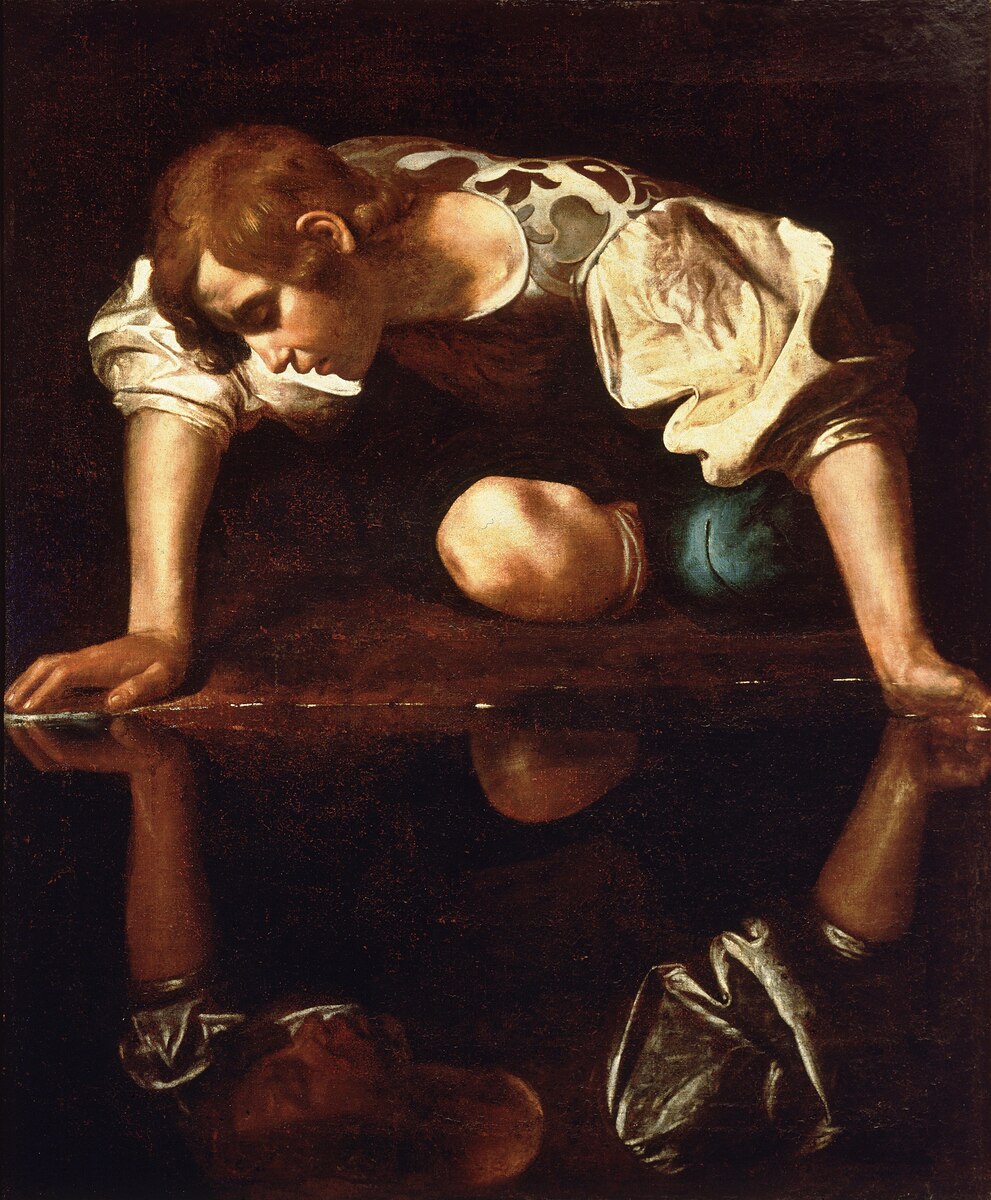 NarcissusCaravaggio (Michelangelo Merisi da Caravaggio)Another work by Caravaggio (Michelangelo Merisi da Caravaggio)
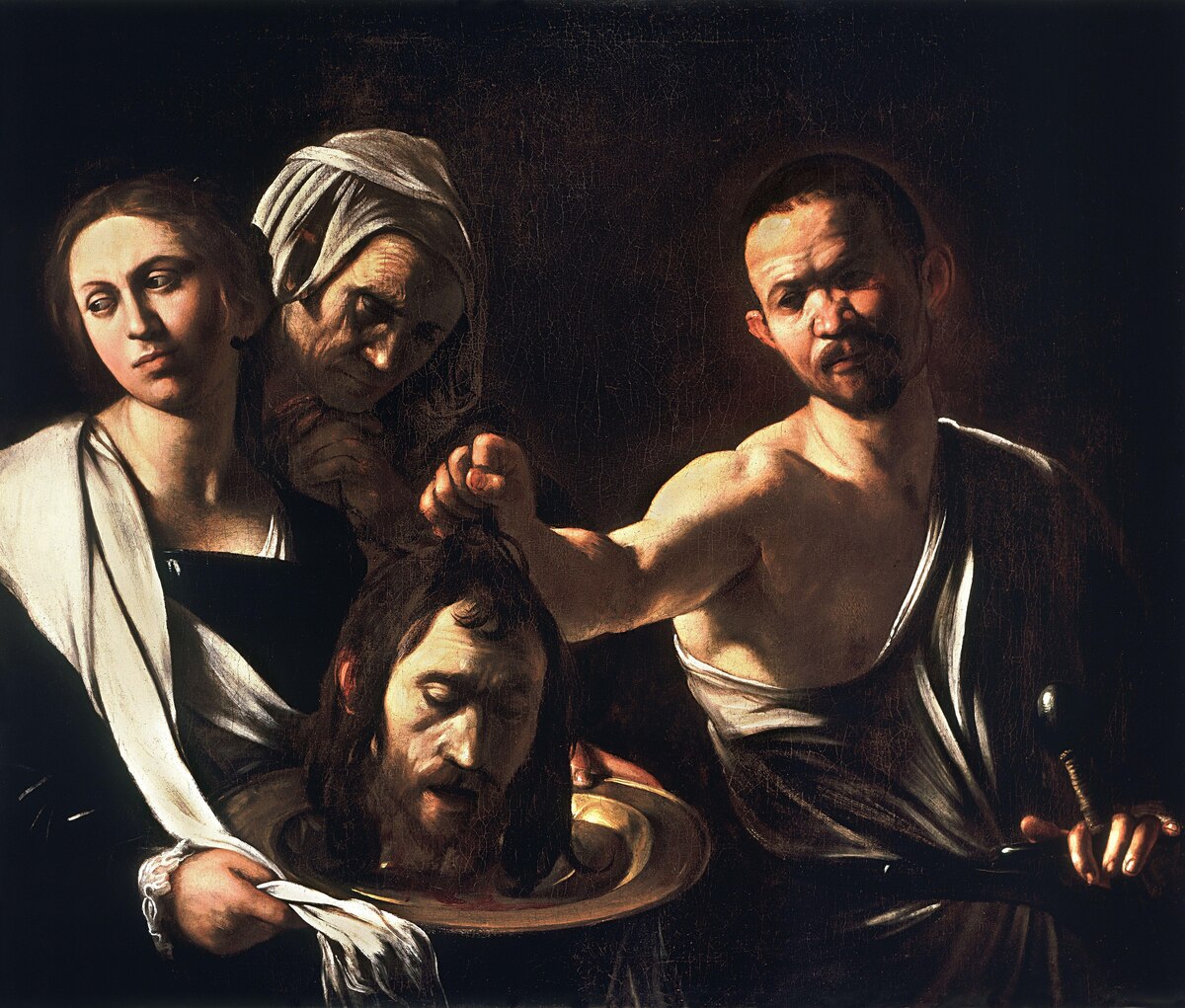 Salome with the Head of John the BaptistCaravaggio (Michelangelo Merisi da Caravaggio)Another work by Caravaggio (Michelangelo Merisi da Caravaggio)
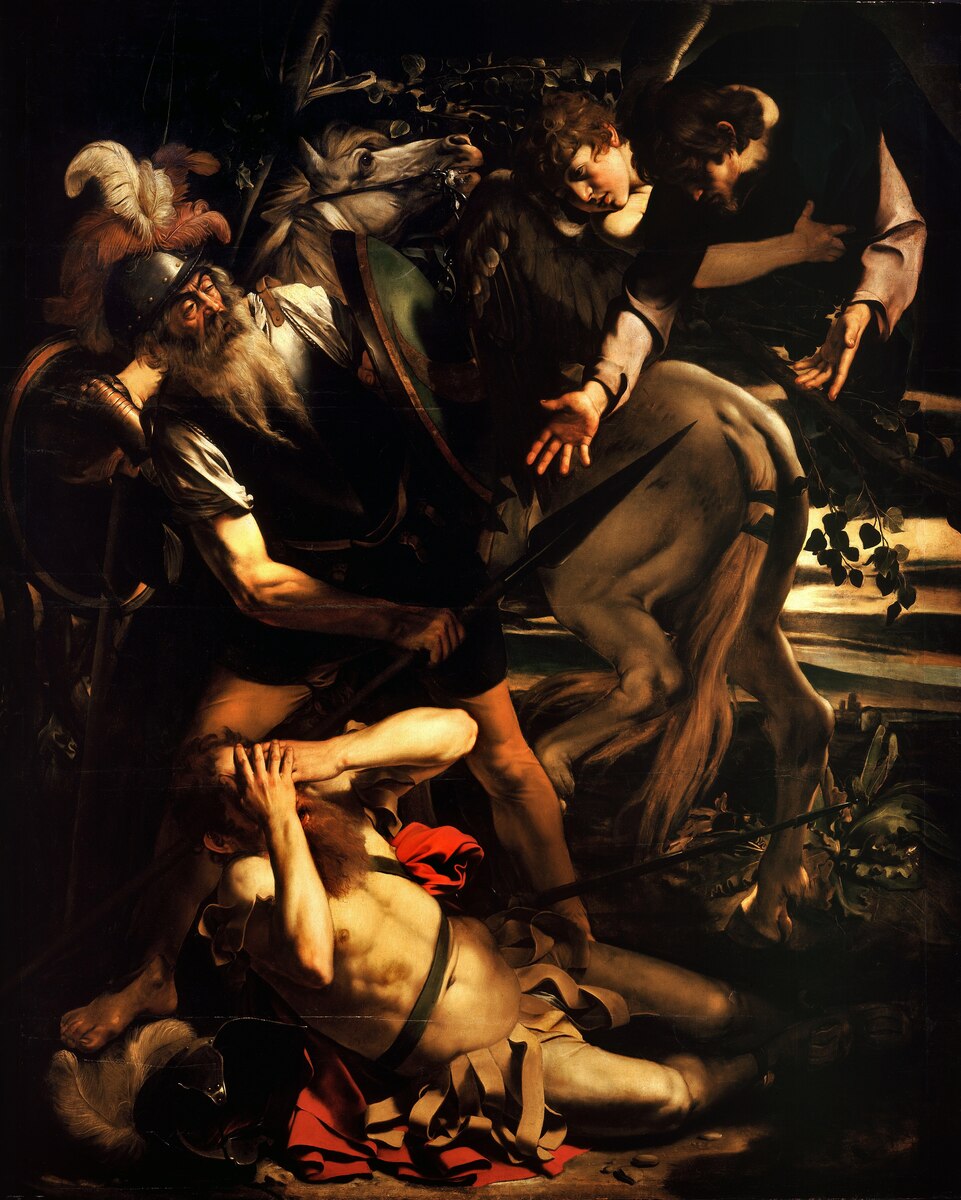 The Conversion of Saint PaulCaravaggio (Michelangelo Merisi da Caravaggio)Another work by Caravaggio (Michelangelo Merisi da Caravaggio)