Audio transcript The complete spoken story
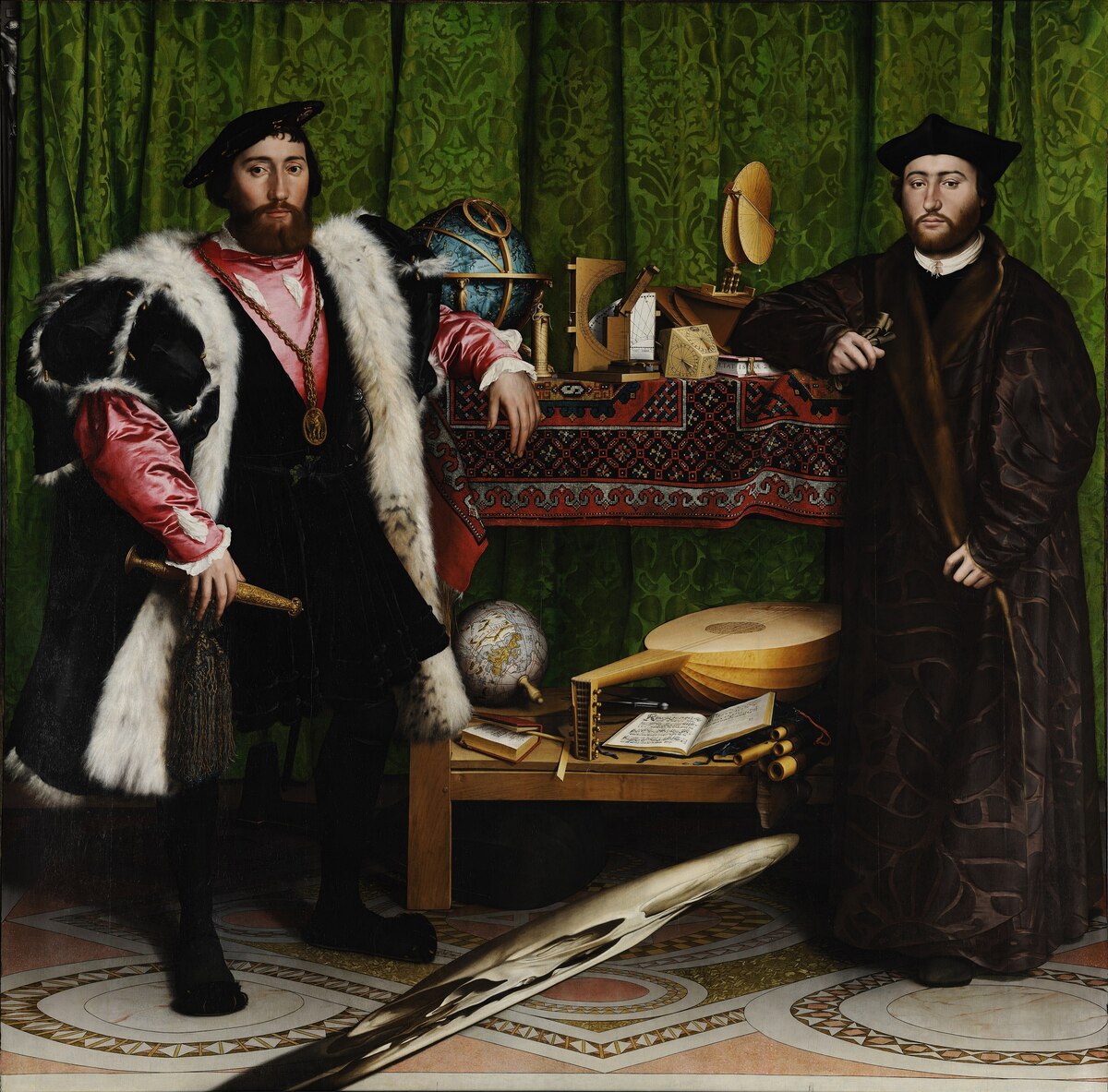
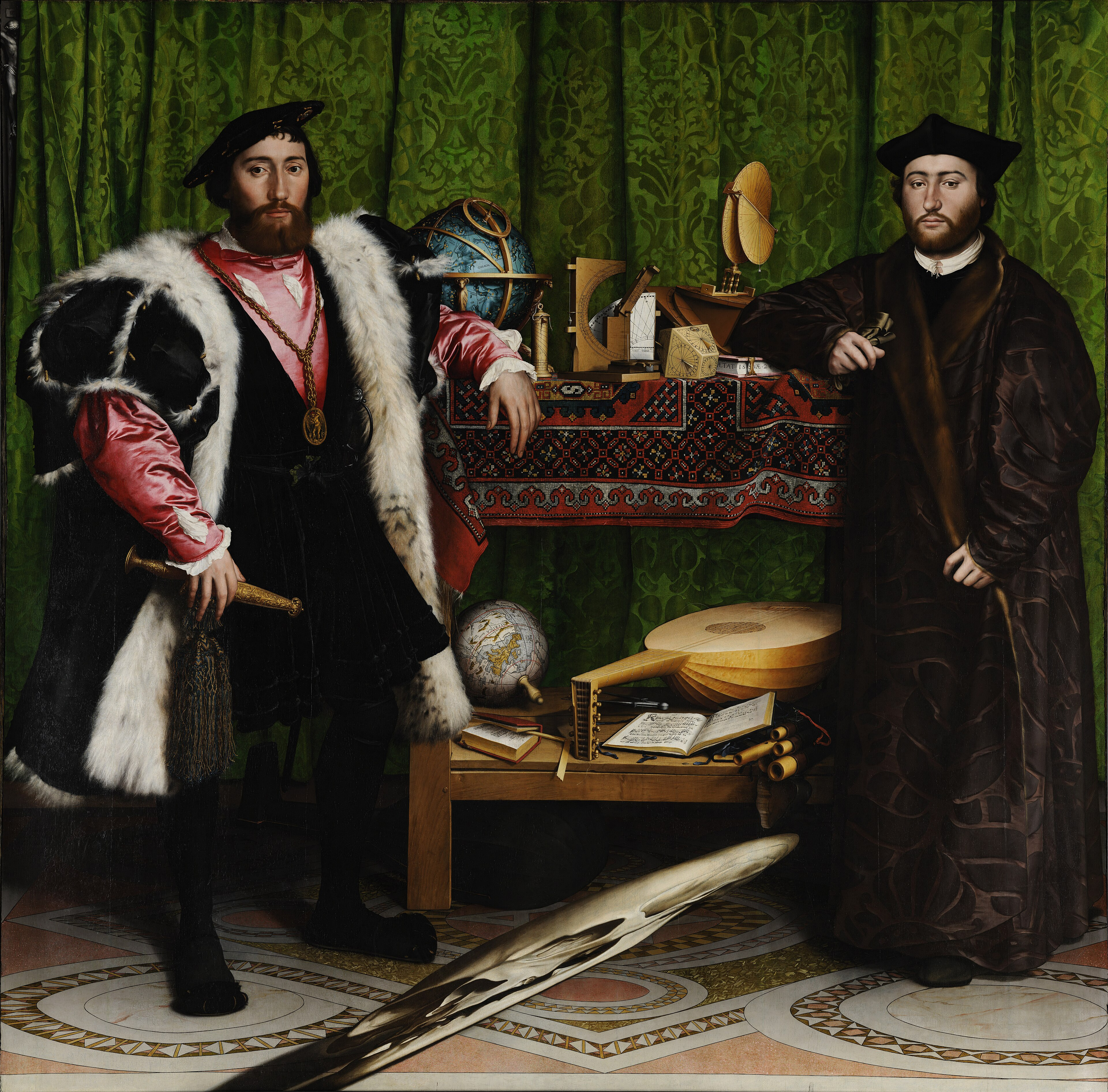
This is Hans Holbein the Younger's double portrait of two Frenchmen in England in 1533.
The man on the left is Jean de Dinteville, French ambassador to England on his second diplomatic mission for Francis the First, King of France.
The man on the right is Georges de Selve, Bishop of Lavaur, and a close friend of Dinteville.
They stand on either side of a two-tiered table, and the table is the picture's second subject.
The top shelf carries instruments for measuring time, altitude and the position of the stars, including a celestial globe and a polyhedral dial, a type of sundial.
Those objects belong to the shared intellectual world of two educated men, and Holbein gives them as much care as he gives the faces.
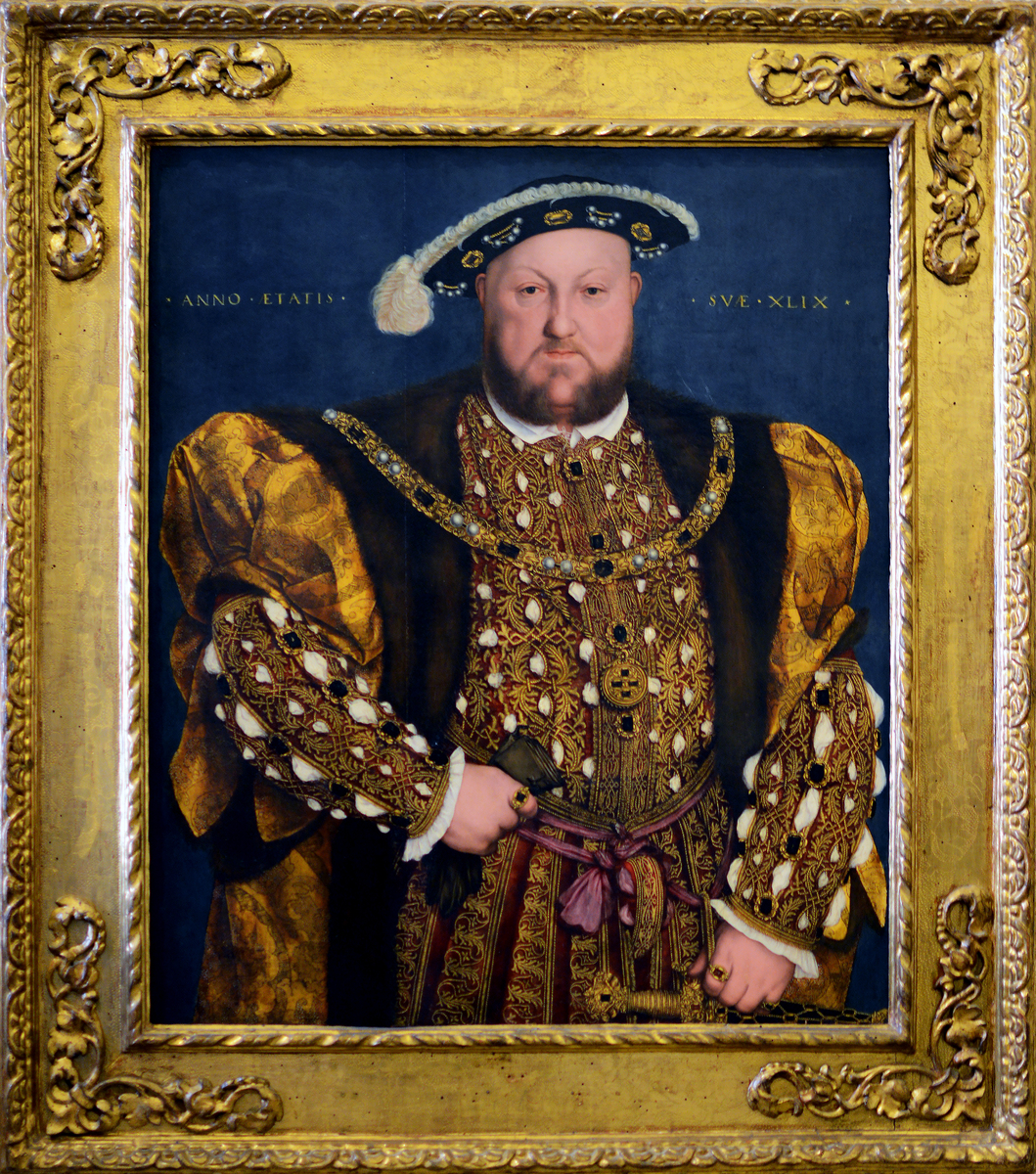
The painting was made in 1533, a year of religious upheaval in Europe, as Henry the Eighth, King of England, broke with the Roman Catholic Church.
Both sitters were in their twenties: Latin inscriptions on Dinteville's sword scabbard and on the book Georges leans on record their ages as twenty-eight and twenty-four.
The objects on the table have been read as alluding to discord and the complexities of the political climate.
One telling detail is the arithmetic book, open at a page concerning mathematical division, a subject that quietly echoes a divided church and a divided Europe.
That is an interpretation offered by the National Gallery, not a certainty about what every object meant to its first owners.
Then there is the shape stretched across the floor between their feet.
From a particular angle it becomes a skull; it is an anamorphosis, an image built to be read only from the side, and it is a memento mori, a reminder that one must die.
Holbein has placed death at the very centre of a scene of wealth, learning and diplomatic confidence.
Almost hidden at the top left is a crucifix, which the National Gallery reads as hinting at the hope of redemption in the resurrected Christ.
It is easy to miss, tucked behind the green curtain, and that near-invisibility seems part of its point amid a room of worldly instruments.
Holbein dated the painting beneath his signature on the marble floor behind the figure on the left.
He did not usually sign his paintings, and this signature is more elaborate than other known examples, which the National Gallery takes to suggest he was particularly proud of this work.
Dinteville commissioned the painting and must have brought it back from England to France, probably in November 1533.
It is first recorded in the inventory dated twenty-first to twenty-fourth January 1589 of Louise de Rochechouart, widow of Guillaume de Dinteville, in the great hall of the Dinteville family chateau at Polisy.
So the picture holds two kinds of knowledge side by side.
On the table is everything these men could measure, from the stars to the hours to the notes of a song.
Across the floor, and again in that small crucifix, Holbein reminds them, and us, of what no instrument can settle.