The story About 5 minutes to read
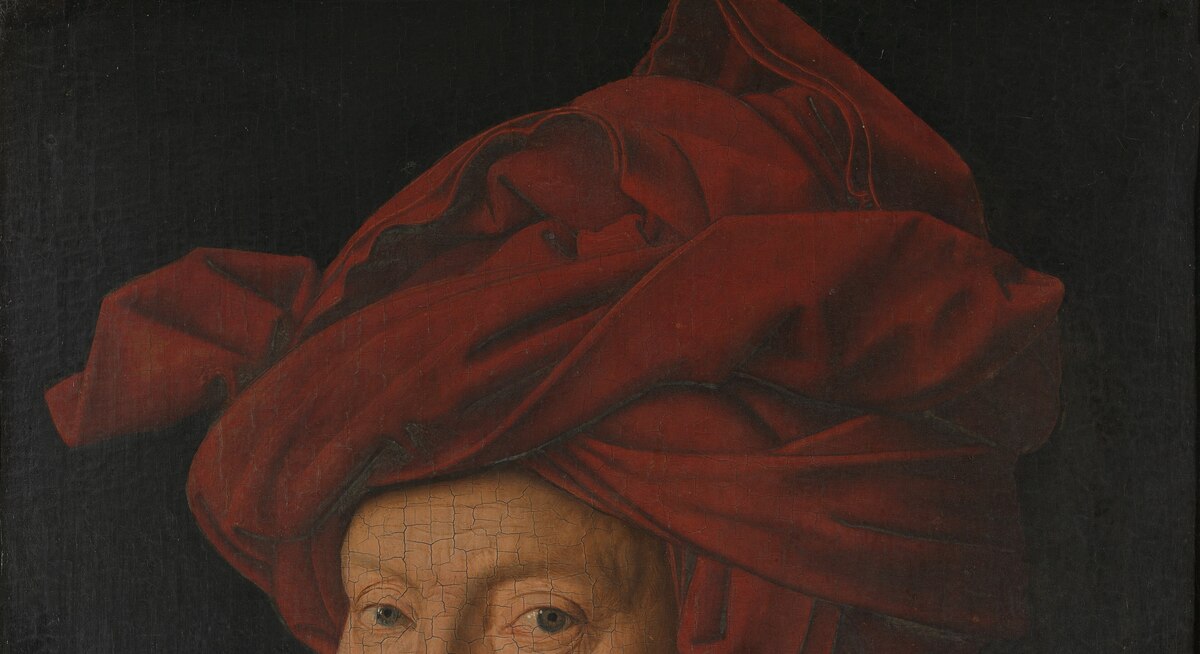
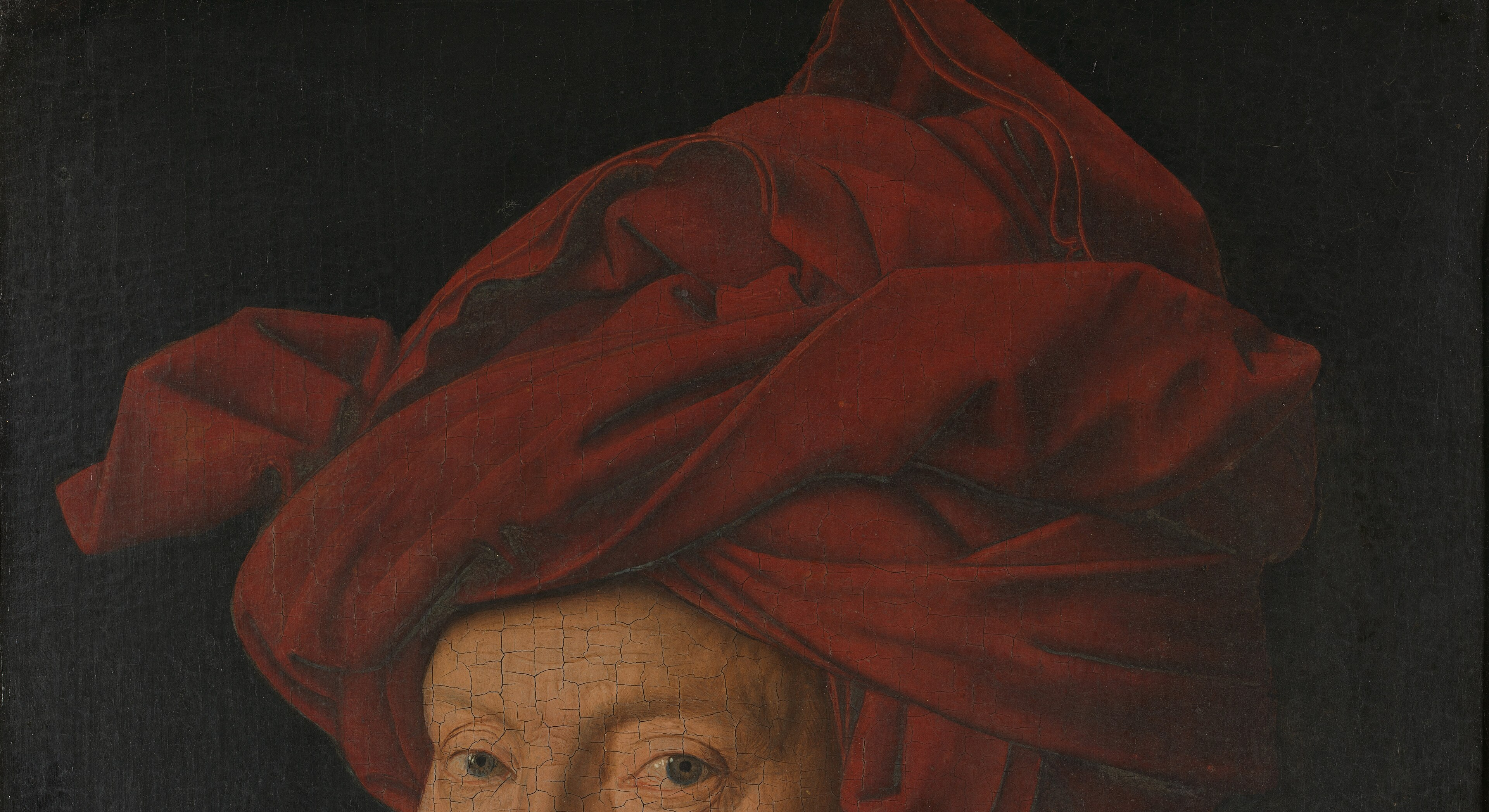
Here is a small painting of a man in a red headdress, turned slightly to his left, and he is looking straight back at you.
The panel is called Portrait of a Man, and the title carries a question mark after the words Self Portrait. That question mark matters, so hold on to it.
The work is attributed to Jan van Eyck, the Flemish painter who lived from about 1390 to before June 1441, and it is dated 1433.
The man is shown close up, bust length, so his face and headdress fill most of the picture. He is turned slightly to his left, but his eyes meet ours.
He wears a red turban-like headdress, which gives the work its older title variants: Portrait of a Man in a Turban, Man in a Turban, Portrait of a Man in a Red Turban.
Those titles describe a garment. The main title asks a different question, about who the sitter might be.
The painting is oil on oak panel, and it is dated 1433. The artist attributed with making it is Jan van Eyck, a Flemish painter, drawer and manuscript illuminator.
The sources record work locations for him at The Hague in 1422, Bruges in 1425, Lille between 1425 and 1428, and Bruges again from 1431 to 1441.
Now for the question in the title. The painting is traditionally identified as a self-portrait of Jan van Eyck, and the Commons record identifies the depicted person as Jan van Eyck.
But the painting is also catalogued as a portrait of an unknown man. The self-portrait reading is traditional and is flagged by the question mark in the title, so it is not settled.
We can say what the record shows and labels. We cannot say the sitter's identity is proven.
The self-portrait tradition is a reported tradition, not a documented fact. The question mark after Self Portrait? in the title is the institutional signal that the identification is traditional rather than universally accepted.
So when you hear this painting described as Van Eyck's self-portrait, remember that the title itself hedges the claim.
The painting entered the National Gallery, London, in 1851, from the collection of Henry T. Farrer. Before that it passed through several collections.
In 1643 it was in the collection of Thomas Howard, 21st Earl of Arundel. In 1680 it was with Henry Stafford-Howard, 1st Earl of Stafford. By 1730 it was with Thomas Brodrick, and by 1851 with Henry T. Farrer.
What to take away: this is a small, direct, close-up portrait of a man in a red headdress, looking at the viewer, painted in oil on oak and dated 1433.
It is attributed to Jan van Eyck, and it is traditionally identified as a self-portrait, but the question mark in the title is the honest summary of that identification.
We know who made it, when, and in what material. We do not know for certain who the man is.