The story About 4 minutes to read
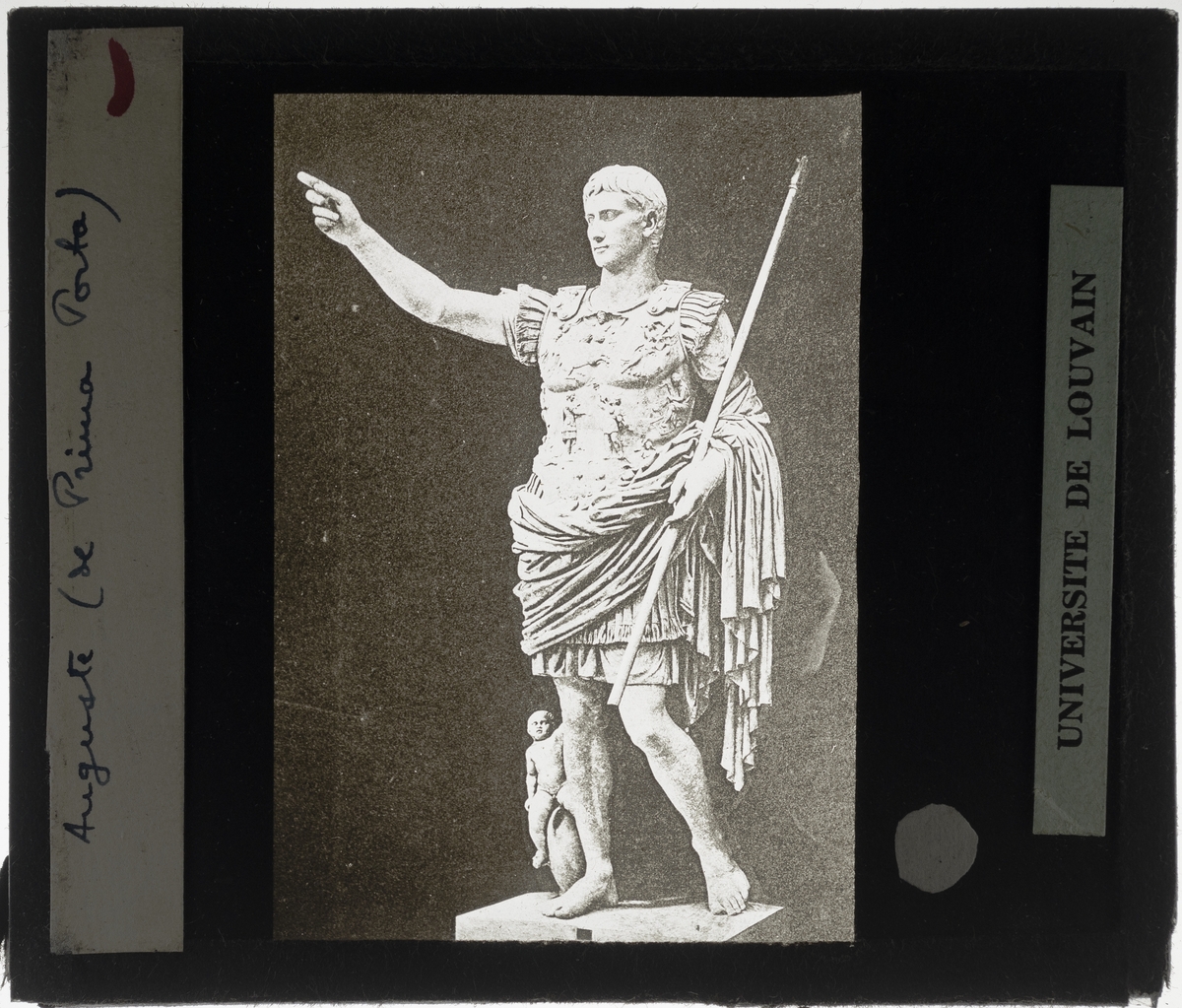
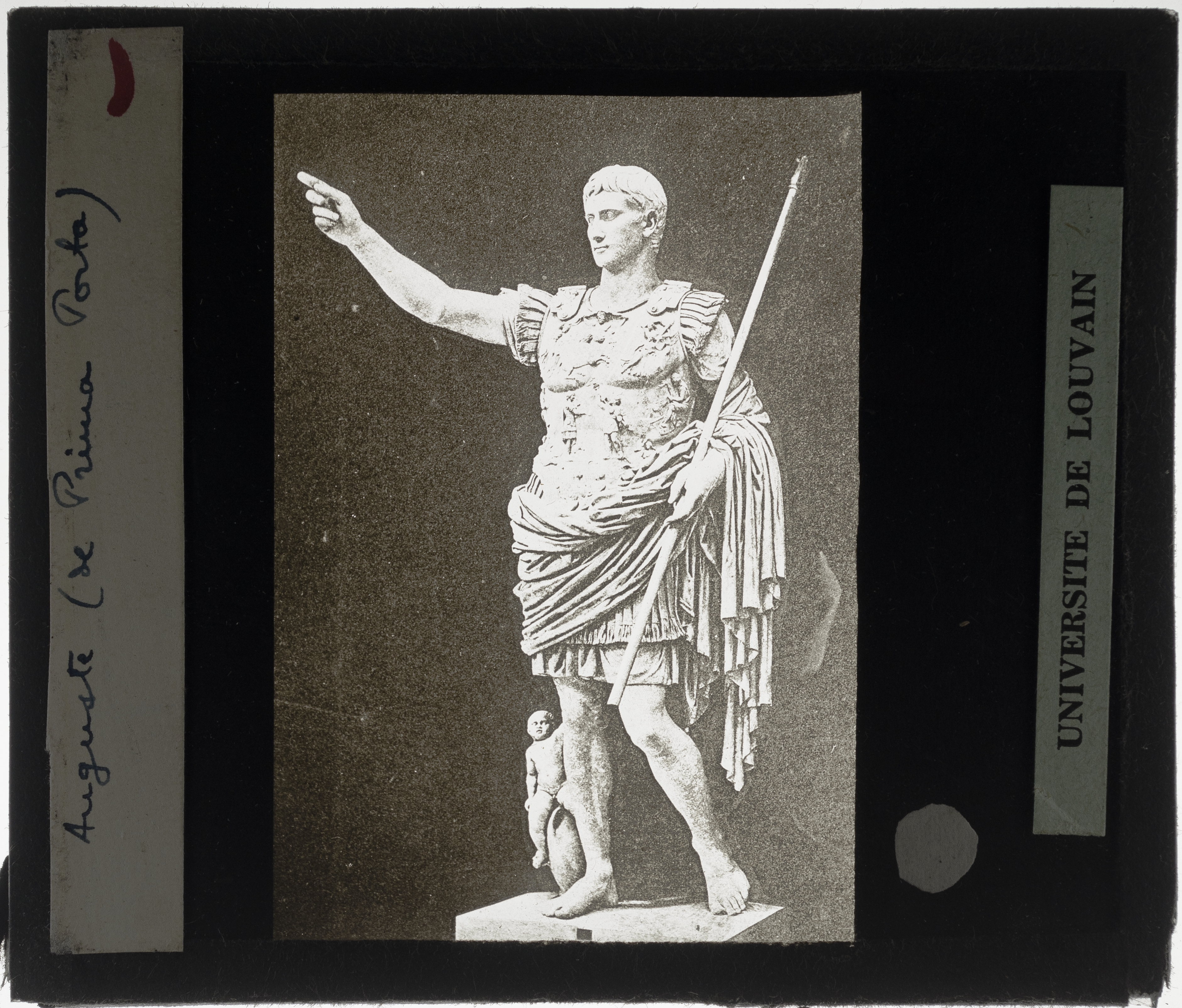
This is the Augustus of Prima Porta, a marble statue in Roman style. The slide record identifies the subject by that title, and it names the findspot as the Villa of Livia at Prima Porta, outside Rome.
The statue is now noted as being in the Vatican Museums, in the Braccio Nuovo. That is the custody the record gives, not proof that it is on public display today.
The record is a glass slide, one hundred by eighty-five millimetres, part of a series called EuroPhot, covering archaeology, antiquity, and sculpture. It is a photographic carrier, not the statue itself.
The photographer is recorded as unknown, so the slide has no named maker of the image. The statue's own sculptor is likewise not named in the supplied material.
The slide's date field reads "7de eeuw," or seventh century. That sits awkwardly against the conventional Roman imperial subject the title points to, and the excerpt does not explain it.
It may belong to another dating convention, or to a slide-series notation. The safest reading is to keep the object date unresolved while the record itself is checked more closely.
What the supplied evidence actually lets us say is narrow. We have a title, a material, a findspot, a current-location note, and a conflicting date field.
The excerpts do not describe the pose, the cuirass, or any figural decoration, so this account does not invent a visual reading of those features. That restraint is part of the record too.
The findspot matters because it is the one piece of historical setting the slide preserves. Prima Porta and the Villa of Livia place the statue's discovery in a named Roman landscape, not a generic museum storeroom.
Current location and original findspot are different facts. The Braccio Nuovo note describes present custody, while the Villa of Livia note describes where the statue was found.
So the reliable takeaway is this. The work is a Roman-style marble statue titled Augustus of Prima Porta, found at the Villa of Livia at Prima Porta, and recorded as held in the Vatican Museums, Braccio Nuovo.
The date remains uncertain in the supplied evidence, and the slide itself is a small glass photograph whose maker is unknown. Those gaps are real, and they belong in the story rather than being smoothed over.