The story About 4 minutes to read
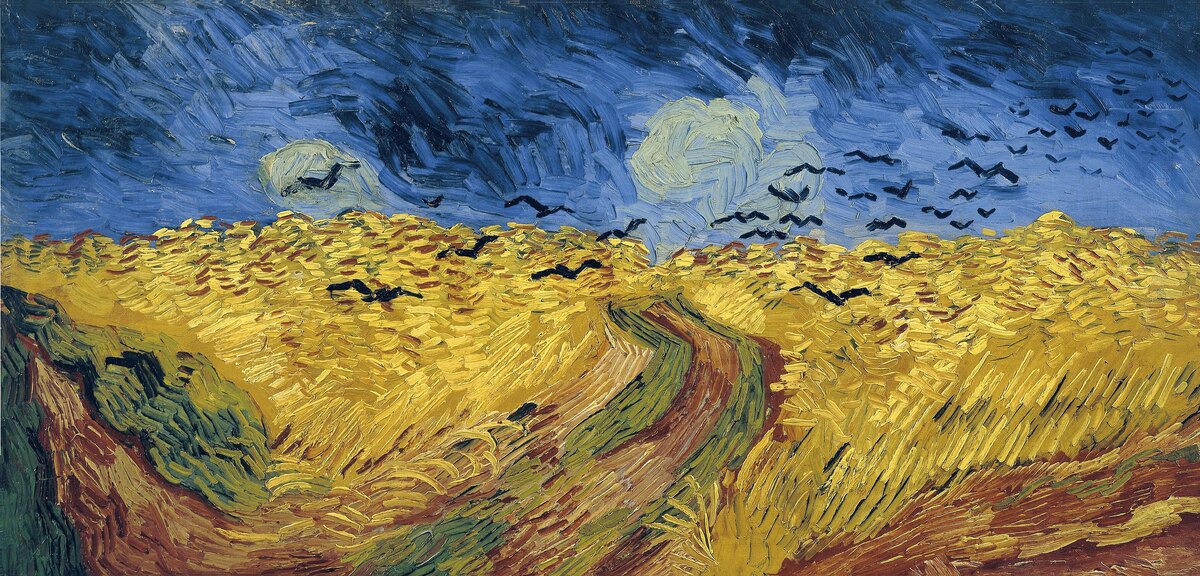
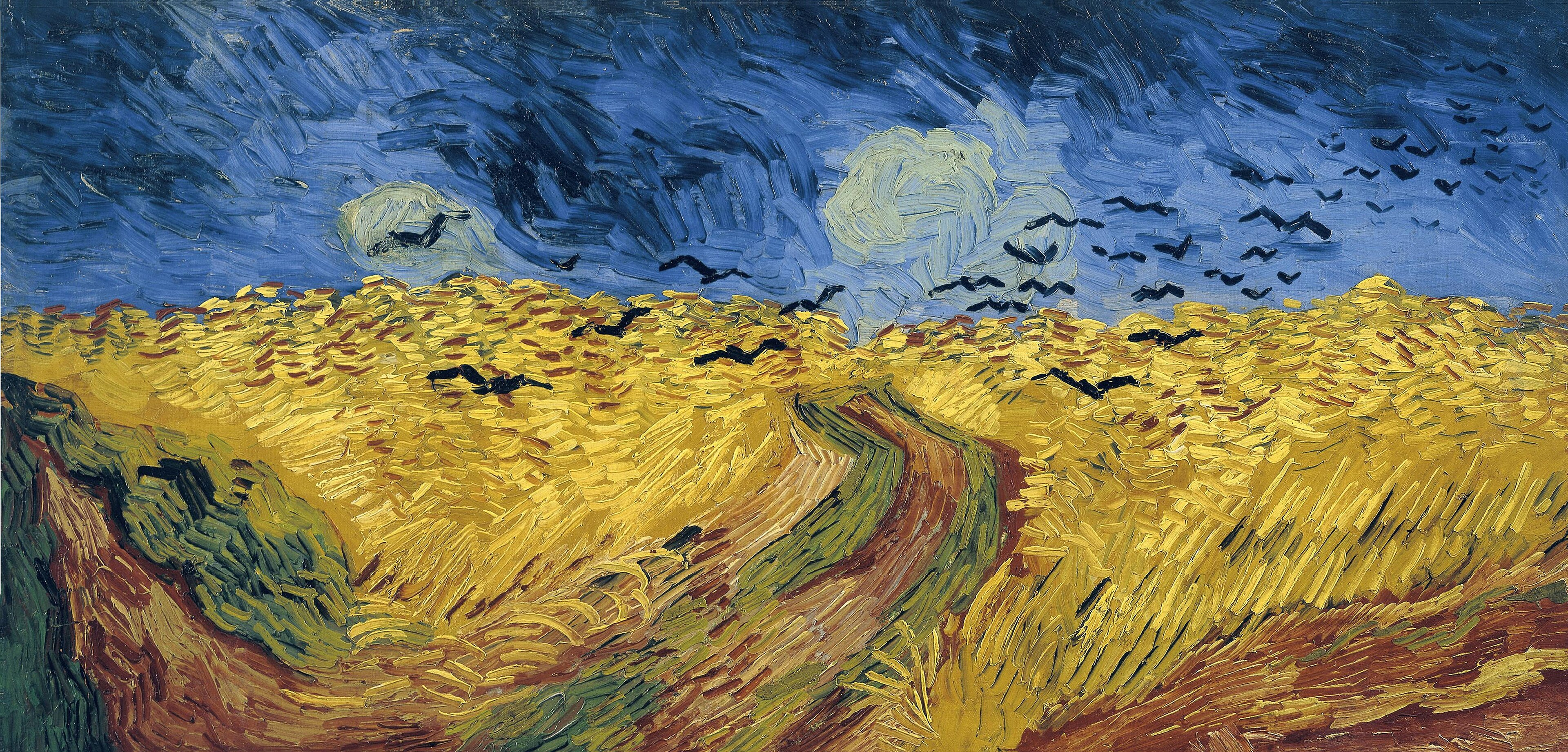
Van Gogh painted Wheatfield with Crows at Auvers-sur-Oise in July 1890. It is oil on canvas, and the Van Gogh Museum identifies it as one of his most famous paintings.
What you see is a wide field of ripe wheat under a cloudy sky. A path cuts through the crop, and crows fly above it.
The canvas is unusually wide and low, about twice as wide as it is tall. That spread-out shape lets the wheat run in horizontal bands across the whole surface.
The path enters at the lower left and moves inward, so your eye follows it away from you. The crows sit above the wheat as small dark marks against the lighter field.
Van Gogh built this scene from strong colour contrasts. The blue sky presses against the yellow-orange wheat, and the red of the path stands out because green bands of grass run alongside it.
The museum describes these as powerful colour combinations. You can see how the warm wheat and cool sky set each other off, while the path colour vibrates against the green.
The museum records what Van Gogh wanted his wheatfields under stormy skies to do. He wanted them to express sadness and extreme loneliness, and at the same time to show what he considered healthy and fortifying about the countryside.
So the same field carries two feelings at once: isolation and renewal. The sky and the wheat are not simply a weather report.
You may have heard that this was Van Gogh's very last painting, a farewell before his death. The Van Gogh Museum calls that a persistent myth, because he made several other works after this one.
A related reading says the menacing sky, the crows and the dead-end path refer to the end of his life approaching. The museum treats that as a persistent myth too, not a secure interpretation.
The dark birds and the path have encouraged a dramatic story about approaching death. That story is reported, but it is not established fact.
What is supported is the artist's stated aim for wheatfields under stormy skies: sadness, extreme loneliness, and the countryside's healthy, fortifying side. The painting can hold both without needing the farewell legend.
Look again at the path and the wheat. The path leads inward and then seems to stop, while the wheat continues past it in bands of yellow and green under a cloudy blue sky.
The museum's own reading gives us the key: this is a wheatfield meant to carry loneliness and strength together. The crows and the path add unease, but the painting is not a reliable record of the end of a life.