The story About 3 minutes to read
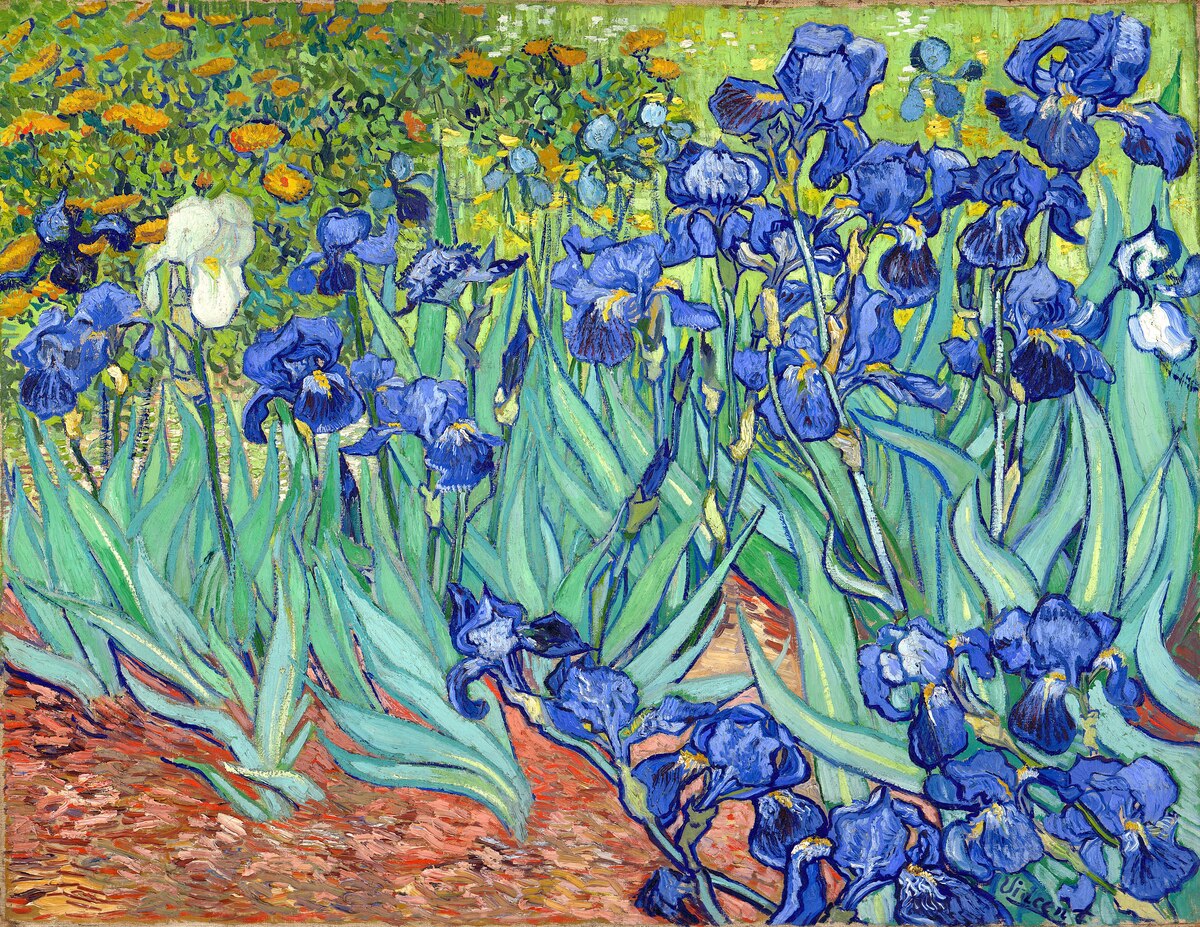
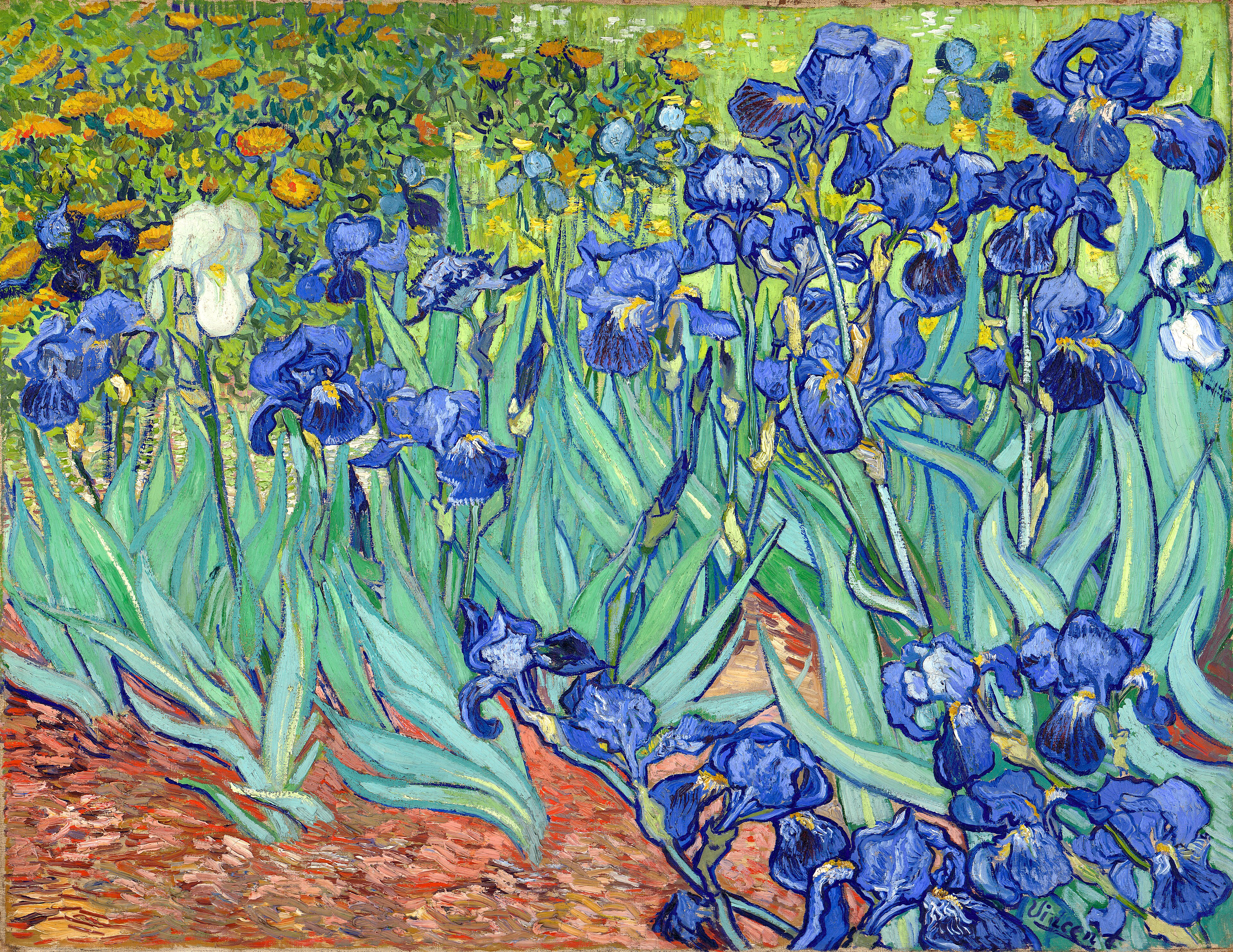
You are looking at a bunch of irises in a vase, painted by Vincent van Gogh in May 1890.
The flowers stand against a yellow background, and the whole canvas is built around that meeting of purple-blue and yellow.
Van Gogh painted this still life at the psychiatric hospital in Saint-Rémy, in the south of France.
The year before, in May 1889, he had voluntarily admitted himself to the hospital, Saint-Paul-de-Mausole.
Look at the flowers themselves. Their heads lean and cross one another, and the stems gather toward a vase that sits low in the bouquet.
The background stays warm and flat, so the flowers read as shapes against it.
For Van Gogh, this painting was mainly a study in colour, and the museum describes the colour contrast, not the flowers, as the point.
By setting the flowers against yellow, he made their decorative forms stand out even more strongly.
Here is something the painter could not have planned for us to see. The irises were originally purple, but the red pigment in the paint has faded, and they have turned blue.
That change matters to a painting whose whole argument is colour contrast. We are reading a balance of blue and yellow where the artist set up purple and yellow.
This bouquet belongs with a companion still life. Van Gogh painted the same bunch of flowers twice, and in the other version he contrasted purple and pink with green.
The museum also states that painting was the best remedy for Van Gogh's psychiatric disorder. That reading places this still life inside a deliberate routine of work rather than outside it.
So take one more look, keeping the faded colour in mind. What you see is a careful exercise in contrast, and also a record of paint that has quietly changed since Van Gogh set it down.