The story About 4 minutes to read
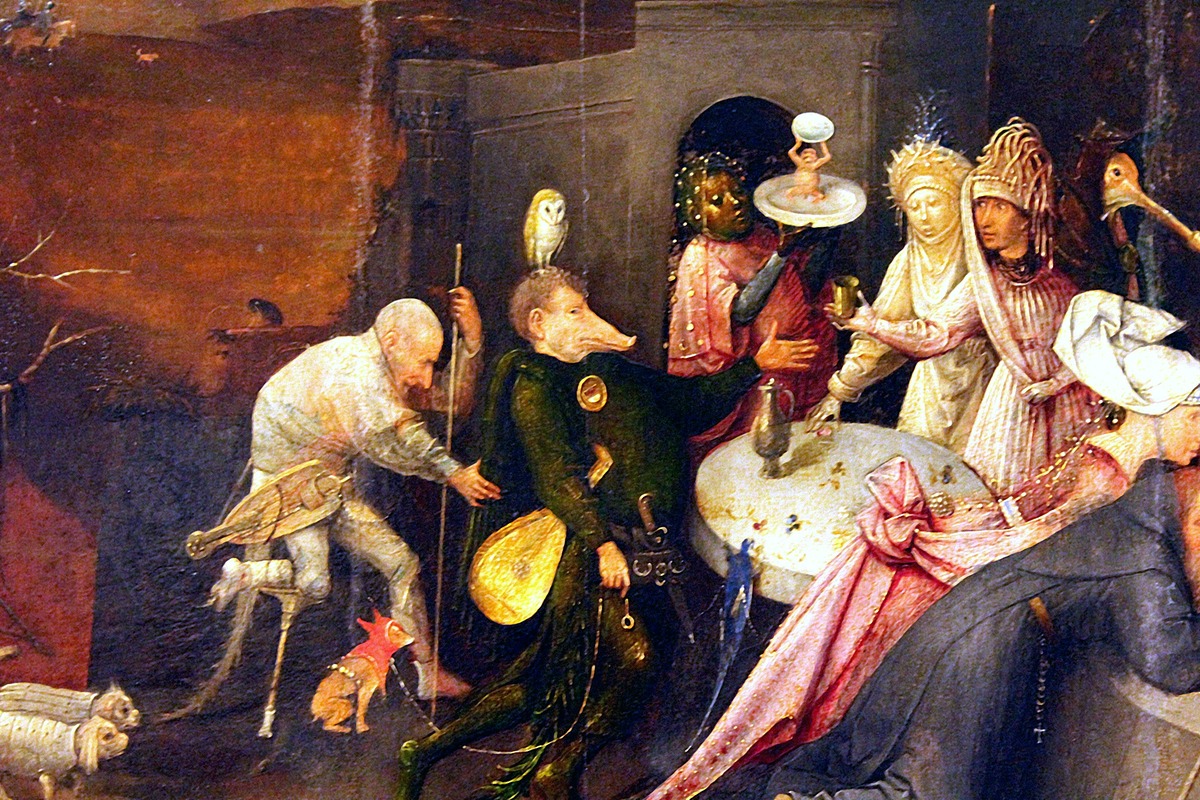
This painting is titled The Temptation of Saint Anthony, and its subject comes from the Christian hagiographic tradition around the hermit Saint Anthony.
The panel is attributed to Hieronymus Bosch and described in the supplied photograph record as held at the Museu Nacional de Arte Antiga in Lisbon.
The temptation is the event to keep in view. In the Christian tradition, Anthony is a hermit whose faith is tested by hostile and seductive forces rather than by ordinary worldly pressures.
That means the strangeness you meet across this panel is not decoration. It is the pressure of the trial itself, presented to the eye as a crowded and unstable world.
Because the painting is shown to us through a photograph, our first job is to look carefully without asking the image to tell us more than it can.
The photograph records the panel in a museum setting and gives us the painting's title and attribution, but it is not the museum's own catalogue record.
The photograph itself was taken by Dguendel on 26 January 2017. That is the date of the photograph, not the date of the painting.
Keeping those two moments separate matters. The uploader is the photographer, not the artist, and the photograph's authorship has no bearing on who painted the panel.
Saint Anthony belongs to the hagiographic tradition: the body of stories told about Christian saints.
His temptation was a familiar subject in European religious art because it made visible a spiritual struggle. The hermit's resistance could be shown through the forces set against him.
The attribution to Hieronymus Bosch comes from the description supplied with the photograph, and the museum named there is the Museu Nacional de Arte Antiga in Lisbon.
No institutional catalogue record was supplied to confirm that attribution independently, so it is best treated here as the supplied identification rather than as a settled, fully documented fact.
That gap changes how we should talk about the picture. We can describe the subject with confidence because the title and the hagiographic tradition establish it.
We can also say who the attribution names. What we cannot do is supply a date, dimensions, support, inscriptions, provenance or conservation history from the supplied material.
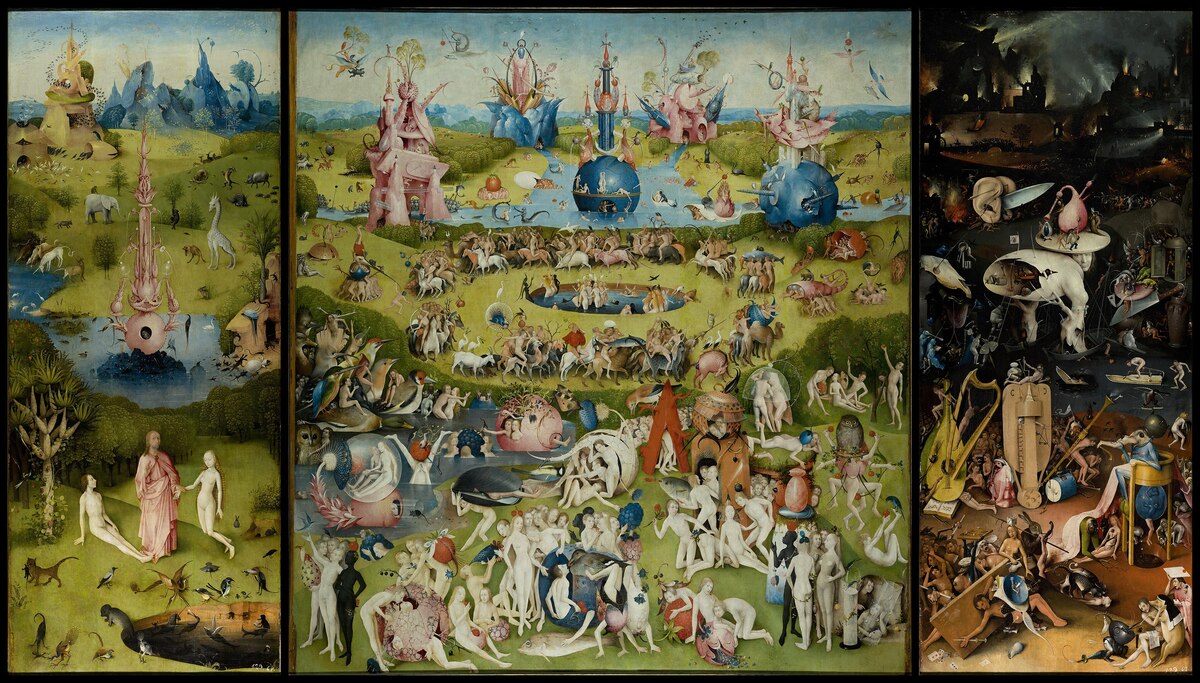
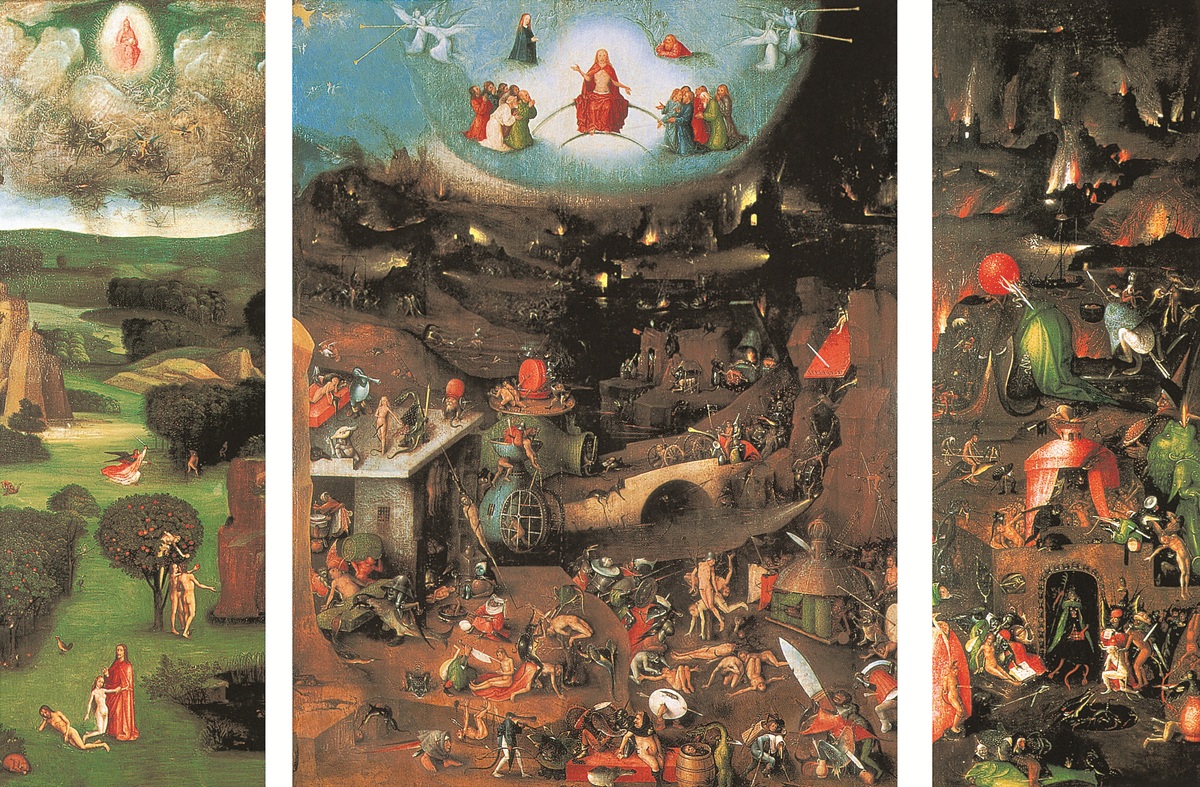
The supplied record also leaves open the possibility of another painting of the same subject attributed to Bosch or his workshop.
That is a real caution for a visitor, because similar titles can describe different objects. The identification here rests on the supplied description, not on an object record that would settle every question.
So the useful understanding is this: the painting asks you to watch a saint under trial, with the tradition of Anthony's temptation supplying the story and the Bosch attribution supplying the name.
The exact physical history of the panel remains outside what the supplied evidence can tell us, and saying so is part of looking honestly at this work.