The story About 6 minutes to read
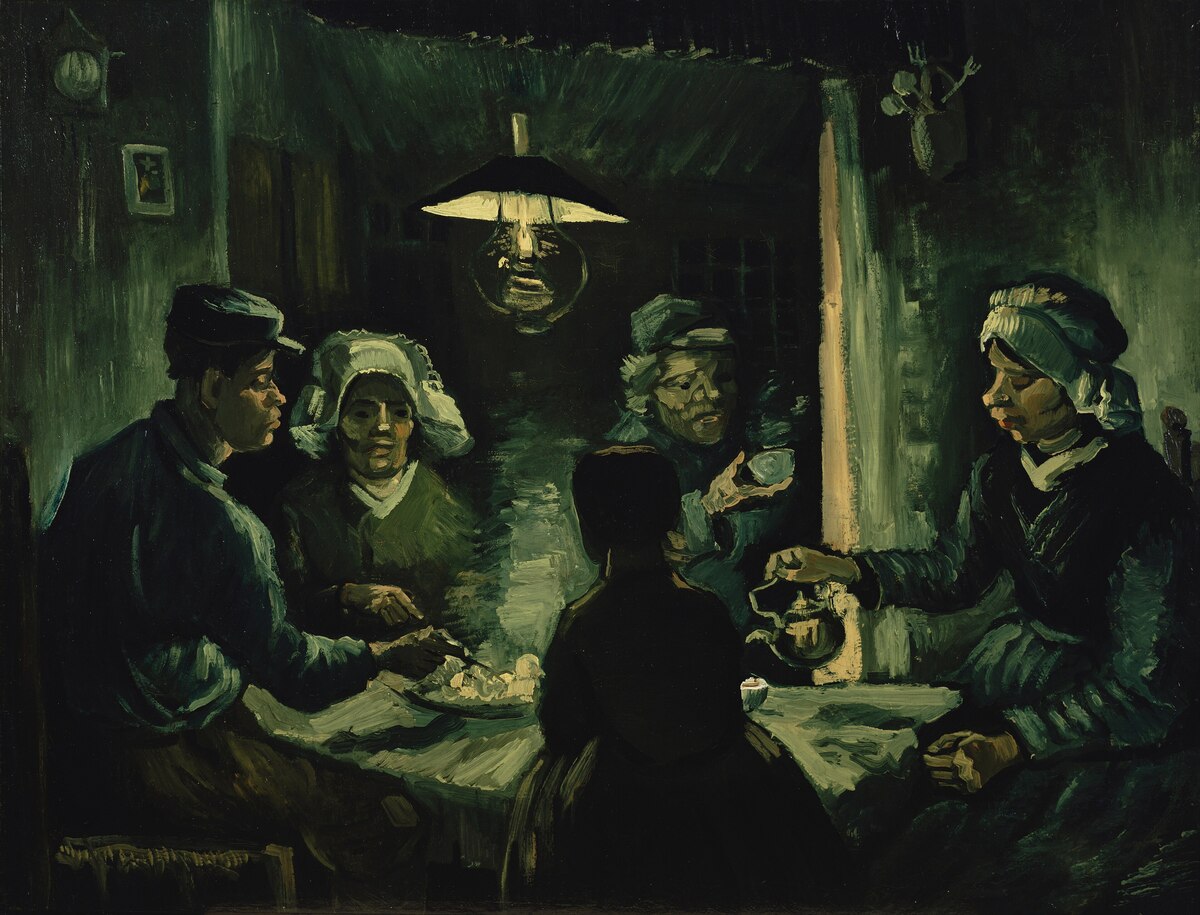
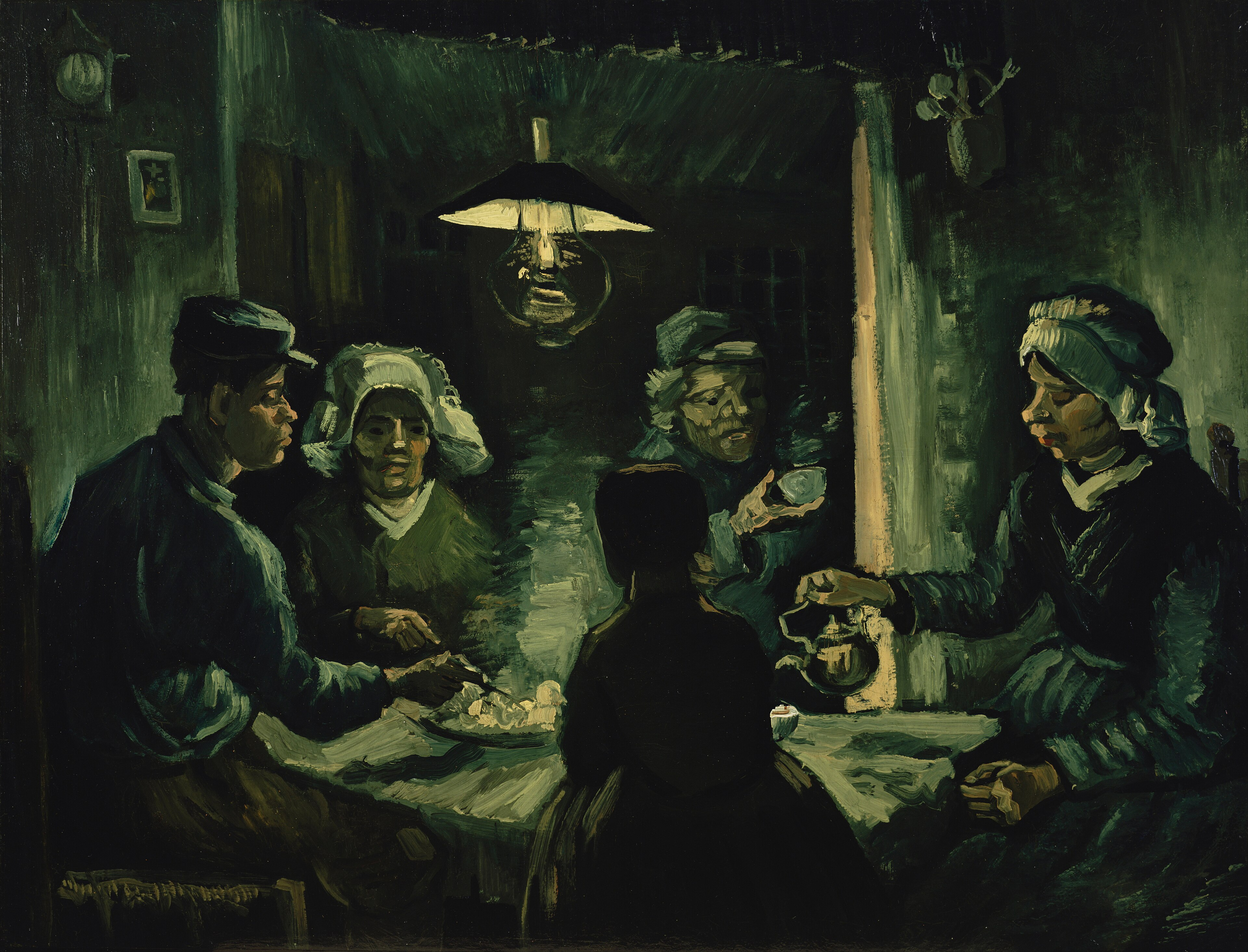
This is The Potato Eaters, painted by Vincent van Gogh in Nuenen in April and May 1885. It shows a family of peasant labourers gathered around a table to share a meal of potatoes.
A single hanging oil lamp lights them from above. Van Gogh painted it as a showpiece, deliberately choosing a difficult composition to prove he was becoming a good figure painter.
The museum's record notes that he wanted the picture to capture the harsh reality of country life. That is why the peasants have coarse faces and bony, working hands.
Look at the hands first. They reach into the dish of potatoes at the centre of the table, and they are as rough as the faces above them.
The room is dark and low, and the lamp is the only strong source of light. It falls on the heads, the shoulders, the dish and the few objects on the table, leaving the corners of the interior in shadow.
The five figures lean inward, so the arrangement forms a rough circle around the meal. The composition is deliberately hard to manage, and Van Gogh chose it for that reason.
Van Gogh explained the meaning of those hands himself. He said the peasants have tilled the earth themselves with these hands they are putting in the dish, and have therefore honestly earned their food.
Their coarse faces and bony hands are not a failure of skill. They carry the point of the picture, which is that the meal is the reward of hard work.
The painting belongs to a larger series of peasant character studies that Van Gogh made in his Nuenen period between 1883 and 1885.
The colour does the same work. Van Gogh painted the five figures in earth colours, which he compared to the colour of a really dusty potato, unpeeled.
That comparison matters. The people, the food and the ground they farm are tied together by the same palette of browns and dull greens.
Museum visitors often expect the bright yellows of his later work. Here the darkness is the subject: a dim interior, a plain meal, and a light that gives just enough to see by.
Van Gogh was very pleased with the painting, but it drew considerable criticism. Viewers objected that its colours were so dark and that the figures were full of mistakes.
His priority was different. For him the message of the painting mattered more than correct anatomy or technical perfection.
So the awkwardness is part of the argument. A polished, graceful peasant family would have softened exactly what he wanted the picture to say about labour and honest food.
The museum's record describes the picture as an interior scene of peasant life, a genre picture of farmers and figures around potatoes. Genre here means a scene of ordinary daily life rather than a religious or historical subject.
A second painting with the same title is held by the Kröller-Müller Museum in Otterlo, painted in Nuenen in April 1885 and measured differently. It is a separate object, not this canvas.
The museum also displays related works from 1885, including a study for The Potato Eaters and studies of the interior of a cottage.
The Potato Eaters is now one of Van Gogh's most famous works. Its fame rests on the very qualities that troubled its first viewers: the dark palette, the heavy faces, the bony hands.
Those choices make the meal legible as earned food rather than mere domestic comfort. The lamp gathers the family, and the earth colours bind them to the fields they work.
What stays with you is that circle of five people, eating in low light what their own hands have brought out of the ground.