ArchiveNefertiti Bust

Artwork record / 31 of 94

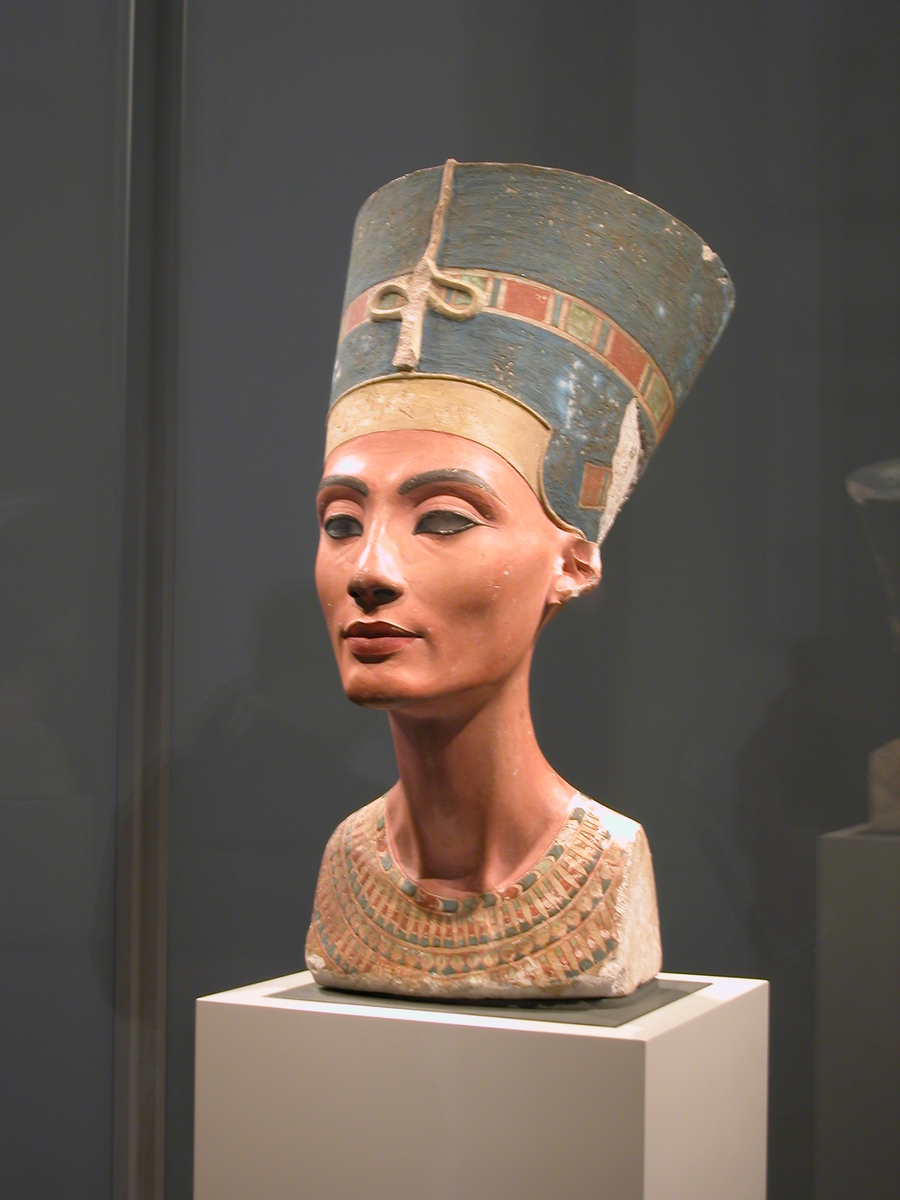
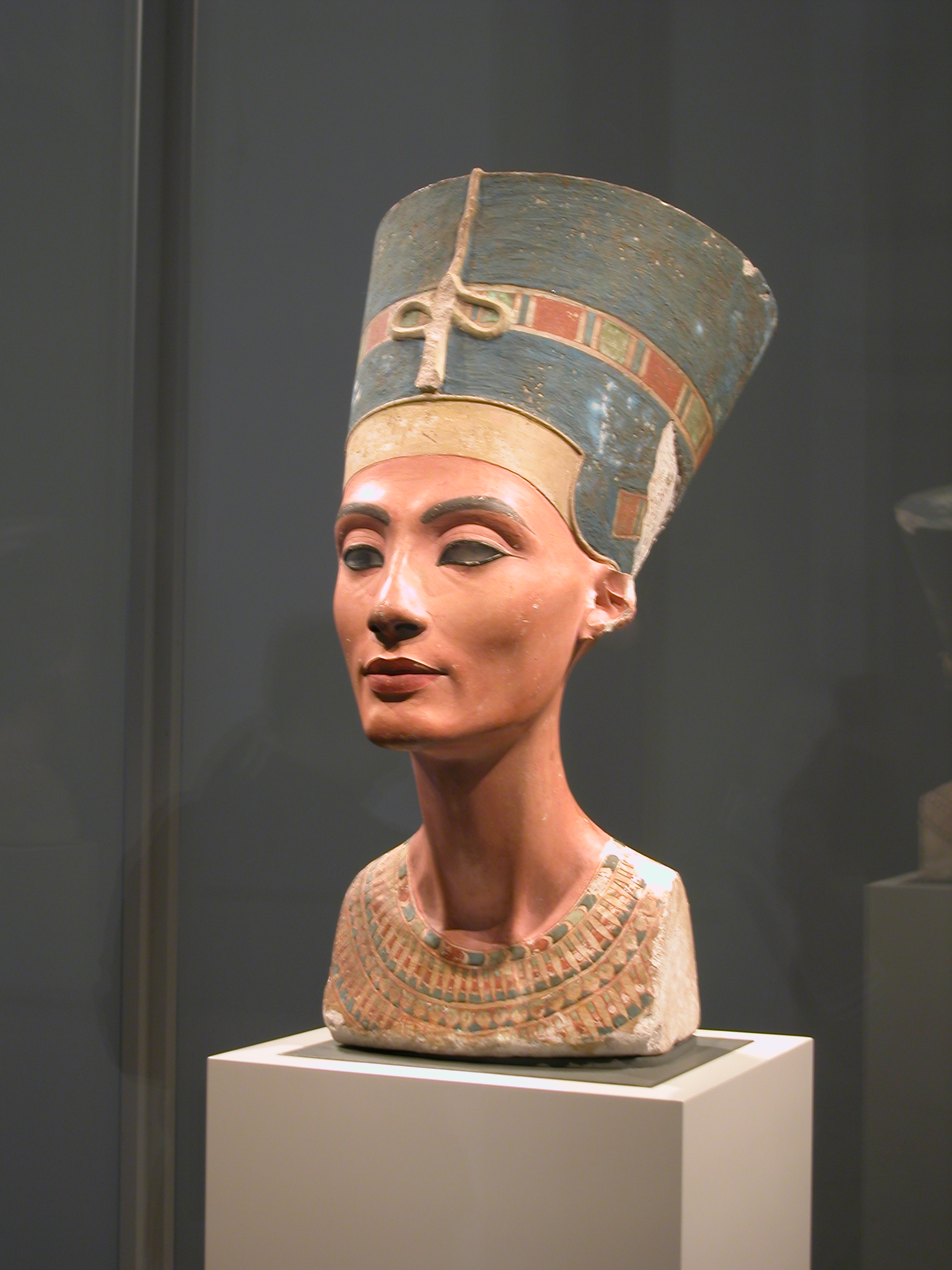
Nefertiti Bust by Thutmose (attributed by source) (circa 1345 BC)

Artist: Thutmose (attributed by source)

A painted limestone bust of Queen Nefertiti, Great Royal Wife of Pharaoh Akhenaten, attributed to the sculptor Thutmose and dated around 1345 BC during Egypt's Amarna Period. The identification rests on the supplied Wikimedia Commons description, which serves as a discovery aid rather than an official museum record, so confidence is medium.

Read the story ↓ About the artist ↓ Research and record ↓ Literature and sources ↓ Listen to the article ↓
Article text for AI
Shop this artwork ↓ 0 visits
Datecirca 1345 BCCultureAncient Egypt PeriodAmarna Period, 18th DynastyCurrent locationNeues Museum, Berlin, Germany
Listen to the article
100%
Nefertiti Bust by Thutmose (attributed by source) (circa 1345 BC)
Loading full-resolution artwork…
Scroll to zoom · drag to pan · double-click to focus Pinch to zoom · drag to explore · double-tap to focus FIELD VIEW / 31
Tools & download
Pixel colour Select a pixel with the eyedropper
No pixel selected

Choose the eyedropper, then click or tap the image. Scroll to zoom for finer selection.

Add text

Hand to pan · Select to move text and drawings · Add as many texts as you like · Scroll to zoom

Nefertiti Bust: high-resolution image

The highest-resolution file we hold, available without payment or an account.1,920 × 2,560 pixels.

Download highest-resolution image

Details to notice

About 3 minutes to read
01

Damaged crown side and shoulder core

The right side of the crown and shoulder where the painted plaster layer has broken away, exposing the limestone core and a rectangular inlay patch, evidence of the layered carving technique and later loss.

02

Painted broad collar

The wide necklace of concentric rows of blue, red, and yellow bead and floral motifs painted on the plaster over the shoulders, a key example of Amarna polychromy and craftsmanship.

03

Uraeus cobra and brow band

The raised cobra emblem set on the front of the crown together with the gold brow band and the vertical-striped inlay, the royal insignia that mark the figure as a queen.

Portrait unrecorded

About the makers

Thutmose (attributed by source)

Individual life dates unrecorded

Biographical details and a verified portrait have not yet been recorded for this attribution.

The research & record

Study the work.
Follow the evidence.

Find catalogue details, historical context, technical research and the literature behind this artwork.

Article text for AI
Open research text

The artwork record

Research catalogue

Catalogue information and detailed research, with references that link to the bibliography.

Updated .

Identity and catalogue

Link
Title
Nefertiti Bust(Ywpark2003, n.d.)
Artist or attribution
Thutmose (attributed by source)(Ywpark2003, n.d.)
Object date
circa 1345 BC
Medium and support
Painted limestone(Ywpark2003, n.d.)
Current collection or location
Neues Museum, Berlin, Germany(Ywpark2003, n.d.)
Movement or period
Amarna Period, 18th Dynasty
Country or culture
Ancient Egypt
Depicted subject
A painted limestone bust of Queen Nefertiti, Great Royal Wife of the pharaoh Akhenaten, crafted by the sculptor Thutmose around 1345 BC during the Amarna Period.
Title variants
Bust of Nefertiti
Attribution qualification
Attributed to the sculptor Thutmose by the supplied source.
Support
Limestone core with painted plaster layer
Dimensions
Unknown
Catalogue identification

The object is a painted limestone bust of Queen Nefertiti, identified in the supplied source as the Great Royal Wife of the Egyptian pharaoh Akhenaten. That identification fixes the subject within the royal court of the Amarna Period rather than presenting her as an anonymous or generic figure, and the source places the bust among the material products of that court. The bust is described as iconic, a characterization that belongs to the work's reception rather than to its original function and that the source does not support with any account of its ancient use or display.(Ywpark2003, n.d., Description)

The same source attributes the bust to the sculptor Thutmose and dates it to circa 1345 BC, during the Amarna Period of the 18th Dynasty of Egypt. Two qualifications attach to that information. The date is the date of the object, not of any event the bust depicts. The attribution and the date both rest on a Wikimedia Commons file description, which the source annotation describes as a discovery aid used as a fallback because no official museum record was supplied, so they are sourced claims rather than facts confirmed by an institutional object record. The source also associates the bust with the Neues Museum in Berlin, Germany, an association recorded in the file title and repeated in the supplied description; the evidence supplies no accession number, dimensions, recorded title variants or inscriptions.(Ywpark2003, n.d., Description)

The object is a painted limestone bust of Queen Nefertiti, the Great Royal Wife of the Egyptian Pharaoh Akhenaten.(Ywpark2003, n.d.)

The bust was crafted by the sculptor Thutmose circa 1345 BC during the Amarna Period of the 18th Dynasty of Egypt.(Ywpark2003, n.d.)

Materials and technique

Link
Documented material

The bust is made of painted limestone. This single documented material statement is the foundation for any technical description of the object, and it distinguishes the sculpture from works whose substance is inferred from appearance alone. The evidence records the material as a documented fact rather than a visual impression, so the limestone body of the bust is the one material component that the supplied record affirms directly.(Ywpark2003, n.d., Description)

The same source that records the limestone material also identifies the object as a painted limestone bust of Queen Nefertiti, the Great Royal Wife of the Egyptian Pharaoh Akhenaten, and places its making in the Amarna Period of the 18th Dynasty at approximately 1345 BC, attributing the work to the sculptor Thutmose. These identifications come from a Wikimedia Commons file description rather than an official museum object record, which was not supplied here. The material statement should therefore be read within the same evidentiary frame as the attribution and date: supported by the cited source, but not corroborated in this account by an institutional technical file. The bust is associated with the Neues Museum in Berlin, Germany, as recorded in the same source, which is where the object's current institutional setting is located in the evidence.(Ywpark2003, n.d., Description)

Surface colour and layers

The published transcript states that the limestone core carries a painted plaster layer, and that this layer preserves colour on the surface, including skin tones, the red bands of the crown, and the detail of the eyes and brows. That account of a plaster layer over a limestone core is a description of visible surface colour rather than a report of technical examination: the transcript itself frames this passage as what the supplied image shows, and the underlying source unit supplied for this section documents only painted limestone. The distinction matters for a materials account, because the presence and composition of a preparation or plaster ground, the number of layers, and the pigments used cannot be established from the evidence supplied here. What the evidence supports is a painted limestone bust whose surface preserves visible colour, with the specific colours and their distribution described in the transcript rather than confirmed by an independent technical record.(Ywpark2003, n.d., Description)

Interpretation

Because the documented material is painted limestone, the object belongs to a class of sculpture in which a carved stone body carries applied colour, so that the modelling of the form and the painted finish are two aspects of one working process. The transcript describes a carefully modelled face, a long, elegant neck, and a tall, flat-topped crown, and treats the crown and collar as markers of the royal woman's status. Those are observations of the finished surface and its formal choices, not laboratory findings about preparation or technique, and the supplied source does not record tools, carving methods, pigment analysis, or conservation treatment. A technical description of this bust can therefore affirm its painted limestone substance and the preserved colour visible on its surface, while leaving the sequence of preparation, the nature of any ground layer, and the identification of pigments as questions the present evidence does not answer.(Ywpark2003, n.d., Description)

Documented material

The source characterizes the bust as iconic, which is a statement about the work's reception rather than about its original making, and the transcript notes that the object is associated with the Neues Museum in Berlin. Read together with the material record, these points explain why the physical constitution of the bust carries historical weight: a painted limestone royal portrait, attributed to Thutmose and dated to the Amarna Period around 1345 BC, is the object whose material description this section documents. The limitations of that documentation should remain explicit. The identification of the subject, the attribution to Thutmose, the Amarna Period date, the association with the Neues Museum, and the iconic status all rest on the same Wikimedia Commons source, described as a discovery aid rather than an official museum record, so the material evidence and the attributional framework share a single evidential basis here.(Ywpark2003, n.d., Description)

The bust is made of painted limestone.(Ywpark2003, n.d.)

Reception and literature

Link
Documented Reception and the Limits of the Record

The reception history recorded in the supplied evidence is thin and begins from a single documented characterisation: the Wikimedia Commons file description of the bust calls it iconic. That designation is a statement about how the work is received and circulated, not about what it was made to do in the Amarna Period, and the evidence does not narrate the sequence of events, exhibitions, publications or public moments through which that status was built. What the unit does establish is the present cultural standing of the object and the context in which that standing is asserted, namely a Commons file page whose descriptive text frames the bust as an iconic image. Because the source is a Wikimedia Commons file rather than an institutional object record, the reception claim it carries should be read as an attributed, general statement of standing rather than as documentation of a specific display, publication or event. Any account of the bust's reception that rests on this evidence must therefore remain at the level of recognised iconic status, without importing named admirers, imitation, biography, literary reading, reproduction or appropriation that the supplied units do not supply.(Ywpark2003, n.d., Description)

The iconic status asserted in the Commons description attaches to an object whose identification, making and material the same source also records. That source gives the subject as Nefertiti, the Great Royal Wife of the pharaoh Akhenaten, attributes the work to the sculptor Thutmose, dates it to around 1345 BC in the Amarna Period of the 18th Dynasty, and specifies painted limestone as the material; it further associates the bust with the Neues Museum in Berlin. Keeping these identifications alongside the reception statement matters because the bust's later cultural weight rests on a specific object with a specific attribution rather than on a free-floating image. The source is annotated as a discovery aid used in the absence of an official museum record, and it is recorded as only partially consulted, so the attribution to Thutmose, the date and the Berlin association are sourced claims carrying that qualification rather than facts confirmed by an institutional object record. The reception value the description asserts and the object-level claims it supplies come from the same file description and share the same evidential limits.(Ywpark2003, n.d., Description)

The bust is described as iconic in the supplied Wikimedia Commons file.(Ywpark2003, n.d.)

Collection and display

Link

The Nefertiti Bust is identified in the supplied Wikimedia Commons file under a title that associates it with the Neues Museum in Berlin, Germany. That association is a locational and institutional link carried in the file title rather than a detailed account of a gallery, room, or installation, and no official museum record was supplied to document its display context further. The same source identifies the object as a painted limestone bust of Queen Nefertiti, the Great Royal Wife of the Egyptian pharaoh Akhenaten, and attributes it to the sculptor Thutmose, dating it circa 1345 BC during the Amarna Period of the 18th Dynasty. The file also describes the work as iconic. Because the source is a Wikimedia Commons file description used as a fallback when no official museum record was provided, these identifications function as sourced claims, with the attribution and date resting on that source rather than on institutional documentation consulted here.(Ywpark2003, n.d., File title)

The Nefertiti Bust is associated with the Neues Museum in Berlin, Germany, as indicated by the file title.(Ywpark2003, n.d.)

Documented values and qualified estimates

Link
Valuation and its Limits

Interpretation

The only numerical valuation in the supplied record is not an appraisal, an auction result or an institutional figure, but a calculated working insurance estimate of US$500M to US$2B, recorded as a working calculation generated on 2026-10-16. The methodology behind it draws only on confirmed context: the painted limestone bust of Queen Nefertiti, attributed by the supplied source to the sculptor Thutmose, dated circa 1345 BC in the Amarna Period of the 18th Dynasty, and identified as held at the Neues Museum in Berlin. Because the object is treated as an iconic, unique, museum-held ancient Egyptian artifact for which no supplied sale, auction, official appraisal or institutional insurance record exists, the range is calculated conservatively, as irreplaceable state-held cultural property against which no reliable open-market comparable can be established. A wide bracket is used precisely to reflect the absence of a documented acquisition value, accession number and official museum object record in the supplied excerpts, and the upper bound is deliberately held below highly publicized trophy-asset outliers so as not to overstate certainty.(Ywpark2003, n.d.)

That figure carries explicit qualifications that must travel with it. It is a model-generated working range for manual review only, not an official insurance value, appraisal, auction result or sale price, and it rests on no comparable sales, private insurance records or institutional valuation. The supplied Wikimedia Commons source supports object identification context only; it contains no public appraisal, acquisition price or insurance figure. Actual insurance or coverage values, if any, would require validation by qualified specialists and by the holding institution. In the same way that the source describes the bust as iconic, a statement about reception rather than original function, the monetary range describes a research placeholder rather than a market fact. The present association with the Neues Museum in Berlin is recorded in the same source, which identifies the subject as Nefertiti, the Great Royal Wife of Akhenaten, and places the making of the bust in the Amarna Period around 1345 BC, a date for the object itself rather than for any depicted event, since the bust is a portrait and not a narrative scene. Attribution to Thutmose comes from that same source, a Wikimedia Commons file description rather than an official museum record, so it remains a sourced claim whose institutional confirmation was not supplied here.(Ywpark2003, n.d.)

Working estimate

Calculated working insurance estimate, not a sale price: Estimated value: US$500M to US$2B Recorded date: Working calculation, generated 2026-10-16. Methodology: Broad working insurance range derived from confirmed context only: the painted limestone bust of Queen Nefertiti, attributed by the supplied source to the sculptor Thutmose, dated circa 1345 BC during the Amarna Period of the 18th Dynasty, and identified as held at the Neues Museum in Berlin. Because the object is an iconic, unique, museum-held ancient Egyptian artifact with no supplied sale, auction, official appraisal, or institutional insurance record, the range is calculated conservatively by treating it as an irreplaceable state-held cultural property against which no reliable open-market comparable exists. A wide bracket is used to reflect the absence of documented acquisition value, accession number, and official museum object record in the supplied excerpts. The upper bound is held below highly publicized trophy-asset outliers to avoid overstating certainty. This is a manual-review placeholder range for further research, not a claim of market value. Qualification: This is a model-generated working range for manual review only. It is not an official insurance value, appraisal, auction result, or sale price. It is not based on comparable sales, private insurance records, or any institutional valuation. The supplied Wikimedia Commons source supports object identification context only and does not contain a public appraisal, acquisition price, or insurance figure. Actual insurance or coverage values, if any, would require validation by qualified specialists and the holding institution.(Ywpark2003, n.d.)

Bibliography

Sources and further reading

References are arranged by author or organisation, with links to the original publications. Where no publication date is recorded, n.d. means no date.

Source notes updated .

  1. 01

    Secondary · About this artwork

    Wikimedia Commons: Nefertiti Bust. Wikimedia Commons: Nefertiti Bust. Wikimedia Commons.

    Discovery source for the Nefertiti Bust, providing identification, maker, date, material, and period. Used as a fallback because no official museum record was supplied.

    Language
    en
    Link to reference
    Citation text

Article text and sources · Reading and attribution

An unhandled error has occurred. Reload 🗙