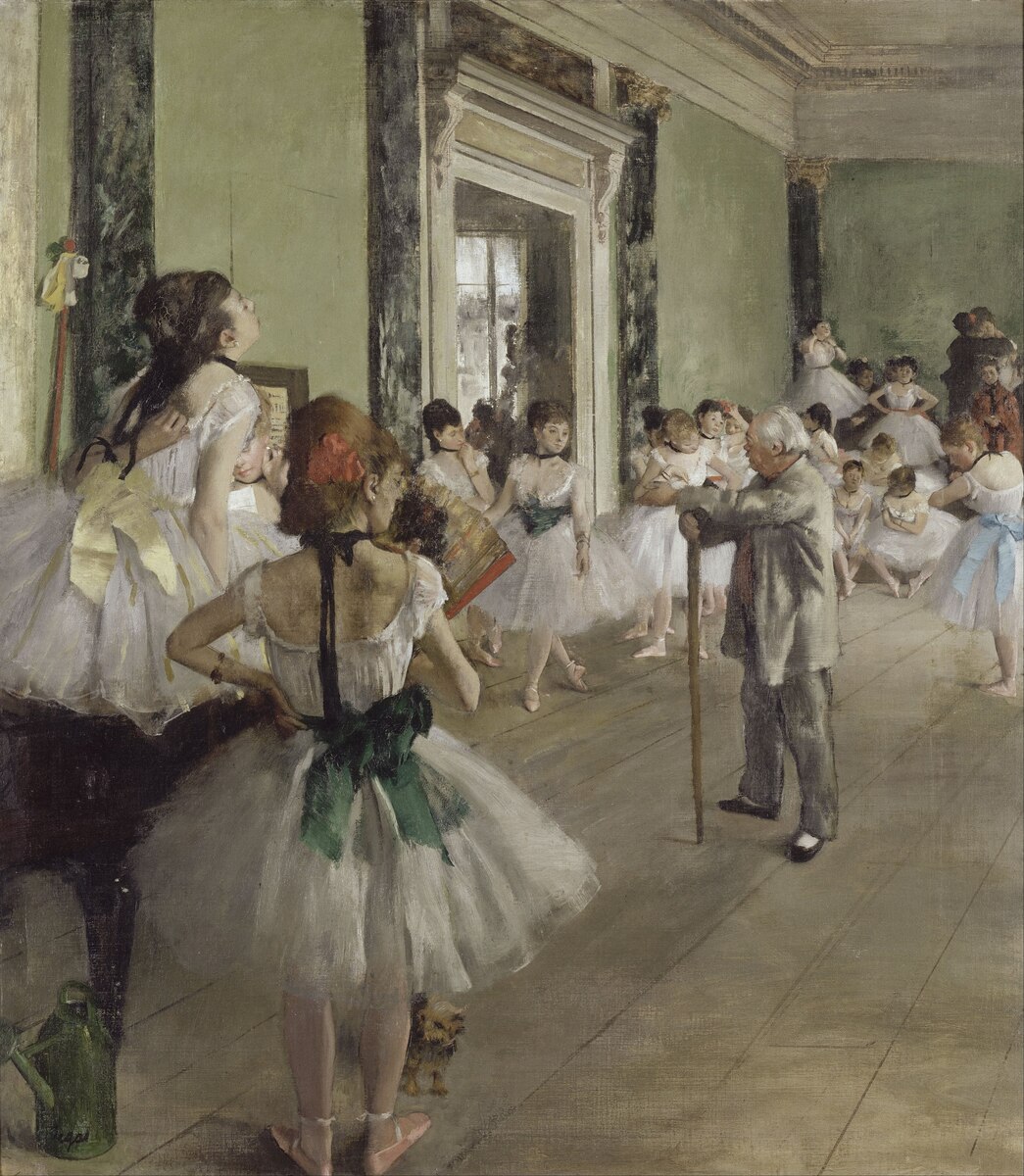
The story About 4 minutes to read
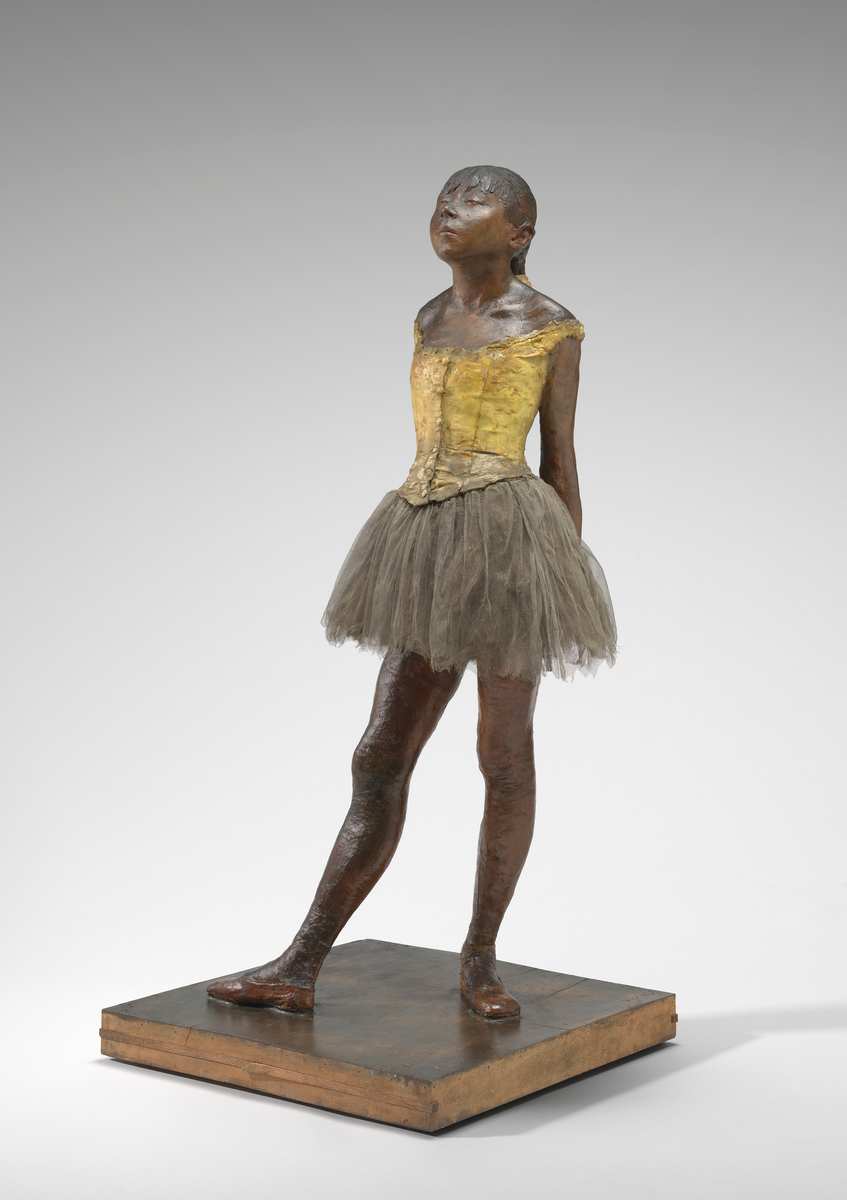
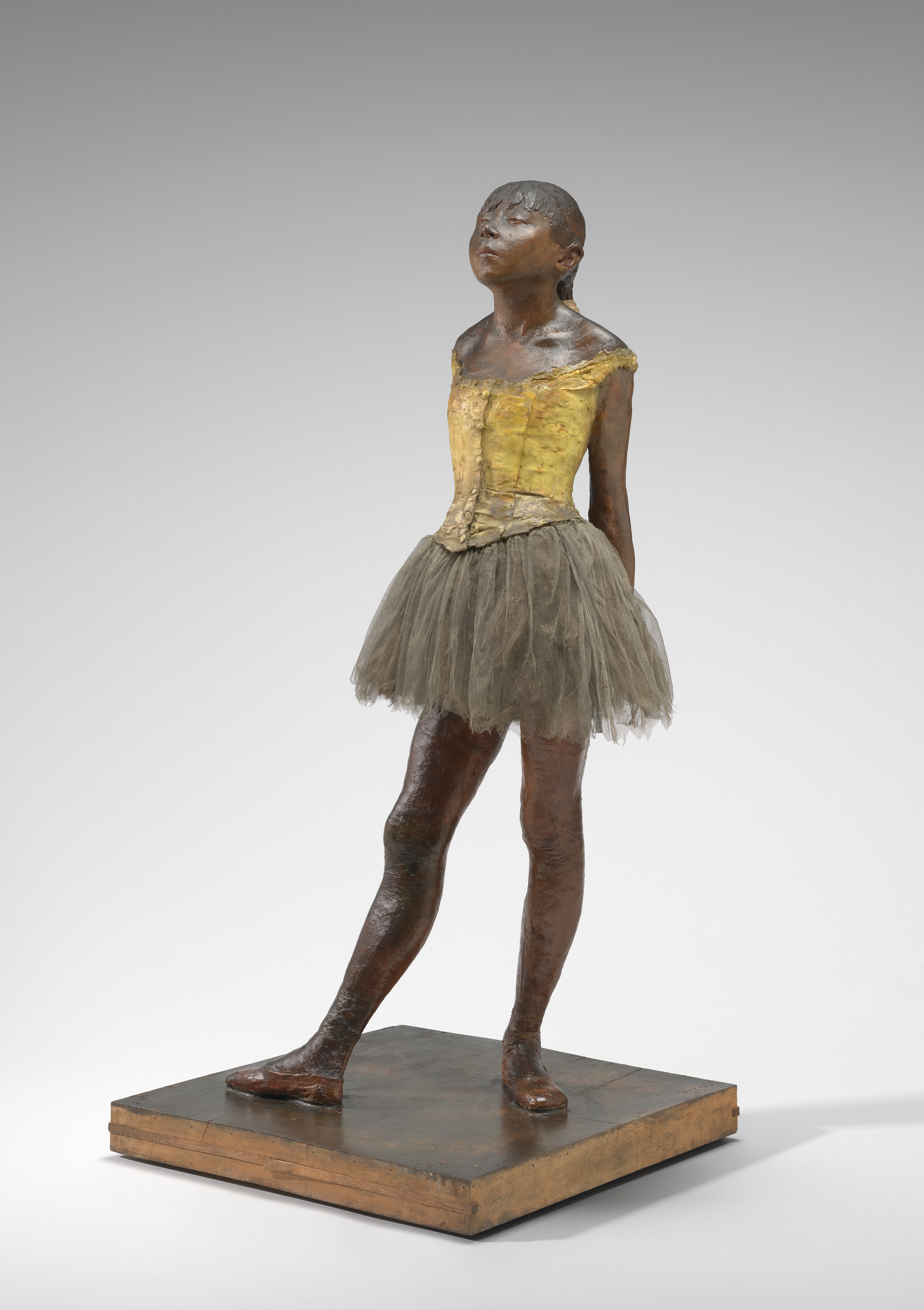
This is Edgar Degas's Little Dancer Aged Fourteen, modelled between 1878 and 1881. It shows a young ballet dancer standing still on a wooden base, her head tipped back.
The statue is much smaller than most people expect when they first see it in the room. She stands close to life scale, quiet and compact, dressed in real fabric over a wax body.
Her chin is raised, her eyes are shut, and her lips are slightly parted. Cropped hair is flattened and braided down the back of her head.
Her legs are long and muscular, placed in a relaxed fourth position, with one foot turned out. She stands on a flat wooden board with visible grain and wear.
The bodice is a strapless corset shape in yellowish patinated bronze, with modelled seams, a central lacing line, and roughly worked shoulder straps.
Over the figure, a real tulle tutu is attached, with translucent layered gauze and pleats. That skirt is not carved; it is actual fabric, and it sits against the harder surface of the body.
Degas made the figure from pigmented beeswax, clay, and a metal armature, and he worked other materials into it, including rope, paintbrushes, human hair, a silk and linen ribbon, a cotton faille bodice, a cotton and silk tutu, and linen slippers.
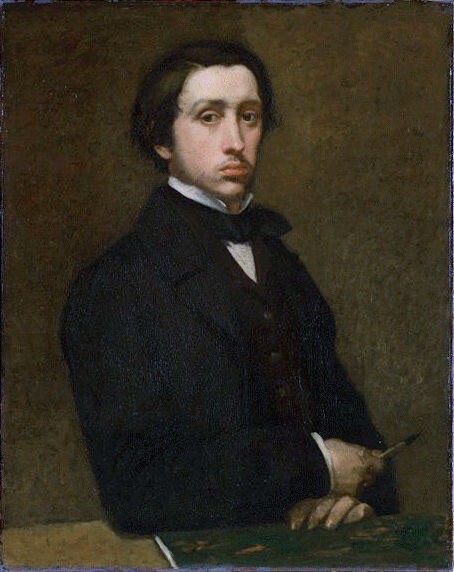
The work is catalogued as a sculpture, part of a sculpture series, with the genre term figure. Degas was a French artist recorded as a painter, sculptor, poet, printmaker, photographer, and draftsperson.
The work is listed among the pieces presented at the sixth Impressionist exhibition. That showing placed a wax figure, dressed in real cloth, before an audience expecting bronze or marble on a pedestal.
The sculpture now belongs to the National Gallery of Art in Washington, D.C., from the Collection of Mr. and Mrs. Paul Mellon.
The real tulle skirt attached over the figure breaks the bronze illusion. The work reads as a mixed-media assemblage rather than a conventional sculpture.
Her working dancer's posture and anatomical realism have been presented as Degas's insistence over idealised ballet cliche. She is not a porcelain figurine; she is a body that has trained.
The upturned face, closed eyes, and parted lips have been described as conveying pride, endurance, and a trance-like defiance that scandalised early viewers. That reading is an interpretation offered for the expression, not a documented statement of the sitter's feelings.
So the stillness matters. A dancer at rest, held between performances, is made to carry the effort the stage usually hides.
Put the pieces together. Wax and cloth, raised chin and turned-out foot, a girl standing on a rough board in a real tutu.
Degas does not give us a ballet fantasy. He gives us a young working dancer, and the sculpture asks us to look at the labour that supports the grace.