ArchiveLittle Dancer Aged Fourteen

Artwork record / 192 of 331

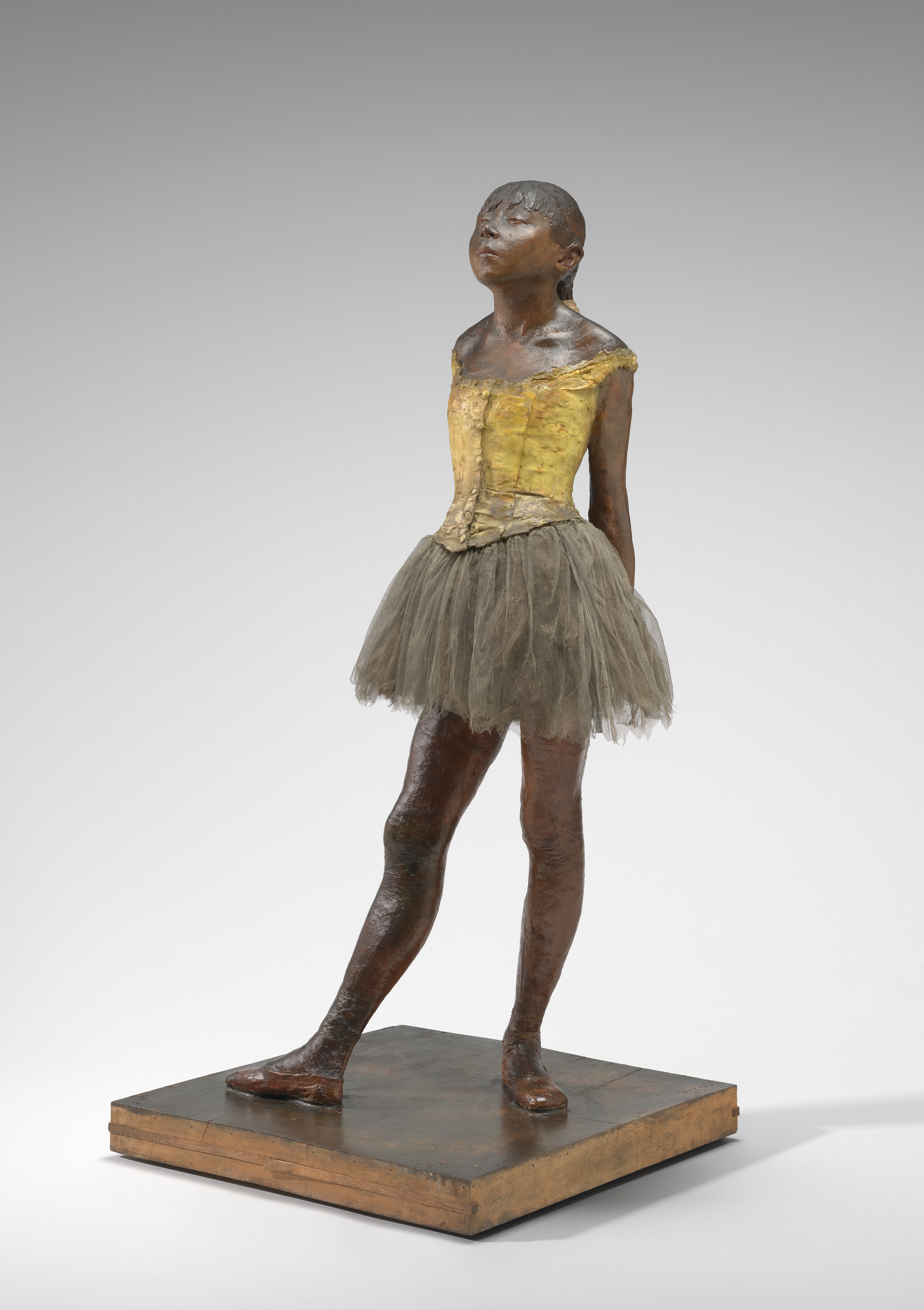
Little Dancer Aged Fourteen by Edgar Degas (1878-1881)

Artist: Edgar Degas

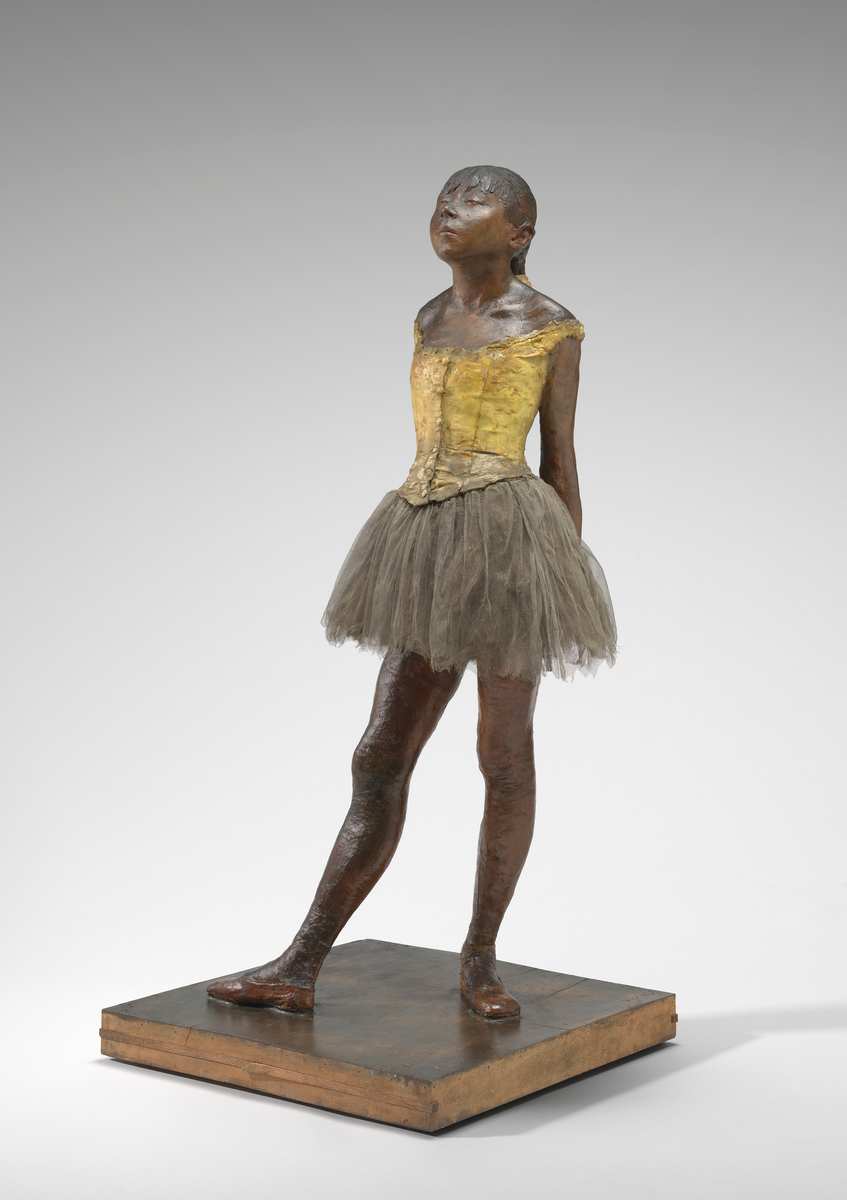
A gallery guide to Degas's sculpture of a fourteen-year-old ballet dancer, modelled in wax between 1878 and 1881, shown at the sixth Impressionist exhibition, and now in the National Gallery of Art. The tour reads the figure's upturned face, turned-out stance, and real fabric tutu as a study in working realism rather than an idealised ballet image.

Read the story ↓ About the artist ↓ Research and record ↓ Literature and sources ↓ Listen to the article ↓
Article text for AI
Shop this artwork ↓ 4 visits
Date1878-1881CultureFrance PeriodImpressionismCurrent locationNational Gallery of Art, Washington, D.C., United States
Listen to the article
100%
Little Dancer Aged Fourteen by Edgar Degas (1878-1881)
Loading full-resolution artwork…
Scroll to zoom · drag to pan · double-click to focus Pinch to zoom · drag to explore · double-tap to focus FIELD VIEW / 192
Tools & download
Pixel colour Select a pixel with the eyedropper
No pixel selected

Choose the eyedropper, then click or tap the image. Scroll to zoom for finer selection.

Add text

Hand to pan · Select to move text and drawings · Add as many texts as you like · Scroll to zoom

Little Dancer Aged Fourteen: high-resolution image

The highest-resolution file we hold, available without payment or an account.2,822 × 4,000 pixels.

Download highest-resolution image

Details to notice

About 3 minutes to read
01

Wooden block base

The flat rectangular wooden board and its plinth edge on which the figure stands, with visible grain, seams, and wear marks; it grounds the pose and is a characteristic fixture of the bronze edition of this sculpture.

02

Legs in fourth position

The long, muscular bronze legs and feet placed in a relaxed fourth position, one foot turned out and one arm hidden behind the back, showing the working dancer's posture and the anatomical realism Degas insisted on over idealised ballet cliche.

03

Real tulle tutu skirt

The translucent layered gauze skirt attached over the metal figure, with soft translucent pleats and fraying hems that break the bronze illusion and mark the work as a mixed-media assemblage rather than a conventional sculpture.

Artist portrait of Edgar Degas
Artist portrait Image credit

Edgar Degas. Image source · Public domain

About the artist

Edgar Degas

1834 to 1917

Edgar Degas was a French Impressionist artist (1834–1917). Their work is associated with Impressionism. Their recorded places of work include Paris; Belgium; Florence; London.

Born
1834
Died
1917
Nationality
France
Birthplace
Paris
Died in
Paris

The research & record

Study the work.
Follow the evidence.

Find catalogue details, historical context, technical research and the literature behind this artwork.

Article text for AI
Open research text

The artwork record

Research catalogue

Catalogue information and detailed research, with references that link to the bibliography.

Updated .

Identity and catalogue

Link
Title
Little Dancer Aged Fourteen
Object date
1878-1881
Medium and support
Pigmented beeswax, clay, metal armature, rope, paintbrushes, human hair, silk and linen ribbon, cotton faille bodice, cotton and silk tutu, linen slippers, on wooden base(Wikimedia Commons: Little Dancer of Fourteen Years, 2018)
Dimensions
overall without base: 98.9 x 34.7 x 35.2 cm (38 15/16 x 13 11/16 x 13 7/8 in); weight: 49 lb. (22.226 kg)(Wikimedia Commons: Little Dancer of Fourteen Years, 2018)
Current collection or location
National Gallery of Art, Washington, D.C., United States(Wikimedia Commons: Little Dancer of Fourteen Years, 2018)
Movement or period
Impressionism
Country or culture
France
Depicted subject
A standing young ballet dancer, aged fourteen, modelled with an upturned face, closed eyes, and parted lips, wearing a real bodice and tutu over a pigmented wax figure on a wooden base.
Title variants
Little Dancer of Fourteen Years; Little Dancer Aged Fourteen(Wikimedia Commons: Little Dancer of Fourteen Years, 2018)
Accession number
1999.80.28
Catalogue identity

The object is catalogued under the title Little Dancer Aged Fourteen, with the artist given as Edgar Degas, whose life dates are recorded as 1834 to 1917. The date assigned to the work is 1878 to 1881, the span during which it was modelled. The same object also appears under the variant title Little Dancer of Fourteen Years, so the two titles should be understood as alternative catalogue headings for one work rather than as references to separate pieces. In catalogue terms the work is classified as a sculpture and as part of a sculpture series, and the genre term assigned to it is figure. These are catalogue designations, distinct from the dating of the object itself: the 1878 to 1881 range belongs to the act of modelling, while the titles and classifications are later descriptive apparatus applied by the cataloguing institution. The object is generally described in the published record as smaller than many first-time viewers expect, standing close to life scale, quiet and compact, dressed in real fabric over a wax body.(Wikimedia Commons: Little Dancer of Fourteen Years, 2018, File information, Summary; Summary; Summary, Object type)

Materials and surface as described

A recurring feature of the published description is the way the surface is described as bronze even though the underlying construction is wax, clay, and other materials. The strapless corset bodice is described as rendered in yellowish patinated bronze, with visible modelled seams, a central lacing line, and roughly worked shoulder straps. The long muscular legs and feet are likewise described as bronze, placed in a relaxed fourth position with one foot turned out. A real tulle tutu skirt is attached over the metal figure, with translucent layered gauze and pleats, and the figure stands on a flat rectangular wooden board and plinth edge with visible grain, seams, and wear marks. The description states that the real tulle skirt attached over the figure breaks the bronze illusion and marks the work as a mixed-media assemblage rather than a conventional sculpture. The bodice's roughly worked shoulder straps are described as revealing a deliberately raw sculptural surface against smooth shoulders. It should be kept clear that these descriptions of bronze-coloured surfaces and attached fabric come from the supplied published account, and that the excerpts do not record conservation treatment, technical examination reports, or condition assessments beyond the visible description of the bodice surface and skirt.(Wikimedia Commons: Little Dancer of Fourteen Years, 2018, Summary, Object type)

Exhibition and image record

The work's exhibition history in the supplied record includes its listing among the works presented at the sixth Impressionist exhibition. That showing placed a wax figure dressed in real cloth before an audience expecting bronze or marble on a pedestal, which is one reason the mixed-media construction matters in the object's reception. The same body of material notes that the source photograph is a National Gallery of Art image, B27545, made in Washington, D.C., and listed as a JPEG of 2,822 by 4,000 pixels, and that the image was donated to Wikimedia Commons as part of a project by the National Gallery of Art under its Open Access Policy, credited to the National Gallery of Art. The Commons file page functions as a discovery aid carrying the institution's object metadata for Little Dancer Aged Fourteen, NGA 110292, rather than as the owning institution's original catalogue. The excerpts consulted are partial, which qualifies what can be asserted about the object from this source alone.(Wikimedia Commons: Little Dancer of Fourteen Years, 2018, Summary; Summary, Object type)

Edgar Degas (1834-1917) created the work titled Little Dancer Aged Fourteen, dated between 1878 and 1881.(Wikimedia Commons: Little Dancer of Fourteen Years, 2018)

The work also appears under the title Little Dancer of Fourteen Years.(Wikimedia Commons: Little Dancer of Fourteen Years, 2018)

The work is catalogued as a sculpture and as part of a sculpture series, with the genre term figure.(Wikimedia Commons: Little Dancer of Fourteen Years, 2018)

Subject and iconography

Link
The figure and its recorded appearance

Visual observation

The central object is a standing figure of a young ballet dancer, modelled in pigmented beeswax over clay and a metal armature and dated to 1878-1881. The visible account is precise about her pose: the head is tilted back with the chin raised, the eyes are shut, and the lips are slightly parted; the hair is cropped, flattened, and braided down the back. The legs are long and muscular and stand in a relaxed fourth position with one foot turned out. She rests not on a polished pedestal but on a flat rectangular wooden board and plinth edge that carries visible grain, seams, and wear marks, details that locate the figure in a working context rather than an idealised one. Observation of this kind establishes what the surviving object looks like; it does not by itself establish who modelled or sat for it, which the supplied excerpts do not name.(Wikimedia Commons: Little Dancer of Fourteen Years, 2018, Vision-derived semantic focus, upturned_face_expression; Vision-derived semantic focus, fourth_position_stance; Vision-derived semantic focus, wooden_platform_base; Structured data, Image title; Summary)

Dress, surface and mixed media

Dress and surface treatment are central to how the figure reads. The strapless corset bodice is described in yellowish patinated bronze, with visible modelled seams, a central lacing line, and roughly worked shoulder straps; the roughness of those straps against smoother shoulders has been noted as a deliberately raw sculptural surface. Over the metal figure a real tulle tutu skirt is attached, with translucent layered gauze and pleats, so the skirt is not carved or cast but actual fabric sitting against the harder body. That attachment is what breaks any illusion of a single bronze and marks the work as a mixed-media assemblage rather than a conventional sculpture. The material list supports and extends this observation: beyond the pigmented beeswax body it includes clay, a metal armature, rope, paintbrushes, human hair, a silk and linen ribbon, a cotton faille bodice, a cotton and silk tutu, linen slippers, and a wooden base. The source photographs the object in a National Gallery of Art image, B27545, made in Washington, D.C. and listed as a JPEG of 2,822 by 4,000 pixels.(Wikimedia Commons: Little Dancer of Fourteen Years, 2018, Vision-derived semantic focus, gilded_bodice_and_shoulders; Vision-derived semantic focus, gauze_tutu_skirt; Structured data, Image title; Metadata, Author, Short title, Size of this preview)

The girl's head is tilted back with her chin raised, her eyes are shut, and her lips are slightly parted, with cropped hair flattened and braided down the back.(Wikimedia Commons: Little Dancer of Fourteen Years, 2018)

The strapless corset bodice is rendered in yellowish patinated bronze, with visible modelled seams, a central lacing line, and roughly worked shoulder straps.(Wikimedia Commons: Little Dancer of Fourteen Years, 2018)

A real tulle tutu skirt is attached over the metal figure, with translucent layered gauze and pleats.(Wikimedia Commons: Little Dancer of Fourteen Years, 2018)

The long muscular bronze legs and feet are placed in a relaxed fourth position, with one foot turned out.(Wikimedia Commons: Little Dancer of Fourteen Years, 2018)

The figure stands on a flat rectangular wooden board and plinth edge with visible grain, seams, and wear marks.(Wikimedia Commons: Little Dancer of Fourteen Years, 2018)

Historical context

Link
Catalogue identity and documentation

The object is catalogued by the National Gallery of Art in Washington, D.C., as Little Dancer Aged Fourteen, accession number 1999.80.28, and credited to the Collection of Mr. and Mrs. Paul Mellon. It also appears under the title Little Dancer of Fourteen Years. The institution classifies it as a sculpture within a sculpture series, with the genre term figure. Its recorded overall dimensions, without the base, are 98.9 by 34.7 by 35.2 centimetres, and its recorded weight is about 22.226 kilograms, or 49 pounds. The Wikimedia Commons file page that carries this metadata is a discovery aid reproducing the National Gallery's own open-access credit, photograph B27545, made in Washington, D.C. and issued as a JPEG of 2,822 by 4,000 pixels, rather than the owning institution's original catalogue, so the recorded figures should be read as institutional metadata transmitted through a fallback source.(Wikimedia Commons: Little Dancer of Fourteen Years, 2018, Summary, Alternative names; Summary, Credit line; Summary)

The work is dated between 1878 and 1881, and it is listed among the works presented at the sixth Impressionist exhibition. That exhibition listing is the point at which a figure built from wax, clay and real cloth was placed before an audience whose expectations for sculpture were formed by bronze and marble on a pedestal. The showing is documented as a fact of the work's exhibition history, while the responses it provoked are reported separately and need to be weighed as accounts rather than as the event itself. The credit line, dimensions and accession number describe the later institutional life of the object, not its creation, so the commissioning circumstances of 1878 to 1881 remain distinct from its Mellon provenance and its present National Gallery status.(Wikimedia Commons: Little Dancer of Fourteen Years, 2018, File usage on other wikis, French Wikipedia; Summary, Credit line; Summary, Alternative names)

Materials and the limits of the record

The making of the figure is documented through its materials: pigmented beeswax and clay formed the body over a metal armature, and rope, paintbrushes, human hair, a silk and linen ribbon, a cotton faille bodice, a cotton and silk tutu, and linen slippers were worked into the whole, mounted on a wooden base. This list matters beyond inventory, because it establishes that fabric and hair are constitutive parts of the object rather than accessories added after completion. At the same time, the supplied excerpts do not name the specific sitter and do not record symbolic meanings beyond the interpretive descriptions of the face, stance and mixed-media construction. They also do not record conservation treatment, technical examination reports, or condition assessments beyond the visible description of the bodice surface and the skirt. Any account of who the girl was, what she felt, or how the materials have aged since the nineteenth century would therefore exceed what the evidence establishes.(Wikimedia Commons: Little Dancer of Fourteen Years, 2018, Summary, Alternative names; Summary)

Artist, attribution and commissioning history

Degas himself is recorded as a French artist and as a painter, sculptor, poet, printmaker, photographer and draftsperson, born in Paris on 19 July 1834 and dead there on 27 September 1917. That range of recorded roles situates the Little Dancer within a career that crossed media, which is consistent with an object that combines modelled wax with cloth, hair and ribbon. The identification of the artist and the dating of the work to 1878 to 1881 are secure at the level of catalogue attribution, but secure identification does not by itself settle the commissioning history. The evidence supplied does not record who commissioned the work, who the model was, or under what arrangement it was made, and those gaps should be preserved rather than filled by inference from the title or the exhibition record.(Wikimedia Commons: Little Dancer of Fourteen Years, 2018, Summary, Alternative names; File usage on other wikis, French Wikipedia; Summary)

Degas was a French artist, recorded as a painter, sculptor, poet, printmaker, photographer, and draftsperson, born in Paris on 19 July 1834 and dead there on 27 September 1917.(Wikimedia Commons: Little Dancer of Fourteen Years, 2018)

The supplied excerpts do not name the specific sitter or record symbolic meanings beyond the interpretive descriptions of the face, stance, and mixed-media construction.(Wikimedia Commons: Little Dancer of Fourteen Years, 2018)

Materials and technique

Link
Documented materials

The figure's documented material composition combines a pigmented beeswax body with clay and a metal armature, and it also incorporates rope, paintbrushes, human hair, a silk and linen ribbon, a cotton faille bodice, a cotton and silk tutu, linen slippers, and a wooden base. The material list is recorded twice in the supplied data, once as the object's basic medium and once as a more explicit enumeration distinguishing the pigmented beeswax body from the additional elements built into or attached to it. Together these entries establish that the sculpture is not a single-substance cast but a constructed figure whose body, internal support and clothing draw on different classes of material, with cloth, hair and found or repurposed items combining with a modelled wax surface. The description is documentary in kind: it records what the object is made from, not what an examination of its layers revealed.(Wikimedia Commons: Little Dancer of Fourteen Years, 2018, Structured data, Image title)

Evidence and its limits

Interpretation

Across the whole account, the object is treated as a mixed-media assemblage rather than a conventional sculpture, and that framing has consequences for how the material evidence should be read. The documented medium combines pigmented beeswax and clay over a metal armature with rope, paintbrushes, human hair, ribbon, a cotton faille bodice, a cotton and silk tutu, linen slippers and a wooden base, while the visual evidence separates a patinated, visibly modelled bodice from a real tulle skirt with layered gauze and pleats. The section also records what the evidence does not contain: no conservation treatment, technical examination report or fuller condition assessment beyond the visible bodice surface and skirt, and no named sitter or documented symbolic meaning beyond the interpretive descriptions of face, stance and construction. The result is a material history in which the supported claims concern composition, surface, dimensions and the photographic record, while questions of intent, reception and meaning remain attributed or unresolved.(Wikimedia Commons: Little Dancer of Fourteen Years, 2018, Structured data, Image title; Vision-derived semantic focus, gauze_tutu_skirt; Summary)

Technical analysis

Technical examination

This section's point of entry is the photographic record itself. The image under discussion is a National Gallery of Art photograph, B27545, made in Washington, D.C., and catalogued as a JPEG of 2,822 by 4,000 pixels. That specification matters for the kind of claims the account can responsibly make: a file of that resolution supports close description of surface, seam and fabric, but it is a reproductive photograph of the object rather than the object, and it cannot by itself establish condition history, internal structure or previous treatment. The archival unit also fixes the geographic and institutional context of the record, placing the act of documentation in Washington at the National Gallery of Art, the institution whose Open Access project supplied the file to Wikimedia Commons. In this archive, then, the photograph is both a primary visual witness to the figure and a dated, located document with its own identification number and technical parameters, and every observational statement that follows should be read as a statement about what this particular file shows.(Wikimedia Commons: Little Dancer of Fourteen Years, 2018, Metadata, Author, Short title, Size of this preview)

The figure is made from pigmented beeswax, clay, a metal armature, rope, paintbrushes, human hair, a silk and linen ribbon, a cotton faille bodice, a cotton and silk tutu, and linen slippers, mounted on a wooden base.(Wikimedia Commons: Little Dancer of Fourteen Years, 2018)

Beyond the pigmented beeswax body, the figure incorporates clay, a metal armature, rope, paintbrushes, human hair, silk and linen ribbon, cotton faille bodice, cotton and silk tutu, linen slippers, and a wooden base.(Wikimedia Commons: Little Dancer of Fourteen Years, 2018)

Technical examination

The source photograph is a National Gallery of Art image, B27545, made in Washington, D.C., and listed as a JPEG of 2,822 by 4,000 pixels.(Wikimedia Commons: Little Dancer of Fourteen Years, 2018)

Condition and conservation

Link
The limits of the condition record

Condition and conservation research on this object has to be assembled from a narrow footing. The supplied extracts record no conservation treatment, no technical examination report, and no condition assessment beyond a visible description of the bodice surface and skirt. That silence is itself a documented finding about the present state of the record: the account below can describe what the surviving evidence establishes about materials, handling and apparent surface, but it cannot report cleaning, consolidation, loss, restoration or environmental history for the figure, because no supplied unit attests to any of them.(Wikimedia Commons: Little Dancer of Fourteen Years, 2018, Summary)

Documented measurement

What can be measured is stated precisely. The sculpture measures 98.9 by 34.7 by 35.2 centimetres overall without its base and weighs about 22.226 kilograms, or 49 pounds. The qualification that the dimensions exclude the base matters for any physical assessment, because the figure is mounted on a wooden base that is not counted in those figures, so total display height and mass as installed would be greater than the recorded measurements. The considerable weight for a figure of this scale is consistent with the assembled construction described elsewhere in the record rather than with a single homogeneous cast.(Wikimedia Commons: Little Dancer of Fourteen Years, 2018, Summary, Dimensions)

Surface character of the bodice

The most specific surface observation available concerns the bodice: roughly worked shoulder straps reveal a deliberately raw sculptural surface against smooth shoulders. Two things follow from this evidence. First, the contrast between rough and smooth is recorded as visible on the object, not inferred from the artist's reputation. Second, the phrase "deliberately raw" attributes intention to the working of the surface rather than describing damage; it should be read as a description of modelled character, not as a record of abrasion, loss or unfinished restoration. Nothing in the supplied units allows that roughness to be dated, sampled or attributed to a later intervention.(Wikimedia Commons: Little Dancer of Fourteen Years, 2018, Vision-derived semantic focus, gilded_bodice_and_shoulders)

Why the gap matters

Interpretation

Read against the object's documented history, the thinness of the condition record is worth stating plainly rather than filling in. The work is dated 1878 to 1881, and it is listed among the works presented at the sixth Impressionist exhibition. A wax figure dressed in real cloth, publicly shown in that context, is precisely the kind of object for which later examination and intervention would be expected; the supplied material nonetheless contains no treatment or examination unit for it. That absence should be preserved as a gap in the present archive, not converted into an assumption that the object is untreated or unexamined, and not converted into an assumption that the bodice surface described above reflects its original state.(Wikimedia Commons: Little Dancer of Fourteen Years, 2018, Summary; Vision-derived semantic focus, gilded_bodice_and_shoulders)

The sculpture measures 98.9 by 34.7 by 35.2 centimetres overall without its base and weighs about 22.226 kilograms (49 pounds).(Wikimedia Commons: Little Dancer of Fourteen Years, 2018)

The bodice shows roughly worked shoulder straps that reveal a deliberately raw sculptural surface against smooth shoulders.(Wikimedia Commons: Little Dancer of Fourteen Years, 2018)

The supplied excerpts do not record conservation treatment, technical examination reports, or condition assessments beyond the visible description of the bodice surface and skirt.(Wikimedia Commons: Little Dancer of Fourteen Years, 2018)

Provenance and ownership

Link
Documented Credit and Ownership

The provenance record supplied for this section is narrow and precise. The object's credit line is the Collection of Mr. and Mrs. Paul Mellon, and it is this credit, rather than a chain of intervening owners, that the evidence documents. That formulation matters for how the acquisition is described: a credit line names the source of the gift or bequest through which the work entered the institution, but it does not by itself establish when the Mellons acquired the work, from whom, or by what instrument. The evidence offered here does not supply those intermediate steps, so the responsible account begins from the credited collection and does not invent transfers the record does not contain.(Wikimedia Commons: Little Dancer of Fourteen Years, 2018, Summary, Credit line)

The same source that gives the credit line also places the object in a public collection: it belongs to the National Gallery of Art in Washington, D.C., comes from the Collection of Mr. and Mrs. Paul Mellon, and carries accession number 1999.80.28. The accession number is the institutional identifier by which the work is tracked in that collection, and the Mellons' names function as the documented bridge between private holding and public stewardship. Read together with the credit line, these data establish a documented endpoint of ownership rather than a full itinerary. The record as supplied does not state the date on which the Mellons acquired the sculpture, the seller or agent involved, or the terms of the transfer, so those points remain an unrecorded interval rather than a proven change of ownership.(Wikimedia Commons: Little Dancer of Fourteen Years, 2018, Summary, Credit line)

Material Record and Its Limits

The mixed-media construction recorded in the same institutional metadata is part of what makes the object's later documentation unusually material. The figure is made from pigmented beeswax, clay, a metal armature, rope, paintbrushes, human hair, a silk and linen ribbon, a cotton faille bodice, a cotton and silk tutu, and linen slippers, mounted on a wooden base. These are not interchangeable surface effects; they are heterogeneous components of different ages and vulnerabilities, and the supplied excerpts do not record conservation treatment, technical examination reports, or condition assessments beyond the visible description of the bodice surface and skirt. For provenance purposes, that gap is consequential. A documented interval of ownership and an undocumented interval of condition history are different things, and the evidence supports a statement about the former while leaving the latter open.(Wikimedia Commons: Little Dancer of Fourteen Years, 2018, Summary; Summary, Credit line)

Interpretation

The sculpture's arrival in a public collection is where its provenance becomes most fully documented, and the shape of that documentation deserves attention. It belongs to the National Gallery of Art in Washington, D.C., and comes from the Collection of Mr. and Mrs. Paul Mellon, with accession number 1999.80.28; the credit line repeats the Collection of Mr. and Mrs. Paul Mellon. The accession number and the institutional name together constitute the kind of locator that lets a later researcher verify the work against a catalogue entry, so the transfer into the National Gallery is the evidentially strongest link in the chain supplied here. The transfer out of the Mellons' holding is attested only through the credit, meaning the gift or bequest is documented as a completed fact without its legal or financial detail.(Wikimedia Commons: Little Dancer of Fourteen Years, 2018, Summary, Credit line)

The Documentary Record and Its Chain

The circumstance in which the object's documentation reaches a wider public also has a provenance dimension, though of the record rather than the work. The image was donated to Wikimedia Commons as part of a project by the National Gallery of Art under its Open Access Policy, and is credited to the National Gallery of Art. The source photograph is a National Gallery of Art image, B27545, made in Washington, D.C., and listed as a JPEG of 2,822 by 4,000 pixels. These identifiers describe the imaging event and the dissemination channel, not the sculpture's ownership history, and they should not be mistaken for a provenance interval. Their value is that they fix the route by which the object's institutional metadata and visual record circulated, which is why a Commons file can carry accurate accession data while remaining, as the supplied annotation states, a fallback source rather than the owning institution's original catalogue.(Wikimedia Commons: Little Dancer of Fourteen Years, 2018, Summary, Credit line)

Interpretation

Taken as a whole, the supplied evidence documents two firm facts about custody and location and leaves one large interval unrecorded. The firm facts are the exhibition listing, which places the work before the public at the sixth Impressionist exhibition, and the current institutional holding at the National Gallery of Art under accession number 1999.80.28 with the Collection of Mr. and Mrs. Paul Mellon as credit. The unrecorded interval is everything between them: no owner, agent, sale, or transfer is named for the years separating the exhibition appearance from the Mellon credit. The correct scholarly formulation, therefore, is that the object appears in a documented exhibition and is documented as entering a public collection from the collection named in the credit line, while the movements in between are unrecorded rather than disproven. Distinguishing an unrecorded interval from a proven change of ownership is precisely what keeps the account honest, because silence in a source is not evidence that nothing happened.(Wikimedia Commons: Little Dancer of Fourteen Years, 2018, Summary, Credit line; File usage on other wikis, French Wikipedia)

The credit line for the object is the Collection of Mr. and Mrs. Paul Mellon.(Wikimedia Commons: Little Dancer of Fourteen Years, 2018)

Exhibition history

Link

The work is listed among the works presented at the sixth Impressionist exhibition.(Wikimedia Commons: Little Dancer of Fourteen Years, 2018)

Reception and literature

Link
Early Public Showing

The earliest documented stage of the work's public life is its inclusion among the pieces presented at the sixth Impressionist exhibition. That listing is the firm anchor for the object's initial reception: it establishes that the figure was shown publicly within the Impressionist circle rather than remaining a private studio exercise. The evidence records the fact of presentation and nothing further about installation, hang, catalogue wording, or contemporary press commentary, so the exhibition's immediate critical aftermath cannot be reconstructed from these units beyond the scandal described below. The later institutional identity of the piece, its place in a public collection, belongs to a different and much later phase of its history, and the two stages should not be collapsed.(Wikimedia Commons: Little Dancer of Fourteen Years, 2018, File usage on other wikis, French Wikipedia)

Visual observation

The face of the figure carries the strongest surviving account of how early audiences responded. The upturned face with closed eyes and slightly parted lips has been described as conveying pride, endurance, and a trance-like defiance that scandalised early viewers. This is a description offered for the expression rather than a documented statement of the sitter's feelings, and the emotional vocabulary attributed to the face belongs to that interpretive tradition. It must also be kept distinct from the physical description of the head itself, which simply records that the girl's head is tilted back with her chin raised, her eyes shut, and her lips slightly parted, with cropped hair flattened and braided down the back. The gap between the neutral observation and the charged reading is the space in which the sculpture's reputation was formed: what is visible is a resting dancer's upturned face, and what was received was defiance.(Wikimedia Commons: Little Dancer of Fourteen Years, 2018, Vision-derived semantic focus, upturned_face_expression)

Materials and the Shock of Assembly

Explaining why that reception was possible requires attention to the materials, since the object does not present itself as a conventional sculpture in a single medium. Degas made the figure from pigmented beeswax, clay, and a metal armature, and worked other materials into it, including rope, paintbrushes, human hair, a silk and linen ribbon, a cotton faille bodice, a cotton and silk tutu, and linen slippers, all mounted on a wooden base. The real tulle skirt attached over the figure breaks the bronze illusion and marks the work as a mixed-media assemblage rather than a conventional sculpture. The bodice contributes to the same effect: its strapless corset shape is rendered in yellowish patinated bronze, with visible modelled seams, a central lacing line, and roughly worked shoulder straps, and those roughly worked straps reveal a deliberately raw sculptural surface against smooth shoulders. A real tulle tutu skirt is attached over the metal figure, with translucent layered gauze and pleats, and the figure stands on a flat rectangular wooden board and plinth edge with visible grain, seams, and wear marks. The long muscular bronze legs and feet are placed in a relaxed fourth position, with one foot turned out. Whatever later viewers took from the face, the early shock value depended on these material facts: an actual garment and a real ribbon on a wax body, set on a rough board, refused the polished finish that an exhibition audience expected.(Wikimedia Commons: Little Dancer of Fourteen Years, 2018, Vision-derived semantic focus, upturned_face_expression; Vision-derived semantic focus, gilded_bodice_and_shoulders; Vision-derived semantic focus, gauze_tutu_skirt; Vision-derived semantic focus, fourth_position_stance; Vision-derived semantic focus, wooden_platform_base)

Category, Career and Collection

The figure's genre identity and the artist's profile are part of the same documented record. The work is catalogued as a sculpture and as part of a sculpture series, with the genre term figure, and Degas was a French artist recorded as a painter, sculptor, poet, printmaker, photographer, and draftsperson, born in Paris on 19 July 1834 and dead there on 27 September 1917. That multi-part biography is relevant to reception because the object has often been treated as an anomaly within a painter's career, yet the evidence files it squarely as a sculpture within a series. The working dancer's posture and anatomical realism have been presented as Degas's insistence over idealised ballet cliche, an attributed reading of the artist's intention rather than a documented statement by him. The sculpture's current institutional home is the National Gallery of Art in Washington, D.C., and its credit line is the Collection of Mr. and Mrs. Paul Mellon, facts that belong to the object's twentieth-century collecting history rather than to its making or first showing.(Wikimedia Commons: Little Dancer of Fourteen Years, 2018, File usage on other wikis, French Wikipedia; Vision-derived semantic focus, upturned_face_expression; Summary, Alternative names; Summary, Credit line)

The upturned face with closed eyes and slightly parted lips has been described as conveying pride, endurance, and a trance-like defiance that scandalised early viewers.(Wikimedia Commons: Little Dancer of Fourteen Years, 2018)

Interpretations and debates

Link
Material and its Descriptions

Interpretation

Little Dancer Aged Fourteen exists in two materially different states within the record supplied here, and the tension between them is the starting point for any reading of the object. The catalogue describes a figure built from pigmented beeswax and clay over a metal armature, into which rope, paintbrushes, human hair, a silk and linen ribbon, a cotton faille bodice, a cotton and silk tutu and linen slippers were worked, all mounted on a wooden base, measuring 98.9 by 34.7 by 35.2 centimetres overall without the base and weighing about 22.226 kilograms. The same object is also catalogued as a sculpture, part of a sculpture series, with the genre term figure. Yet the visible surface consulted in the source image is described as yellowish patinated bronze in the bodice, with long muscular bronze legs. These accounts do not cancel one another so much as mark the difference between what the object is now known to be made of and what the consulted photographic description records, a difference the evidence itself does not resolve. Because the supplied excerpts record no conservation treatment, technical examination report or condition assessment beyond a description of the bodice surface and skirt, the passage between those two material descriptions cannot be reconstructed from this evidence alone.(Wikimedia Commons: Little Dancer of Fourteen Years, 2018, Vision-derived semantic focus, gauze_tutu_skirt; Vision-derived semantic focus, fourth_position_stance; Summary, Alternative names; Vision-derived semantic focus, gilded_bodice_and_shoulders; Vision-derived semantic focus, wooden_platform_base; Summary)

The clearest attributed reading in the evidence turns on the skirt. A real tulle tutu is attached over the figure, with translucent layered gauze and pleats, and this attached fabric has been read as breaking the bronze illusion, recasting the work as a mixed-media assemblage rather than a conventional sculpture. That reading depends on a juxtaposition the visible evidence supports: the bodice is rendered with visible modelled seams, a central lacing line and roughly worked shoulder straps, while the skirt is not carved at all but is actual cloth laid against the harder surface of the body. The roughly worked straps have themselves been described as revealing a deliberately raw sculptural surface set against smooth shoulders, which suggests that the roughness is part of the intended finish rather than an incompletion. The wooden support carrying the figure, a flat rectangular board and plinth edge with visible grain, seams and wear marks, extends the same logic downward, so that cloth, bronze surface and worn board are presented together rather than harmonised into a single ideal substance.(Wikimedia Commons: Little Dancer of Fourteen Years, 2018, Vision-derived semantic focus, gauze_tutu_skirt; Vision-derived semantic focus, gilded_bodice_and_shoulders; Vision-derived semantic focus, wooden_platform_base)

The Body and its Posture

A second attributed reading concerns the body rather than the materials. The working dancer's posture and anatomical realism have been presented as Degas's insistence over idealised ballet cliche, a claim the visible evidence can be tested against: the legs are long and muscular and the feet are placed in a relaxed fourth position with one foot turned out. The same evidence supplies the counter-image the reading is arguing against, since the posture is not the weightless extension of a stage pose but a stance that a trained body holds at rest. The argument is an interpretation attributed to the source and should not be converted into a statement about the maker's private intention. What it explains is why the object resists being read as decorative: realism here is a position taken in relation to a genre, not simply a record of a particular body.(Wikimedia Commons: Little Dancer of Fourteen Years, 2018, Vision-derived semantic focus, fourth_position_stance)

Reception and Historical Position

Reception evidence gives the object a place in a larger history of exhibition and of what counted as sculpture in the later nineteenth century. The work is listed among the pieces presented at the sixth Impressionist exhibition, and the interpretive account supplied with the source treats that showing as the moment a wax figure dressed in real cloth was placed before an audience expecting bronze or marble on a pedestal. That context is what makes the mixed-media construction historically consequential rather than merely unusual: the real tulle skirt and the worked surfaces intervened in an exhibition culture organised around conventional sculptural materials. The scandalised response attributed to early viewers belongs to the same episode, since it registers the shock produced by the figure's expression as reported rather than as documented feeling. Beyond the exhibition listing, the later institutional fact is that the sculpture belongs to the National Gallery of Art in Washington, D.C., from the Collection of Mr. and Mrs. Paul Mellon, so the object's public life runs from an Impressionist display to an American collection. Within this account, the work's importance lies in its demonstration that a sculpture could carry cloth, hair and rope into an exhibition space without ceasing to be catalogued as sculpture.(Wikimedia Commons: Little Dancer of Fourteen Years, 2018, File usage on other wikis, French Wikipedia; Vision-derived semantic focus, upturned_face_expression; Vision-derived semantic focus, gauze_tutu_skirt)

Reading the Evidence Itself

Taken together, the units make possible a qualified synthesis, and the qualifications deserve to be stated as plainly as the synthesis. What can be seen in the image is a dancer standing still on a worn wooden board, in a real tulle skirt over a modelled bodice, with a raised chin and a turned-out foot. What the historical and technical evidence establishes is a work modelled between 1878 and 1881 in wax, clay and mixed materials, exhibited among the sixth Impressionist exhibition works, now in the National Gallery of Art from the Mellon collection. What has been attributed to the object by interpretation is a reading of the skirt as breaking sculptural illusion, of the posture as an argument against ballet cliche, and of the face as conveying pride, endurance and defiance to scandalised early viewers. The gaps are as important as the findings: no sitter is named, no symbolic meaning beyond those interpretive descriptions is recorded, and no conservation or technical examination beyond the visible surfaces is supplied. The object matters within a larger history of art because it shows a figure crossing the boundary between sculptural representation and real material, and because its reception history records that crossing as a disturbance. Further synthesis would require evidence this source does not provide, and it should not be inferred from the interpretive descriptions alone.(Wikimedia Commons: Little Dancer of Fourteen Years, 2018, Vision-derived semantic focus, gauze_tutu_skirt; Vision-derived semantic focus, fourth_position_stance; Vision-derived semantic focus, upturned_face_expression; File usage on other wikis, French Wikipedia; Summary; Summary, Alternative names)

The real tulle skirt attached over the figure breaks the bronze illusion and marks the work as a mixed-media assemblage rather than a conventional sculpture.(Wikimedia Commons: Little Dancer of Fourteen Years, 2018)

The working dancer's posture and anatomical realism are presented as Degas's insistence over idealised ballet cliche.(Wikimedia Commons: Little Dancer of Fourteen Years, 2018)

Collection and display

Link
The object and its records

The object catalogued here is Edgar Degas's Little Dancer Aged Fourteen, modelled between 1878 and 1881 and now held by the National Gallery of Art in Washington, D.C. It comes from the Collection of Mr. and Mrs. Paul Mellon, which is also the credit line, and carries the accession number 1999.80.28. The Commons metadata records Degas's dates as 19 July 1834 to 27 September 1917, born and dead in Paris, and describes him as a French artist working as painter, sculptor, poet, printmaker, photographer and draftsperson. The figure is catalogued as a sculpture belonging to a sculpture series, with the genre term figure. Its documented materials are unusually composite: pigmented beeswax and clay are worked over a metal armature, and other materials are incorporated into the body, including rope, paintbrushes, human hair, a silk and linen ribbon, a cotton faille bodice, a cotton and silk tutu, and linen slippers, the whole mounted on a wooden base. Overall the sculpture measures 98.9 by 34.7 by 35.2 centimetres without its base and weighs about 22.226 kilograms, roughly 49 pounds.(Wikimedia Commons: Little Dancer of Fourteen Years, 2018, Summary, Collection, Accession number)

Interpretation

This single object has two documented lives in the record that should be kept distinct. The first is its history as a museum object: a work in a named public collection, from a named private collection, with a credit line, an accession number, and classification as sculpture and figure within a series. The second is the life of its photographic reproduction. The image reaching viewers online was donated to Wikimedia Commons as part of a project by the National Gallery of Art under its Open Access Policy and is credited to the National Gallery of Art. The metadata attached to that file is institutional metadata, reproducing the museum's object information rather than a separate scholarly catalogue. Recognizing this matters for how the evidence behind claims about the object should be weighted: the collection, credit, accession number, title, dates, materials and classification all descend from the institution's own documentation, while the persistent description of the surface in visible terms has been compiled through that reproduction and its accompanying summary.(Wikimedia Commons: Little Dancer of Fourteen Years, 2018, Summary, Collection, Accession number; File information, Summary)

Material gathering and the broken illusion

Within that composite construction, two kinds of material argue with each other. The body is described in terms of a yellowish patinated bronze surface for the bodice: a strapless corset shape with modelled seams, a central lacing line, and roughly worked shoulder straps. This is a sculpted and finished surface, and the working of those straps leaves a deliberately raw edge against the smooth shoulders. Against and over that surface sits a real tulle tutu, attached to the metal figure, with translucent layered gauze and pleats. The costume is not carved or modelled but actual fabric, so that the real skirt breaks the bronze illusion and the object reads as a mixed-media assemblage rather than a conventional sculpture. The distinction between modelled flesh and cloth and worked bronze is not a nuance of description; it is the structural fact that makes the work unusual as an object.(Wikimedia Commons: Little Dancer of Fourteen Years, 2018, Summary, Collection, Accession number)

Interpretation

The visible figure can be described precisely. The girl's head is tilted back with her chin raised, her eyes are shut, and her lips are slightly parted; cropped hair is flattened and braided down the back. The long muscular legs and feet are placed in a relaxed fourth position, with one foot turned out, and the figure stands on a flat rectangular wooden board and plinth edge that shows visible grain, seams and wear marks. The posture and anatomical realism have been presented as Degas's insistence over an idealised ballet cliche, a working body that has trained rather than a porcelain figurine. The upturned face, closed eyes and parted lips have been described as conveying pride, endurance, and a trance-like defiance that scandalised early viewers; that reading is an interpretation offered for the expression, not a documented statement of the sitter's feelings. Read together, these observations make the stillness the point: a dancer at rest, held between performances, is made to carry effort the stage normally hides.(Wikimedia Commons: Little Dancer of Fourteen Years, 2018, Summary, Collection, Accession number)

Exhibition and the public record

The work is listed among the works presented at the sixth Impressionist exhibition. That listing matters because it places the object in a specific institutional and art-historical setting: a display of an Impressionist exhibition in which a wax figure dressed in real cloth was shown to an audience whose expectations for a finished sculpture ran to bronze or marble on a pedestal. The exhibition record and the object's later museum record are separate events joined by the same figure, so the showing can be treated as a documented exhibition fact while the question of how viewers responded is left to the attributed interpretations of the face and stance described above.(Wikimedia Commons: Little Dancer of Fourteen Years, 2018, Summary, Collection, Accession number)

Interpretation

Several absences in the supplied record need to be stated rather than filled. The excerpts do not record conservation treatment, technical examination reports, or condition assessments beyond the visible description of the bodice surface and skirt. They also do not name the specific sitter, and do not record symbolic meanings beyond the interpretive descriptions of the face, stance and mixed-media construction. The group of interpretive descriptions, including the readings of posture as anti-cliche and of the expression as pride, endurance and defiance, belongs to attributed commentary about the figure rather than to documented statements by the maker or sitter. Keeping the record's limits explicit protects the documented material facts, the museum attribution and accession, from being merged with later interpretations of what the figure expresses.(Wikimedia Commons: Little Dancer of Fourteen Years, 2018, Summary, Collection, Accession number; File information, Summary)

The work belongs to the National Gallery of Art in Washington, D.C., and comes from the Collection of Mr. and Mrs. Paul Mellon, with accession number 1999.80.28.(Wikimedia Commons: Little Dancer of Fourteen Years, 2018)

The image was donated to Wikimedia Commons as part of a project by the National Gallery of Art under its Open Access Policy, and is credited to the National Gallery of Art.(Wikimedia Commons: Little Dancer of Fourteen Years, 2018)

Documented values and qualified estimates

Link
The Evidence Base and Its Limits

Interpretation

The primary evidence for the object's recorded values is a single source record, the Wikimedia Commons file page carrying the National Gallery of Art's Open Access credit for Little Dancer Aged Fourteen, NGA 110292, accession number 1999.80.28, drawn from the Collection of Mr. and Mrs. Paul Mellon. That page reproduces the institution's object metadata and states the work's dimensions, materials, exhibition history and interpretive descriptions, but the same record explicitly notes the limits of what it contains: the supplied excerpts do not record conservation treatment, technical examination reports or condition assessments beyond the visible description of the bodice surface and skirt, and they do not name the specific sitter or record symbolic meanings beyond the interpretive descriptions of the face, stance and mixed-media construction. The most consequential value attached to the object in this evidence set is therefore not a price but a category: the object is catalogued as a sculpture and as part of a sculpture series, with the genre term figure, at the same time as its construction undermines the conventional expectations of that category.(Wikimedia Commons: Little Dancer of Fourteen Years, 2018)

The Working Insurance Range

The working insurance estimate supplies the only monetary figure in the evidence, and it is presented strictly as a calculated range, not as a market fact. The estimated value is US$50M to US$150M, recorded as a working calculation generated 2026-10-16, and the methodology states that it is calculated for manual review only. It takes into account the confirmed artist Edgar Degas, the documented date range 1878 to 1881, the highly unusual mixed medium including pigmented beeswax, human hair, and real fabric garments, the scale of approximately 98.9 x 34.7 x 35.2 cm, the work's status as the original wax sculpture in the National Gallery of Art collection, and its exceptional prominence in Impressionist sculpture. The same unit is explicit that the range is not derived from any public appraisal, auction result, or private insurance record, that it is intentionally wide and conservative to reflect the difficulty of valuing a unique, museum-held masterwork with no direct market comparables, and that no comparable sales or private insurance records were accessed or invented. The qualification is part of the evidence rather than a disclaimer appended to it: any actual insurance value would require a qualified appraiser and is likely to differ materially from this broad estimate. The only primary unit supplied for this section is that working calculation, so the monetary claim must be read as a model-generated figure for manual review, not as an official insurance value, an appraisal, an auction result, or a sale price; the object-specific facts it cites, however, are corroborated by the Commons record.(Wikimedia Commons: Little Dancer of Fourteen Years, 2018)

Material Complexity and Its Consequences

The materials and methods recorded for the object explain why valuation is difficult and why the object matters to the history of sculpture. Degas made the figure from pigmented beeswax, clay, and a metal armature, and he worked other materials into it, including rope, paintbrushes, human hair, a silk and linen ribbon, a cotton faille bodice, a cotton and silk tutu, and linen slippers, mounted on a wooden base. The sculpture measures 98.9 by 34.7 by 35.2 centimetres overall without its base and weighs about 22.226 kilograms (49 pounds). The visible surface carries the same mixed construction: the strapless corset bodice is rendered in yellowish patinated bronze, with visible modelled seams, a central lacing line, and roughly worked shoulder straps, while a real tulle tutu skirt is attached over the metal figure, with translucent layered gauze and pleats. The bodice's roughly worked shoulder straps reveal a deliberately raw sculptural surface against smooth shoulders, and the real tulle skirt attached over the figure breaks the bronze illusion and marks the work as a mixed-media assemblage rather than a conventional sculpture. The working estimate's methodology names exactly this combination, pigmented beeswax, human hair, and real fabric garments, among the factors driving its range, which is one documented reason the object resists direct market comparison.(Wikimedia Commons: Little Dancer of Fourteen Years, 2018)

Attribution, Date, and Custody

Degas is recorded as a French artist, a painter, sculptor, poet, printmaker, photographer, and draftsperson, born in Paris on 19 July 1834 and dead there on 27 September 1917, and the work is dated between 1878 and 1881, also appearing under the title Little Dancer of Fourteen Years. The Commons record lists the work among the works presented at the sixth Impressionist exhibition, which is the documented exhibition context rather than an inferred one. The object is held by the National Gallery of Art in Washington, D.C., from the Collection of Mr. and Mrs. Paul Mellon, with accession number 1999.80.28 and the credit line Collection of Mr. and Mrs. Paul Mellon. The source photograph is a National Gallery of Art image, B27545, made in Washington, D.C., and listed as a JPEG of 2,822 by 4,000 pixels, donated to Wikimedia Commons as part of a project by the National Gallery of Art under its Open Access Policy and credited to the National Gallery of Art. The Commons annotation is explicit that this page is a discovery aid carrying the institution's metadata rather than the owning institution's original catalogue, which is a qualification on the record itself.(Wikimedia Commons: Little Dancer of Fourteen Years, 2018)

Visual Conventions and Reception

The figure itself is recorded as a young ballet dancer standing on a flat rectangular wooden board and plinth edge with visible grain, seams, and wear marks, her head tilted back with her chin raised, her eyes shut, and her lips slightly parted, with cropped hair flattened and braided down the back. The long muscular bronze legs and feet are placed in a relaxed fourth position, with one foot turned out. The working dancer's posture and anatomical realism are presented as Degas's insistence over idealised ballet cliche, and the upturned face with closed eyes and slightly parted lips has been described as conveying pride, endurance, and a trance-like defiance that scandalised early viewers. The evidence frames that reading as an interpretation offered for the expression rather than a documented statement of the sitter's feelings. These formal observations sit alongside the mixed-media construction: the wooden board's wear, the body's training, and the real tutu belong to the same account of an object that shows its working surfaces rather than polishing them away.(Wikimedia Commons: Little Dancer of Fourteen Years, 2018)

Working estimate

Calculated working insurance estimate, not a sale price: Estimated value: US$50M to US$150M Recorded date: Working calculation, generated 2026-10-16. Methodology: This broad working insurance range is calculated for manual review only. It takes into account the confirmed artist Edgar Degas, the documented date range 1878 to 1881, the highly unusual mixed medium including pigmented beeswax, human hair, and real fabric garments, the scale of approximately 98.9 x 34.7 x 35.2 cm, the work's status as the original wax sculpture in the National Gallery of Art collection, and its exceptional prominence in Impressionist sculpture. The range is not derived from any public appraisal, auction result, or private insurance record. It is intentionally wide and conservative to reflect the difficulty of valuing a unique, museum-held masterwork with no direct market comparables. Qualification: This is a model-generated working range for manual review only. It is not an official insurance value, an appraisal, an auction result, or a sale price. No comparable sales or private insurance records were accessed or invented. The actual insurance value, if any, would require a qualified appraiser and is likely to differ materially from this broad estimate.(Wikimedia Commons: Little Dancer of Fourteen Years, 2018)

Bibliography

Sources and further reading

References are arranged by author or organisation, with links to the original publications. Where no publication date is recorded, n.d. means no date.

Source notes updated .

  1. 02

    Book

    Degas' Little Dancer Aged Fourteen: The Earlier Version That Helped Spark the Birth of Modern Art. Arnoldsche Art Publishers.

    Recorded as 'Degas' Little Dancer Aged Fourteen' with Hedberg and Arnoldsche as authors and subject headings including 'Degas, Edgar, 1834-1917', 'Criticism and interpretation', 'French Sculpture', 'Ballet dancing in art', and 'Little dancer (Degas, Edgar)'. This is the only candidate with a title naming the sculpture and a subject heading indexing the object itself, indicating an object-specific study rather than a broad artist survey. Note the catalogue record does not confirm contents beyond these headings.

    ISBN
    9783897903920
    Link to reference
    Citation text
  2. 03

    Book

    Little Dancer Aged Fourteen. Fugitives, Les.

    Title 'Little Dancer Aged Fourteen' by Camille Laurens, with subjects including 'Little dancer (Degas, Edgar)', 'Artists' models, biography', 'Ballet dancers', and 'Degas, Edgar, 1834-1917'. The subject headings and biography terms point to a documented study of the sculpture and its model Marie van Goethem. The record also lists 'Fiction, general' among its subjects, a caution that the book may blend historical narrative with fictionalized elements, so it is offered as an object-specific cultural reception source, not as a scholarly catalogue.

    ISBN
    9781838014117
    Link to reference
    Citation text
  3. 04

    Book

    Degas sculptures: Catalogue Raisonneʹ of the bronzes. International Arts.

    Title 'Degas sculptures' with author Czestochowski and subject headings 'Catalogues raisonnés' and 'Exhibitions'. Although its title is not specific to the Little Dancer, a catalogue raisonné of Degas's sculpture is the standard reference type for documented provenance, casting history, and edition evidence concerning the wax and bronze Little Dancer. Relevance rests on the recorded type and subject, not on inspected contents.

    ISBN
    0971640807
    Link to reference
    Citation text
  4. 01

    Secondary · About this artwork

    Wikimedia Commons: Little Dancer of Fourteen Years (2018). Wikimedia Commons: File:Edgar Degas, Little Dancer Aged Fourteen, 1878-1881, NGA 110292.jpg. Wikimedia Commons.

    Wikimedia Commons file page used as a discovery aid for the object. It carries the National Gallery of Art Open Access credit and reproduces the institution's object metadata for Little Dancer Aged Fourteen, NGA 110292. Commons is a fallback source, not the owning institution's original catalogue.

    Language
    English
    Link to reference
    Citation text

Article text and sources · Reading and attribution

An unhandled error has occurred. Reload 🗙