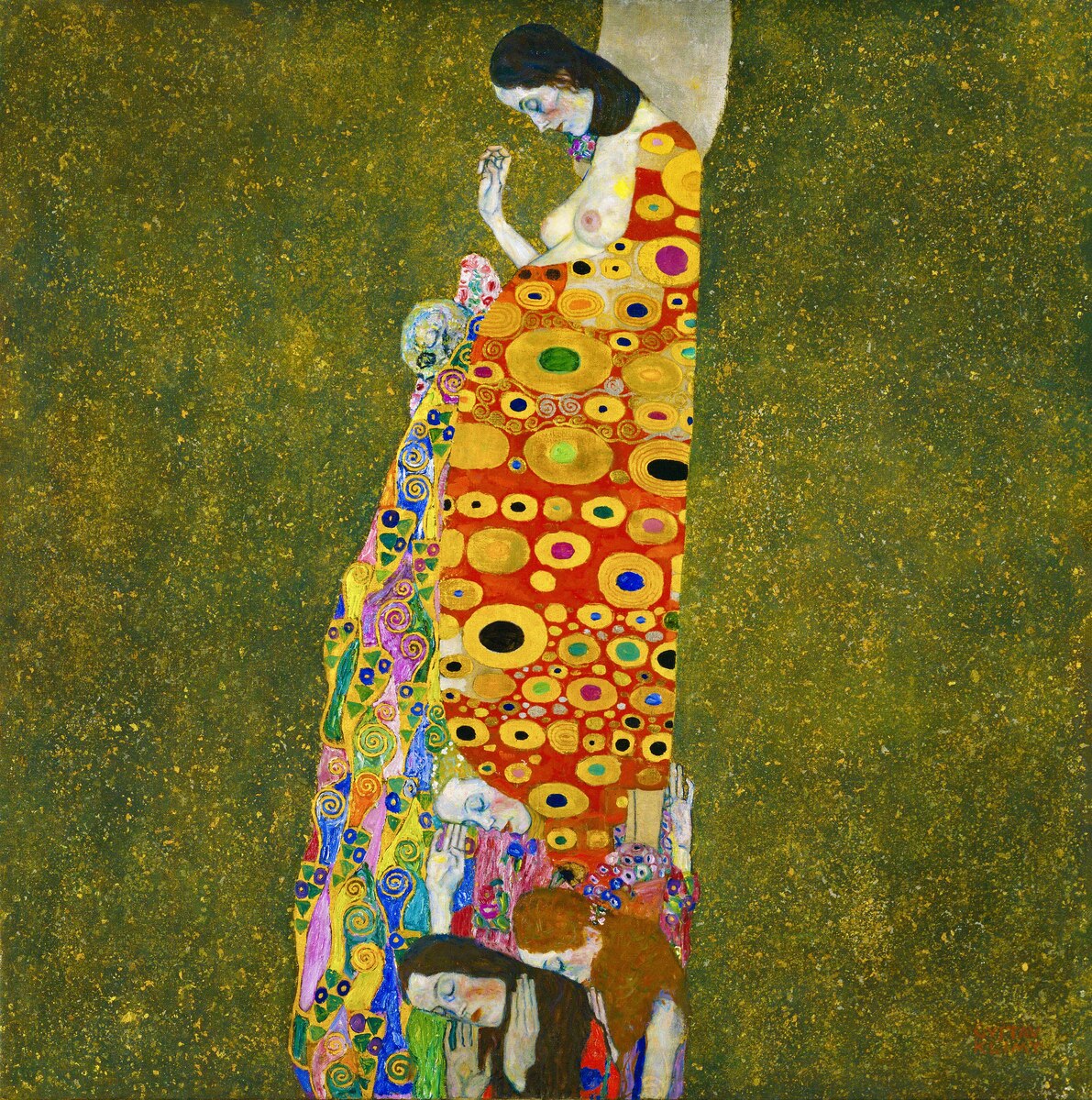
Gustav Klimt's Hope II of 1908 shows a pregnant woman in profile, head bowed and hands clasped, her patterned robe filling the canvas. A small skull appears near her belly, and kneeling figures are set below her. The supplied record confirms the title, artist, date, medium and object type but gives no dimensions, collection or provenance, so this visit stays close to what the picture shows.
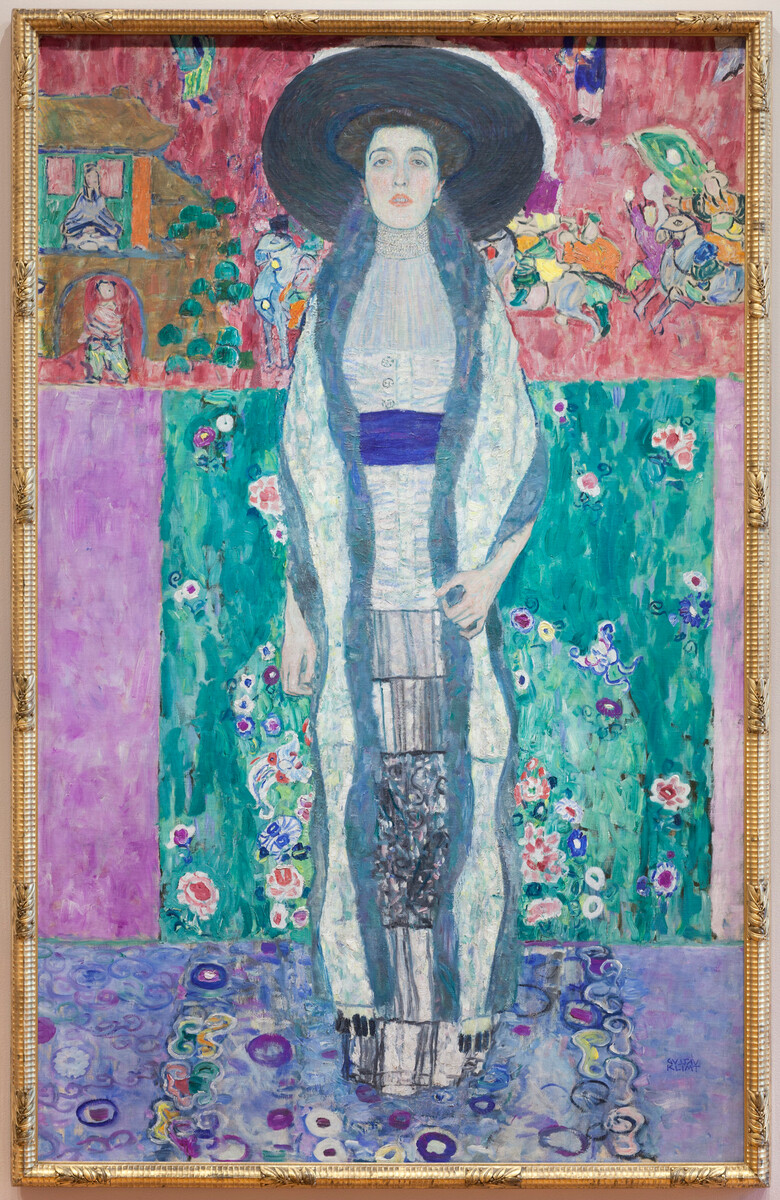
Gustav Klimt's second portrait of Adele Bloch-Bauer sets a still, formal figure against a field of patterns and motifs. This short gallery tour looks at what the painting shows, how its composition is built, and why the sitter's identity as a Vienna patron matters to its meaning.
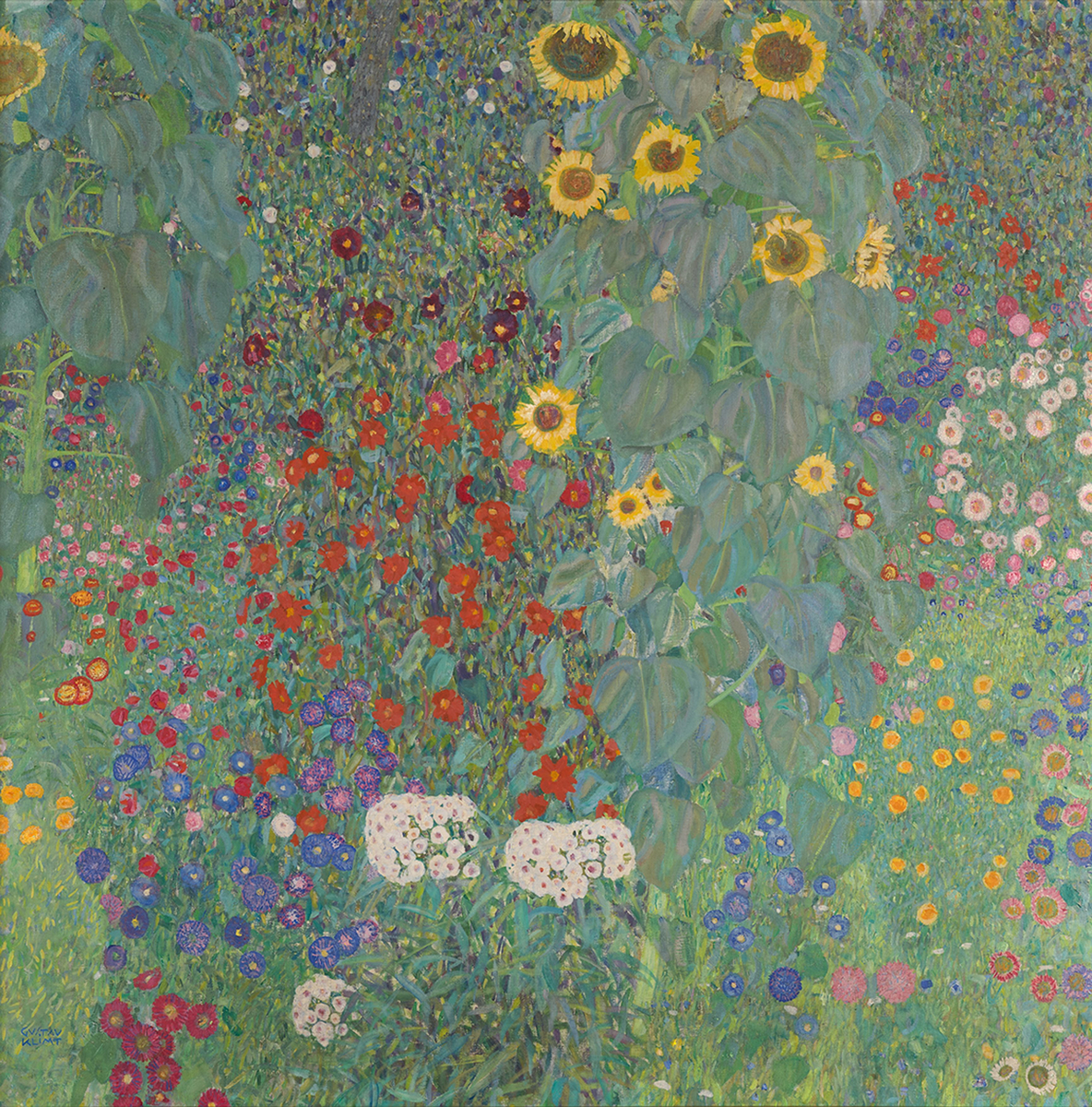
Gustav Klimt's 'Farm Garden with Sunflowers' of 1907 is a square canvas packed with blossoms, painted near Lake Attersee. The record confirms the title, artist, date, medium, dimensions and Belvedere collection, and names a brewery garden at Litzlberg am Attersee as the subject. It does not supply a detailed visual description, so this tour stays close to what the sources establish and what the square canvas itself shows.
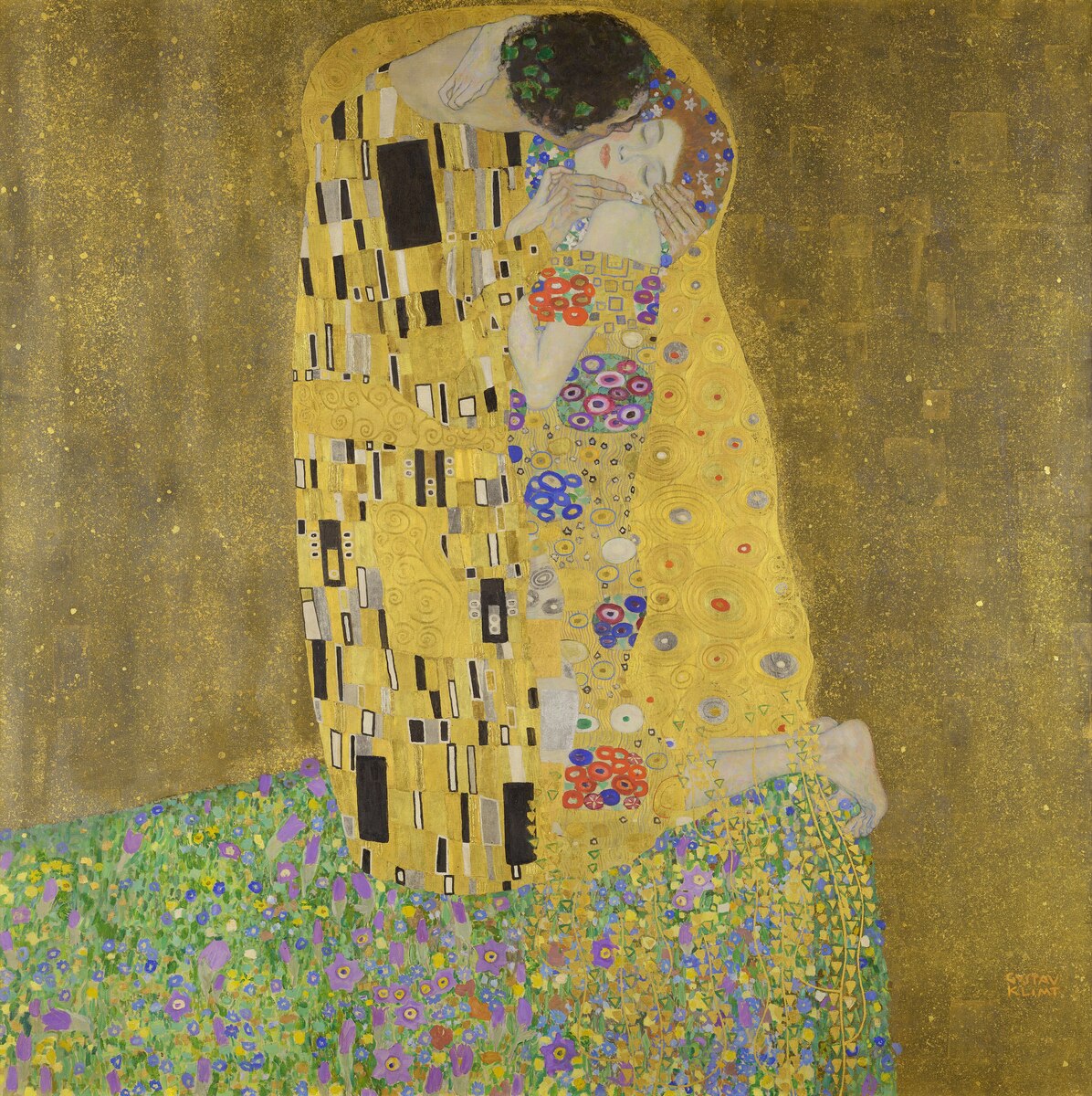
Gustav Klimt's The Kiss, painted between 1907 and 1908, shows two lovers locked in an embrace, their bodies wrapped in a shimmering gold cloak. In this spoken tour, a docent explains what the painting depicts, how its composition and materials shape the narrative, and how the accepted reading of the work rests on the limited evidence available.
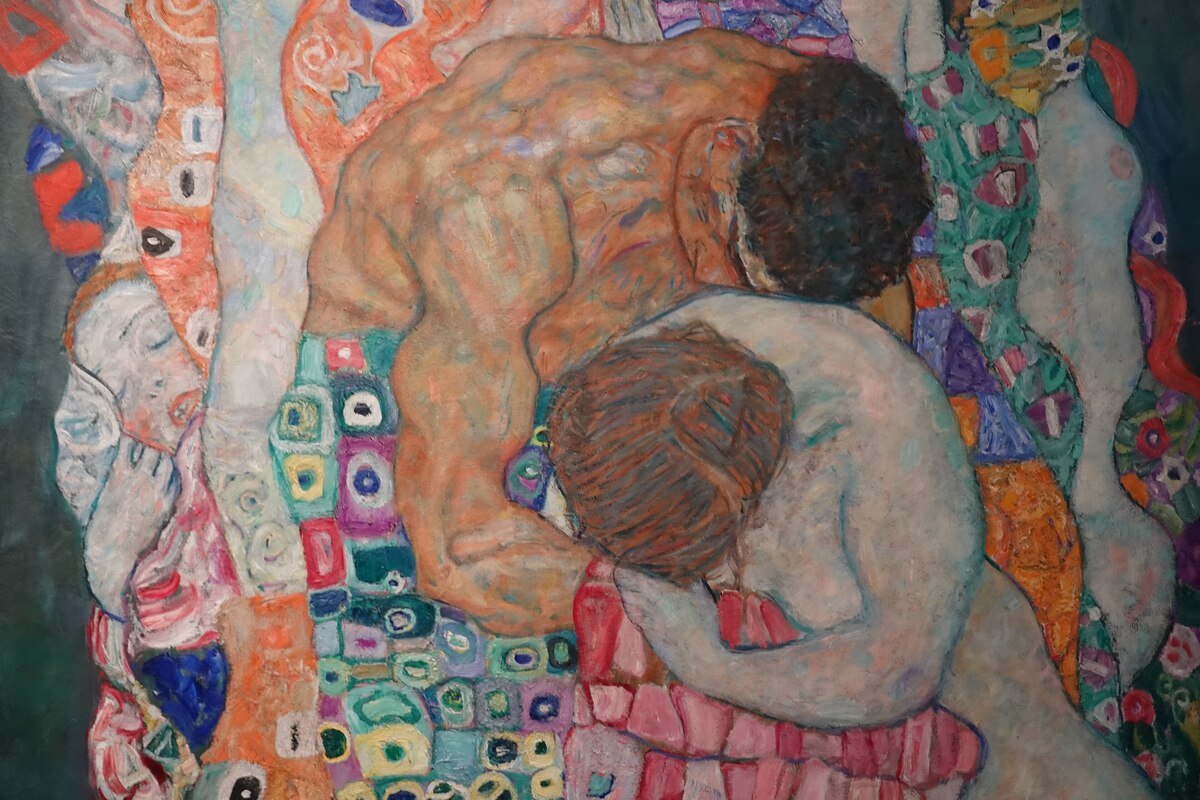
Gustav Klimt's allegorical painting Death and Life sets a huddled group of living figures beside the figure of Death. The Leopold Museum describes it as one of Klimt's greatest allegorical pieces, in which he illustrated the cycle of human life through a daring composition. The painting was made in 1910/1911 and revised in 1915/1916.
Showing 1 to 5 of 5 artworks.
You’ve reached the end of the collection.
Advertising supports the archive. These preferences control aggregate page counting, reading activity and ad-delivery diagnostics. They use no visitor tracking cookie.