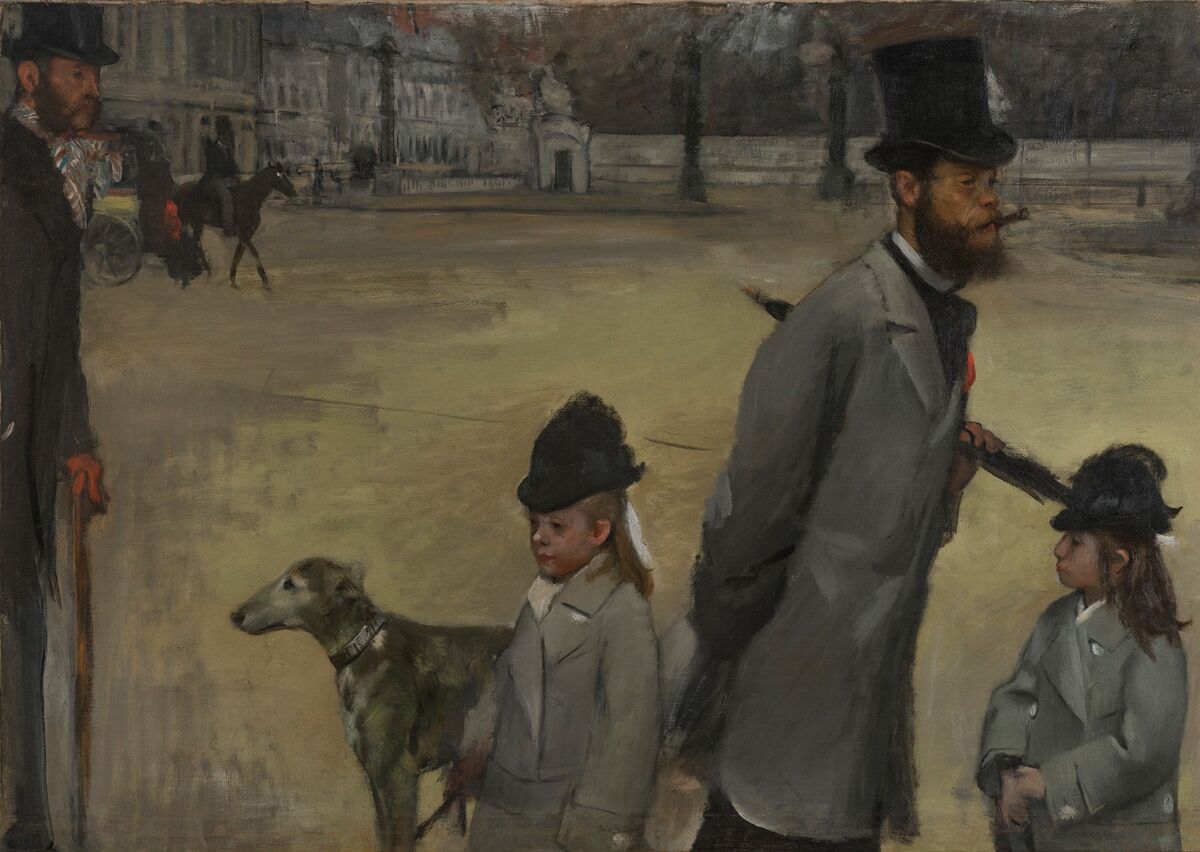
Edgar Degas painted Place de la Concorde in 1875, showing a group of figures crossing the square. The figures include Ludovic-Napoléon Lepic and his daughters Eylau and Jeanine. The composition is off-center, with a greyhound at the left and a bearded man cut off by the frame. This docent tour uses the supplied Commons record, which cites the Hermitage Museum and catalogues raisonnés, as a discovery aid.
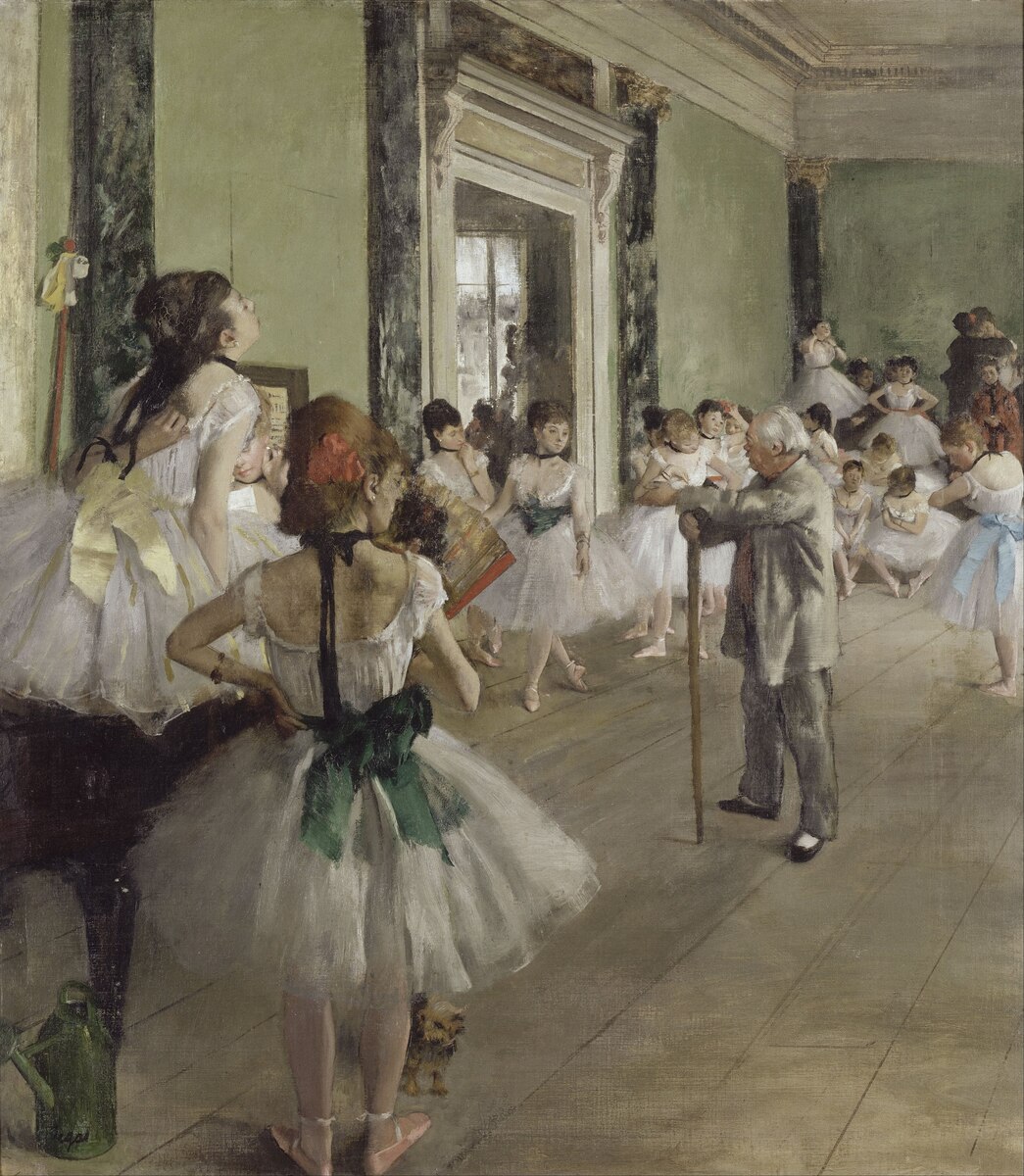
A rehearsal on the ballet studio floor: Degas turns an off-centre view of a Paris Opera class, with the ballet master Jules Perrot at its centre, into a study of attention, waiting and work.
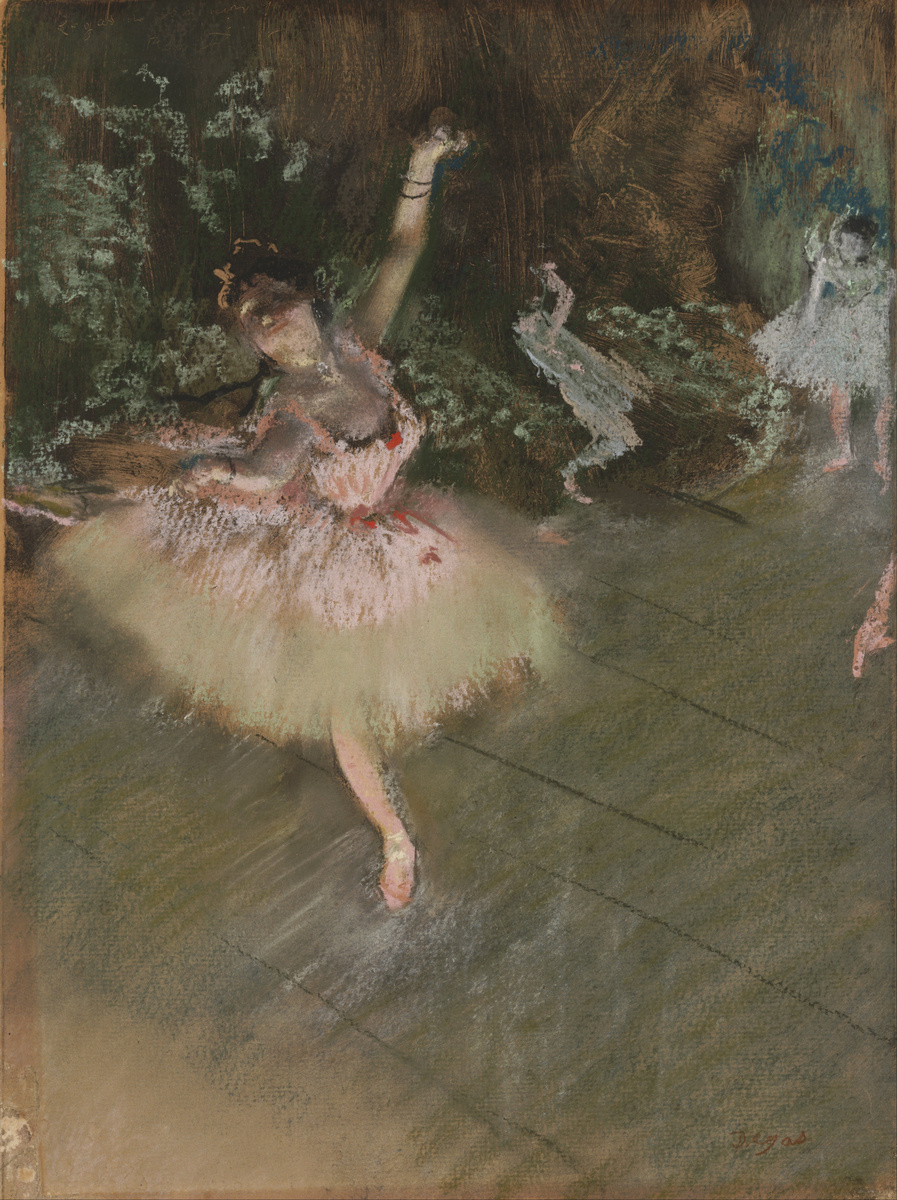
A solo dancer stands alone on a raked stage, caught in stage light. Edgar Degas made this pastel over an ink monotype around 1876 to 1878, and the layered process is part of how the picture works. Wikimedia Commons files the sheet under portraits of Rosita Mauri, a dancer, while also categorising it among Degas's pastels of ballet dancers and among his pastel-over-monotype works dated 1876. This docent tour explains what the sheet is, how its making shapes the image, and where the evidence stops.
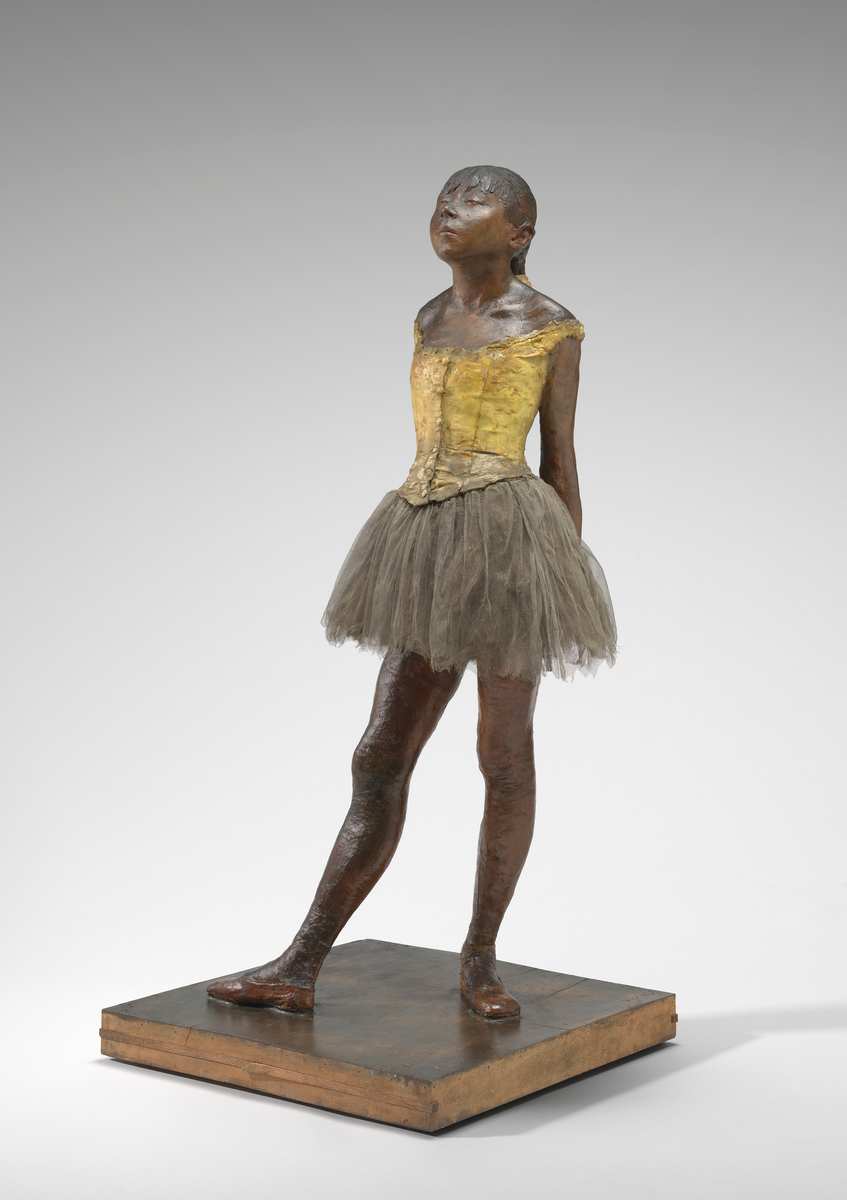
A gallery guide to Degas's sculpture of a fourteen-year-old ballet dancer, modelled in wax between 1878 and 1881, shown at the sixth Impressionist exhibition, and now in the National Gallery of Art. The tour reads the figure's upturned face, turned-out stance, and real fabric tutu as a study in working realism rather than an idealised ballet image.
Showing 1 to 4 of 4 artworks.
You’ve reached the end of the collection.
Advertising supports the archive. These preferences control aggregate page counting, reading activity and ad-delivery diagnostics. They use no visitor tracking cookie.