The story About 4 minutes to read
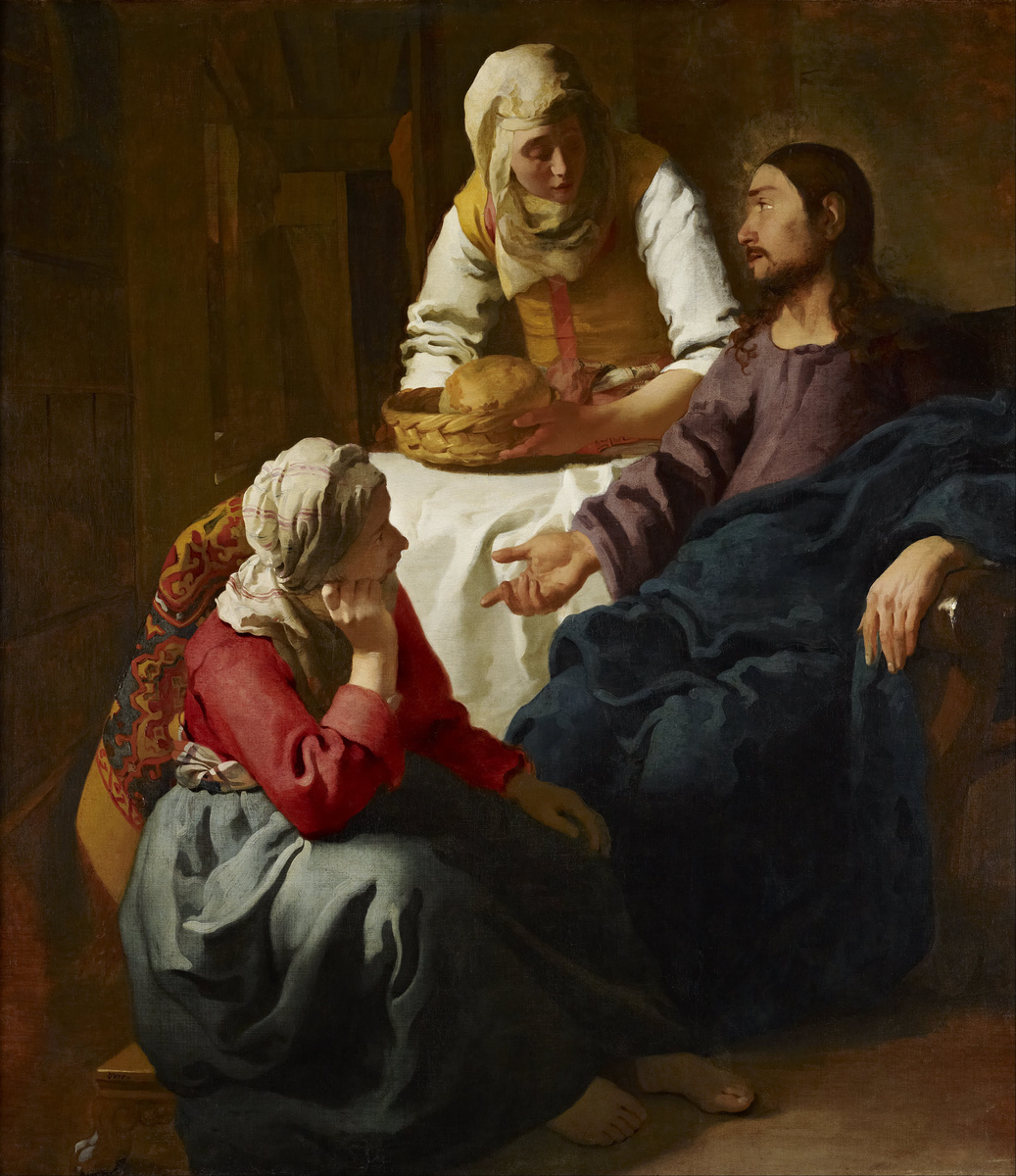
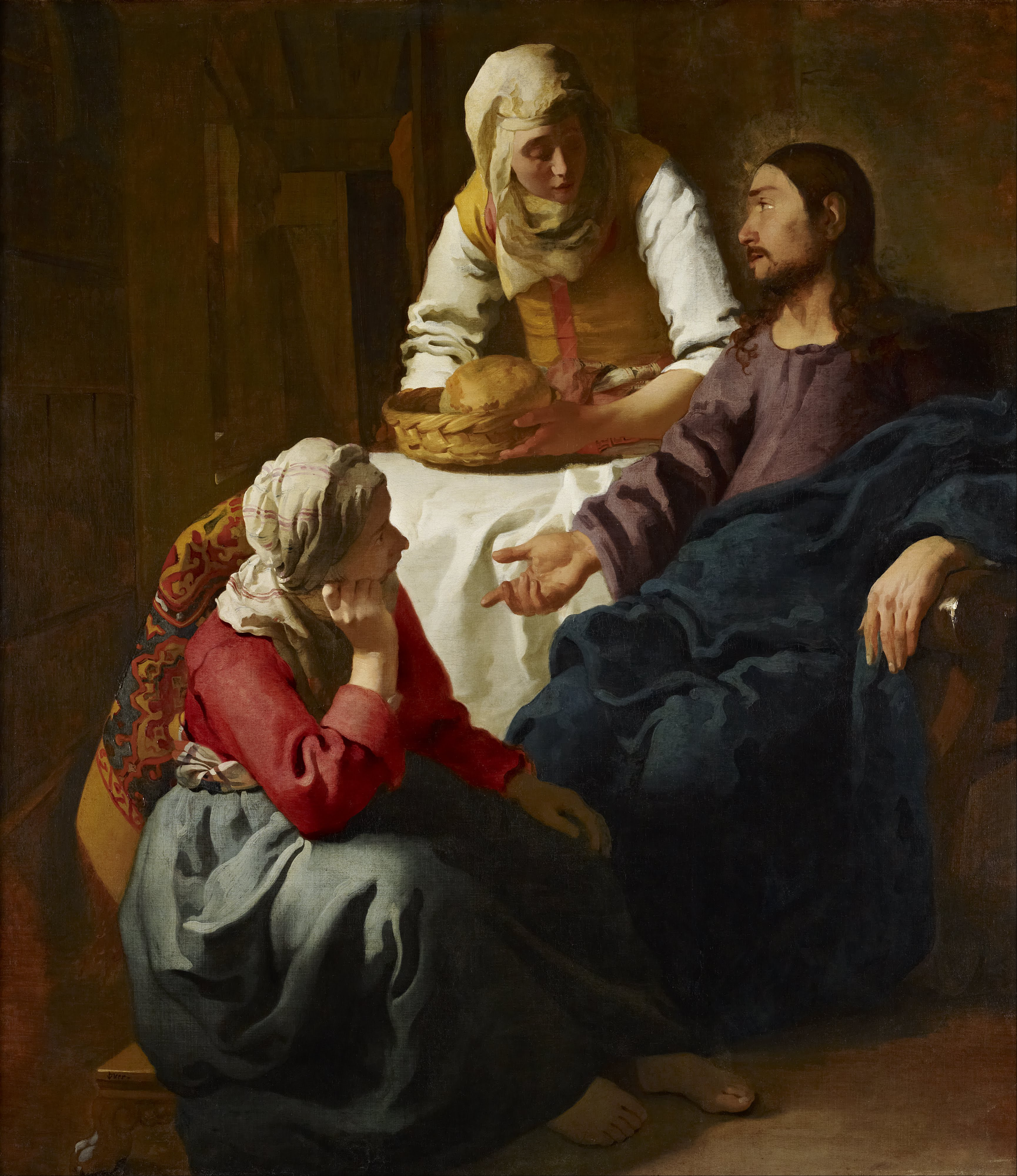
Here you're looking at a scene from the Gospel of Luke: Jesus in the home of two sisters, Martha and Mary of Bethany. Martha has been busy serving. Mary has stopped and sits at Jesus's feet, listening.
The painting is titled Christ in the House of Martha and Mary. It belongs to the early years of Johannes Vermeer, the Dutch painter and art dealer active in Delft, and it's usually dated to about 1654 to 1655.
The scene is built around three figures. Jesus sits at the centre, calm and still, with one hand raised as he speaks. Mary is at his feet, looking up at him.
Martha stands to the left, holding out a basket of bread. She's the one in motion, caught mid-gesture, while the two others form a quiet, settled group.
Look at how the space is arranged. The three figures are close to the picture plane, filling the canvas with little room around them, so the exchange between them feels immediate rather than distant.
Jesus and Mary share a visual line of attention. Martha's outstretched basket enters from the side and breaks that stillness, which sets up the contrast the story is about: active service and attentive listening, held in one picture.
The painting is religious art, and it draws directly on the biblical episode of Jesus visiting Martha and Mary. The figures shown are Jesus Christ, Martha, and Mary of Bethany.
This is an unusually large picture for Vermeer. It's his largest known work, which matters because he's usually associated with small, quiet domestic scenes of a very different kind.
It's worth holding one distinction clearly. The painting was made in the mid-seventeen fifties, but the event it pictures belongs to the Gospel narrative, a much older story.
So the canvas is not a record of a witnessed moment. It's a religious narrative image, using a biblical episode to set up a contrast between two ways of responding to Jesus's presence.
That contrast is what the picture is really organising. Martha's bread is faithful labour in the home, and Mary's seated listening is the alternative the gospel text praises.
The composition keeps both before you at once. Martha's action is real and necessary, and Mary's stillness is held as the better choice, so the painting reads as an argument rather than a simple illustration.
So what you're looking at is an early Vermeer taking on a large public subject: Jesus, Martha and Mary, with Martha serving and Mary listening at his feet.
The action is small and domestic, but the question it stages is not. Mary has chosen to listen, and the picture lets you see why that choice matters.