Identity and catalogue
Link- Title
- Hylas and the Nymphs
- Artist or attribution
- Maker unknown
- Movement or period
- Roman, end of 3rd century AD
- Country or culture
- Roman Cyprus
- Depicted subject
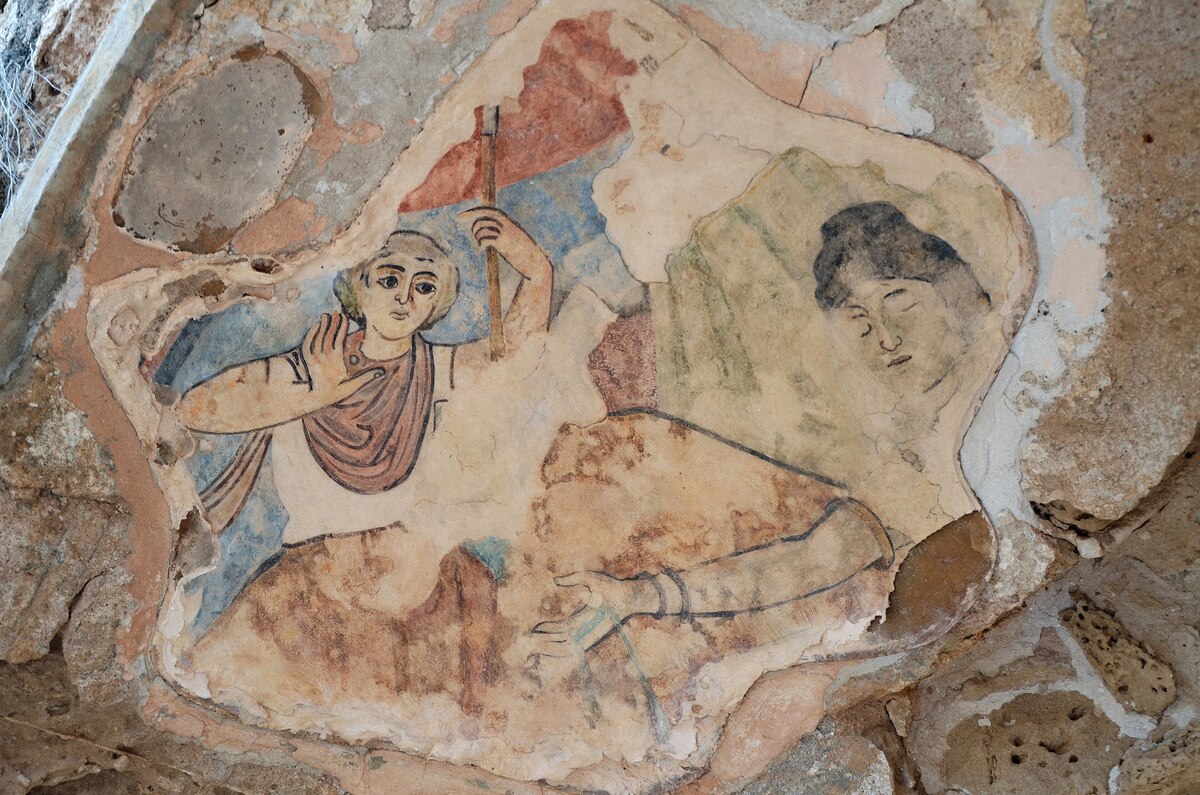
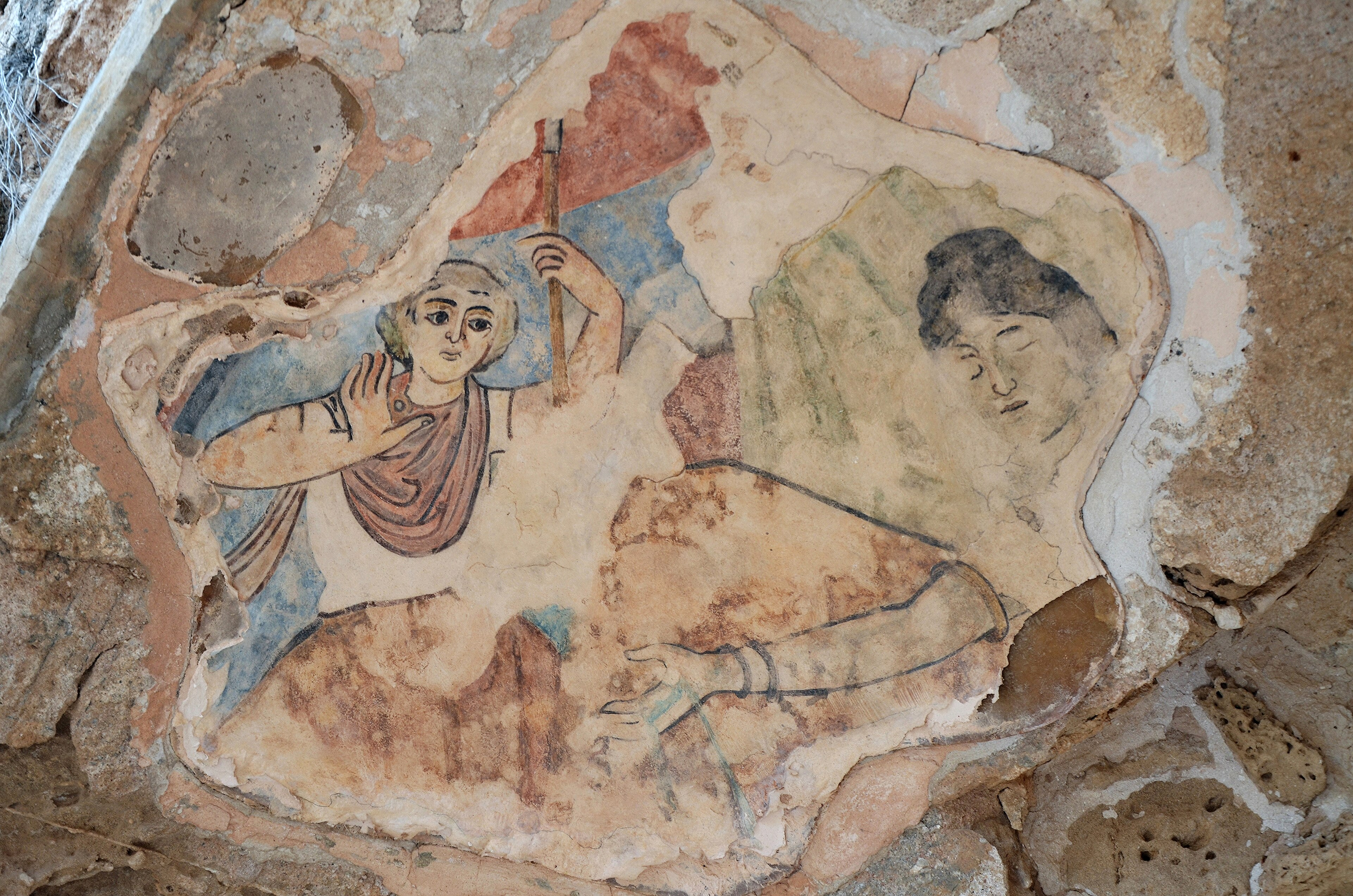
- A wall painting in the bath complex at Salamis depicting the myth of Hylas and the water nymphs, dated to the end of the 3rd century AD.(Carole Raddato, 2015)
- Title variants
- Fresco in the bath complex depicting the myth of Hylas and the water nymphs, end of 3rd century AD, Salamis, Northern Cyprus
- Attribution qualification
- Maker unknown. The named photographer is Carole Raddato, not the artist.
- Dimensions
- Unknown
Catalogue Identity
The object is recorded as a fresco in the bath complex depicting the myth of Hylas and the water nymphs, a subject identification supplied by the source record rather than inferred here. In the object-type field of that record the work is classed as a painting, specified as a fresco in the bath complex at Salamis. The same record dates the work to the end of the 3rd century AD, so the object date belongs to the later Roman imperial period and must be kept distinct from the date of the modern photograph through which the painting is now chiefly known. The record does not name the artist, nor does it give dimensions, accession number, or a full curatorial interpretation, so the catalogue entry remains incomplete on precisely the points a museum catalogue would normally supply. What the record does establish with some firmness is the combination of place, subject and medium: Salamis, the Hylas myth, and wall painting executed as fresco.(Carole Raddato, 2015, Summary, Description; File information)
Because the source describes the work as a fresco, it specifies a wall painting made on plaster, an object type that ties the image to the architecture it once decorated rather than to a portable panel. The narrative setting recorded for the painting is the bath complex at Salamis, so the myth of Hylas and the water nymphs was painted inside a building whose function was bathing. That placement is documented in the source as a fact about the painting's location, not offered there as an explanation of meaning. The convergence of medium and setting matters for the larger material history of Roman wall painting, since frescoes were integral to the rooms they adorned and cannot be fully understood as detached pictures. This paragraph therefore takes the documented location and medium together while leaving the interpretation of why the subject was chosen to the paragraphs that follow.(Carole Raddato, 2015, Summary, Description; File information)
The supplied source identifies the subject as a fresco in the bath complex depicting the myth of Hylas and the water nymphs.(Carole Raddato, 2015)
The object type recorded in the supplied discovery source is painting, here a fresco in the bath complex at Salamis.(Carole Raddato, 2015)
The Object and Its Record
The object under study is a Roman wall painting of the myth of Hylas and the water nymphs, identified in the supplied record as a fresco from the bath complex at Salamis, in Northern Cyprus, dated to the end of the 3rd century AD. The record classifies the work as a painting, specifically a fresco, meaning the pigments were applied to wet plaster so that the image became part of the wall surface rather than a separate panel. The source title, subject identification, site, and date come from a Wikimedia Commons file record, which is the sole evidence unit supplied for this section. That record does not name the fresco's artist, and it supplies no dimensions, accession number, or full curatorial interpretation, so the maker remains unidentified and the physical extent of the surviving painting cannot be stated beyond what the summary describes. The same record describes what survives as a fragment of painted plaster rather than a complete room: the image has lost its edges and much of its original context, so the figures appear against a broken surface rather than a fully described setting. The fresco is inseparable from the architecture it once decorated because the fresco technique bound the picture to the wall itself.(Carole Raddato, 2015, Summary, Description)
Subject and Setting
Interpretation
The evidence establishes that the myth of Hylas and the water nymphs was painted in the bath complex at Salamis, which places the story in a bathing setting. In the classical myth, Hylas was the companion of Hercules who went to fetch water and was pulled into the spring by nymphs who desired him; the story therefore turns on a spring or pool as its decisive location. Within a bath complex, the water of the narrative coincides with the water surrounding the viewer, so the myth becomes part of daily life in a building devoted to bathing rather than remaining a distant literary tale kept only in books. The surviving source identifies the subject and the setting; the connection drawn between them is a curatorial reading of why the myth suits this room, not a statement of the painter's private intent. The evidence does not document who commissioned the painting, who designed its programme, or what specific meaning the painter intended.(Carole Raddato, 2015, Summary, Description)
The myth of Hylas and the water nymphs was painted in the bath complex at Salamis, placing the story in a bathing setting.(Carole Raddato, 2015)
Materials and technique
LinkThe object and its documentation
The object under study is a wall painting identified in the supplying record as a fresco, that is, a wall painting made on plaster. It depicts the myth of Hylas and the water nymphs and is dated to the end of the 3rd century AD. Its recorded location is the bath complex at Salamis, in Northern Cyprus. The same record classifies the object type as painting, specifically a fresco in that bath complex. The surviving creator is not named in the record, so the work cannot be assigned to a documented hand; the supplying source also does not provide the fresco's artist, dimensions, accession number, or a full curatorial interpretation. These limits matter for any materials account, because statements about support, pigment, and preparation rest on the identification of the work as a plaster-based wall painting rather than on a technical report reproduced in the evidence.(Carole Raddato, 2015, Summary, Description)
Interpretation
The evidence available for this section supports one material fact directly: the work is described as a fresco, a wall painting made on plaster. That identification places the image within a tradition of wall decoration in which the painted surface is bound to the architecture it once adorned, although the supplied unit does not itself detail plaster composition, pigment identification, layer sequence, or preparation technique. Any fuller account of how the plaster was laid, how many coats were applied, what pigments were used, or what tools were employed is not established by these evidence units and would have to come from examination records that the present evidence does not include. For a materials-and-technique account, this qualification is part of the finding: the fresco identification is documented, while the specific materials and making methods remain undetermined here.(Carole Raddato, 2015, Summary, Description)
The record also documents the later photographic record through which the painting is known. The photograph was taken by Carole Raddato on 18 October 2015, and the photographer is not the artist of the fresco. The image was released under a Creative Commons Attribution-Share Alike 2.0 Generic license and was originally posted to Flickr by Following Hadrian. The publication title under which the record circulates is "Fresco in the bath complex depicting the myth of Hylas and the water nymphs, end of 3rd century AD, Salamis, Northern Cyprus," issued in 2015 in English. This documentation history is distinct from the object's own manufacture: the 2015 date belongs to the photograph, not to the ancient painting, and the license and platform details describe the circulation of the record rather than the fresco's materials.(Carole Raddato, 2015, Summary, Description)
Provenance and ownership
LinkThe Modern Photographic Record
The fresco's recorded provenance is inseparable from a modern photographic record rather than from a chain of owners. The photograph of the fresco was taken by Carole Raddato on 18 October 2015. Raddato is the photographer and not the artist of the fresco, a distinction the source makes explicit because the photograph and the painting have sometimes been conflated in the record. The image was originally posted to Flickr by Following Hadrian and was released under a Creative Commons Attribution-Share Alike 2.0 Generic license. Those facts document the circulation of the photograph, not a transfer of the painting itself, so they establish an image provenance that is separate from the ownership history, if any, of the wall painting.(Carole Raddato, 2015, Summary, Date, Author; Licensing)
Interpretation
The myth painted here is Hylas and the water nymphs, and it was placed in the bath complex at Salamis, so the story was set within a bathing setting. That placement connects the subject to the building's function: the source states that the myth was painted in the bath complex, placing the story in a bathing setting. The same source records the site and date, the bath complex at Salamis and the end of the 3rd century AD, which situates the fresco within the building's decorative program. Any reading of why a water myth suited a bathing house is an interpretation built on those identified facts, since the source establishes the subject and the setting but does not supply the painter's name, the patron or a documented intention behind the choice.(Carole Raddato, 2015, Summary, Description; Summary, Date, Author)
The photograph of the fresco was taken by Carole Raddato on 18 October 2015. The photographer is not the artist of the fresco.(Carole Raddato, 2015)
The photograph was released under a Creative Commons Attribution-Share Alike 2.0 Generic license and was originally posted to Flickr by Following Hadrian.(Carole Raddato, 2015)
Provenance timeline
- 18 October 2015
Carole Raddato photographed the fresco, recording the image as a painting in the bath complex at Salamis. She is the photographer and not the artist of the fresco.(Carole Raddato, 2015, Summary, Date, Author)
Collection and display
LinkThe Salamis Bath Complex Fresco
The object under consideration is a fresco located in the bath complex at Salamis, in Northern Cyprus (f3). The supplied source identifies the subject as the myth of Hylas and the water nymphs, dated to the end of the 3rd century AD, and describes the work as a fresco, a wall painting made on plaster.(Carole Raddato, 2015, Summary, Description)
The surviving record does not name the maker of the fresco, so the work is catalogued as by an unknown hand. The source does not supply the artist's name, the fresco's dimensions, an accession number, or a full curatorial interpretation, and it is only partially consulted. These omissions matter because claims about the work's authorship or precise physical scale cannot be made from the available evidence. The object type recorded in the supplied discovery source is painting, here a fresco in the bath complex at Salamis. What survives is a fragment of painted plaster rather than a complete room, so the image has lost its edges and much of its original architectural context.(Carole Raddato, 2015, Summary, Description)
Interpretation
The fresco's location in a bath complex is significant because the myth of Hylas and the water nymphs centres on a spring or pool where Hylas is drawn down. The supplied source states that the myth was painted in the bath complex at Salamis, placing the story in a bathing setting. Bathers would have moved past this myth in a building devoted to water, making the story part of daily Roman life rather than a distant literary tale. The connection between the myth's water and the building's water is an interpretation built on the facts of subject and setting, not a statement of the painter's private intent.(Carole Raddato, 2015, Summary, Description)
The fresco is known today mainly through Carole Raddato's photograph, taken on 18 October 2015. Raddato is the photographer, not the ancient artist. The photograph was released under a Creative Commons Attribution-Share Alike 2.0 Generic license and was originally posted to Flickr by Following Hadrian. The object type recorded in the supplied discovery source is painting, here a fresco in the bath complex at Salamis.(Carole Raddato, 2015, Summary, Description)
Documented values and qualified estimates
LinkThe object and its record
Interpretation
The object is a Roman wall painting, a fresco, depicting the myth of Hylas and the water nymphs. It is dated to the end of the 3rd century AD and is located in the bath complex at Salamis, in Northern Cyprus. The maker is not named in the surviving record, and the work is consequently listed as by an unknown hand. The object type recorded in the supplied discovery source is painting, here specifically a fresco in the bath complex at Salamis. The record establishes the subject as a scene from classical myth, the moment when the water nymphs take Hylas, and places the painting within the bathing setting of the bath complex rather than a domestic or literary context. The source also identifies the work as a fresco, a wall painting made on plaster, which is the physical basis on which the pigments and the surface were united with the architecture it once decorated.(Carole Raddato, 2015)
What survives is a fragment of painted plaster rather than a complete room. The image has lost its edges and much of its original context, so the figures appear against a broken surface rather than a fully described setting. The medium is fresco, which means the pigments were applied to wet plaster and became part of the wall itself; that is why the picture is inseparable from the architecture it once decorated. The fresco was painted in a bath complex, so bathers would have moved past this myth in a building devoted to water. The setting matters because the story turns on a spring or pool where Hylas is drawn down, and placing the nymphs in a bathing house made the myth part of daily Roman life rather than a distant literary tale kept only in books. The surviving source identifies the subject and the setting; the connection between them is a curatorial reading of why the myth suits this room, not a statement of the painter's private intent.(Carole Raddato, 2015)
The fresco is known today mainly through Carole Raddato's photograph, taken in 2015. The photograph is a record of the painting, not the painting itself, and Raddato is not the ancient artist. The supplied file page documents a photograph by Carole Raddato rather than the artist of the fresco. The photograph was released under a Creative Commons Attribution-Share Alike 2.0 Generic license and was originally posted to Flickr by Following Hadrian. This is the only named individual in the record: the photographer, not the maker. The source does not supply the fresco's artist, dimensions, accession number, or a full curatorial interpretation. What remains is a Roman image of a myth about water, made for a building used for bathing, and now preserved as a fragment of wall painting at Salamis.(Carole Raddato, 2015)
The site is identified as the bath complex at Salamis, Northern Cyprus, and the work is dated to the end of the 3rd century AD. The record gives no named institutional collection, accession number, dimensions, or acquisition record in the excerpts. The subject is Hylas, the companion of Hercules, who went to fetch water and was pulled into the spring by nymphs who desired him. In a bath complex, the story's water becomes the water around the viewer. This is a reading of why the myth suits the room and a consequence of the documented subject and setting, not a claim about the painter's private intent.(Carole Raddato, 2015)
The working insurance estimate
A separate working insurance estimate was generated for the object, recorded as a calculated working insurance estimate with a recorded date of 2026-10-16. The estimate takes the form of an estimated insurance range of US$250K to US$1M. The methodology describes it as a conservative working insurance range generated from the confirmed artwork context and the supplied Commons file page. The calculation accounts for the work's antiquity, medium, mythological subject, archaeological context, and presumed historical significance, while applying a substantial discount for the lack of firm attribution, published institutional valuation, documented condition, measured scale, and secure private ownership status. A broad low-to-high working band is used to reflect the high uncertainty of insuring an immovable, publicly situated archaeological fresco. No comparable sales, auction results, or private insurance records were used or claimed.(Carole Raddato, 2015)
The estimate is qualified as a model-generated working insurance range for manual review. It is not an official insurance value, appraisal, auction result, or sale price, and it is not based on comparable sales or private insurance records. Actual insurance valuation would require professional appraisal, secure location review, condition assessment, and verified provenance or institutional records. For an object recorded as in situ, publicly situated, and immovable, the lack of measured scale, documented condition, published institutional valuation, and secure private ownership status is precisely what the range registers as a discount rather than as a measured market fact. The estimate therefore documents a procedural approach to valuing high-uncertainty archaeological painting, not a market transaction or a curatorial valuation of the fresco.(Carole Raddato, 2015)
Evidential limits and significance
The record for this object is unusually thin in the categories that normally anchor a research account. There is no named artist, no named institutional collection, no accession number, no dimensions, and no acquisition record in the excerpts beyond the identification of the fresco in the bath complex at Salamis. The only secure attributions are the location of the bath complex at Salamis in Northern Cyprus, the dating to the end of the 3rd century AD, the subject of the myth of Hylas and the water nymphs, the medium of fresco on plaster, and the photographic documentation by Carole Raddato in 2015. The working insurance estimate explicitly reflects that lack of firm attribution, published institutional valuation, documented condition, measured scale, and secure private ownership status. The object matters within a larger history of Roman wall painting and material culture because it places a classical water myth inside the architecture of bathing, so that the painted surface and the building's function were produced together for viewers moving through a space devoted to water.(Carole Raddato, 2015)
Working estimate
Calculated working insurance estimate, not a sale price: Estimated insurance range: US$250K to US$1M Recorded date: Working calculation, generated 2026-10-16. Methodology: Conservative working insurance range generated from the confirmed artwork context and supplied Commons file page. The object is an in situ Roman fresco dated to the end of the 3rd century AD, located in the bath complex at Salamis, Northern Cyprus, with an unknown maker and no named institutional collection, accession number, dimensions, or acquisition record in the excerpts. The range is calculated for manual review only and accounts for the work's antiquity, medium, mythological subject, archaeological context, and presumed historical significance, while applying a substantial discount for the lack of firm attribution, published institutional valuation, documented condition, measured scale, and secure private ownership status. A broad low-to-high working band is used to reflect the high uncertainty of insuring an immovable, publicly situated archaeological fresco. No comparable sales, auction results, or private insurance records were used or claimed. Qualification: This is a model-generated working insurance range for manual review. It is not an official insurance value, appraisal, auction result, or sale price. It is not based on comparable sales or private insurance records. The supplied Wikimedia Commons file page documents a photograph by Carole Raddato, not the artist of the fresco. Actual insurance valuation requires professional appraisal, secure location review, condition assessment, and verified provenance or institutional records.(Carole Raddato, 2015)