Identity and catalogue
Link- Current collection or location
- Wikimedia Commons
- Country or culture
- Lviv, Ukraine
- Depicted subject
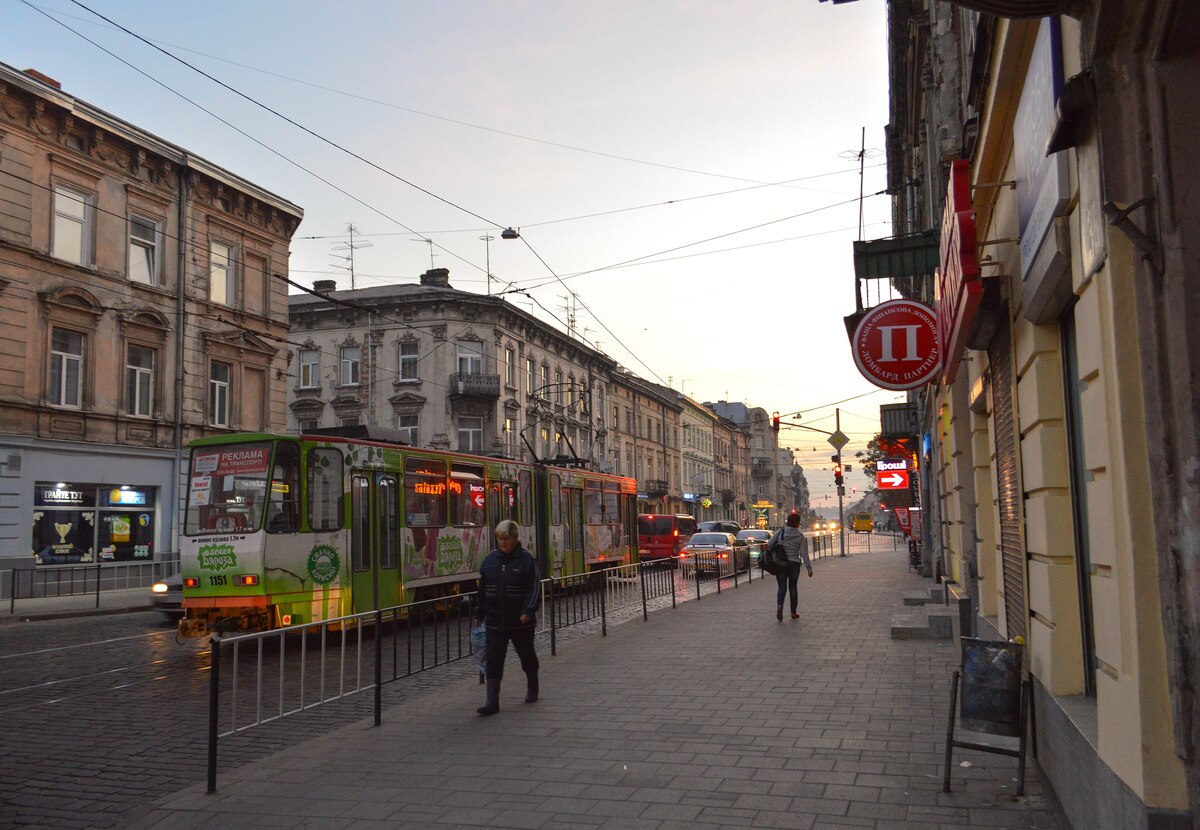
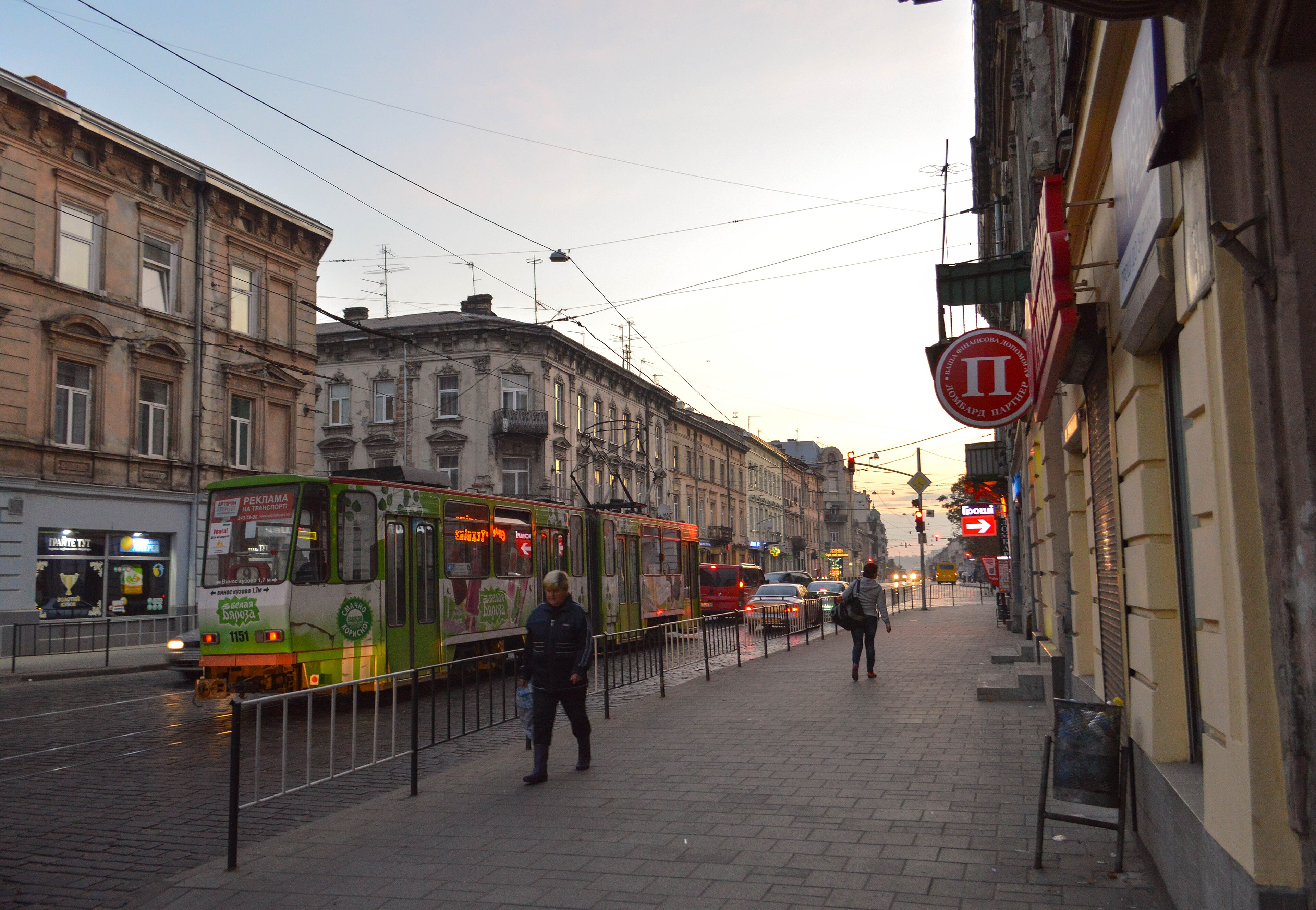
- A photograph described as an early Sunday morning scene in Lviv, taken by Francisco Anzola on 16 September 2017 and shared on Flickr under a Creative Commons Attribution 2.0 license. The uploaded file record describes a scene in Lviv and links it to the Tatra KT4 tram and September 2017 in Lviv.
- Title variants
- Early Sunday Morning; Early Sunday morning in Lviv.jpg
- Attribution qualification
- The Commons record credits Francisco Anzola as the author of the photograph.
- Dimensions
- Unknown
- Period
- Unknown
Catalogue identity
The supplied record for this object is a Wikimedia Commons file page titled "Early Sunday morning in Lviv.jpg" and described in English as "Early Sunday morning in Lviv." The Commons record names Francisco Anzola as the author of the work, and the same source is listed among the authors associated with the record. The file is dated to 16 September 2017, with a recorded inception and generation time of 22:51:01 on 16 September 2017. The revision in view was published in 2017 under the title "Early Sunday morning in Lviv" in English. This is a born-digital photographic file rather than a catalogued museum object: the supplied record does not name an accession number, a formal collection department, or a museum cataloguing history for the file. That absence matters for how the object should be cited, because its identity rests on a file record rather than on an institutional registration.(Francisco Anzola, 2017, File title; Description / English caption; Summary / Author; Summary / Date; Structured data / inception)
The object date and the catalogue date are distinct and should not be collapsed. The file was created on 16 September 2017, while the Commons file history records that it was uploaded to Commons on 8 March 2022 by Sebastian Wallroth using UploadWizard. In other words, the moment of photographic creation precedes the moment of archival publication by roughly four and a half years. The Commons date and the upload date therefore answer different questions: when the picture was made, and when it entered this particular repository. Structured data on the file page lists the image as an instance of a photograph with the media type image/jpeg, which fixes the medium of the catalogued item as a JPEG image file rather than a physical print or negative.(Francisco Anzola, 2017, Summary / Date; Structured data / inception; File history)
Subject and setting
Interpretation
Read together, the identity record supports a modest but precise description of what the object is and how it should be handled. The photograph is a documented street scene in Lviv made on an early Sunday morning, credited to Francisco Anzola, dated 16 September 2017, recorded by a Nikon D3200 at 18 millimetres, and flagged in structured data as depicting a Tatra KT4 tram as a prominent element, alongside categories for Lviv sidewalks and Ukrainian tram transport. Because the Commons record marks the tram as prominent, the vehicle can reasonably be treated as an anchor of the composition, but that emphasis is the record's own and does not license claims about the photographer's intentions or feelings. The evidence establishes the who, the where, the when and the camera settings, and it does not supply the mood of the scene.(Francisco Anzola, 2017, Summary / Author; Summary / Date; Structured data / inception)
The file was created on 16 September 2017, with a date and time of generation of 22:51:01 on 16 September 2017.(Francisco Anzola, 2017)
The file and its documentation
The object under consideration is a photographic file held on Wikimedia Commons under the title Early Sunday morning in Lviv. The Commons record credits Francisco Anzola as the author of the work. The photograph is an instance of a photograph in the file's structured data, with a media type of image/jpeg. The file was created on 16 September 2017, and the record gives a date and time of generation of 22:51:01 on that same day. The file page name and description describe the scene simply as Early Sunday morning in Lviv. Taken together, these identifiers establish the picture's authorship, medium and nominal creation date without yet telling us what the picture contains.(Francisco Anzola, 2017, Categories)
Visual observation
The record's account of the picture's subject comes from structured data rather than from the title alone. Structured data on the file page records that the file depicts a Tatra KT4, and marks that depiction as prominent. The same page carries four categories: September 2017 in Lviv, Tatra KT4 in Lviv, 2017 in tram transport in Ukraine, and Sidewalks in Lviv. These categories connect the image to a specific city and month, to a named tram model, to tram transport in Ukraine during 2017, and to the sidewalks of Lviv. The documentation therefore frames the scene as an urban street view in which the tram and the pedestrian infrastructure are both registered as content.(Francisco Anzola, 2017, Structured data / depicts; Categories)
The image's technical metadata record the conditions of exposure. The photograph carries Exif metadata for a Nikon D3200 camera, an exposure time of 1/60 second, an f-number of 3.5, ISO 1,000, and a focal length of 18 millimetres. The record states that the image was processed with Adobe Photoshop Lightroom 4.4 on Windows, with a file change date and time of 17:11 on 17 September 2017. The photograph was taken at the camera location 50 degrees 27 minutes 47.7 seconds north, 30 degrees 31 minutes 29.68 seconds east. The location ties the exposure to Lviv and is consistent with the categories the file page carries. The processing step, dated to the afternoon of the day after the exposure, is recorded separately from the moment the shutter opened, so the file as held reflects both an act of photography and a later act of digital processing.(Francisco Anzola, 2017, Categories)
Subject, setting and the limits of the record
Interpretation
Read as a document of a place and moment, the picture combines the file's named subject with its recorded setting. The structured data's identification of a Tatra KT4, marked as prominent, makes the tram the documented anchor of the scene, while the categories for September 2017 in Lviv and Sidewalks in Lviv place it within a specific city and month and register the pedestrian surfaces of the street as content. The title's reference to an early Sunday morning, together with the date of 16 September 2017 and the exposure settings of 1/60 second at f/3.5 and ISO 1,000, describes a low-light exposure made on that morning. The combination of a prominent tram, a Sunday morning hour and a sidewalk category suggests an urban scene at a quiet time of day, but the evidence establishes only what the record marks as depicted and categorized; it does not supply the photographer's intentions or the mood of the scene.(Francisco Anzola, 2017, Structured data / depicts; Categories)
The file page carries the categories September 2017 in Lviv, Tatra KT4 in Lviv, 2017 in tram transport in Ukraine, and Sidewalks in Lviv.(Francisco Anzola, 2017)
Materials and technique
LinkDigital carrier and file identity
Technical examination
The technical record for this file is unusually explicit about the digital carrier of the image. The original file measures 5,672 by 3,921 pixels and 1.78 megabytes, and the structured data on the file page independently records a data size of 1,861,381 bytes at the same height and width, together with a checksum beginning ea7cd2e6587716cc69328ed784a00bed5af3a7bd. The structured data classifies the item as an instance of a photograph with the media type image/jpeg. Taken together, these values describe a single high-resolution JPEG whose pixel dimensions, byte count and checksum can be used to identify one specific version of the file among any later derivatives. This is a record about the digital object as much as about the scene it shows, and the presence of a checksum means the page preserves a means of verifying that an examined copy is the copy described.(Francisco Anzola, 2017, File history / current version; Structured data / media type; instance of; Structured data / data size, height, width, checksum)
Capture and processing metadata
Capture conditions are documented in the Exif metadata, which records a Nikon D3200 camera, an exposure time of 1/60 second, an f-number of 3.5, ISO 1,000, and a focal length of 18 millimetres. These settings describe a wide-angle view under relatively low light: the combination of an aperture of f/3.5 and a sensitivity of ISO 1,000 allows a comparatively fast shutter of 1/60 second to be used when ambient light is limited. The same metadata records that the image was processed with Adobe Photoshop Lightroom 4.4 on Windows, with a file change date and time of 17:11 on 17 September 2017. The processing step is separated in time from the moment of exposure, so the file as circulated reflects both the camera settings at capture and a subsequent editing session approximately a day later; the metadata establishes that processing occurred but does not record what adjustments were applied.(Francisco Anzola, 2017, Metadata / camera and exposure fields; Metadata / Software; File change date and time)
Camera location and depicted subject
Visual observation
The file record supplies a geographical position for the point of view: 50 degrees 27 minutes 47.7 seconds north, 30 degrees 31 minutes 29.68 seconds east. That coordinate locates the photograph in Lviv and is consistent with the subject matter elsewhere in the record, which depicts a Tatra KT4 tram, the model associated with that city. The coordinate therefore functions as technical corroboration of the place named in the title and categories, while the settings and the camera metadata describe how the view was captured. Together these fields let a reader reconstruct both where the photographer stood and what equipment and exposure produced the image.(Francisco Anzola, 2017, Camera location; Structured data / coordinates of the point of view; Structured data / depicts)
Capture and processing metadata
Interpretation
Read as a group, these technical fields establish a documented sequence rather than a single undifferentiated image: capture with a Nikon D3200 at 1/60 second, f/3.5, ISO 1,000 and 18 millimetres, from a recorded position in Lviv, followed by processing in Lightroom 4.4 with a file change on 17 September 2017, and finally a JPEG of 5,672 by 3,921 pixels, 1,861,381 bytes and a recorded checksum. The evidence supports these linked facts about the file and its making, but it does not describe underdrawing, sampling, pigment or conservation treatment, because the object here is a born-digital photograph rather than a painting or a physically examined artefact. The limitations of the technical interpretation therefore lie in its scope: the metadata documents equipment, exposure, place, software and file identity, while the visual subject and the recorded prominence of the tram come from the file page's structured data rather than from the Exif fields themselves. For the larger history of photographic documentation, the value of this record is precisely that it preserves the chain from camera to published file in verifiable, dated terms.(Francisco Anzola, 2017, File history / current version; Metadata / camera and exposure fields; Metadata / Software; File change date and time; Camera location; Structured data / coordinates of the point of view; Structured data / media type; instance of; Structured data / data size, height, width, checksum; Structured data / depicts)
Technical examination
The original file has dimensions of 5,672 by 3,921 pixels and a file size of 1.78 megabytes.(Francisco Anzola, 2017)
The photograph carries Exif metadata recording a Nikon D3200 camera, an exposure time of 1/60 second, an f-number of 3.5, ISO 1,000, and a focal length of 18 millimetres.(Francisco Anzola, 2017)
The Exif metadata records that the image was processed with Adobe Photoshop Lightroom 4.4 on Windows, with a file change date and time of 17:11 on 17 September 2017.(Francisco Anzola, 2017)
The photograph was taken at the camera location 50 degrees 27 minutes 47.7 seconds north, 30 degrees 31 minutes 29.68 seconds east.(Francisco Anzola, 2017)
Structured data on the file page lists the image as an instance of a photograph with the media type image/jpeg.(Francisco Anzola, 2017)
Structured data on the file page records a file data size of 1,861,381 bytes, a height of 3,921 pixels, a width of 5,672 pixels, and a checksum beginning ea7cd2e6587716cc69328ed784a00bed5af3a7bd.(Francisco Anzola, 2017)
Provenance and ownership
LinkPublication and Licensing History
The archival object in question is a photographic file held on Wikimedia Commons under the title Early Sunday morning in Lviv. Its provenance record as supplied is not a chain of art-market transactions but an online publication and licensing history. The supplied evidence establishes that the file page identifies its origin as a Flickr page with photo ID 36468109183, and that the file page structured data records both that the file was published in Flickr and that its source of file is file available on the internet. These identifiers function as the earliest documented point of the work's existence as a distributed digital object: a photograph attributed to Francisco Anzola, published first through Flickr, and subsequently migrated to Commons. No dealer, auction house, gallery, or private collector is named anywhere in the supplied units, and the record similarly does not supply an accession number, a formal collection department, or a museum cataloguing history for the file. The provenance available here is therefore a publication and licensing provenance rather than a custodial provenance in the museum sense.(Francisco Anzola, 2017, Summary / Source; Structured data / Flickr photo ID; Structured data / published in; source of file)
The licensing record gives the work a documented legal status independent of any physical custody. The file is licensed under the Creative Commons Attribution 2.0 Generic license, an open license that permits reuse with attribution. The progression from Flickr posting to Commons hosting is recorded with distinct dates and actors. The image was originally posted to Flickr by Francisco Anzola, and it was reviewed on 8 March 2022 by FlickreviewR 2, an automated or semi-automated review process on Commons that confirmed the cc-by-2.0 license. On the same date, 8 March 2022, the file was uploaded to Commons by Sebastian Wallroth using UploadWizard. The coincidence of the review date and the upload date indicates that the license verification was part of the same ingestion event, which is the normal sequence for Flickr-sourced uploads to Commons. The attribution named in the licensing is Francisco Anzola, consistent with the author credit in the record; the uploader, Sebastian Wallroth, is recorded as the person who moved the file to Commons, not as the author of the photograph.(Francisco Anzola, 2017, Licensing; Licensing / review note; File history)
Documented Chronology and Unrecorded Intervals
Interpretation
The supplied provenance evidence describes a migration from one platform to another with an interval that the record does not narrate. The Flickr photo ID and the stated source of file establish the earlier platform; the Commons upload by Sebastian Wallroth on 8 March 2022 establishes the later one. Between the original Flickr posting by Francisco Anzola and the 8 March 2022 Commons upload, the record documents no intermediate owner, custodian, repository, or transfer. This is an unrecorded interval, not a proven change of ownership: the evidence does not show a sale, gift, bequest, or any other legal conveyance. The FlickreviewR 2 review of 8 March 2022 and the Commons upload on the same date describe a single licensing and hosting event, and the review confirmed the cc-by-2.0 license as it stood on the source. The 2.0 Generic license and the Attribution requirement together define the terms under which the image may be reused, and those terms attach to the image rather than to any physical support. Consequently, the provenance recorded here concerns the conditions of publication and reuse for a digital file, and the gaps in that record should be read as gaps in documentation rather than as evidence of an undocumented transfer.(Francisco Anzola, 2017, Summary / Source; Structured data / Flickr photo ID; Licensing; Licensing / review note; File history; Structured data / published in; source of file; Categories; File usage on Commons)
The image was originally posted to Flickr by Francisco Anzola and was reviewed on 8 March 2022 by FlickreviewR 2, which confirmed the cc-by-2.0 license.(Francisco Anzola, 2017)
The file page identifiers record that it was published in Flickr and that its source of file is file available on the internet.(Francisco Anzola, 2017)
Provenance timeline
- 8 March 2022
The image, originally posted to Flickr by Francisco Anzola, was reviewed by FlickreviewR 2, which confirmed the cc-by-2.0 license.(Francisco Anzola, 2017, Licensing / review note)
- 8 March 2022
The file was uploaded to Commons by Sebastian Wallroth using UploadWizard.(Francisco Anzola, 2017, File history)
Collection and display
LinkDocumentation and circulation
The photograph titled "Early Sunday morning in Lviv" is documented on Wikimedia Commons as the work of Francisco Anzola, with the file created on 16 September 2017 at 22:51:01. The Commons record traces the image to a Flickr page bearing photo ID 36468109183, and states that it was posted to Flickr by Anzola and later uploaded to Commons on 8 March 2022 by Sebastian Wallroth using the UploadWizard tool. The same record reports that on 8 March 2022 a reviewer, FlickreviewR 2, confirmed the Creative Commons Attribution 2.0 Generic license under which the file is held, and that the file page states no pages on Commons use the file. Taken together, these entries describe a common pattern in contemporary image circulation: a single photograph exists both as a Flickr post and as a Commons file, its license status verified long after the original posting. The detail that the file is not used by any Commons page is a fact about its citation footprint rather than about the image's subject; it means the record functions here as a standalone description rather than as an illustration embedded in an article.(Francisco Anzola, 2017, File information)
The supplied record does not name an accession number, a formal collection department, or a museum cataloguing history for the file. That absence shapes how the object must be described: the Commons page is the supplied discovery and institutional-style description, but it operates as a media repository record rather than as a catalog entry within a collecting institution. The distinction matters for any account of collection and display, because the file's documented history consists of its upload, its source linkage to Flickr, and its license review, not of acquisition by a museum. The record identifies the image as an instance of a photograph with the media type image/jpeg, and it records its source of file as an available file on the internet, which aligns the object with open web publication rather than with a physical or departmental collection.(Francisco Anzola, 2017, File information)
The record establishes the image's technical form in unusual detail. The original file measures 5,672 by 3,921 pixels and 1.78 megabytes on the file page, while the structured data records a file data size of 1,861,381 bytes, a height of 3,921 pixels, a width of 5,672 pixels, and a checksum beginning ea7cd2e6587716cc69328ed784a00bed5af3a7bd. The Exif metadata records that the photograph was made with a Nikon D3200 at an exposure time of 1/60 second, an f-number of 3.5, ISO 1,000, and a focal length of 18 millimetres, and that it was processed with Adobe Photoshop Lightroom 4.4 on Windows, with a file change date and time of 17:11 on 17 September 2017. These values allow the exposure and the post-processing to be kept as separate stages of the record: 1/60 second at f/3.5 and ISO 1,000 describes the moment the shutter opened, while the Lightroom entry describes work performed on the file the following afternoon. A qualified reading of the exposure settings is that they are consistent with a dimly lit scene, which accords with the title's reference to early morning, but the record does not itself state that the light was low.(Francisco Anzola, 2017, File information)
The Commons record gives the photograph a geographic position and a set of subject classifications. The camera location is recorded as 50 degrees 27 minutes 47.7 seconds north, 30 degrees 31 minutes 29.68 seconds east, which places the image in Lviv and matches the file's own categories. The file page carries the categories September 2017 in Lviv, Tatra KT4 in Lviv, 2017 in tram transport in Ukraine, and Sidewalks in Lviv, and the structured data records that the file depicts a Tatra KT4, marked as prominent. Because the prominent marking comes from the structured data rather than from an independent curatorial judgment, the tram's centrality is an attribute of the record's own emphasis. The combination of the tram category with the sidewalk and September 2017 categories establishes the scene as a street setting in a specific city at a specific time, with the tram identified as a Tatra KT4, the model the record associates with Lviv. Within an account of collection and display, these categories are the closest thing the record offers to cataloguing history: they classify the image by place, month, vehicle type, and street feature, even though no accession number or departmental structure is named.(Francisco Anzola, 2017, File information)
The supplied record does not name an accession number, a formal collection department, or a museum cataloguing history for the file.(Francisco Anzola, 2017)
Documented values and qualified estimates
LinkThe Commons Record as the Documentary Basis
Interpretation
The Wikimedia Commons file record for Early Sunday morning in Lviv is the supplied discovery and institutional-style description for this object, and it is also the sole primary evidence unit for this section. The record credits Francisco Anzola as the author of the work and dates the file to 16 September 2017, with a recorded date and time of generation of 22:51:01 on that day. The photograph was sourced from a Flickr page with photo ID 36468109183, where it was originally posted by Anzola, and it was uploaded to Commons on 8 March 2022 by Sebastian Wallroth using UploadWizard. On 8 March 2022 a reviewer, FlickreviewR 2, confirmed the Creative Commons Attribution 2.0 Generic license under which the image was shared. The file carries a title, a description as an early Sunday morning scene in Lviv, Ukraine, and the attribution of authorship to Anzola, but the supplied record does not name an accession number, a formal collection department, or a museum cataloguing history for the file.(Francisco Anzola, 2017)
Technical Description of the Digital File
The technical description attached to the file establishes the physical parameters of the image as a digital object. The original file has dimensions of 5,672 by 3,921 pixels and a file size of 1.78 megabytes, and the structured data records a file data size of 1,861,381 bytes with the same height and width, together with a checksum beginning ea7cd2e6587716cc69328ed784a00bed5af3a7bd. The structured data lists the image as an instance of a photograph with the media type image/jpeg, and the file page identifiers record that it was published in Flickr with a source of file available on the internet. The Exif metadata records a Nikon D3200 camera, an exposure time of 1/60 second, an f-number of 3.5, ISO 1,000, and a focal length of 18 millimetres, and it further records that the image was processed with Adobe Photoshop Lightroom 4.4 on Windows, with a file change date and time of 17:11 on 17 September 2017. The camera location is recorded as 50 degrees 27 minutes 47.7 seconds north, 30 degrees 31 minutes 29.68 seconds east, which places the picture in Lviv and matches the file's own categories.(Francisco Anzola, 2017)
Subject, Setting and Categories
The file page organizes the image through descriptive categories and structured data that identify what the record asks a viewer to notice. Structured data records that the file depicts a Tatra KT4, marked as prominent, and the page carries the categories September 2017 in Lviv, Tatra KT4 in Lviv, 2017 in tram transport in Ukraine, and Sidewalks in Lviv. Taken together, these categories and the structured statement about the tram establish a street scene in a specific city at a specific time, with the tram model named as a prominent element rather than an incidental one. The title's reference to an early Sunday hour and the category for sidewalks situate that scene within a particular kind of urban setting, though the record itself supplies the subject and setting without documenting the photographer's intention or the mood of the scene.(Francisco Anzola, 2017)
Circulation and Repository Status
The record also documents the file's circulation status as a Commons record. The file page states that no pages on Commons use this file, a fact about its use as a record rather than about the scene it depicts. This circulation status matters for how the object can be described within a larger history of photographic and documentary material culture, because it indicates that the image exists in a public media repository without being embedded in Commons pages at the time of the supplied record. The record identifies the file as available on the internet and sourced from Flickr, and it names the uploading account and the licensing review, so the chain from original posting to repository is documented even though no accession number or formal collection department appears in the record.(Francisco Anzola, 2017)
The Calculated Working Insurance Estimate
The calculated working insurance estimate supplied for this object is a model-generated working range for manual review, recorded as generated on 2026-10-16, and it gives a working range of US$500 to US$3,000. The methodology describes the artwork as a digital photograph by Francisco Anzola, dated 16 September 2017, depicting an early Sunday morning scene in Lviv, Ukraine, and it relies on the file record's identification of the item as a photograph with dimensions of 5,672 by 3,921 pixels, shared on Flickr under a Creative Commons Attribution 2.0 Generic license, with the Commons record crediting Anzola as author and confirming the medium and date. The calculation notes that no sale, auction, appraisal, or documented acquisition history was supplied, that the artist is not documented in the provided context as having a primary or secondary market with published results, and that the work is a contemporary digital photograph with a widely available Creative Commons license, held in a public media repository rather than a private or museum collection, with no unique physical support, edition, or provenance.(Francisco Anzola, 2017)
The valuation methodology explains the reasoning behind the range as an explicitly qualified calculation rather than a market fact. Because there is no market evidence for this specific artist or work, the range is calculated by treating the photograph as a low-value, non-editioned digital image with modest fine-art replacement potential. The upper end of the range reflects the possibility of limited fine-art print or licensing value, while the lower end reflects the absence of a documented physical object, edition, or market record, and the result is described as a broad working range for manual review only. The qualification states that this is a model-generated working range, not an official insurance value, appraisal, auction result, or sale price; that it does not rely on comparable sales or private insurance records; and that actual insurance values require professional appraisal and verified provenance. The estimate therefore documents the absence of market evidence as much as it documents a figure, and it should be read alongside the Commons record rather than as an independent appraisal.(Francisco Anzola, 2017)
Read together, the Commons record and the calculated working estimate describe two different kinds of value that attach to the same digital file, and the relationship between them is the substance of this section. The Commons record establishes authorship, date, camera data, processing history, location, licensing, categories, and the absence of Commons page use, while the estimate records a working range of US$500 to US$3,000 generated on 2026-10-16 from the same descriptive facts about medium, license, and repository status. The estimate is explicit that its figure follows from the lack of sale, auction, appraisal, or acquisition history and from the absence of a documented market for the artist, and it treats the work as a non-editioned digital image in a public repository without unique physical support or provenance. This is why the object matters within a larger history of photographic and documentary material culture: its documented value lies in the descriptive and licensing record and in the scene it records, not in a documented market, and the two supplied accounts should be kept distinct, since one is an institutional-style file description and the other is a qualified model-generated calculation for manual review.(Francisco Anzola, 2017)
Working estimate
Calculated working insurance estimate, not a sale price: Working range: US$500 to US$3,000 Recorded date: Working calculation, generated 2026-10-16. Methodology: The artwork is a digital photograph by Francisco Anzola, dated 16 September 2017, depicting an early Sunday morning scene in Lviv, Ukraine. The file record identifies it as a photograph, with dimensions of 5,672 by 3,921 pixels, and states it was shared on Flickr under a Creative Commons Attribution 2.0 Generic license. The Wikimedia Commons record credits Anzola as the author and confirms the medium and date. No sale, auction, appraisal, or documented acquisition history was supplied. The artist is not documented in the provided context as having a primary or secondary market with published results. The work is a contemporary digital photograph with a widely available Creative Commons license, is held in a public media repository rather than a private or museum collection, and has no unique physical support, edition, or provenance. Because there is no market evidence for this specific artist or work, a conservative working insurance range is calculated by treating the photograph as a low-value, non-editioned digital image with modest fine-art replacement potential. The upper end of the range reflects the possibility of limited fine-art print or licensing value, while the lower end reflects the absence of a documented physical object, edition, or market record. This is a broad working range for manual review only. Qualification: This is a model-generated working range for manual review. It is not an official insurance value, appraisal, auction result, or sale price. It does not rely on comparable sales or private insurance records. Actual insurance values require professional appraisal and verified provenance.(Francisco Anzola, 2017)