The story About 3 minutes to read
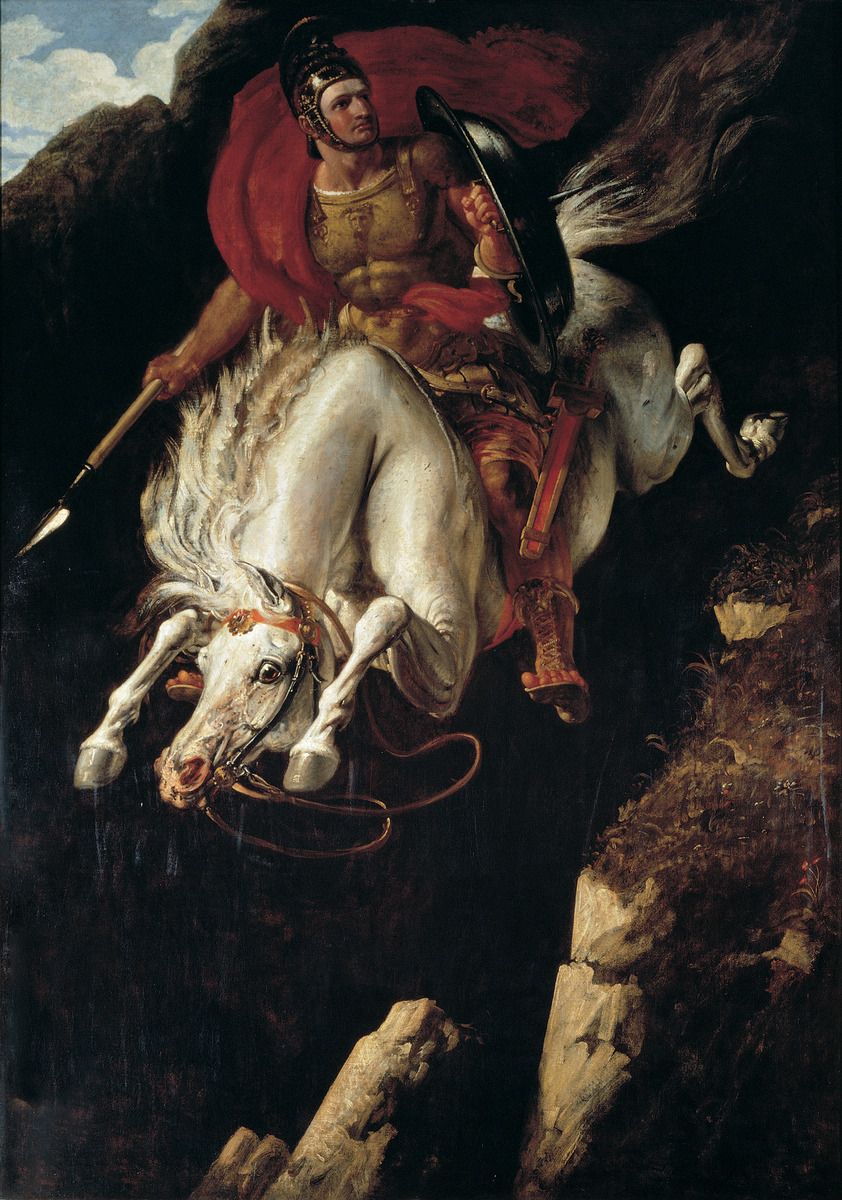
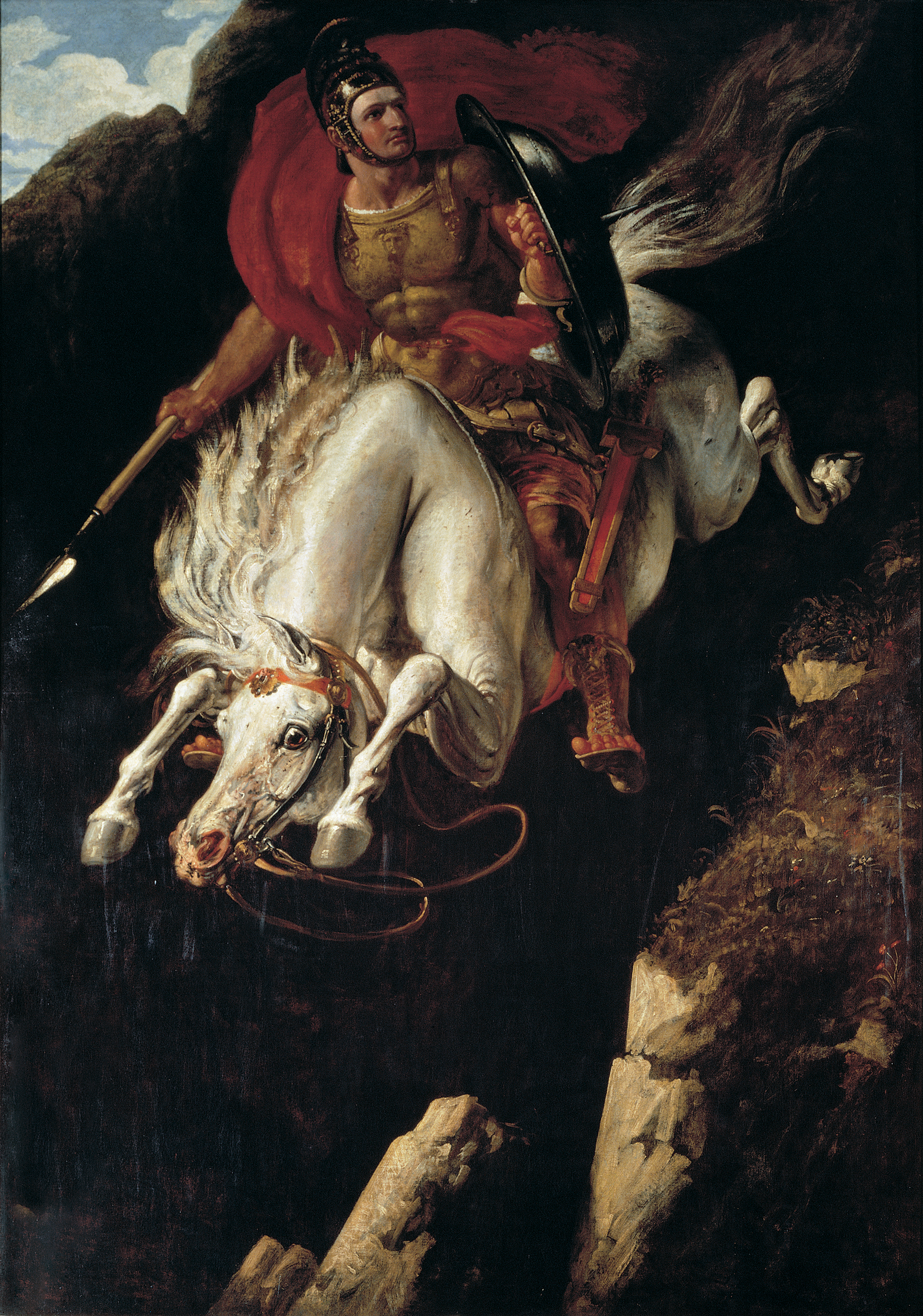
A white horse hangs above darkness, forelegs raised, neck strained, mane thrown back. Beneath it, a gulf opens—black, bottomless. At the horse's back, an armored rider leans forward, shield up, spear lowered. He is not falling. He is leaping.
Follow the rider's line. His body, the shield, the lowered spear, the red cloth snapping behind—everything drives in one direction, across the canvas and into the void. The horse is not running; it is rearing, caught between earth and air. The composition gives you no pause, no safe ledge. The only way out is down.
The subject is Marcus Curtius, a Roman warrior who, according to the ancient story, sacrificed himself by jumping into a gulf that had opened in the Roman Forum. The painting shows that moment: the leap, the horse, the plunge into darkness. The artist is Benjamin Robert Haydon, a nineteenth-century history painter who pursued historical, mythological, and biblical subjects on a grand scale.
The source describes the subject as inevitably associated with Haydon's own life story and suicide. That word—inevitably—is an interpretation, not a fact of the painting. But it changes how you see the leap. Haydon died by suicide on 22 June 1846. Knowing that, the rider's plunge can feel less like ancient heroism and more like a personal reckoning.
The supplied source credits the Royal Albert Memorial Museum & Art Gallery, though it does not explicitly verify the painting's current collection location. The file title identifies the work as Curtius Leaping into the Gulf by Benjamin Robert Haydon. But the same source also lists Charles Ricketts as artist or creator—an unresolved conflict in the metadata. The identification rests on the title and the historical account, which name Haydon.
So the painting holds two stories at once: the Roman legend of a man who gives his life for the city, and the later reading that ties that leap to the painter's own end. The source calls that association inevitable. You can stand before the rearing horse and the dark gulf and decide what you see—an ancient sacrifice, a personal tragedy, or both, suspended in the same downward motion.