The story About 4 minutes to read
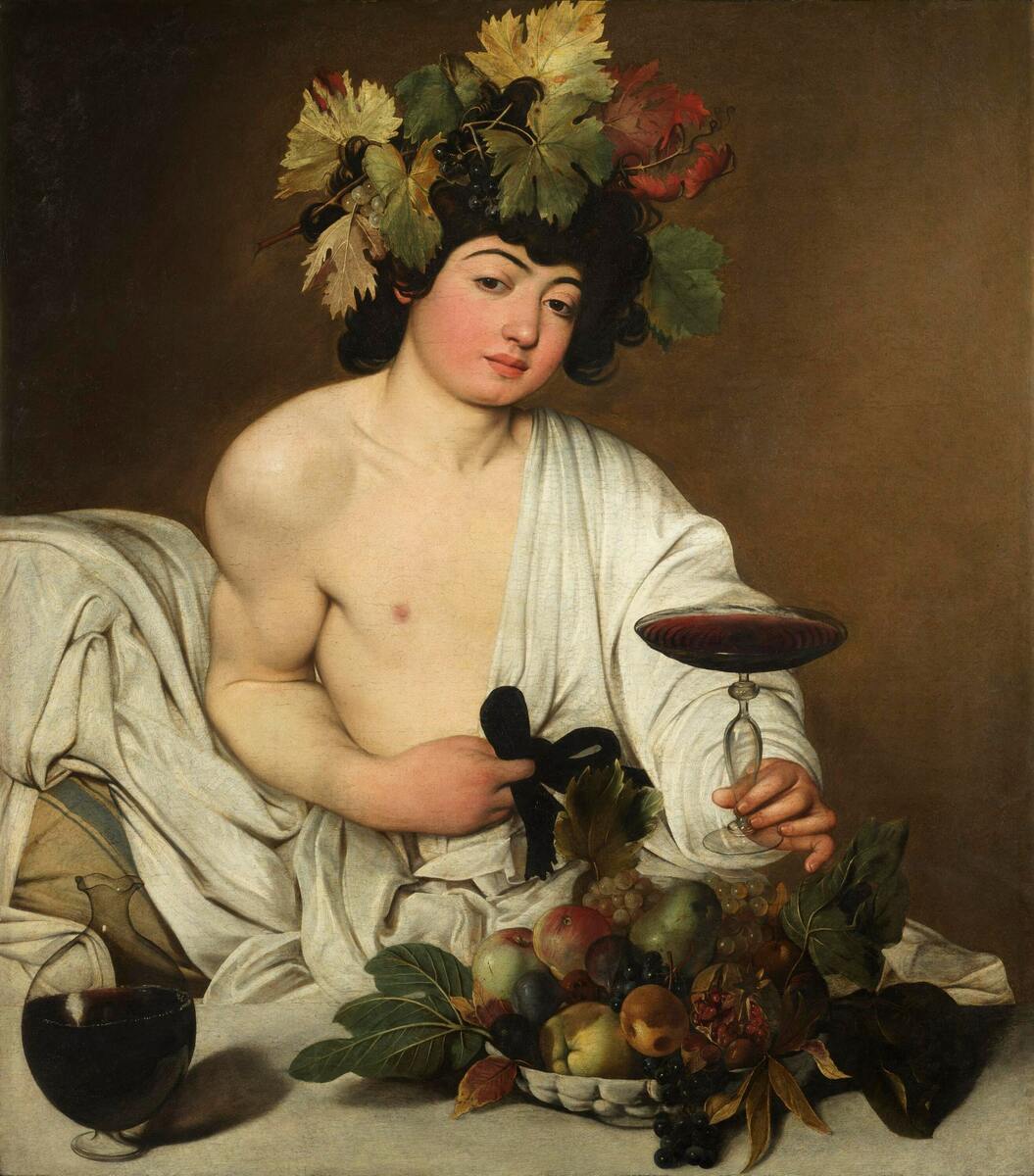
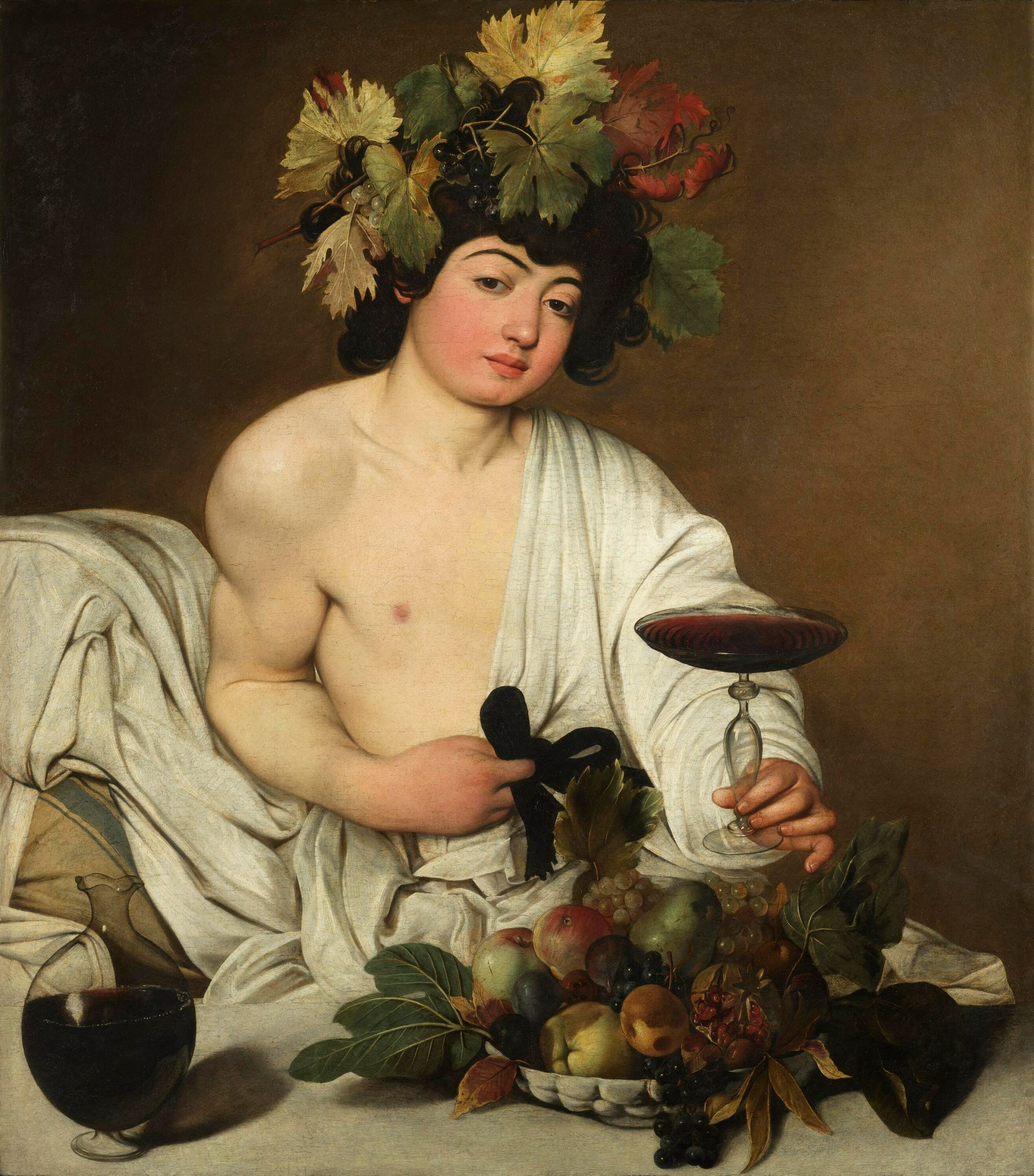
A youth crowned with vine leaves and clusters of grapes offers you a glass of red wine. His skin is warm with colour, his eyes heavy, his expression dazed. The basket of fruit in front of him looks so real you could almost reach out and take a peach. This is Bacchus, the god of wine, and he seems to be inviting you to join him.
Look closely at the glass he holds. The wine inside is dark, and the glass itself is round-bowled, catching the light. Beside the fruit basket, a glass carafe of wine sits at the lower left. The Uffizi describes the figure's expression as stunned from inebriation, and his pose as languid and sensual. The still life of fruit and wine is painted with such naturalism that some critics have seen in it a Horatian invitation to frugality, conviviality and friendship.
Caravaggio painted this Bacchus around 1598, early in his Roman career, when he was under the patronage of Cardinal Francesco Maria del Monte. The Uffizi notes that it belongs to a series of half-length portraits painted 'in chiaro', in a clear light. The sculpted figure of Bacchus reproduces classical models, in particular portraits of Antinous, the young favourite of the emperor Hadrian. So the god of wine is also a quotation of ancient art.
The painting's early history is tied to Cardinal del Monte. According to the Uffizi, he donated this Bacchus, together with Caravaggio's Medusa, to Ferdinando I de' Medici in 1608, on the occasion of the wedding of his son Cosimo II. So the painting entered the Medici collections as a gift, a diplomatic gesture that placed Caravaggio's work in the heart of Florentine power.
But then the trail goes cold. For centuries, the painting was forgotten, hidden away in the Uffizi's storerooms. It was only in 1913 that it was rediscovered, and the art historian Roberto Longhi attributed it to Caravaggio. This was a time when Caravaggio's reputation was being rebuilt; many of his works had been misattributed or overlooked. The Bacchus that had once been a gift to a grand duke had become a dusty object in storage, its authorship uncertain.
Now the god of wine looks out again, his glass raised, his gaze meeting ours. The painting is no longer a forgotten canvas but a key to Caravaggio's early years, a moment when he was experimenting with light, naturalism and classical quotation. The fruit and the wine are not just symbols; they are invitations to think about pleasure, friendship and the passage of time. And the youth who offers the glass, with his flushed face and heavy eyes, remains as enigmatic as the god he portrays.